On This Page
Description
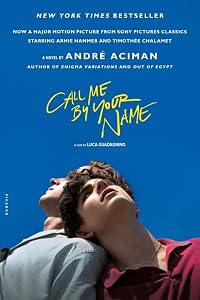
Call Me by Your Name is the story of a sudden and powerful romance that blossoms between an adolescent boy and a summer guest at his parents' house, a cliff-side mansion on the Italian Riviera. Unprepared for the consequences of their attraction, at first each feigns indifference to the other. But during the warm, languorous summer weeks that follow, unrelenting buried currents of obsession and fear, fascination and desire, intensify their passion as they test the charged ground between show more them. What grows from the depths of their spirits is a romance of scarcely six weeks duration and an experience that marks them for a lifetime. For what the two discover on the Riviera and on a sultry evening in Rome is the one thing both already fear they may never truly find again: total intimacy. show lessTags
Recommendations

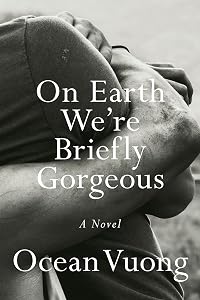
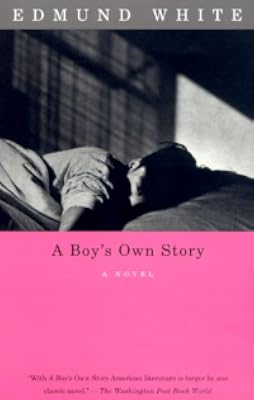
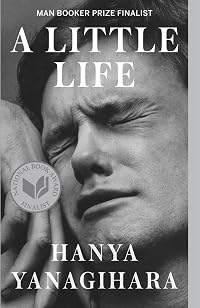
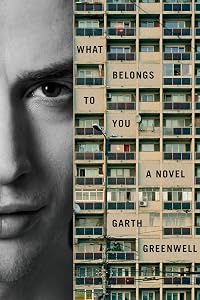

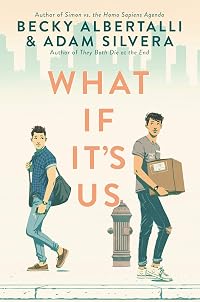
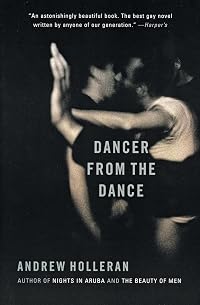
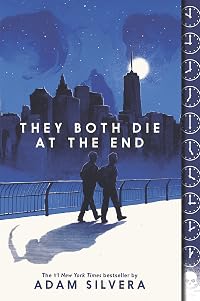
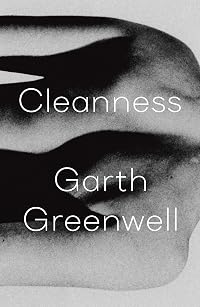



Member Recommendations

Member Reviews
What is the difference between the lover and beloved, the watcher and the one watched? In his story of Eros and education the author, Andre Aciman, considers these questions and with his narrative demonstrates the answers. With emphasis on the erotic, he has created an almost Proustian meditation on time and desire, a love letter, an invocation in words that one must call simply "beautiful". His novel, Call Me by Your Name, is a wonderful tale whose dream-like qualities continually evoke the narrator's obscure object of desire which is, by definition, inexpiable, and indeterminate. The story is one of a young man, Elio, and a slightly older man, Oliver, for whom Elio obsesses with a passion that is filled with Mediterranean fire, yet show more mediated by a classical patina not unlike that suggested in the less accurate translations of Plato's dialogues. For further details of the story I recommend you read the book, not because it is banal but rather because it is too beautiful to risk spoiling.
This book constantly reminded me that it was fiction - the product of an imagination able to create an unreal dream world - yet I did not mind because it was simply, joyously readable. I was both entranced and intrigued by the narrator, whose name is withheld for much of the novel, but this is because, as the title implies, he is entranced and intrigued himself by his family's summer guest, Oliver, who seems to be nothing less than a Greek god. The subtle allusions to poetry and philosophy, the music of the senses, add to the magnificence of this short novel. Perhaps it will not effect everyone the same as it did me, but for those who appreciate the classical source of beauty this is a novel that ranks with Mann and Gide in its glistening presence. show less
This book constantly reminded me that it was fiction - the product of an imagination able to create an unreal dream world - yet I did not mind because it was simply, joyously readable. I was both entranced and intrigued by the narrator, whose name is withheld for much of the novel, but this is because, as the title implies, he is entranced and intrigued himself by his family's summer guest, Oliver, who seems to be nothing less than a Greek god. The subtle allusions to poetry and philosophy, the music of the senses, add to the magnificence of this short novel. Perhaps it will not effect everyone the same as it did me, but for those who appreciate the classical source of beauty this is a novel that ranks with Mann and Gide in its glistening presence. show less
I think this is a beautiful book about love, coming of age, and finding yourself. I think the movie was a really true and honest adaptation. I do not, however, think it’s an anomaly of the genre.
Call Me By Your Name centers on Elio, a 17-year-old who falls for a graduate student that has come to stay with Elio’s family in Italy for the summer. It is a true exploration and discovery for Elio and the relationship that blooms between the two is beautiful and poignant. The writing is poetic and endearing. I truly felt all of Elio’s hesitance and emotion on each page. I think this book bridges a gap in young adult and adult literature. Elio is still young enough to be a YA character, but his relationship is so much more intense and show more mature, that I think this book can satisfy both audiences.
I enjoyed this book and it has earned a lot of its praise, but I hope that the worldwide enjoyment of this story pushes more readers to pick up other LGBTQ+ novels. Love is such a universal desire, I feel most of us could be limiting ourselves by gravitating towards stories that echo only our own experiences. show less
Call Me By Your Name centers on Elio, a 17-year-old who falls for a graduate student that has come to stay with Elio’s family in Italy for the summer. It is a true exploration and discovery for Elio and the relationship that blooms between the two is beautiful and poignant. The writing is poetic and endearing. I truly felt all of Elio’s hesitance and emotion on each page. I think this book bridges a gap in young adult and adult literature. Elio is still young enough to be a YA character, but his relationship is so much more intense and show more mature, that I think this book can satisfy both audiences.
I enjoyed this book and it has earned a lot of its praise, but I hope that the worldwide enjoyment of this story pushes more readers to pick up other LGBTQ+ novels. Love is such a universal desire, I feel most of us could be limiting ourselves by gravitating towards stories that echo only our own experiences. show less
“We are not written for one instrument alone.”
Do you remember longing for something, someone (“Intoxicated rapture” and “The twisted skein of desire”), while worrying about the implications? Fear of rejection - and of acceptance? I do.
This is an achingly slow, beautiful, microscopic analysis of the glittering facets of identity. They’re painfully and joyously revealed during the fluctuating and confusing experiences of late adolescence.
Hunger and fear. “I loved the fear.” Desire and shame. Shame that becomes a route to total intimacy.
The emotions are universal, if not the specific permutations and situations. If that were not possible, genres like fantasy and murder mysteries could not succeed.
Know Yourself
Perhaps show more the most important task of adolescence is to understand oneself. Only then can one truly begin to understand others.
Oliver, at 24, seems very sure of himself - and everyone else. The impetus of the story is 17-year old Elio’s struggle to achieve the same, occasionally aided by the tactful, understated empathy of his father.
“If there is pain, nurse it, and if there is a flame, don’t snuff it out.”
(His mother is almost irrelevant.)
Hiders
“People who read are hiders. They hide who they are. People who hide don’t always like who they are.”
I hide in books. I expect many GoodReaders do. But it’s not because I dislike myself (though there’s room for self-improvement). It’s an escape from ordinary me, in ordinary life. Books are safe spaces where I can confront the truth. By hiding in books, I can learn about the world, and about myself.
Photo: fortune cookie “To truly find yourself you should play hide and seek alone.”
Unity
“Having someone’s body to touch and being that someone we’re longing to touch are one and the same, just opposite banks on a river that passes from us to them… This perpetual circuit where the chambers of the heart, like the trapdoors of desire, and the wormholes of time, and the false-bottomed drawer we call identity share a beguiling logic according to which the shortest distance between real life and the life unlived, between who we are and what we want, is a twisted staircase designed with the impish cruelty of MC Escher.”
The deepest intimacy of all is when two become one, where each can call the other by caller’s name.
“Is it your body that I want… or do I want to slip into it and own it as if it were my own?”
Where that one becomes many: brother, friend, father, son, husband, lover, self. Thence comes self-knowledge.
“He was my secret conduit to myself.”
Exquisite, intimate, poignant. Peaches and feet feature notably, separately, sexually.
Duality
We seek unity, and we have one life and one body, but most of us live as if we have two: “one is the mockup and the other is the finished version”.
The job of poetry and wine is “to help us see double”. Is that a good thing?
Fluidity
"Bakers and butchers don't compete."
Because Elio and Oliver sail on open waters of identity and sexuality, there’s no need for labels, no need to be bisexual or male to relate to them. Their unstated (at the time) bond of shared secular Judaism was more elusive to me.
Sexuality is a spectrum; some move along it, while others stick at one point on it. Personality, behaviour, or circumstances?
This article explains, “same-sex relations were viewed in pre-modern times as merely a predilection or practice, whereas during the 19th century they came to be considered an innate nature, an identity” and "rather than a hetero/homosexual dichotomy, the two sexualities are defined by penetrating and being penetrated."
Gender can be fluid, too. A peripheral character had formative experiences in Thailand, and was picked up by a ladyboy.
Gay Romance
Don’t let the book blurb or film trailer let you think this is a gay romance (not that there’s anything wrong with them, but this is not one).
My first impressions were about the importance of first impressions in setting our path, our fate. I experienced the “promises of instant affinities” from the first page, and that held firm beyond the last page.
It’s a bildungsroman told by a middle-aged man looking back to a summer in the mid 1980s, when he was 17: a boy who liked girls and was struck by a passion for a slightly older man who also liked girls. Oliver was staying with Elio's family in Italy for six weeks: that year's promising grad student. The setting is a lush and elemental component of the story. It could not have happened the same way in the US or UK.
Elio dips in and out of his memories, showing how his typical teen uncertainty, coupled with his atypical academic and self-analytical approach, affect them both, throughout their lives. Just as he imagined:
"Two young men who found much happiness for a few weeks and lived the remainder of their lives dipping cotton swabs into that bowl of happiness, fearing they’d use it up, without daring to drink more than a thimbleful on ritual anniversaries."
It’s not clear who he’s telling the story to or why. He refers to the diary he kept at the time, but he observes “I’d written it down in my diary but omitted to say I had dreamt it. I wanted to come back years later and believe, if only for a moment.” He remembers “‘repeat’ moments”, but not necessarily the sequence.
By the end, I wondered how relevant it was that Elio and Oliver were both male, rather as I did with Brokeback Mountain (see my review HERE) and the dwarfism of the lead character in the film The Station Agent. Here, the taboo, inasmuch as there is one, is Elio’s youth, the age gap, and Oliver’s position as guest.
Consent
“Does this make you happy?” and “You sure you want this?” and “Can I kiss you?”
Consent is of recurring importance here. Ten years after it was published, it is topical in the aftermath of Harvey Weinstein and #MeToo. But as in real life, sometimes the messages are mixed:
“Please, don’t hurt me, which meant, Hurt me all you want.”
Later
“I’d lodged him in the permanent past, my pluperfect lover.”
We learn something of Oliver’s life decades hence, but almost nothing of Elio’s. That balances the fact that for most of the book we know every nuance of Elio’s thoughts, but can only infer Oliver’s.
Quotes
• “The promise of so much bliss hovering a fingertip away.”
• “The soft wind training exhalations from our garden up the stairs to my bedroom.”
• “Awakened by the rich brown cloistral scent of coffee.”
• “There are certain wishes that must be clipped like wings off a thriving butterfly.”
• “What startles virgins on being touched for the first time by the person they desire: he stirs nerves in them they never knew existed and that produce far, far more disturbing pleasures than they are used to on their own.”
• “Wanting to test desire is nothing more than a ruse to get what we want without admitting that we want it.”
• “The kind of lovemaking that can run circles round time.”
• “Scrambling for something to say, the way a fish struggles for water in a muddied pond that’s fast drying up in the heat.”
• “Unreal and sticky goblin lanes that seemed to lead to a different, nether realm you entered in a state of stupor and wonderment.”
• “I intentionally failed to drop breadcrumbs for my return journey; instead, I ate them.”
• “By not planning to keep things alive, we were avoiding the prospect that they might ever die.”
• “We were eloping together with return-trip tickets to different destinations.”
• “That summer, our lives had scarcely touched, but we had crossed to the other bank… We had found the stars… And this is given only once.”
UPDATE re Film
I've just seen the film, and unlike many GR fans of the book, I was very disappointed.
• It looks gorgeous: Italian sun and scenery, and some subtly clever cinematography, particularly with the relative positioning of characters in the scene.
• It sounds good, too, which matters, given the importance of music in the story, especially Elio.
• Whereas the recent adaptation of On Chesil Beach added a significant postscript to the story that changed the meaning of the main story (see my review here), this omitted the rather pointless postscript of the book.
But:
• I didn't feel the warmth, let alone the passion. I didn't believe the characters, let alone their relationship.
• It felt somehow prurient in a way the book did not, but that may just be me.
• The father was creepy, rather than empathetic.
• A seminal trip was to beautiful countryside, rather than Rome. Why?
Film details on imdb here. show less
Do you remember longing for something, someone (“Intoxicated rapture” and “The twisted skein of desire”), while worrying about the implications? Fear of rejection - and of acceptance? I do.
This is an achingly slow, beautiful, microscopic analysis of the glittering facets of identity. They’re painfully and joyously revealed during the fluctuating and confusing experiences of late adolescence.
Hunger and fear. “I loved the fear.” Desire and shame. Shame that becomes a route to total intimacy.
The emotions are universal, if not the specific permutations and situations. If that were not possible, genres like fantasy and murder mysteries could not succeed.
Know Yourself
Perhaps show more the most important task of adolescence is to understand oneself. Only then can one truly begin to understand others.
Oliver, at 24, seems very sure of himself - and everyone else. The impetus of the story is 17-year old Elio’s struggle to achieve the same, occasionally aided by the tactful, understated empathy of his father.
“If there is pain, nurse it, and if there is a flame, don’t snuff it out.”
(His mother is almost irrelevant.)
Hiders
“People who read are hiders. They hide who they are. People who hide don’t always like who they are.”
I hide in books. I expect many GoodReaders do. But it’s not because I dislike myself (though there’s room for self-improvement). It’s an escape from ordinary me, in ordinary life. Books are safe spaces where I can confront the truth. By hiding in books, I can learn about the world, and about myself.
Photo: fortune cookie “To truly find yourself you should play hide and seek alone.”
Unity
“Having someone’s body to touch and being that someone we’re longing to touch are one and the same, just opposite banks on a river that passes from us to them… This perpetual circuit where the chambers of the heart, like the trapdoors of desire, and the wormholes of time, and the false-bottomed drawer we call identity share a beguiling logic according to which the shortest distance between real life and the life unlived, between who we are and what we want, is a twisted staircase designed with the impish cruelty of MC Escher.”
The deepest intimacy of all is when two become one, where each can call the other by caller’s name.
“Is it your body that I want… or do I want to slip into it and own it as if it were my own?”
Where that one becomes many: brother, friend, father, son, husband, lover, self. Thence comes self-knowledge.
“He was my secret conduit to myself.”
Exquisite, intimate, poignant. Peaches and feet feature notably, separately, sexually.
Duality
We seek unity, and we have one life and one body, but most of us live as if we have two: “one is the mockup and the other is the finished version”.
The job of poetry and wine is “to help us see double”. Is that a good thing?
Fluidity
"Bakers and butchers don't compete."
Because Elio and Oliver sail on open waters of identity and sexuality, there’s no need for labels, no need to be bisexual or male to relate to them. Their unstated (at the time) bond of shared secular Judaism was more elusive to me.
Sexuality is a spectrum; some move along it, while others stick at one point on it. Personality, behaviour, or circumstances?
This article explains, “same-sex relations were viewed in pre-modern times as merely a predilection or practice, whereas during the 19th century they came to be considered an innate nature, an identity” and "rather than a hetero/homosexual dichotomy, the two sexualities are defined by penetrating and being penetrated."
Gender can be fluid, too. A peripheral character had formative experiences in Thailand, and was picked up by a ladyboy.
Gay Romance
Don’t let the book blurb or film trailer let you think this is a gay romance (not that there’s anything wrong with them, but this is not one).
My first impressions were about the importance of first impressions in setting our path, our fate. I experienced the “promises of instant affinities” from the first page, and that held firm beyond the last page.
It’s a bildungsroman told by a middle-aged man looking back to a summer in the mid 1980s, when he was 17: a boy who liked girls and was struck by a passion for a slightly older man who also liked girls. Oliver was staying with Elio's family in Italy for six weeks: that year's promising grad student. The setting is a lush and elemental component of the story. It could not have happened the same way in the US or UK.
Elio dips in and out of his memories, showing how his typical teen uncertainty, coupled with his atypical academic and self-analytical approach, affect them both, throughout their lives. Just as he imagined:
"Two young men who found much happiness for a few weeks and lived the remainder of their lives dipping cotton swabs into that bowl of happiness, fearing they’d use it up, without daring to drink more than a thimbleful on ritual anniversaries."
It’s not clear who he’s telling the story to or why. He refers to the diary he kept at the time, but he observes “I’d written it down in my diary but omitted to say I had dreamt it. I wanted to come back years later and believe, if only for a moment.” He remembers “‘repeat’ moments”, but not necessarily the sequence.
By the end, I wondered how relevant it was that Elio and Oliver were both male, rather as I did with Brokeback Mountain (see my review HERE) and the dwarfism of the lead character in the film The Station Agent. Here, the taboo, inasmuch as there is one, is Elio’s youth, the age gap, and Oliver’s position as guest.
Consent
“Does this make you happy?” and “You sure you want this?” and “Can I kiss you?”
Consent is of recurring importance here. Ten years after it was published, it is topical in the aftermath of Harvey Weinstein and #MeToo. But as in real life, sometimes the messages are mixed:
“Please, don’t hurt me, which meant, Hurt me all you want.”
Later
“I’d lodged him in the permanent past, my pluperfect lover.”
We learn something of Oliver’s life decades hence, but almost nothing of Elio’s. That balances the fact that for most of the book we know every nuance of Elio’s thoughts, but can only infer Oliver’s.
Quotes
• “The promise of so much bliss hovering a fingertip away.”
• “The soft wind training exhalations from our garden up the stairs to my bedroom.”
• “Awakened by the rich brown cloistral scent of coffee.”
• “There are certain wishes that must be clipped like wings off a thriving butterfly.”
• “What startles virgins on being touched for the first time by the person they desire: he stirs nerves in them they never knew existed and that produce far, far more disturbing pleasures than they are used to on their own.”
• “Wanting to test desire is nothing more than a ruse to get what we want without admitting that we want it.”
• “The kind of lovemaking that can run circles round time.”
• “Scrambling for something to say, the way a fish struggles for water in a muddied pond that’s fast drying up in the heat.”
• “Unreal and sticky goblin lanes that seemed to lead to a different, nether realm you entered in a state of stupor and wonderment.”
• “I intentionally failed to drop breadcrumbs for my return journey; instead, I ate them.”
• “By not planning to keep things alive, we were avoiding the prospect that they might ever die.”
• “We were eloping together with return-trip tickets to different destinations.”
• “That summer, our lives had scarcely touched, but we had crossed to the other bank… We had found the stars… And this is given only once.”
UPDATE re Film
I've just seen the film, and unlike many GR fans of the book, I was very disappointed.
• It looks gorgeous: Italian sun and scenery, and some subtly clever cinematography, particularly with the relative positioning of characters in the scene.
• It sounds good, too, which matters, given the importance of music in the story, especially Elio.
• Whereas the recent adaptation of On Chesil Beach added a significant postscript to the story that changed the meaning of the main story (see my review here), this omitted the rather pointless postscript of the book.
But:
• I didn't feel the warmth, let alone the passion. I didn't believe the characters, let alone their relationship.
• It felt somehow prurient in a way the book did not, but that may just be me.
• The father was creepy, rather than empathetic.
• A seminal trip was to beautiful countryside, rather than Rome. Why?
Film details on imdb here. show less
This flayed me apart. Multiple times I cried, hit my thighs, asking why, oh why?
I put this off for a couple years because I thought it was going to break my heart, and I was right. I hate the first section of this book and the last section, but throughout it all, it was so beautiful, the writing was so nostalgic and scattered (in time and memory) and evocative of what being a teenager in love and beginning to bloom into life is like, especially with the one person who will ever get you completely and share every piece of your body with you, and become you while you become him.
God, the run-on sentences, the intellectual writing, the fumbling attitudes and parries, the sweeping beautiful scenes and soaking emotions, how the information of show more names and time are trickled in bit by bit, so you aren't even sure what decade the book is set in until half way through...
This book was a dream, a literary oasis of music, thought, touch, truth, beauty, pain, horror, and heartbreak that you never recover from. It tells of how time goes on, but some experiences change your reality and never vacate your heart. This was wordy and full to overflowing with experiences. Mr. André Aciman is a wonderous writer, and I felt completely dropped into this time and place. So many choices were not what I would have made, but I completely, even though I am still mad, give them their story.
My kindle book said the average reading time was under four hours...it took me about eleven, because I was transfixed, feeling every paragraph with my fingertips, highlighting too many words, and rereading to get at a deeper meaning. I stayed up well past sunrise and into midmorning, because I couldn't bear to split this up into a two-night read.
I am heartbroken and angry, my neck is lots of pain every time I try to move it, and I really need a shower and some sleep, but I do not regret being transported to their world for a little while. This reinforced why I do not read books with sad endings, but I am glad I plucked up my courage to live this story and bask in the joy of life. I am going to pretend they stayed happy instead of slipping into their "comas" and got back together, quickly, or I am going to only think of the first three sections. However I do it, this story has indelibly marked me. So, Mr. Aciman, I hate you very much for killing my heart (why not rip it out and wrap it in a billowy shirt?) and making them suffer without respite (why would you give them everything just to take it away?), but thank you very much for gifting us with this grand work of art.
...Two days later and I still think of their story all the time, so many things remind me, and my stomach will still suddenly hurt from sadness when I recall this scene or that. This story affects me more than any other has. I am sad, but I am also so deeply angry. They had it all, were the deepest and rarest of couples, but then neither of them fought for each other; one chose another path, and the other just let him. And, there were hinted possibilities as to why, sure, but they had acceptance, could have chosen each other...instead after the most intimate time they just let each other go. Was it fear, the intensity of heir connection, their differences, taking the path of least resistance? But then fifteen, then twenty years later neither had moved on emotionally, were still and forever would be remembering and holding on to those few short weeks, and they regretted the choices made that ended their being together all those years ago. That is why I am sad and angry. Even after all the foreshadowing, I had hope because there was no reason to lose it. Until they just both gave their relationship up without a fight. I will never accept that. I think that's the only imperfect thing for me about this story. That they didn't need to, but still did. It hurts too much. "Fenesta Ca Lucive" sung by Roberto Murolo understands it all. show less
I put this off for a couple years because I thought it was going to break my heart, and I was right. I hate the first section of this book and the last section, but throughout it all, it was so beautiful, the writing was so nostalgic and scattered (in time and memory) and evocative of what being a teenager in love and beginning to bloom into life is like, especially with the one person who will ever get you completely and share every piece of your body with you, and become you while you become him.
God, the run-on sentences, the intellectual writing, the fumbling attitudes and parries, the sweeping beautiful scenes and soaking emotions, how the information of show more names and time are trickled in bit by bit, so you aren't even sure what decade the book is set in until half way through...
This book was a dream, a literary oasis of music, thought, touch, truth, beauty, pain, horror, and heartbreak that you never recover from. It tells of how time goes on, but some experiences change your reality and never vacate your heart. This was wordy and full to overflowing with experiences. Mr. André Aciman is a wonderous writer, and I felt completely dropped into this time and place. So many choices were not what I would have made, but I completely, even though I am still mad, give them their story.
My kindle book said the average reading time was under four hours...it took me about eleven, because I was transfixed, feeling every paragraph with my fingertips, highlighting too many words, and rereading to get at a deeper meaning. I stayed up well past sunrise and into midmorning, because I couldn't bear to split this up into a two-night read.
I am heartbroken and angry, my neck is lots of pain every time I try to move it, and I really need a shower and some sleep, but I do not regret being transported to their world for a little while. This reinforced why I do not read books with sad endings, but I am glad I plucked up my courage to live this story and bask in the joy of life. I am going to pretend they stayed happy instead of slipping into their "comas" and got back together, quickly, or I am going to only think of the first three sections. However I do it, this story has indelibly marked me. So, Mr. Aciman, I hate you very much for killing my heart (why not rip it out and wrap it in a billowy shirt?) and making them suffer without respite (why would you give them everything just to take it away?), but thank you very much for gifting us with this grand work of art.
...Two days later and I still think of their story all the time, so many things remind me, and my stomach will still suddenly hurt from sadness when I recall this scene or that. This story affects me more than any other has. I am sad, but I am also so deeply angry. They had it all, were the deepest and rarest of couples, but then neither of them fought for each other; one chose another path, and the other just let him. And, there were hinted possibilities as to why, sure, but they had acceptance, could have chosen each other...instead after the most intimate time they just let each other go. Was it fear, the intensity of heir connection, their differences, taking the path of least resistance? But then fifteen, then twenty years later neither had moved on emotionally, were still and forever would be remembering and holding on to those few short weeks, and they regretted the choices made that ended their being together all those years ago. That is why I am sad and angry. Even after all the foreshadowing, I had hope because there was no reason to lose it. Until they just both gave their relationship up without a fight. I will never accept that. I think that's the only imperfect thing for me about this story. That they didn't need to, but still did. It hurts too much. "Fenesta Ca Lucive" sung by Roberto Murolo understands it all. show less
There's much to be admired in Call Me by Your Name—the prose is undeniably lush and some of the passages can leave you swooning—but I found myself ultimately feeling that it didn't live up to its reputation. There is a mixture of implausibility and superficiality in the narrative that often left me feeling incredulous, sometimes even frustrated. I was surprised that other reviewers hardly even raised an eyebrow to the character of Elio—a seventeen year old polyglot well-versed in everything from Greek philosophy to 19th century literary realism (Stendhal for God's sake?), who just also happens to be a musical prodigy recreationally transcribing Haydn and tossing off renditions of Bach as Busoni would have played it if he'd heard show more Liszt. Ok, so we have an incredibly intellectually precocious adolescent boy. In addition to being implausible almost to the point of absurdity (which I acknowledge is not a problem in itself), this characterization seems to muddy the waters as to the fact that Elio's still a moody, emotionally immature teenager. I sympathize with why some readers might be so dazzled by his intellectual chops, that they confuse it for some sort of emotional wisdom. But in fact, Elio sulks, broods, and plays high school mind games with the object of his infatuation—the confident, dashing, twenty-four year old college professor, Oliver. I can also see why some might also confuse Elio's erotic desire, so richly described (often ad nauseum), with something deep and meaningful—and perhaps it is, but Aciman only intimates this and never gives us very compelling reasons to think that there is something too much more than limerence at play. Are we meant to think that Elio and Oliver love each other? That they share some special understanding? If so, what is it? Some profound appreciation of who the other person is? It's not impossible to just assume some answers to these questions, but I struggled to find the them in the morass of obsession, brooding, and horniness that Elio nurtures for Oliver throughout most of the novel.
I was also a little bothered by how the character of Marzia functions in the novel. It seemed to me that, while Elio and Oliver were living somewhat semi-charmed lives making out on Monet's berm, waxing intellectual about Heraclitus, and generally serving as their own obstructions to happiness, Marzia is the only character in the novel who might actually be suffering. Perhaps we're supposed to imagine that Marzia is fine with being being a pawn in Elio and Oliver's erotic games, but I took her for having feelings for Elio that he does not really reciprocate. He largely characterizes his feelings for Marzia in subordination to his feelings for Oliver. In fact, Elio's lack of sympathy for Marzia serves as evidence of his emotional immaturity, which some readers seem to miss. While obsession over every little thing Oliver does and taking each gesture or glance as a dagger or a kiss, he is indifferent to how his behavior might register with Marzia. Might she not be tormented and suffering from Elio keeping her at an emotional distance while at the same time having a sexually intimate relationship with her? He never really addresses this, instead equivocating: "Barely half an hour ago I was asking Oliver to fuck me and now here I was about to make love to Marzia, and yet neither had anything to do with the other." Only a thoughtless and immature person could truly believe that.
Still, in spite of the ways it frustrated me, I like the book. On the whole, it was enjoyable to read. Just don't expect one of the great coming-of-age romantic novels of our time—unless you take romance to simply be profound yearning. show less
I was also a little bothered by how the character of Marzia functions in the novel. It seemed to me that, while Elio and Oliver were living somewhat semi-charmed lives making out on Monet's berm, waxing intellectual about Heraclitus, and generally serving as their own obstructions to happiness, Marzia is the only character in the novel who might actually be suffering. Perhaps we're supposed to imagine that Marzia is fine with being being a pawn in Elio and Oliver's erotic games, but I took her for having feelings for Elio that he does not really reciprocate. He largely characterizes his feelings for Marzia in subordination to his feelings for Oliver. In fact, Elio's lack of sympathy for Marzia serves as evidence of his emotional immaturity, which some readers seem to miss. While obsession over every little thing Oliver does and taking each gesture or glance as a dagger or a kiss, he is indifferent to how his behavior might register with Marzia. Might she not be tormented and suffering from Elio keeping her at an emotional distance while at the same time having a sexually intimate relationship with her? He never really addresses this, instead equivocating: "Barely half an hour ago I was asking Oliver to fuck me and now here I was about to make love to Marzia, and yet neither had anything to do with the other." Only a thoughtless and immature person could truly believe that.
Still, in spite of the ways it frustrated me, I like the book. On the whole, it was enjoyable to read. Just don't expect one of the great coming-of-age romantic novels of our time—unless you take romance to simply be profound yearning. show less
A lovely and oh-so-tender coming-of-age story about a teenager who encounters his true soulmate very early in life and must, as a result, handle intense and complex adult emotions, perhaps before he's fully ready. And it feels like a novel written by someone who has known a love much more intimate than many of us ever experience.
17-year-old Elio, living in a small town in Northern Italy, is accustomed to his professor-father hiring a different assistant each summer, to live with the family in exchange for help organizing academic work. In 1983, however, the assistant who arrives is Oliver, 7 years Elio's senior and just beginning a promising academic career of his own.
The book is narrated by Elio and so the author gets to slowly reveal show more -- with beauty, tenderness, depth, and authenticity -- all the uncertainties, insecurities, hopes, and fears that occupy Elio's mind as he navigates first love. There is so much truth in Andre Aciman's descriptions, that you are certain to recognize in Elio's psychological musings something from your own experiences.
Aciman takes you deep into Elio's soul and you will know him intimately. There is SUCH exquisite detail about his passage through each painful stage: initial attraction, intense infatuation, obsessive fantasizing, wild passion, deep emotional attachment, and profound intimacy. I confess there were moments when the detail felt a bit overwhelming and I found myself eager for something to "happen." But by the end of the book, I came to appreciate the way the author used the descriptions to lay a foundation for what was to come.
It's a wonderful read though also sad. Because, by the end, it becomes much more about the decisions we all make in life, how those decisions shape our path, and how we sometimes long for the path not taken. show less
17-year-old Elio, living in a small town in Northern Italy, is accustomed to his professor-father hiring a different assistant each summer, to live with the family in exchange for help organizing academic work. In 1983, however, the assistant who arrives is Oliver, 7 years Elio's senior and just beginning a promising academic career of his own.
The book is narrated by Elio and so the author gets to slowly reveal show more -- with beauty, tenderness, depth, and authenticity -- all the uncertainties, insecurities, hopes, and fears that occupy Elio's mind as he navigates first love. There is so much truth in Andre Aciman's descriptions, that you are certain to recognize in Elio's psychological musings something from your own experiences.
Aciman takes you deep into Elio's soul and you will know him intimately. There is SUCH exquisite detail about his passage through each painful stage: initial attraction, intense infatuation, obsessive fantasizing, wild passion, deep emotional attachment, and profound intimacy. I confess there were moments when the detail felt a bit overwhelming and I found myself eager for something to "happen." But by the end of the book, I came to appreciate the way the author used the descriptions to lay a foundation for what was to come.
It's a wonderful read though also sad. Because, by the end, it becomes much more about the decisions we all make in life, how those decisions shape our path, and how we sometimes long for the path not taken. show less
DNF @ 40%
I don't really like to review DNFs because they're usually full of nonsensical rage; this one is less ragey but I'm also very. very tired of it.
three words: i get it.
this started out with a startling amount of candor and realism, even when it was ugly or uncomfortable. what's-his-face's obsession was one big #deargodiwishididn'trelate and it was weirdly compelling to just watch him drive himself crazy.
and then i uhhh. realised that this was gonna be the whole book. watching this insufferable Contemporary Protagonist Clone #1 do things that went from "ah wow, how true, how brutally true," to "jesus fucking christ you're an absolute creep and i can't deal with you anymore"
i get it.
and when they finally kissed I was bored out of show more my damned mind and figured that it was time to put it away if the romance in this painful drag of a romance book wasn't interesting.
so...yeah. beautiful but tiring. fake-deep, but striking all the same. the sexual charge was awkward. the random references to x y z greek nonsense was pretentious (and i've done the same damn stupid thing). it swept me away to some land of awkward teen life and fierce obsession, and then made me wanna slam it shut as it forcibly shouldered its way through a two-page stream of consciousness about nothing just to throw 'cock!! i wanted to talk about COCKS! BECAUSE HE'S G A Y !!!!!" at me in the end.
also i know it ends sad and i aint in the mood
later. show less
I don't really like to review DNFs because they're usually full of nonsensical rage; this one is less ragey but I'm also very. very tired of it.
three words: i get it.
this started out with a startling amount of candor and realism, even when it was ugly or uncomfortable. what's-his-face's obsession was one big #deargodiwishididn'trelate and it was weirdly compelling to just watch him drive himself crazy.
and then i uhhh. realised that this was gonna be the whole book. watching this insufferable Contemporary Protagonist Clone #1 do things that went from "ah wow, how true, how brutally true," to "jesus fucking christ you're an absolute creep and i can't deal with you anymore"
i get it.
and when they finally kissed I was bored out of show more my damned mind and figured that it was time to put it away if the romance in this painful drag of a romance book wasn't interesting.
so...yeah. beautiful but tiring. fake-deep, but striking all the same. the sexual charge was awkward. the random references to x y z greek nonsense was pretentious (and i've done the same damn stupid thing). it swept me away to some land of awkward teen life and fierce obsession, and then made me wanna slam it shut as it forcibly shouldered its way through a two-page stream of consciousness about nothing just to throw 'cock!! i wanted to talk about COCKS! BECAUSE HE'S G A Y !!!!!" at me in the end.
also i know it ends sad and i aint in the mood
later. show less
Members
- Recently Added By
Published Reviews
ThingScore 100
In poetic, elevated prose, André Aciman has written a powerful psychological drama of two bisexual men who share their most intimate selves, intellectually, spiritually, and physically. Elio’s thoughts and emotions are depicted in vivid detail that unashamedly highlight the infatuation, lust, love, and obsession that sometimes result from a first love.
added by TracyNectoux
added by gsc55
Lists

Top Five Books of 2020
982 works; 348 members

Favorite Literary Love Stories
182 works; 100 members

A Novel Cure
742 works; 23 members

Good LGBT fiction for LGBT folk and friends
545 works; 50 members

SHOULD Read Books!
354 works; 9 members

Books Read in 2020
4,379 works; 124 members

Summer Books
82 works; 9 members

Plan to Read Books
75 works; 1 member

Books Read in 2019
4,052 works; 108 members

Dim Sum Lunch Reading
43 works; 2 members

READ IN 2021
239 works; 4 members

PS: 43 Books to Read Before They're Movies
18 works; 5 members

Global Reads: Books Set in Western Europe
186 works; 10 members
Favorite Romance Fiction
247 works; 115 members
Books With Our Favorite First Lines
168 works; 104 members

Books With the Most Memorable Titles
478 works; 158 members

Great Films Based on Books
319 works; 140 members

Florida
366 works; 3 members

Stuff from Bard
70 works; 1 member

The Luca Guadagnino Universe
62 works; 1 member

Books Read in 2025
4,091 works; 97 members

.
184 works; 1 member

LGBTQIA+ TBR
33 works; 1 member

el
1,139 works; 1 member
Author Information

26+ Works 10,062 Members
A regular contributor to the New Yorker, The New York Review of Books and The New Republic, Andre Aciman was born in Alexandria: raised in Egypt, Italy, and France; and educated at Harvard. He teaches literature at Bard College and lives in Manhattan. (Bowker Author Biography)
Some Editions
Awards and Honors
Awards
Distinctions
Series

Work Relationships
Has the adaptation
Common Knowledge
- Canonical title
- Call Me by Your Name
- Original title
- Call Me by Your Name
- Original publication date
- 2007
- People/Characters
- Elio; Oliver
- Important places
- Italy; Italian Riviera, Liguria, Italy; Rome, Italy
- Related movies
- Call Me by Your Name (2017 | IMDb)
- Dedication
- For Albio, Alma de mi vida
- First words
- "Later!" The word, the voice, the attitude.
- Quotations
- Whoever said the soul and the body met in the pineal gland was a fool. It's the asshole, stupid.
If youth must canter, then who'll do the galloping?
Perhaps we were friends first and lovers second.
But then perhaps this is what lovers are.
All I knew was that I had nothing left to hide from him. I had never felt freer or safer in my life.
"I may have come close, but I never had what you had. Something always held me back or stood in the way. How you live your life is your business. But remember, our hearts and our bodies are given to us only once. Most of us... (show all) can't help but live as though we've got two lives to live, one is the mockup, the other the finished version, and then there are all those versions in between. But there's only one, and before you know it, your heart is worn out, and, as for your body, there comes a point when no one looks at it, much less wants to come near it. Right now there's sorrow. I don't envy the pain. But I envy you the pain." (225) - Last words
- (Click to show. Warning: May contain spoilers.)If you remember everything, I wanted to say, and if you are really like me, then before you leave tomorrow, or when you're just ready to shut the door of the taxi and have already said goodbye to everyone else and there's not a thing left to say in this life, then, just this once, turn to me, even in jest, or as an afterthought, which would have meant everything to me when we were together, and, as you did back then, look me in the face, hold my gaze, and call me by your name.
- Blurbers
- Krauss, Nicole; Tóibín, Colm
- Original language
- American English
Classifications
Statistics
- Members
- 5,853
- Popularity
- 2,220
- Reviews
- 177
- Rating
- (4.00)
- Languages
- 16 — Chinese, Czech, Danish, Dutch, English, Finnish, French, German, Hungarian, Italian, Polish, Portuguese, Romanian, Spanish, Swedish, Turkish
- Media
- Paper, Audiobook, Ebook
- ISBNs
- 68
- ASINs
- 22