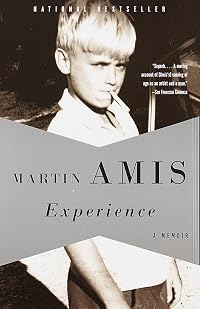
Experience
by Martin Amis
On This Page
Description
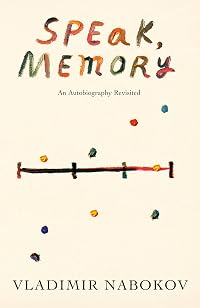
Martin Amis is one of the most gifted and innovative writers of our time. With Experience, he discloses a private life every bit as unique and fascinating as his bestselling novels. The son of the great comic novelist Kingsley Amis, Martin Amis explores his relationship with this father and writes about the various crises of Kingsley's life. He also examines the life and legacy of his cousin, Lucy Partington, who was abducted and murdered by one of Britain?s most notorious serial killers. show more Experience also deconstructs the changing literary scene, including Amis's portraits of Saul Bellow, Salman Rushdie, Allan Bloom, Philip Larkin, and Robert Graves, among others. Not since Nabokov's Speak, Memory has such an implausible life been recorded by such an inimitable talent. Profound, witty, and ruthlessly honest, Experience is a literary event. show lessTags
Recommendations







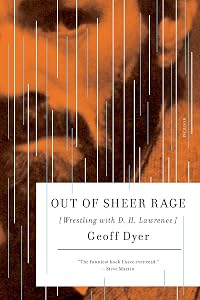

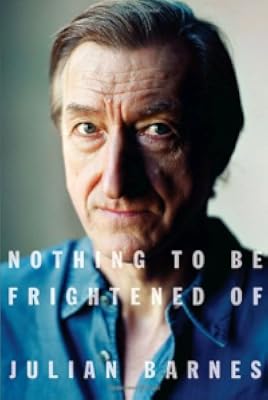
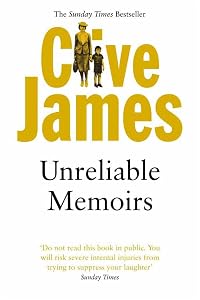
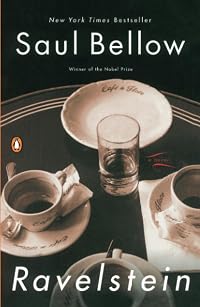












Member Recommendations

Member Reviews
Martin Amis warns the reader very early on in his memoir that he's going to do a lot of name-dropping. It's a good strategy, since "Experience" is to literary memoirs what "Sgt. Pepper's Lonely Hearts Club Band" is to album covers. It seems that Amis has shared a cup of coffee or had an intimate friendship with just about anyone who's published anything of importance in the British Isles at any point during the last seventy-five years. When I was reading Richard Ellman's biography of James Joyce, it struck me how often all those Modernist authors met up, exchanged letters, or became friends. At the time, I assumed that things were different now and that the world was too large – and literature's market too fragmented – for that sort show more of clubbiness to occur anymore. While I'll take Joyce over the younger Amis any day of the week, "Experience" suggests that this isn't quite so: famous and important literary types still know how to find each other, and they do so with surprising regularity.
I also think that Amis made a good choice when he decided that his memoir wasn't gonna be a chronological history but a freewheeling collection of loosely structured anecdotes. Considering the enormous amount of alcohol that's been consumed in Amis's vicinity, it's sort of hard to avoid comparing "Experience" to a particularly talky and entertaining drinking session, and I'm not sure Amis would argue with this comparison. He's both expansive and digressive throughout, and his use of footnotes to insert additional commentary only adds to this book's conversational tone. Amis is, after a fashion, rather suited to this literary form: his eye for detail is as sharp as ever, and the wry cynicism that has made it difficult for me to really love him as a novelist serves this material well. Among all the anecdotes, Amis does manage to touch on the big issues: there's the death of his father and of Ricardo Fonseca, an artist friend, the birth of his children, and the disappearance of Lucy Partington, a cousin who was later discovered to be one of Fred West's victims. And, as others have mentioned, there's an awful lot about his teeth, which are, apparently, almost as awful as Shane McGowan's. There are also a few things missing here. There are few details in "Experience" about Amis's own love affairs or about the business of writing. Indeed, it almost seems that Amis considers novel writing to be a day job that he'd rather not talk about when he's not at the office. Perhaps he's saving those subjects for his next memoir, to be written when he reaches appropriately advanced age, perhaps a decade or two from now. show less
I also think that Amis made a good choice when he decided that his memoir wasn't gonna be a chronological history but a freewheeling collection of loosely structured anecdotes. Considering the enormous amount of alcohol that's been consumed in Amis's vicinity, it's sort of hard to avoid comparing "Experience" to a particularly talky and entertaining drinking session, and I'm not sure Amis would argue with this comparison. He's both expansive and digressive throughout, and his use of footnotes to insert additional commentary only adds to this book's conversational tone. Amis is, after a fashion, rather suited to this literary form: his eye for detail is as sharp as ever, and the wry cynicism that has made it difficult for me to really love him as a novelist serves this material well. Among all the anecdotes, Amis does manage to touch on the big issues: there's the death of his father and of Ricardo Fonseca, an artist friend, the birth of his children, and the disappearance of Lucy Partington, a cousin who was later discovered to be one of Fred West's victims. And, as others have mentioned, there's an awful lot about his teeth, which are, apparently, almost as awful as Shane McGowan's. There are also a few things missing here. There are few details in "Experience" about Amis's own love affairs or about the business of writing. Indeed, it almost seems that Amis considers novel writing to be a day job that he'd rather not talk about when he's not at the office. Perhaps he's saving those subjects for his next memoir, to be written when he reaches appropriately advanced age, perhaps a decade or two from now. show less
It's somewhat a vindication of himself, a vindication of everything bad ever said about him. That he's so vain e spends a fortune on cosmetic surgery, he replies with the quite terrifying and harrowing tale of his teeth; that he had a poor relationship with his father, he demonstrates the opposite; that the West's murder of his niece was partly because his family were tragically torn apart, he counters with the real sorrow of being a mourning family of the victim; and it works for me. He clearly has a strong rapport with his father. etc but what struck me most of all was his harrowing account of his cousin's murder. Of course, there is no rhyme or reason to those sort of brutal events but if I was put up against a wall and would be show more murdered myself if I didn't give one, I would say Martin Amis has been able to share such an awful event with the world in a manner that helps us all have a better insight into how this sort of sorrow must feel.
I deducted a star for the jumpy narrative and excessive footnotes. (If it's good enough to make a footnote, it's good enough to be seamlessly incorporated into the story) (and brackets so I'm somewhat hoist on my own petard!) show less
I deducted a star for the jumpy narrative and excessive footnotes. (If it's good enough to make a footnote, it's good enough to be seamlessly incorporated into the story) (and brackets so I'm somewhat hoist on my own petard!) show less
One of the most unique works of autobiographical fiction I have ever come across, this epic covers different aspects in the life of Martin Amis - his murdered cousin, his relationship with his father, his teeth - in a spectacularly non-linear way. Brilliant.
The memoir is a guided tour, no free ranging research with the price of admission. It is likely closer to a slide show. One mustn't shuffle the sequence. It alleges itself as a report, an account. It isn't submission. That is unseemly. I often felt ill at ease when reading Experience. My friends and I read Zachary Leader's biography of Kingsley Amis a few years back. The sordid details of the home life and its philandering projections really bothered me. Such an upbringing also gave a context to Marty's less than stellar moments. The pauses, omissions and gaffes fuel the narrative. The footnotes underscore the narrative. We must agree with Kingsley's observation that life is grief and labor. I suppose Forster is also on target and I show more should feel that Amis connected with me, the reader, though I'm not sure I welcome such. show less
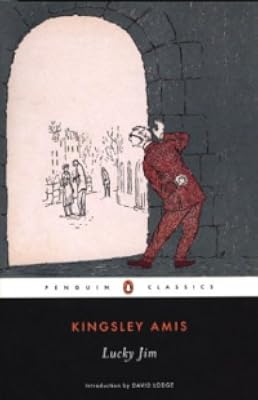
Part autobiography, part memoir to his father. I have read very little of either Kingsley or Martin Amis work. I read Lucky Jim in my teens, and tried a few others, but couldn't get on with them. Then, latterly, Kingsley appeared in the Sunday papers as a rather obnoxious and pompous reactionary. I always mean to read more of Martin Amis; what little I have read has impressed me, and this has made me want to read more.
He seems to have been a rather precocious and pretentious teenager (which he freely admits) and there is quite a bit of name dropping (but he cant help having Larkin as a godfather, and holidaying with Robert Graves). There was a bit too much literary quotation for me, particularly as I'm not familiar with the works. On show more the whole I found this moving and compelling. show less
He seems to have been a rather precocious and pretentious teenager (which he freely admits) and there is quite a bit of name dropping (but he cant help having Larkin as a godfather, and holidaying with Robert Graves). There was a bit too much literary quotation for me, particularly as I'm not familiar with the works. On show more the whole I found this moving and compelling. show less
Fascinating, very personal insight into the lives, loves and losses of one of the great, late twentieth-century English literary families. Non-linear structure adds to interest, intercutting late teenage school & university letters home with later events, making the links between the major themes across time. Particularly strong on the decline and death of his father. Flashes of laugh-out loud humour. A master prose writer.
It is all kinds of strange and inconsistent to have read this so early in the game: I'd only read Money, a few somewhat-forgotten chapters of London Fields and his dad's big, obvious book. Pretty entertaining for a book that uses most of its space to settle completely obscure scores: the idea of transforming from "Yorick" to "Hamlet" is a good conceit, the descriptions of his wrecked teeth and subsequent dentistry are suitably horrifying and the Lucy stuff induces dread. The section about Kingsley Amis's death is pretty good. Low points are Amis gushing about John Travolta's focus and his fevered hyping of Saul Bellow's Ravelstein, below.
Members
- Recently Added By
Published Reviews
ThingScore 100
Critics either love or hate Martin Amis, and reviews of his memoir, Experience, had plenty of both.
added by KayCliff
Count on Martin Amis to take risks. He is contemporary Britain's shape-shifter of fiction.
added by Sylak
Mr. Amis is his generation's top literary dog. He comes highly pedigreed, but his terrain is the junkyard of the human psyche.
added by Sylak
Lists

Best Autobiographies and Memoirs
370 works; 67 members

The Guardian's 100 best books of the 21st century
100 works; 21 members

living room bookshelf
150 works; 1 member
Author Information

58+ Works 29,865 Members
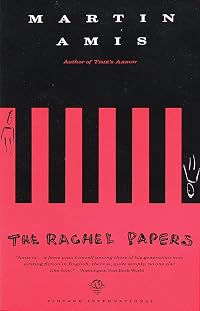
Martin Amis, son of the novelist Kingsley Amis, was born August 25, 1949. His childhood was spent traveling with his famous father. From 1969 to 1971 he attended Exeter College at Oxford University. After graduating, he worked for the Times Literary Supplement and later as special writer for the Observer. Amis published his first novel, The Rachel show more Papers, in 1973, which received the prestigious Somerset Maugham Award in 1974. Other titles include Dead Babies (1976), Other People: A Mystery Story (1981); London Fields (1989), The Information (1995), and Night Train (1997). Martin Amis has been called the voice of his generation. His novels are controversial, often satiric and dark, concentrating on urban low life. His style has been compared to that of Graham Greene, Philip Larkin and Saul Bellow, among others. He is currently Professor of Creative Writing at the Centre for New Writing at the University of Manchester. In 2008, The Times named him one of the 50 greatest British writers since 1945. (Bowker Author Biography) show less
Some Editions
Awards and Honors
Awards
Notable Lists
Common Knowledge
- Original title
- Experience: A Memoir
- Original publication date
- 2000
- Original language
- English
Classifications
Statistics
- Members
- 1,347
- Popularity
- 17,864
- Reviews
- 13
- Rating
- (3.94)
- Languages
- 9 — Catalan, Danish, Dutch, English, French, German, Italian, Portuguese, Spanish
- Media
- Paper, Ebook
- ISBNs
- 29
- ASINs
- 10