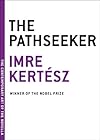
The Pathseeker
by Imre Kertész
On This Page
Description
"The acclaimed Hungarian Holocaust survivor Imre Kertesz continues his investigation of the malignant methodologies of totalitarianism in a major work of fiction. In a mysterious middle-European country, a man identified only as the commissioner undertakes what seems to be a banal trip to a nondescript town with his wife a brief detour on the way to a holiday at the seaside that turns into something ominous. Something terrible has happened in the town, something that no one wants to discuss. show more With his wife watching on fearfully, he commences a perverse investigation, rudely interrogating the locals, inspecting a local landmark with a frightening intensity, traveling to an outlying factory where he confronts the proprietors ... and slowly revealing a past he's been trying to suppress. In a limpid translation by Tim Wilkinson, this haunting tale lays bare an emotional and psychological landscape ravaged by totalitarianism in one of Kertesz's most devastating examinations of the responsibilities of and for the Holocaust." show lessTags
Recommendations









































Member Reviews
This short novella by Nobel Prize winning author, Imre Kertesz, is a different approach to the question of responsibility and guilt in the 20th century. The story begins with "the commissioner", the only name by which we are to know him, interviewing the owner of a hotel about an incident that happened nearby. The hotel owner has lived in the town since boyhood and volunteers information rather feverishly. In fact, he seems relieved to be able to confess his "small part in universal evil", and furthermore to explain his inaction since then. But the commissioner has not come to absolve the hotel owner, rather his intent is to visit the nearby site of the incident, and then continue on his way to a seaside resort with his wife.
The visit show more to the unnamed site turns out to be a disappointment, however. Nothing remains as it was, and the
Tourists were like ants, diligently carrying off the significance of things, crumb by crumb, wearing away a bit of the unspoken importance investing them with every word they spoke and every single snapshot they took. He should have realized that this was precisely the sort of opportunity they would not leave unexploited.
The commissioner does not find the evidence he is seeking here.
He does, however, spot a veiled woman in the distance with whom he is later to have an unexpected conversation. The woman is mysterious and accusatory. When the commissioner protests that he was only at the site by chance, the woman replies, "There's no such thing as chance. Only injustice." Now it is the commissioner's turn to protest his innocence; but the veiled woman is as uninterested in his excuses as the commissioner was in the hotel owner's.
Finally, spurning his confused but supportive wife, the commissioner seeks to complete his mission by visiting the factory. Finding the factory still working, he feels a brief moment of hope, but then realizes that he has still failed, because all that remains are objects. What is the truth he seeks?
These objects here were holding their peace; like uncommunicative strangers, they were complete and sufficient unto themselves, they were not going to verify his existence. Let him find it in chance or seek it within himself, accept it or reject it-that was now, as ever, a matter of utter indifference to this pitiless landscape and to these obtusely different objects here.
As he waits for the train back to town, he picks up a paper and reads an article about a recent suicide. With that, the commissioner has a moment of panic, but "surely he couldn't be looking for his accusers?" His mission, however, appears complete, and he continues forward, in seeming indifference to all that he has experienced in the last few days.
Kertesz is masterful at exploring the themes of responsibility and guilt without ever becoming specific. By doing so, the unnamed places and people can stand for everyone, for each of us. We all have a role in the story be it spectator, victim, survivor, or tourist. Vague, confusing, and surreal, the story prods the reader to identify with the scenario and ask hard questions of ourselves. Although I can't say I enjoyed this novella, it did make me uncomfortable, and that, I think, is the point. show less
The visit show more to the unnamed site turns out to be a disappointment, however. Nothing remains as it was, and the
Tourists were like ants, diligently carrying off the significance of things, crumb by crumb, wearing away a bit of the unspoken importance investing them with every word they spoke and every single snapshot they took. He should have realized that this was precisely the sort of opportunity they would not leave unexploited.
The commissioner does not find the evidence he is seeking here.
He does, however, spot a veiled woman in the distance with whom he is later to have an unexpected conversation. The woman is mysterious and accusatory. When the commissioner protests that he was only at the site by chance, the woman replies, "There's no such thing as chance. Only injustice." Now it is the commissioner's turn to protest his innocence; but the veiled woman is as uninterested in his excuses as the commissioner was in the hotel owner's.
Finally, spurning his confused but supportive wife, the commissioner seeks to complete his mission by visiting the factory. Finding the factory still working, he feels a brief moment of hope, but then realizes that he has still failed, because all that remains are objects. What is the truth he seeks?
These objects here were holding their peace; like uncommunicative strangers, they were complete and sufficient unto themselves, they were not going to verify his existence. Let him find it in chance or seek it within himself, accept it or reject it-that was now, as ever, a matter of utter indifference to this pitiless landscape and to these obtusely different objects here.
As he waits for the train back to town, he picks up a paper and reads an article about a recent suicide. With that, the commissioner has a moment of panic, but "surely he couldn't be looking for his accusers?" His mission, however, appears complete, and he continues forward, in seeming indifference to all that he has experienced in the last few days.
Kertesz is masterful at exploring the themes of responsibility and guilt without ever becoming specific. By doing so, the unnamed places and people can stand for everyone, for each of us. We all have a role in the story be it spectator, victim, survivor, or tourist. Vague, confusing, and surreal, the story prods the reader to identify with the scenario and ask hard questions of ourselves. Although I can't say I enjoyed this novella, it did make me uncomfortable, and that, I think, is the point. show less
Very pallid, even timid evocation of the way that scenes of horror from the past are forgotten. (A concentration camp is turned into a harmless cultural center.) But it's pale, and there is no drama in moments of discovery or search -- passages that Kertesz apparently thinks are very suspenseful.
Wat men doet om zich van zijn eigen bestaan te overtuigen. Hoop om een antwoord te krijgen bij het terugkeren. De thematiek wordt verhaald en beschreven door een kampoverlevende
Oct 1, 2020Dutch
Buchnotiz zu : Frankfurter Allgemeine Zeitung, 07.12.2002
Diese Erzählung gehe auf das Jahr 1962 zurück, schreibt Rezensent Hubert Spiegel, als Kertesz zum ersten Mal nach seiner Befreiung aus Auschwitz ein Konzentrationslager besucht habe, das KZ Buchenwald bei Weimar, damals in der sozialistischen DDR gelegen. Mit inquisitorischer Härte und Finesse sah Spiegel den Protagonisten der Erzählung einen nicht näher definierten Auftrag ausführen, dessen Hintergrund die Suche nach Verantwortlichen für die Nazi-Verbrechen ist. Im Zentrum des Textes sieht der Rezensent die Frage stehen, wie Literatur angesichts dessen, was sich nicht erzählen lasse, dem Vorwurf der Luge entgehen könne. Zu Unrecht habe die Erzählung lange im Schatten show more des weltberühmten "Roman eines Schicksallosen" gestanden. Die Sprache der Erzählung freilich zeichne eine "gewissen stilistische Euphorie" aus, wie der Rezensent, Kertesz zitierend, schreibt, der dies im Nachwort des Buches selbst als Folge "jener Sprachdisziplin" beschrieben habe, die er sich während der Arbeit am "Roman eines Schicksallosen" selbst auferlegt habe. Doch die gelockerten stilistischen Fesseln haben den Rezensenten einen ganz neuen Kertesz entdecken lassen: "parabelhaft und stark an Kafka gemahnend, zur philosophischen Sentenz neigend, immer wieder erzähltheoretische Passagen einstreuend.
Quelle: Amazon.de show less
Diese Erzählung gehe auf das Jahr 1962 zurück, schreibt Rezensent Hubert Spiegel, als Kertesz zum ersten Mal nach seiner Befreiung aus Auschwitz ein Konzentrationslager besucht habe, das KZ Buchenwald bei Weimar, damals in der sozialistischen DDR gelegen. Mit inquisitorischer Härte und Finesse sah Spiegel den Protagonisten der Erzählung einen nicht näher definierten Auftrag ausführen, dessen Hintergrund die Suche nach Verantwortlichen für die Nazi-Verbrechen ist. Im Zentrum des Textes sieht der Rezensent die Frage stehen, wie Literatur angesichts dessen, was sich nicht erzählen lasse, dem Vorwurf der Luge entgehen könne. Zu Unrecht habe die Erzählung lange im Schatten show more des weltberühmten "Roman eines Schicksallosen" gestanden. Die Sprache der Erzählung freilich zeichne eine "gewissen stilistische Euphorie" aus, wie der Rezensent, Kertesz zitierend, schreibt, der dies im Nachwort des Buches selbst als Folge "jener Sprachdisziplin" beschrieben habe, die er sich während der Arbeit am "Roman eines Schicksallosen" selbst auferlegt habe. Doch die gelockerten stilistischen Fesseln haben den Rezensenten einen ganz neuen Kertesz entdecken lassen: "parabelhaft und stark an Kafka gemahnend, zur philosophischen Sentenz neigend, immer wieder erzähltheoretische Passagen einstreuend.
Quelle: Amazon.de show less
Jan 22, 2011German
Ratings
Members
- Recently Added By
Author Information

190+ Works 6,022 Members
Imre Kertész was born in Budapest, Hungary on November 9, 1929. He was only 14 years old when he was deported with 7,000 other Hungarian Jews to the Auschwitz concentration camp in Poland in 1944. He survived that camp and later was transferred to the Buchenwald camp from where he was liberated in 1945. After returning to his native Budapest, he show more worked as a journalist and translator. He translated the works of Friedrich Nietzsche, Sigmund Freud, Ludwig Wittgenstein and Elias Canetti into Hungarian. He wrote several novels that drew largely from his experience as a teenage prisoner in Nazi concentration camps. His novels included Fateless, Fiasco, Kaddish for a Child Not Born, Someone Else, The K File, Europe's Depressing Heritage, and Liquidation. He also wrote the screenplay for the film version of Fateless in 2005. While his work was ignored by both the communist authorities and the public in Hungary where awareness of the Holocaust remained negligible, his work was recognized in other parts of the world. He received awards including the Brandenburg Literature Prize in 1995, The Book Prize for European Understanding, the Darmstadt Academy Prize in 1997, the World Literature Prize in 2000, and the Nobel Prize for Literature for fiction in 2002. He died after a long illness on March 31, 2016 at the age of 86. (Bowker Author Biography) show less
Some Editions
Series
Belongs to Publisher Series
Common Knowledge
- Canonical title
- The Pathseeker
- Original title
- A nyomkereső; Az angol lobogó; Jegyzőkönyv
- Original publication date
- 1977
- People/Characters
- the commissioner; Hermann; the veiled woman
- First words
- The host--a man with a complicated family name, Hermann by Christian name--was chattering ingenuously; it seems he really did still take his guest to be only a simply colleague, and the latter, puffing on his pipe (a tiresome... (show all) implement but, it had to be admitted, one that on occassion was quite indispensible) quietly studied his face.
- Quotations
- There is no such thing as chance...only injustice.
- Last words
- (Click to show. Warning: May contain spoilers.)He produced a notebook and ballpoint pen to go with it, and a minute later he caught himself immersed in a rough computation of expenditures on the sea voyage that would be starting the next day.
Classifications
- Genres
- Fiction and Literature, General Fiction
- DDC/MDS
- 894.511334 — Literature & rhetoric Literatures of other languages Literatures of Altaic, Uralic, Hyperborean, Dravidian languages; literatures of miscellaneous languages of south Asia Finno-Ugric languages Ugric languages Hungarian Hungarian fiction 1900–2000 Late 20th century 1945–2000
- LCC
- PH3281 .K3815 .N913 — Language and Literature Uralic languages. Basque language Uralic. Basque Hungarian
- BISAC
Statistics
- Members
- 124
- Popularity
- 261,836
- Reviews
- 4
- Rating
- (3.48)
- Languages
- 5 — Dutch, English, French, German, Hungarian
- Media
- Paper, Ebook
- ISBNs
- 9
- ASINs
- 1