On This Page
Description
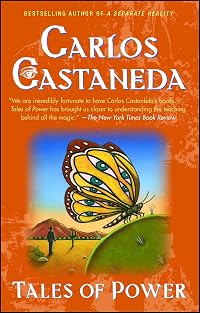
Don Juan concludes the instruction of Castaneda with his most powerful and mysterious lesson in the sorcerer's art, a dazzling series of visions that are at once an initiation and a deeply moving farewell.Tags
Recommendations




















Member Recommendations

paradoxosalpha Accounts of personal initiation and mystical realization.
Member Reviews
Mi reputo un razionalista e un materialista storico, questo libro mi descriverebbe come intrappolato nella bolla del tonal, non penso che al mondo ci sia posto per fenomeni che non possano essere spiegati con le leggi della fisica, eppure è stato impossibile, per me, non farmi affascinare da Carlos Castaneda e dal suo maestro stregone Don Juan. L'isola del Tonal è stato il mio primo incontro con l'antropologo sudamericano e sebbene non mi sia mai spinto, come alcuni fanatici new age, a considerare come precetti di vita, gli insegnamenti che Don Juan elargisce a Carlos, ad ogni pagina dovevo convincermi che ciò che leggevo probabilmente era solo fiction. Merito della scrittura di Castaneda, incisiva e profonda, capace di descrivere show more fenomeni straordinari così come di penetrare l'animo umano portandone alla luce le inquietudini. Un libro che consiglierei a tutti, anche solo come romanzo, lontano anni luce dalla spazzatura misticheggiante che è sorta attorno alla figura dell'autore show less
One of the most life-changing books I have ever read - but you need to have read (at the very least) Journey To Ixtlan first (and maybe A Separate Reality).
In this part of the journey, "sorcerer's apprentice" Castaneda is judged to be ready, by his teacher Don Juan and DJ's partner-in-crime Don Genaro, to face the ultimate test. This occurs right at the end of the book and is totally mind-blowing, but I won't spoil it for you by describing it here.
Before this happens though, Castaneda has to undergo two preliminary stages. The first - which he has begged Don Juan for many times - is what Don Juan calls the "sorcerer's explanation", though in truth, what he delivers of it here is merely the beginning, and it takes the last four books of show more the series (most of it dredged up from a hidden subconscious region, placed there by Don Juan on the strict understanding that Castaneda must "assemble" this knowledge on his own by remembering it) to explore this explanation and to give it context and meaning.
The explanation that Don Juan begins, is to tell Castaneda that every human being has "two attentions", described as the FIRST and SECOND attention. (Or the "tonal" and "nagual" to give them their shamanic names). The first deals with everything that we can conceive of, describe, imagine - it truly encompasses everything which the 'ordinary man' thinks of as the totality of a human being. But it is not. There is an inconceivable, mysterious aspect to us - which begins to be covered over from the moment we are born - that comprises the 'second attention', and it can only be experienced and not described. The shamanic "sorcery" tradition prepares someone for this experience, though ultimately it is the person themself that has to store enough power through "being impeccable" to realise this experience.
The other preliminary that Castaneda has to endure is being "split" : his first and second attentions have to operate simultaneously yet independently - a very difficult trick to learn and full of risk and dangers, so much so that the timid Castaneda almost cannot endure the process.
At the end is a moving scene on a mountain top, where Don Juan and Don Genaro make an emotional and symbolic farewell to Castaneda and the two other apprentices there, before leaving them to perform the awesome task they have been prepared for.
This is not the last time we will meet Don Juan, but in the strict time line of events, this is his last appearance : all subsequent dialogue between him and Castaneda is retrospectively remembered.
This is not an easy book, either to read or to believe. Yet it is gripping, and leaves the mind reeling at the nature of what is being described. It is not possible to take it in without being changed by it, unless the reader's first attention performs the intellectual somersault of "converting it" to fiction.
Fiction? You have to ask yourself, given the validation of these practices in what we know of Mexican shamanism, could you make it up? show less
In this part of the journey, "sorcerer's apprentice" Castaneda is judged to be ready, by his teacher Don Juan and DJ's partner-in-crime Don Genaro, to face the ultimate test. This occurs right at the end of the book and is totally mind-blowing, but I won't spoil it for you by describing it here.
Before this happens though, Castaneda has to undergo two preliminary stages. The first - which he has begged Don Juan for many times - is what Don Juan calls the "sorcerer's explanation", though in truth, what he delivers of it here is merely the beginning, and it takes the last four books of show more the series (most of it dredged up from a hidden subconscious region, placed there by Don Juan on the strict understanding that Castaneda must "assemble" this knowledge on his own by remembering it) to explore this explanation and to give it context and meaning.
The explanation that Don Juan begins, is to tell Castaneda that every human being has "two attentions", described as the FIRST and SECOND attention. (Or the "tonal" and "nagual" to give them their shamanic names). The first deals with everything that we can conceive of, describe, imagine - it truly encompasses everything which the 'ordinary man' thinks of as the totality of a human being. But it is not. There is an inconceivable, mysterious aspect to us - which begins to be covered over from the moment we are born - that comprises the 'second attention', and it can only be experienced and not described. The shamanic "sorcery" tradition prepares someone for this experience, though ultimately it is the person themself that has to store enough power through "being impeccable" to realise this experience.
The other preliminary that Castaneda has to endure is being "split" : his first and second attentions have to operate simultaneously yet independently - a very difficult trick to learn and full of risk and dangers, so much so that the timid Castaneda almost cannot endure the process.
At the end is a moving scene on a mountain top, where Don Juan and Don Genaro make an emotional and symbolic farewell to Castaneda and the two other apprentices there, before leaving them to perform the awesome task they have been prepared for.
This is not the last time we will meet Don Juan, but in the strict time line of events, this is his last appearance : all subsequent dialogue between him and Castaneda is retrospectively remembered.
This is not an easy book, either to read or to believe. Yet it is gripping, and leaves the mind reeling at the nature of what is being described. It is not possible to take it in without being changed by it, unless the reader's first attention performs the intellectual somersault of "converting it" to fiction.
Fiction? You have to ask yourself, given the validation of these practices in what we know of Mexican shamanism, could you make it up? show less
I find this Casataneda's most wild and thrilling book. In the end, it doesn't really matter whether it's "true" or not; it will still open your mind to the unseen possibilities of life.
Neste 4. livro, Don Juan continua seus ensinamentos levando Castaneda ao limite da percepção da realidade. Neste livro Don Juan nos apresenta ao Sonhar e os dois lados fundamentais da psiquê humana, o tonal e o nagual. Este livro representa o ápice da convivência de ambos. A partir deste livro Castaneda deverá trilhar seu próprio caminho, já que nunca mais viria Don Juan e sua órdem de feiticeiros.
Final in the teaching series in the training of Casteneda. It was a fantastic ride and I enjoyed every minute of this spiritual trip.
All books of Carlos Castaneda are very important to me. He (and his Don Juan), Vadim Zeland - writer from Russia, quantum physicist and Alexey Bachev - an unusual psychologist from Bulgaria, protagonist of my book Life Can Be a Miracle have shaped my way of thinking, perceiving, experiencing the reality. Very grateful for showing me the miraculous way of living!!!!
An interesting look a certain kind of folk religion.
Members
- Recently Added By
Lists

Publisher's Weekly NON-Fiction list - 1912 - 1975
486 works; 4 members
Author Information

35+ Works 16,115 Members
Some Editions
Awards and Honors
Distinctions
Notable Lists
Series

Belongs to Publisher Series
Work Relationships
Common Knowledge
- Canonical title
- Tales Of Power
- Original title
- Tales Of Power
- Original publication date
- 1974
- Epigraph
- The conditions of a solitary bird are five:
The first, that it flies to the highest point;
the second, that it does not suffer for company,
not even of its own kind;
the third, that it ... (show all)aims its beak toward the skies;
the fourth, that it does not have a definite color;
the fifth, that it sings very softly.
San Juan de la Cruz, Dichos De Luz y Amor - First words
- I had not seen don Juan for several months.
- Last words
- (Click to show. Warning: May contain spoilers.)I felt his arm holding me as we jumped and then I was alone.
- Original language
- English
Classifications
Statistics
- Members
- 1,601
- Popularity
- 14,271
- Reviews
- 14
- Rating
- (3.65)
- Languages
- 20 — Czech, Danish, Dutch, English, Estonian, Finnish, French, German, Greek, Italian, Japanese, Lithuanian, Norwegian, Portuguese, Romanian, Russian, Serbian, Spanish, Swedish, Turkish
- Media
- Paper, Audiobook, Ebook
- ISBNs
- 58
- UPCs
- 1
- ASINs
- 17