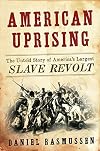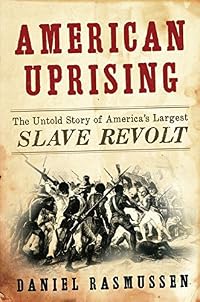
American Uprising: The Untold Story of America's Largest Slave Revolt
by Daniel Rasmussen
On This Page
Description
The author, a historian reveals the long forgotten history of America's largest slave uprising, the New Orleans slave revolt of 1811 that nearly toppled New Orleans and changed the course of American history. In this narrative, he offers new insight into American expansionism, the path to Civil War, and the earliest grassroots push to overcome slavery. Five hundred slaves, dressed in military uniforms and armed with guns, cane knives, and axes, rose up from the plantations around New Orleans show more and set out to conquer the city. Ethnically diverse, politically astute, and highly organized, this self made army challenged not only the economic system of plantation agriculture but also American expansion. Their march represented the largest act of armed resistance against slavery in the history of the United States. The work is the story of this elaborate plot, the rebel army's dramatic march on the city, and its shocking conclusion. No North American slave uprising, not Gabriel Prosser's, not Denmark Vesey's, not Nat Turner's, has rivaled the scale of this rebellion either in terms of the number of the slaves involved or the number who were killed. More than one hundred slaves were slaughtered by federal troops and French planters, who then sought to write the event out of history and prevent the spread of the slaves' revolutionary philosophy. With the Haitian revolution a recent memory and the War of 1812 looming on the horizon, the revolt had epic consequences for America. Through original research, the author offers a window into the young, expansionist country, illuminating the early history of New Orleans and providing new insight into the path to the Civil War and the slave revolutionaries who fought and died for justice and the hope of freedom. show lessTags
Recommendations






Member Reviews
This riveting book will keep you glued to your chair from start to finish. Rasmussen tells the story of the largest slave revolt in United States history – a story that is most striking for the fact that it has been virtually eliminated from textbooks.
In January of 1811, approximately 500 slaves from plantations in the New Orleans area tried to seize power and win freedom for those who labored in the sugar cane fields. The sugar cane industry was notorious for the intense workload and high death rate among the slaves. During harvest time, slaves worked sixteen hours a day. Yet the profits were so high, planters were unaffected by the fact that less than one-third of slaves survived past the third or fourth year. Louisiana planters show more claimed that Africans were “uniquely matched to the hot weather and tough work.” But this claim was belied by the high death rate as well as the necessity for whips, spiked iron collars, and face masks used on the slaves. As Rasmussen observes, "These colonial plantations were as close to a death camp as one could come in the late eighteenth century.”
The author recounts the incredible story of how the slave rebellion was organized, carried out, and viciously crushed by the combined forces of the planters and the U.S. Army and Navy. He details the brutal retaliation exacted by the planters, who decapitated some one hundred slaves, putting their heads on spikes all along the levee. He also decries the fact that the names of the brave rebel leaders – Kook, Quamana, Harry Kenner, and Charles Deslondes – have been lost to history, and he tells you exactly how and why the memory of this revolt was suppressed almost immediately. And in a fascinating twist, he explains how the slave rebellion and its aftermath became a factor in the victory of Andrew Jackson at New Orleans a year later, a victory that ultimately led to his presidency. Jackson, “the nation’s most celebrated killer of Native Americans,” was only one of several presidents dedicated to the hegemony of white Americans over the vast expanse of the American continent.
Rasmussen wants us to draw at least two important lessons from this story:
"Above all, this is a story about America: who we are, where we came from, and how our ideals have at times been twisted and cast aside for the sake of greed and power.”
Secondly, he mentions other black Americans who have fought against the U.S. government, such as Robert F. Williams. He observes that only those blacks who strike a conciliatory pose toward the government through peaceful resistance (such as Martin Luther King, Jr.) get written into history. The others get written out:
"Robert F.Williams, like Kook and Quamana, like Charles Deslondes, took up arms against the United States of America in the name of freedom. They fought against U.S. government agents, they supported the overthrow of legally sanctioned racism, and they were exiled or executed for their actions.”
He concludes:
"Coming to terms with American history means addressing the 1811 uprising and the story of Robert F.Williams – not brushing these events under the rug because they upset safe understandings about who were are as a nation.”
Evaluation: This is a fabulous book about a horrible subject. It is non-fiction but reads like a suspense novel. In addition, it contains critical information about our nation’s history, and how the government treated anyone who got in the way of the profit-maximizing and imperialist mission of the young country. I’d call it a must-read. show less
In January of 1811, approximately 500 slaves from plantations in the New Orleans area tried to seize power and win freedom for those who labored in the sugar cane fields. The sugar cane industry was notorious for the intense workload and high death rate among the slaves. During harvest time, slaves worked sixteen hours a day. Yet the profits were so high, planters were unaffected by the fact that less than one-third of slaves survived past the third or fourth year. Louisiana planters show more claimed that Africans were “uniquely matched to the hot weather and tough work.” But this claim was belied by the high death rate as well as the necessity for whips, spiked iron collars, and face masks used on the slaves. As Rasmussen observes, "These colonial plantations were as close to a death camp as one could come in the late eighteenth century.”
The author recounts the incredible story of how the slave rebellion was organized, carried out, and viciously crushed by the combined forces of the planters and the U.S. Army and Navy. He details the brutal retaliation exacted by the planters, who decapitated some one hundred slaves, putting their heads on spikes all along the levee. He also decries the fact that the names of the brave rebel leaders – Kook, Quamana, Harry Kenner, and Charles Deslondes – have been lost to history, and he tells you exactly how and why the memory of this revolt was suppressed almost immediately. And in a fascinating twist, he explains how the slave rebellion and its aftermath became a factor in the victory of Andrew Jackson at New Orleans a year later, a victory that ultimately led to his presidency. Jackson, “the nation’s most celebrated killer of Native Americans,” was only one of several presidents dedicated to the hegemony of white Americans over the vast expanse of the American continent.
Rasmussen wants us to draw at least two important lessons from this story:
"Above all, this is a story about America: who we are, where we came from, and how our ideals have at times been twisted and cast aside for the sake of greed and power.”
Secondly, he mentions other black Americans who have fought against the U.S. government, such as Robert F. Williams. He observes that only those blacks who strike a conciliatory pose toward the government through peaceful resistance (such as Martin Luther King, Jr.) get written into history. The others get written out:
"Robert F.Williams, like Kook and Quamana, like Charles Deslondes, took up arms against the United States of America in the name of freedom. They fought against U.S. government agents, they supported the overthrow of legally sanctioned racism, and they were exiled or executed for their actions.”
He concludes:
"Coming to terms with American history means addressing the 1811 uprising and the story of Robert F.Williams – not brushing these events under the rug because they upset safe understandings about who were are as a nation.”
Evaluation: This is a fabulous book about a horrible subject. It is non-fiction but reads like a suspense novel. In addition, it contains critical information about our nation’s history, and how the government treated anyone who got in the way of the profit-maximizing and imperialist mission of the young country. I’d call it a must-read. show less
There has been a push in recent decades for history books to present the full picture of certain historical events, to try to present an alternative viewpoint of history. American Uprising is a novel that meshes well with this trend, as it not only goes into details about the largest slave uprising in U.S. history, an event that receives very little attention from historians, but it also revisits more famous historical events and shines a new light on them. Mr. Rasmussen presents his findings in a clear, concise narrator that highlights the horror underlying race relations at the time and the political implications of these relations.
Easy to read and completely engaging, Mr. Rasmussen details the build-up to the event in question, show more including a brief history lesson on the Haitian revolt and the political mire that was New Orleans in 1811 after the Louisiana Purchase. This background knowledge is essential to understanding the mindset of all participants in the revolt as well as the subsequent cover-up. In addition, the Battle of New Orleans from the War of 1812, Andrew Jackson, and other famous people and events in U.S. history become more well-rounded. Through it all, the reader obtains a clear picture of how enmeshed slavery was with politics and how it shaped every aspect of the U.S. in the early 1800s.
The method by which Mr. Rasmussen presents his findings raises some interesting questions about race relations. Given the overreaction of the planters to the revolt, did they know, in their heart of hearts, that slavery and their actions towards their slaves were fundamentally wrong or was it purely economic? For, if their harsh punishments of the key leaders were purely for economic reasons, would they have behaved the same way had all the horses or farm animals revolted? If they felt the slaves were animals, why the need to torture and brutally kill the leaders? In a similar vein, with the slaves trying to obtain their freedom, had their own actions been less brutish, less violent, would they have been treated differently in the long run? Is it okay to fight fire with fire in race relations?
American Uprising reminds the reader that history is written by the victors. Mr. Rasmussen's findings, uncovered through laborious yet rewarding efforts, provide a cautionary tale about other hidden histories. What other stories are historians ignoring or have explained incorrectly due to lack of time and effort in discovering the truth? Completely covered up for purely political and economic reasons, the revolt of 1811 continued to be all but ignored by historians until Mr. Rasmussen uncovered the details, for which task he obviously did his homework. Well-researched with well-documented sources, Mr. Rasmussen makes it easy to understand how such an event can occur and subsequently be promptly ignored. It is not a proud moment in U.S. history, but given everything that results from the actions of the slaves on that fateful January day, it is an important lesson to learn. show less
Easy to read and completely engaging, Mr. Rasmussen details the build-up to the event in question, show more including a brief history lesson on the Haitian revolt and the political mire that was New Orleans in 1811 after the Louisiana Purchase. This background knowledge is essential to understanding the mindset of all participants in the revolt as well as the subsequent cover-up. In addition, the Battle of New Orleans from the War of 1812, Andrew Jackson, and other famous people and events in U.S. history become more well-rounded. Through it all, the reader obtains a clear picture of how enmeshed slavery was with politics and how it shaped every aspect of the U.S. in the early 1800s.
The method by which Mr. Rasmussen presents his findings raises some interesting questions about race relations. Given the overreaction of the planters to the revolt, did they know, in their heart of hearts, that slavery and their actions towards their slaves were fundamentally wrong or was it purely economic? For, if their harsh punishments of the key leaders were purely for economic reasons, would they have behaved the same way had all the horses or farm animals revolted? If they felt the slaves were animals, why the need to torture and brutally kill the leaders? In a similar vein, with the slaves trying to obtain their freedom, had their own actions been less brutish, less violent, would they have been treated differently in the long run? Is it okay to fight fire with fire in race relations?
American Uprising reminds the reader that history is written by the victors. Mr. Rasmussen's findings, uncovered through laborious yet rewarding efforts, provide a cautionary tale about other hidden histories. What other stories are historians ignoring or have explained incorrectly due to lack of time and effort in discovering the truth? Completely covered up for purely political and economic reasons, the revolt of 1811 continued to be all but ignored by historians until Mr. Rasmussen uncovered the details, for which task he obviously did his homework. Well-researched with well-documented sources, Mr. Rasmussen makes it easy to understand how such an event can occur and subsequently be promptly ignored. It is not a proud moment in U.S. history, but given everything that results from the actions of the slaves on that fateful January day, it is an important lesson to learn. show less
This book delivers a captivating story that is untold of in American history. Rasmussen writes about the largest slave revolt in our history that happened right outside of New Orleans. He details the event starting by discussing what ignited this revolt in the first place, inspiration of the Haitian Revolution, which succeeded. This rebellion was the grandest, highly organized, slave revolt and Rasmussen delivers the story with facts and a narrative that kept me turning pages. I was dumbfounded by the story. Over one-hundred slaves and those involved were slaughtered as they sought violence to achieve freedom. Rasmussen discusses the implications of such a feat and goes on to discuss the cover-up, which is just as upsetting as the show more massacre itself.
This book is essential for students because it shows them how slaves were not complacent with their condition. Many fought to the death, even here in Louisiana, not far from where all of my students live. I could certainly read excerpts of this book for middle school students to teach them about this event. If one were to teach a high school or college course, I would require it for the whole class. show less
This book is essential for students because it shows them how slaves were not complacent with their condition. Many fought to the death, even here in Louisiana, not far from where all of my students live. I could certainly read excerpts of this book for middle school students to teach them about this event. If one were to teach a high school or college course, I would require it for the whole class. show less
Did Lincoln free the slaves, or did the slaves free themselves?
A high school history teacher friend of mine recently asked me this question while explaining the new writing program she's using in her tenth grade U.S. history class. In the program, students are given a set of historical documents to read, discuss and draw conclusions about in essay form.
The point of the activity is not to reach a pre-determined correct answer but to produce a quality piece of writing with a well-reasoned argument based on historical evidence like historians.
Sounds like a great class. But the question bothered me. I think the Emancipation Proclamation has been long under-rated. Any cursory look at the document will reveal that it frees very few people, show more but cursory looks reveal very little. Lincoln was fighting to uphold a Union based on a constitution. This meant following the rulings of the Supreme Court that ruled slaves were property, without rights, in the Dred Scott decision. Roger Taney, the chief justice who wrote that decision still had the power to over-rule Lincoln. The Union Lincoln was fighting to preserve included four boarder states that allowed slavery. Should Lincoln free the slaves, even if he had the authority which the Dred Scott ruling said he did not, he risked losing those four states to the Confederacy thereby losing the war. The Emancipation Proclamation, while it did not end slavery immediately, was an act that crossed the Rubicon. There was no way slavery could last afterwards. Win the war and in a few years slavery would end nationwide. Frederick Douglas said as much himself.
You can see that I'm a Lincoln fanboy.
Even if we set aside the question of Lincoln's Emancipation Proclamation, the question of the slaves freeing themselves remains. How can slaves themselves bring about an end to slavery? Don't the people in power have to agree to give up that power? Doesn't that make them the only ones who could have ended slavery?
Daniel Rasmussen's book, American Uprising: The Untold Story of America's Largest Slave Revolt, provides a case study explaining just how the slaves themselves brought about an end to slavery. Decades before the Civil War, long before the Nat Turner slave revolt, several hundred slaves took up arms against their masters, burned down the plantations where they were kept and marched on the city of New Orleans. Although their revolt was eventually put down, it is one among many actions that led to the end of slavery in America.
This revolt is almost completely forgotten today. Those who put down the revolt made sure they got to write the history books. This means there is little documentation for Mr. Rasmussen to draw on for American Uprising, not enough for a book devoted to the revolt. So Mr. Rasmussen fills out his book with background on slavery and slave revolts in America. Unable to describe in detail the lives of the revolt's leaders, Mr. Rasmussen provides a general overview of the slave trade, the conditions faced by slaves in America, and the successful slave revolt in Haiti which came to represent the greatest fear and hope for Americans in the slave holding southern states.
In the end, American Uprising is a good primer on slavery in America. A highly readable 200 pages, American Uprising provides a solid general background on a shameful chapter on American history. The details and documentation that would have provided the information necessary for a book length account of this slave revolt are lost to history, but Mr. Rasmussen has done a good job rescuing this story and bringing it to our attention.
I think it would make a fine addition to any tenth grade history class. My high school history teacher friend agrees. She'll plans on using American Uprising with her students next year.
Full Disclosure: I received a advanced review copy of American Uprising from the publishers. It's been on my TBR shelf for several months. show less
A high school history teacher friend of mine recently asked me this question while explaining the new writing program she's using in her tenth grade U.S. history class. In the program, students are given a set of historical documents to read, discuss and draw conclusions about in essay form.
The point of the activity is not to reach a pre-determined correct answer but to produce a quality piece of writing with a well-reasoned argument based on historical evidence like historians.
Sounds like a great class. But the question bothered me. I think the Emancipation Proclamation has been long under-rated. Any cursory look at the document will reveal that it frees very few people, show more but cursory looks reveal very little. Lincoln was fighting to uphold a Union based on a constitution. This meant following the rulings of the Supreme Court that ruled slaves were property, without rights, in the Dred Scott decision. Roger Taney, the chief justice who wrote that decision still had the power to over-rule Lincoln. The Union Lincoln was fighting to preserve included four boarder states that allowed slavery. Should Lincoln free the slaves, even if he had the authority which the Dred Scott ruling said he did not, he risked losing those four states to the Confederacy thereby losing the war. The Emancipation Proclamation, while it did not end slavery immediately, was an act that crossed the Rubicon. There was no way slavery could last afterwards. Win the war and in a few years slavery would end nationwide. Frederick Douglas said as much himself.
You can see that I'm a Lincoln fanboy.
Even if we set aside the question of Lincoln's Emancipation Proclamation, the question of the slaves freeing themselves remains. How can slaves themselves bring about an end to slavery? Don't the people in power have to agree to give up that power? Doesn't that make them the only ones who could have ended slavery?
Daniel Rasmussen's book, American Uprising: The Untold Story of America's Largest Slave Revolt, provides a case study explaining just how the slaves themselves brought about an end to slavery. Decades before the Civil War, long before the Nat Turner slave revolt, several hundred slaves took up arms against their masters, burned down the plantations where they were kept and marched on the city of New Orleans. Although their revolt was eventually put down, it is one among many actions that led to the end of slavery in America.
This revolt is almost completely forgotten today. Those who put down the revolt made sure they got to write the history books. This means there is little documentation for Mr. Rasmussen to draw on for American Uprising, not enough for a book devoted to the revolt. So Mr. Rasmussen fills out his book with background on slavery and slave revolts in America. Unable to describe in detail the lives of the revolt's leaders, Mr. Rasmussen provides a general overview of the slave trade, the conditions faced by slaves in America, and the successful slave revolt in Haiti which came to represent the greatest fear and hope for Americans in the slave holding southern states.
In the end, American Uprising is a good primer on slavery in America. A highly readable 200 pages, American Uprising provides a solid general background on a shameful chapter on American history. The details and documentation that would have provided the information necessary for a book length account of this slave revolt are lost to history, but Mr. Rasmussen has done a good job rescuing this story and bringing it to our attention.
I think it would make a fine addition to any tenth grade history class. My high school history teacher friend agrees. She'll plans on using American Uprising with her students next year.
Full Disclosure: I received a advanced review copy of American Uprising from the publishers. It's been on my TBR shelf for several months. show less
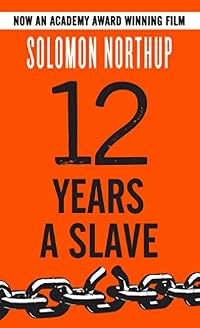
A lot of filler. Reads like a research paper. Includes the War of 1812 and the Civil War somehow, and many references to Solomon Northrup's narrative to fill in what the rebels "must have been thinking." The revolt of the enslaved in 1811 should be remembered, but this fluff is not worth the time spent to read it.
I think in the hands of a more capable storyteller, this could have been excellent. However, Rasmussen's book doesn't do justice to its rich subject. The writing is just workmanlike. That Rasmussen's a journalist shows through and while this isn't a flaw in and of itself, he never develops his own voice. Moreover, though the book benefits from his impressive research, there's just not enough meat here and far too much filler.
1 copy in 3/5/2012 Reiko
Members
- Recently Added By
Author Information
3 Works 365 Members
Daniel Rasmussen graduated summa cum laude and Phi Beta Kappa from Harvard University in 2009, where he won the Kathryn Ann Huggins Prize, the Perry Miller Prize, and the Thomas Temple Hoopes Prize.
Classifications
Statistics
- Members
- 354
- Popularity
- 88,582
- Reviews
- 7
- Rating
- (3.64)
- Languages
- English
- Media
- Paper, Audiobook, Ebook
- ISBNs
- 10
- ASINs
- 2