On This Page
Description
A bunch of scruffy urchin kids in the backstreets of Paris outwit thieves to uncover the whereabouts of millions of francs stolen from the Paris-Ventimiglia express. Gaby is the leader, but it is super-cool Marion with her collection of stray dogs who is the heart of the gang. It all begins when a local villain offers the children a fortune for their 'horse' a headless rocking horse, given old tricycle wheels that they 'ride' down the steep cobbled street, but they don't want to part with show more it. Then, a few days later, the horse is stolen, and so begins an adventure that is full of twists and turns, leading to a satisfying conclusion when the villains receive their comeuppance. show lessTags
Recommendations














Member Reviews
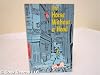
The Horse Without a Head — US edition, translated by John Buchanan-Brown
A group of ten working class children, living in the industrial town of Louvigny, on the outskirts of Paris, confront a strange mystery in this post-WWII French children's novel. Their favorite activity—barreling down steep Poverty Lane on their headless toy horse—brings them no end of entertainment, but also involves them in unexpected adventure, when some local thugs begin to take an interest in the horse. When the horse is stolen, the children report the crime to the police, with whom they normally don't have the closest relations, and thereby involve Inspector Sinet in their case. As the children investigate the mystery, they discover an abandoned factory, show more enjoy their new clubhouse, and hatch a plan to trap the thieves...
Originally published in 1955 as Le cheval sans tête, this comedic mystery for children was one of a number set in Louvigny, and was translated slightly differently for UK and American children. I myself read the American edition, The Horse Without a Head, rather than the UK one, entitled One Hundred Millions Francs, a title which is a bit of a spoiler, I would think. That said, I read the book with friends, for a group discussion, and they read the UK edition. It would seem that there are pros and cons to both translations. Apparently the UK edition retains the original French names of the streets in Louvigny, whereas the US edition translates them (Poverty Lane, etc). I'm of two minds when it comes to this: on the one hand, I generally favor keeping original names in translations, but on the other hand, when the names have meaning with significance for the story, then it might be better to translate them. Another significant difference, is that the UK edition apparently uses the word "darkie" to refer to Criquet, a young black child who belongs to the gang of children, whereas the US edition uses "Negro." By the standards of the time, the latter is much less offensive, and I prefer it. That said, I would be curious to know what term was used in the original French, whether it too had an offensive connotation, thereby making the UK translation more accurate (even if less pleasant). Finally, I understand from some reading online that the US edition leaves out certain elements of the story, such as the children smoking or the adults drinking wine. I am not clear whether this was also left out of the UK edition, but generally speaking I dislike this kind of "cleaning up" of children's books, as part of the translation process.
In any case, leaving these details of translation aside, I found this one quite enjoyable, and couldn't help feeling that it was a better-written, less middle-class and more French answer to this story type, as it was so frequently presented, at least in the English-speaking world, by Enid Blyton. I was reminded of Blyton's Five Find-Outers and Dog series, which also features a gang of children with a dog, who forge a relationship with a local police inspector, and catch criminals. Of course, there the similarities end. Paul Berna's characters (both young and old) are sharp and memorable, his settings harsh but brilliantly evoked, and his treatment of the adult world humorous and entertaining. There's a bit of slapstick in the final section of the book, but there are also moments of pathos (something Inspector Sinet perceives, when dealing with the children), and of power. I think Marion and her dogs is a perfect example of the latter, and I suspect that if I had read this as a girl, she would have been a personal hero. Recommended to anyone looking for stories about children finding their own entertainment, for children's mysteries, and for stories with a French and/or working class setting. For my part, I do intend to track down some of the others that Berna wrote about these characters. show less
A group of ten working class children, living in the industrial town of Louvigny, on the outskirts of Paris, confront a strange mystery in this post-WWII French children's novel. Their favorite activity—barreling down steep Poverty Lane on their headless toy horse—brings them no end of entertainment, but also involves them in unexpected adventure, when some local thugs begin to take an interest in the horse. When the horse is stolen, the children report the crime to the police, with whom they normally don't have the closest relations, and thereby involve Inspector Sinet in their case. As the children investigate the mystery, they discover an abandoned factory, show more enjoy their new clubhouse, and hatch a plan to trap the thieves...
Originally published in 1955 as Le cheval sans tête, this comedic mystery for children was one of a number set in Louvigny, and was translated slightly differently for UK and American children. I myself read the American edition, The Horse Without a Head, rather than the UK one, entitled One Hundred Millions Francs, a title which is a bit of a spoiler, I would think. That said, I read the book with friends, for a group discussion, and they read the UK edition. It would seem that there are pros and cons to both translations. Apparently the UK edition retains the original French names of the streets in Louvigny, whereas the US edition translates them (Poverty Lane, etc). I'm of two minds when it comes to this: on the one hand, I generally favor keeping original names in translations, but on the other hand, when the names have meaning with significance for the story, then it might be better to translate them. Another significant difference, is that the UK edition apparently uses the word "darkie" to refer to Criquet, a young black child who belongs to the gang of children, whereas the US edition uses "Negro." By the standards of the time, the latter is much less offensive, and I prefer it. That said, I would be curious to know what term was used in the original French, whether it too had an offensive connotation, thereby making the UK translation more accurate (even if less pleasant). Finally, I understand from some reading online that the US edition leaves out certain elements of the story, such as the children smoking or the adults drinking wine. I am not clear whether this was also left out of the UK edition, but generally speaking I dislike this kind of "cleaning up" of children's books, as part of the translation process.
In any case, leaving these details of translation aside, I found this one quite enjoyable, and couldn't help feeling that it was a better-written, less middle-class and more French answer to this story type, as it was so frequently presented, at least in the English-speaking world, by Enid Blyton. I was reminded of Blyton's Five Find-Outers and Dog series, which also features a gang of children with a dog, who forge a relationship with a local police inspector, and catch criminals. Of course, there the similarities end. Paul Berna's characters (both young and old) are sharp and memorable, his settings harsh but brilliantly evoked, and his treatment of the adult world humorous and entertaining. There's a bit of slapstick in the final section of the book, but there are also moments of pathos (something Inspector Sinet perceives, when dealing with the children), and of power. I think Marion and her dogs is a perfect example of the latter, and I suspect that if I had read this as a girl, she would have been a personal hero. Recommended to anyone looking for stories about children finding their own entertainment, for children's mysteries, and for stories with a French and/or working class setting. For my part, I do intend to track down some of the others that Berna wrote about these characters. show less
The story is set in an outlying workingclass area of Paris after WW2 and features a gang of children, a train robbery and a battered headless horse/tricycle. All the elements of classic children's literature here with the intrepid children outwitting a bunch of fairly bumbling robbers, along with supportive parents and a distracted policeman. What I really liked was just the simple joie de vivre of the children whose favourite pastime is taking turns to ride the old horse trike down the steepest street in their area. Also Marion, the oldest girl, has trained most of the neighbourhood dogs and adopted numerous strays which comes in handy when dealing with the thugs.
There are a couple more books about this gang of children and I read show more somewhere that Berna grew up in this area of Paris so really captures the essence of these children and their community. I also have to commend the b&w illustrations in my edition by English illustrator Richard Kennedy, in the notes it says he made his sketches in Paris and this adds to the authenticity. show less
There are a couple more books about this gang of children and I read show more somewhere that Berna grew up in this area of Paris so really captures the essence of these children and their community. I also have to commend the b&w illustrations in my edition by English illustrator Richard Kennedy, in the notes it says he made his sketches in Paris and this adds to the authenticity. show less
When a kindly junk dealer gives a group of poor French children a headless toy horse, the broken toy becomes their only source of fun as they race down the narrow streets of their village. But suddenly the horse becomes the pawn in another game - a deadly race against time between a ruthless gang of train robbers. The stakes are high: A hundred million francs... and the lives of five innocent children!
When a kindly junk dealer gives a group of poor French children a headless toy horse, the broken toy becomes their only source of fun as they race down the narrow streets of their village. But suddenly the horse becomes the pawn in another game - a deadly race against time between a ruthless gang of train robbers. The stakes are high: A hundred million francs... and the lives of five innocent children!
A group of French kiddos are given a broken-down toy horse that fast becomes they're favorite pastime. But it links them to a group of robber and makes life much more interesting for them than they'd bargained for.
On the vintage children's books scale, this one leans more toward dated than charming, I'm afraid.
On the vintage children's books scale, this one leans more toward dated than charming, I'm afraid.
SPOILER
I first read this book when I was in primary (elementary) school - in the 1970s. I have been hooked on french culture ever since. Basically this is about a gang of street kids in suburban Paris during or after the war, who manage to round up the members of a gang of bumbling thieves who have stolen 100 million francs.
I first read this book when I was in primary (elementary) school - in the 1970s. I have been hooked on french culture ever since. Basically this is about a gang of street kids in suburban Paris during or after the war, who manage to round up the members of a gang of bumbling thieves who have stolen 100 million francs.
Ratings
Members
- Recently Added By
Lists

Favorite Childhood Books
1,651 works; 519 members

Childhood: Books for or about children in different cultures around the wor
345 works; 18 members

Favorite Books in Translation
320 works; 133 members

Favorite French Fiction
211 works; 100 members
Author Information

31+ Works 526 Members
Some Editions
Awards and Honors
Series

Belongs to Publisher Series
Work Relationships
Has the adaptation
Common Knowledge
- Canonical title*
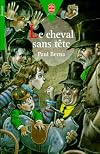
- Le cheval sans tête
- Original title
- Le cheval sans tête
- Alternate titles
- The Horse Without a Head (US Edition) (US Edition); A Hundred Million Francs (UK Edition) (UK Edition)
- Original publication date
- 1955
- People/Characters
- Gaby (Bernard) Joye (Bernard); Inspector Sinet
- Important places
- Paris, France
- Related movies
- The Horse Without a Head: The 100,000,000 Franc Train Robbery (1963 | IMDb)
- First words
- Gaby and the rest of the gang were there in front of Fernand Douin's house at the top of the rue des Petits-Pauvres.
- Last words
- (Click to show. Warning: May contain spoilers.)Inspector Sinet closed his eyes, put out his arms, and, a look of horror coming over his face, made off up the rue des Petits-Pauvres as hard as he could.
- Original language
- French
*Some information comes from Common Knowledge in other languages. Click "Edit" for more information.
Classifications
Statistics
- Members
- 255
- Popularity
- 127,615
- Reviews
- 6
- Rating
- (4.13)
- Languages
- 8 — Danish, Dutch, English, Finnish, French, German, Italian, Swedish
- Media
- Paper
- ISBNs
- 24
- ASINs
- 17