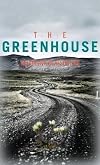
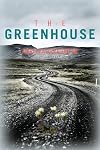
The Greenhouse
by Auður Ava Ólafsdóttir
On This Page
Description
Lobbi, a young man just leaving for a new job, experiences a chain of life changing events including the death of his mother and unexpected fatherhood for himself, but as he focuses on the cultivation of a rare eight-petaled rose he learns how to adjust to his new life and to cultivate love as well.Tags
Recommendations





























Member Recommendations

Cecilturtle une approche semblable, tout en subtilité; celui-ci est un regard sur le mariage
Member Reviews
His father calls him Lobbi (and several other terms of affection as well) so we don’t learn his real name, Arnljotur, until well on in the book, nor do we learn the country he has travelled from, although I strongly suspect it’s Iceland. Let’s call him Lobbi, then. He has recently lost his mother in a car accident, her car sliding out on loose wet gravel at a bend in the lava fields. She was a bit of a miracle worker, growing a garden in a climate hostile even to a concept of a garden, planting trees in a treeless landscape, nurturing flower seedlings in the greenhouse of the title. The greenhouse was their place, his mother and Lobbi, the place where he felt most at home, at peace, and at one with himself.
“Dad looks on these show more things differently; the world is a cluster of numbers that hang together, making up the innermost core of creation, and the interpretation of dates can yield profound truths and beauty. {snip} Too many coincidences can’t be discarded as chance, one maybe, but not three in a row, he says: Mom’s birthday, his granddaughter’s birthday, and the day of Mom’s death, all on the same date - August the seventh.”
Lobbi’s father is a sweet man, a 77 year old retired electrician who, having lost the love of his life, is now a bit lost himself so he pours his love into his two sons, Lobbi and his autistic twin brother, Josef. Josef always wears a tie and likes to hold Lobbi’s hand; he has moved into a care centre since his mother’s death. And yet at the start of the story Lobbi is leaving this love, this home with its greenhouse, carrying his mother’s eight petalled rose cuttings to a job in another country–I suspect it’s somewhere like Brittanny because of the strange guttural language, although it is never named–to become a gardener at an abbey in an isolated town far off any beaten path. He also leaves his daughter, Flora-Sol, who he fathered in a casual encounter in his mother’s greenhouse. (She will become an integral part of the story.)
Metaphors abound in this story: seedlings, births, fecundity, gardens, faith, miracles all intertwining to hint at mysteries only partially seen, much less understood. Flora-Sol herself takes on powerful levels of meaning, although Lobbi himself sees her in direct and relatively simple terms. In fact, Lobbi views most things this way, interacting with the things he grows, the ancient garden he restores, the act of cooking, his life and its relationships with a focus and simplicity that had me wondering if he too had a form of autism spectrum disorder, as well as his twin. I never did decide.
This story is very much like the eight-petalled rose at its heart: deceptively simple and yet compellingly lovely. It lingered with me for days after reading it. There is a sense of a kind of divine mystery here but I was content to let it alone, glimmering a bit beneath the surface of things. show less
“Dad looks on these show more things differently; the world is a cluster of numbers that hang together, making up the innermost core of creation, and the interpretation of dates can yield profound truths and beauty. {snip} Too many coincidences can’t be discarded as chance, one maybe, but not three in a row, he says: Mom’s birthday, his granddaughter’s birthday, and the day of Mom’s death, all on the same date - August the seventh.”
Lobbi’s father is a sweet man, a 77 year old retired electrician who, having lost the love of his life, is now a bit lost himself so he pours his love into his two sons, Lobbi and his autistic twin brother, Josef. Josef always wears a tie and likes to hold Lobbi’s hand; he has moved into a care centre since his mother’s death. And yet at the start of the story Lobbi is leaving this love, this home with its greenhouse, carrying his mother’s eight petalled rose cuttings to a job in another country–I suspect it’s somewhere like Brittanny because of the strange guttural language, although it is never named–to become a gardener at an abbey in an isolated town far off any beaten path. He also leaves his daughter, Flora-Sol, who he fathered in a casual encounter in his mother’s greenhouse. (She will become an integral part of the story.)
Metaphors abound in this story: seedlings, births, fecundity, gardens, faith, miracles all intertwining to hint at mysteries only partially seen, much less understood. Flora-Sol herself takes on powerful levels of meaning, although Lobbi himself sees her in direct and relatively simple terms. In fact, Lobbi views most things this way, interacting with the things he grows, the ancient garden he restores, the act of cooking, his life and its relationships with a focus and simplicity that had me wondering if he too had a form of autism spectrum disorder, as well as his twin. I never did decide.
This story is very much like the eight-petalled rose at its heart: deceptively simple and yet compellingly lovely. It lingered with me for days after reading it. There is a sense of a kind of divine mystery here but I was content to let it alone, glimmering a bit beneath the surface of things. show less
Arnljótur, is a 22 year old Icelandic young man who is unsure about his future, but sure that it does not include a university degree, despite his father's wishes. Since school he has been working on local fishing boats and tending the family gardens. He and his mother have spent years in their greenhouse developing plants, particularly roses, to withstand the harsh climate and lava rock of their part of Iceland. It is all he wants to do. When his mother dies he needs to make some changes. He finds out about a distant monastery that has a renown rose garden in disarray. He offers to come and restore it and take slips from his mother's 8 petal rose to add to it. Arnljótur is very insecure. He will be leaving behind an overprotective show more aging father, an autistic twin brother and a 7 month old daughter (conceived with a stranger in the greenhouse during his birthday party).
The story is part road trip and part self discovery. I really enjoyed this quiet book told in the unfolding, unsure voice of the young man. Although he is intelligent and lacks his autistic twin's compulsions he seems to be underdeveloped emotionally. Working on the gardens, living in a town where he doesn't speak the language and then dealing with his daughter who arrives two months later forces Arnljótur to look at his life and determine his place. Very well done. show less
The story is part road trip and part self discovery. I really enjoyed this quiet book told in the unfolding, unsure voice of the young man. Although he is intelligent and lacks his autistic twin's compulsions he seems to be underdeveloped emotionally. Working on the gardens, living in a town where he doesn't speak the language and then dealing with his daughter who arrives two months later forces Arnljótur to look at his life and determine his place. Very well done. show less
When 20 year old Arnljotor, or Lobbi as his father calls him, has a one night stand in his mother’s greenhouse, with a girl he barely knows, she gets pregnant. At the time, his life is unsettled; his mother has died, his elderly father wants him to pursue an advanced education degree, and his autistic brother is in an assisted living home. Lobbi loves working with plants and plans on traveling to a medieval monastery to help the monks bring their world renowned ancient garden back to its former glory. He is feeling torn between the life he wants and the life he leaves behind. The author has done a magnificent job bringing all the emotions and questions a young man goes through to find out what makes a man a man.
I smiled through 95% of show more this book—so simple, so exquisitely written—by the end I had a lump in my throat and bittersweet tears in my eyes. Timeless, subtle, I felt transported into the heart of the story and remembered each life discovery with a renewed freshness. One of my favorite quotes is when Lobbi recalls his daughters’ birth “I was alone with the child. She was awake and staring right back at me; my moment of carelessness made flesh was staring at me.” This is an AmazonCrossing publication, they translate foreign books into English making them available to a wider audience and I am so glad they choose this author. Giving this one 5 stars and making it a favorite that I’ll read again. I read this advanced readers copy through the Amazon Vine program. show less
I smiled through 95% of show more this book—so simple, so exquisitely written—by the end I had a lump in my throat and bittersweet tears in my eyes. Timeless, subtle, I felt transported into the heart of the story and remembered each life discovery with a renewed freshness. One of my favorite quotes is when Lobbi recalls his daughters’ birth “I was alone with the child. She was awake and staring right back at me; my moment of carelessness made flesh was staring at me.” This is an AmazonCrossing publication, they translate foreign books into English making them available to a wider audience and I am so glad they choose this author. Giving this one 5 stars and making it a favorite that I’ll read again. I read this advanced readers copy through the Amazon Vine program. show less
What a wonderful introduction to this author! Narrated by "Lobbi" as he is affectionately called by his father, this is the story of a young man's search for himself and for meaning in life. After a tragic loss, Lobbi becomes fixated on the body and on death. He follows his passion for gardening to tend to a famous, but now neglected and overrun, rose garden at an unnamed monastery somewhere in Europe. Lobbi leaves behind, in Iceland, his infant daughter Flora Sol, the product of a one-night stand. When the mother of his child brings her to him, he is suddenly faced with the life-changing consequences of his one night of carelessness, and must discover what it means to become a father.
The translation of the novel is very well done. The show more writing is luminous and captivating and several themes are explored: the meaning of life, death, coincidence vs. fate. There is rich symbolism. This is a novel that one can get lost in; it is not terribly plot focused and it's really more about the journey than the destination. Reading it was sort of like taking a train ride through beautiful country-- with each page you could just savor the moment and the lovely writing. Lobbi's character is quite compelling, human and believable. As another reviewer noted, the story is somewhat slow at first, but as his character develops and deepens, you'll be rewarded for sticking with the story. The growing bond of this reluctant young father with his child is tenderly portrayed. This was a thoughtful and touching story well-deserving of the praise it has received. show less
The translation of the novel is very well done. The show more writing is luminous and captivating and several themes are explored: the meaning of life, death, coincidence vs. fate. There is rich symbolism. This is a novel that one can get lost in; it is not terribly plot focused and it's really more about the journey than the destination. Reading it was sort of like taking a train ride through beautiful country-- with each page you could just savor the moment and the lovely writing. Lobbi's character is quite compelling, human and believable. As another reviewer noted, the story is somewhat slow at first, but as his character develops and deepens, you'll be rewarded for sticking with the story. The growing bond of this reluctant young father with his child is tenderly portrayed. This was a thoughtful and touching story well-deserving of the praise it has received. show less
The Greenhouse is an emotionally restrained yet enormously powerfully coming-of-age novel. Narrated in the first person, this character-driven novel invites the reader to step into the mind and body of 22-year old Arnljotur Thorir, affectionately referred to throughout book as Lobbi. This young man is preoccupied with his body and his mother's recent accidental death. He is a confused, timid, immature, self-conscious, and inward-looking young man bewildered by life.
Lobbi has a six-month-old daughter as the result of an awkward and disconnected one-night stand with a virtually unknown young woman. He is mystified how he should relate to his child or its mother. His father wants him to go to college to study botany. But this insecure show more young man is confident of only one thing: working in a garden provides him with purpose and meaning. It is something he must do. He is driven by this narrow focus.
As a result, he volunteers to travel from Iceland to a distant monastery (clues place it in southern Europe near the Mediterranean) to help restore a world-famous rose garden to its former glory. The ancient rose garden is in dire neglect. Restoring the garden becomes Lobbi's single purpose—his life's beacon in a time of great personal turmoil.
But after a few months, his child and child's mother unexpectedly join him. Through them, he slowly discovers himself and morphs into manhood. He learns how to relate to his child, the child's mother, the townsfolk, and the monks. But most of all, he finally discovers a greater meaning and purpose to life: he is not only a gardener, but also a father, a lover, and a person who has meaningful relationships with a network of people close and far. He is fulfilled and life finally has meaning, purpose, and beauty.
The Greenhouse is filled with symbolism that will delight thoughtful, knowledgeable, and methodical readers. The writing is straightforward and exceptionally clean. In fact, there is almost no ornamentation or anything that I would call lyrical. What glitters is the beauty of its simplicity. Pay close attention to the prose and watch it morph and unfold brilliantly toward the end of the book as Lobbi finds beauty in life. It warms the prose and will warm your heart.
The Greenhouse is an understated jewel of a novel. It richly deserves the many literary awards it has won. show less
Lobbi has a six-month-old daughter as the result of an awkward and disconnected one-night stand with a virtually unknown young woman. He is mystified how he should relate to his child or its mother. His father wants him to go to college to study botany. But this insecure show more young man is confident of only one thing: working in a garden provides him with purpose and meaning. It is something he must do. He is driven by this narrow focus.
As a result, he volunteers to travel from Iceland to a distant monastery (clues place it in southern Europe near the Mediterranean) to help restore a world-famous rose garden to its former glory. The ancient rose garden is in dire neglect. Restoring the garden becomes Lobbi's single purpose—his life's beacon in a time of great personal turmoil.
But after a few months, his child and child's mother unexpectedly join him. Through them, he slowly discovers himself and morphs into manhood. He learns how to relate to his child, the child's mother, the townsfolk, and the monks. But most of all, he finally discovers a greater meaning and purpose to life: he is not only a gardener, but also a father, a lover, and a person who has meaningful relationships with a network of people close and far. He is fulfilled and life finally has meaning, purpose, and beauty.
The Greenhouse is filled with symbolism that will delight thoughtful, knowledgeable, and methodical readers. The writing is straightforward and exceptionally clean. In fact, there is almost no ornamentation or anything that I would call lyrical. What glitters is the beauty of its simplicity. Pay close attention to the prose and watch it morph and unfold brilliantly toward the end of the book as Lobbi finds beauty in life. It warms the prose and will warm your heart.
The Greenhouse is an understated jewel of a novel. It richly deserves the many literary awards it has won. show less
Note: Review from the Amazon Vine Program
The Greenhouse is very different from the books that I ordinarily read. It is not plot-driven. The beauty of the story is in the tone, the descriptions, the cerebral nature of the character's actions. Basically, it is the story of a young man, Lobbi, who meets and bonds with his baby girl. There is a calm, gentle, almost spiritual quality, to this tale. Lobbi, a gardener, nurtures his daughter with the sensitivity that he applies to his plants.
At first I was bothered by the lack of factual details to this story. Where was Lobbi going? What were his plans? After a few chapters, I began to understand the sense of this story. It's really not about who, what, when, where and why. It's about the show more World as seen through Lobbi's eyes.
Lobbi tends to be reactive, rather than proactive in his surroundings. He learns through observation and inquiry. The story evolves from Lobbi responding to forces acting upon him. He copes quietly, competently and brilliantly in confusing, difficult circumstances.
I know that I have just described a book in which little happens and given it 4 1/2 stars. It's hard to explain the loveliness of this prose. You just have to taste it to know. show less
The Greenhouse is very different from the books that I ordinarily read. It is not plot-driven. The beauty of the story is in the tone, the descriptions, the cerebral nature of the character's actions. Basically, it is the story of a young man, Lobbi, who meets and bonds with his baby girl. There is a calm, gentle, almost spiritual quality, to this tale. Lobbi, a gardener, nurtures his daughter with the sensitivity that he applies to his plants.
At first I was bothered by the lack of factual details to this story. Where was Lobbi going? What were his plans? After a few chapters, I began to understand the sense of this story. It's really not about who, what, when, where and why. It's about the show more World as seen through Lobbi's eyes.
Lobbi tends to be reactive, rather than proactive in his surroundings. He learns through observation and inquiry. The story evolves from Lobbi responding to forces acting upon him. He copes quietly, competently and brilliantly in confusing, difficult circumstances.
I know that I have just described a book in which little happens and given it 4 1/2 stars. It's hard to explain the loveliness of this prose. You just have to taste it to know. show less
I read the Italian translation (nota al traduttore e all'editore: su "do" di "io do" l'accento NON ci va. Ma insomma, dove avete studiato??).
This is the story of the Icelandic Forrest Gump. He has a retarded brother, but he has some serious issues too. I disagree with many reviewers who see him as a real, regular, almost typical 22 yo man. Let's put it out there before anyone misses it: this guy is border-line autistic.
Things happen to him and to his body often as if he was watching them on a screen. Yes teenagers live a bit like that, but they don't rationalize that condition constantly like this guy does, and they tend to express themselves in one way or the other, while this guy is totally passive.
Now, is that particularly show more Icelandic? Or is this something the author wanted to create? I don't know. I know that, aside from the normal issues of a twenty year old, this man has other, very peculiar issues: very serious communication problems, and as I said, some autistic traits.
Let me be frank. If this simple, delicate book was not from an Icelandic author, I don't know if anyone would have published it. The young father with baby plot has been used many times, and with better, more coherent results, by Nick Hornby and other writers. "Iceland! Iceland!" is the reason why I, and probably many others, ended up reading this book.
On the other hand, simpliciy and quiet are the actual charm of the book, so I understand the readers who fell in love with it for its soothing effect.
But quiet and delicate are attributes that very easily overlap with bland and diluted.
Nothing stands out in the whole story, nothing jumps off the page, an idea, an individual, a feeling.
It is like one of those sweet melodies that might be pleasant to listen to while they're playing, but that once finished are immediately forgotten. show less
This is the story of the Icelandic Forrest Gump. He has a retarded brother, but he has some serious issues too. I disagree with many reviewers who see him as a real, regular, almost typical 22 yo man. Let's put it out there before anyone misses it: this guy is border-line autistic.
Things happen to him and to his body often as if he was watching them on a screen. Yes teenagers live a bit like that, but they don't rationalize that condition constantly like this guy does, and they tend to express themselves in one way or the other, while this guy is totally passive.
Now, is that particularly show more Icelandic? Or is this something the author wanted to create? I don't know. I know that, aside from the normal issues of a twenty year old, this man has other, very peculiar issues: very serious communication problems, and as I said, some autistic traits.
Let me be frank. If this simple, delicate book was not from an Icelandic author, I don't know if anyone would have published it. The young father with baby plot has been used many times, and with better, more coherent results, by Nick Hornby and other writers. "Iceland! Iceland!" is the reason why I, and probably many others, ended up reading this book.
On the other hand, simpliciy and quiet are the actual charm of the book, so I understand the readers who fell in love with it for its soothing effect.
But quiet and delicate are attributes that very easily overlap with bland and diluted.
Nothing stands out in the whole story, nothing jumps off the page, an idea, an individual, a feeling.
It is like one of those sweet melodies that might be pleasant to listen to while they're playing, but that once finished are immediately forgotten. show less
Members
- Recently Added By
Published Reviews
ThingScore 100
Islandská autorka od prvních stran zaujme neobyčejně klidným a vyrovnaným tónem vyprávění, prostého jakýchkoli bouřlivých emocí, které bychom na románové cestě za poznáním sebe sama čekali.
added by _eskarina
Lists

Top Five Books of 2016
795 works; 228 members

Books Read in 2018
4,360 works; 110 members

Allie's List of Books I Want To Read
93 works; 1 member

Books written in uncommon languages
97 works; 8 members
Author Information

20+ Works 1,807 Members
All Editions
Some Editions
Awards and Honors
Awards
Notable Lists
Common Knowledge
- Canonical title*
- Il rosso vivo del rabarbaro
- Original title
- Afleggjarinn
- Original publication date
- 2007
- People/Characters
- Arnljótur Thórir
- Important places
- Iceland; France
- Epigraph*
- En God zei: 'Hierbij geef Ik alle zaadvormende gewassen op de hele aardbodem aan jullie, en alle bomen met zaaddragende vruchten; zij zullen jullie tot voedsel dienen'. (Gen. 1, 29)
- Dedication*
- Opgedragen aan mjin moeder
- First words*
- Omdat ik naar het buitenland ga en nog niet weet wanneer ik terugkom, wil mijn vader van 77 een gedenkwaardig laatste avondmaal verzorgen door een van mijn moeders recepten te gebruiken, iets wat zij bij zo'n gelegenheid moge... (show all)lijk gemaakt zou hebben.
- Last words*
- (Click to show. Warning: May contain spoilers.)Mijn dochter zit doodstil op mijn schouders; ik houd mijn hand boven mijn ogen en kijk naar het licht, het verblindende ochtendlicht, en dan zie ik haar boven het koorvenster: een paarse, achtbladige roos, juist op het moment dat de eerste zonnestraal door het bloemhoofd heen weet te dringen. Hij valt op de wang van mijn kind.
- Original language
- Icelandic
*Some information comes from Common Knowledge in other languages. Click "Edit" for more information.
Classifications
- Genres
- General Fiction, Fiction and Literature
- DDC/MDS
- 839.6934 — Literature & rhetoric German & related literatures Other Germanic literatures Old Norse, Old Icelandic, Icelandic, Faroese literatures Modern West Scandinavian; Modern Icelandic Modern Icelandic fiction 1900-1999
- LCC
- PT7511 .A93 .A75 — Language and Literature German, Dutch and Scandinavian literatures Modern Icelandic literature Individual authors or works 19th-20th centuries
- BISAC
Statistics
- Members
- 527
- Popularity
- 56,804
- Reviews
- 34
- Rating
- (3.69)
- Languages
- 12 — Czech, Danish, Dutch, English, French, German, Icelandic, Italian, Norwegian (Bokmål), Portuguese, Spanish, Swedish
- Media
- Paper, Audiobook, Ebook
- ISBNs
- 39
- ASINs
- 12