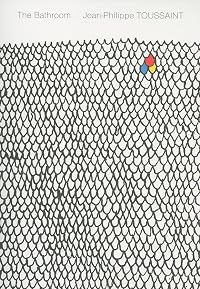
The Bathroom
by Jean-Philippe Toussaint
On This Page
Description
First published in France in 1985, The Bathroom was Jean-Philippe Toussaint's debut novel, and it heralded a new generation of innovative French literature. In this playful and perplexing book, we meet a young Parisian researcher who lives inside his bathroom. As he sits in his tub meditating on existence (and refusing to tell us his name), the people around him--his girlfriend, Edmondsson, the Polish painters in his kitchen--each in their own way further enables his peculiar lifestyle, show more supporting his eccentric quest for immobility. But an invitation to the Austrian embassy shakes up his stable world, prompting him to take a risk and leave his bathroom . . . show lessTags
Recommendations




































Member Recommendations


bluepiano Another (the only other?) novel whose protagonist is determined to live in his bathroom. That's all that the two books have in common aside from their both being worth reading.
Member Reviews
There is a 27-year-old man who loves to stay in the bathtub and ponder over life for the whole afternoon every day. He does not have a mental problem, yet, he is a mere reflection of our anxiety in this 21st-century modern bustling world. He represents the helpless and desperate attitude towards life yet no one can resist such desperation.
He is not a loser, instead, he is somehow a thinker or a philosopher. One day, he took a book someone left in the cafe in Venice. The book was the English version of "Pensées" written by Blaise Pascal. He was fascinated by the quotation about death and desperation. From my point of view, all of his mentality and actions throughout the whole novel actually represent us, as modern citizens in this show more modern world, as well as our deepest fear: what are we exactly doing in our lives while we are all going to die one day? What to do with our short and desperate lives that are doomed? We cannot change anything because we are so small.
This little book may be plotless, yet it contains a lot of meanings and philosophy. There are few times that the narrator comes really close to offering the reader a reason for his bathroom behaviour. However, he can never be able to complete the sentence. This is because he does not, and will not, and cannot know the answer. He is hopeless. I think Toussaint is trying to reveal our fear of death and uncertainty by using a very relaxing, slow and peaceful tone. He talks about life and death without fear. Also, he mentions a little about love as well by including Edmondsson in the story. I strongly recommend you this beautiful little book. show less
He is not a loser, instead, he is somehow a thinker or a philosopher. One day, he took a book someone left in the cafe in Venice. The book was the English version of "Pensées" written by Blaise Pascal. He was fascinated by the quotation about death and desperation. From my point of view, all of his mentality and actions throughout the whole novel actually represent us, as modern citizens in this show more modern world, as well as our deepest fear: what are we exactly doing in our lives while we are all going to die one day? What to do with our short and desperate lives that are doomed? We cannot change anything because we are so small.
This little book may be plotless, yet it contains a lot of meanings and philosophy. There are few times that the narrator comes really close to offering the reader a reason for his bathroom behaviour. However, he can never be able to complete the sentence. This is because he does not, and will not, and cannot know the answer. He is hopeless. I think Toussaint is trying to reveal our fear of death and uncertainty by using a very relaxing, slow and peaceful tone. He talks about life and death without fear. Also, he mentions a little about love as well by including Edmondsson in the story. I strongly recommend you this beautiful little book. show less
The narrator is a researcher who decides that he will live in his bathroom in a Parisian flat. He moves everything (clothes, books, etc.) there, and sits in his tub all day, contemplating his toenails. His girlfriend and his mother visit him and are amazingly tolerant of his foibles. The book consists of short, self-absorbed entries, such as this one:
9. The bathroom walls were light green, the paint blistered in spots. After turning the key in the door I took off my underpants and hung them on the doorknob. I took a shower in the tub, dried myself, and went back to my room shivering, towel around my shoulders. The new underwear was on the table. Using my teeth, I separated the socks, which were tied together with a thread. The wool was show more soft, smelled good. I put on clean socks, new underpants. I was feeling good. In that state, I hung around the room for a while, pulling on the elastic of my underpants, reading the notices thumbtacked to the door: safety instructions, prices of rooms, breakfast. Turning back to the table, I pulled on my trousers and put on my dirty shirt, which stank under the armpits.
I'm amazed that I made it through almost 50 pages, and is recommended only if you want a reason to visit a psychotherapist. show less
9. The bathroom walls were light green, the paint blistered in spots. After turning the key in the door I took off my underpants and hung them on the doorknob. I took a shower in the tub, dried myself, and went back to my room shivering, towel around my shoulders. The new underwear was on the table. Using my teeth, I separated the socks, which were tied together with a thread. The wool was show more soft, smelled good. I put on clean socks, new underpants. I was feeling good. In that state, I hung around the room for a while, pulling on the elastic of my underpants, reading the notices thumbtacked to the door: safety instructions, prices of rooms, breakfast. Turning back to the table, I pulled on my trousers and put on my dirty shirt, which stank under the armpits.
I'm amazed that I made it through almost 50 pages, and is recommended only if you want a reason to visit a psychotherapist. show less
"Immobility is not absence of movement but absence of any prospect of movement."
The above observation lies three-quarters of the way through The Bathroom, just before the quasi-authorial ruminations break forth, escaping the previous three room stage design. A change of locale occurs. Not to disclose much, but it is a change of nation as well. The insular goes on the lam. In fact, the section abroad distills the almost static gestation of the earlier salvos. The novel's only act of violence (except for that to Octupi) occurs and maintains, almost despite the postulation previously exhibited. The act is outside of reason. It isn't theorized. It does change matters. Well, to be fair, in a book of less than a hundred pages it pushes show more matters towards a certain conclusion, albeit without conviction. Then again, isn't that a great deal of our lives? show less
The above observation lies three-quarters of the way through The Bathroom, just before the quasi-authorial ruminations break forth, escaping the previous three room stage design. A change of locale occurs. Not to disclose much, but it is a change of nation as well. The insular goes on the lam. In fact, the section abroad distills the almost static gestation of the earlier salvos. The novel's only act of violence (except for that to Octupi) occurs and maintains, almost despite the postulation previously exhibited. The act is outside of reason. It isn't theorized. It does change matters. Well, to be fair, in a book of less than a hundred pages it pushes show more matters towards a certain conclusion, albeit without conviction. Then again, isn't that a great deal of our lives? show less
We cannot forget Toussaint, face expressionless, as he hurls that dart into our forehead with his full strength, distinctly grimacing; nor forgive the fact that he is always on the verge of playing tennis.
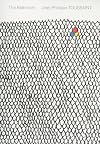
Apparently this is important for literary historical reasons, but then, lots of solid but not great books are. What's good here can be found more fully in Toussaint's later work, and, mercifully, what's bad here (numbered paragraphs for no reason, for instance, as well as silly juvenile rebellions) is not. Great cover, though.
A young Belgian researcher in Paris strains his relations with his girlfriend and parents by remaining in his apartment bathroom. He emerges into the apartment itself, then bolts to Venice, where he holes up in a hotel, except for the occasional foray out. His girlfriend comes but doesn’t convince him to return home. He checks into a hospital, supposedly for sinus surgery. He abruptly decides to return to Paris and seems about to repeat his bathroom sojourn when an invitation to a reception at the Austrian Embassy convinces him to emerge.
A story that’s simple on the surface but raises more than enough questions.
A story that’s simple on the surface but raises more than enough questions.
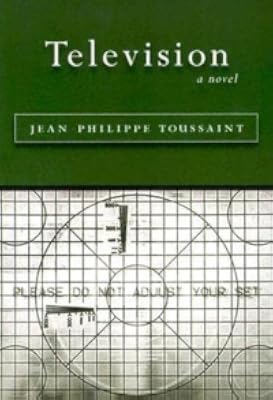
Toussaint is a nut. I enjoyed this, but less than [b:Television|407487|Television|Jean-Philippe Toussaint|https://d.gr-assets.com/books/1348045585s/407487.jpg|396807]
Members
- Recently Added By
Author Information

41+ Works 1,986 Members
Awards and Honors
Awards
Work Relationships
Is contained in
Common Knowledge
- Canonical title
- The Bathroom
- Original title
- La salle de bain
- Original publication date
- 1985
- Important places*
- Paris, Frankreich; Venedig, Italien
- Epigraph*
- Im rechtwinkligen Dreieck ist das Hypothenusenquadrat gleich der Summer der Kathetenquadrate. (Pythagoras)
- First words*
- Als ich begann, meine Nachmittage im Badezimmer zu verbringen, hatte ich nicht vor, mich dort einzurichten;
- Last words*
- (Click to show. Warning: May contain spoilers.)Am folgenden Tag verließ ich das Badezimmer.
*Some information comes from Common Knowledge in other languages. Click "Edit" for more information.
Classifications
Statistics
- Members
- 318
- Popularity
- 100,351
- Reviews
- 8
- Rating
- (3.23)
- Languages
- 12 — Dutch, English, Estonian, Finnish, French, German, Italian, Norwegian (Bokmål), Norwegian, Polish, Spanish, Swedish
- Media
- Paper, Ebook
- ISBNs
- 21
- ASINs
- 4