On This Page
Description
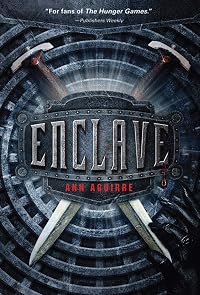
In a post-apocalyptic future, fifteen-year-old Deuce, a loyal Huntress, brings back meat while avoiding the Freaks outside her enclave, but when she is partnered with the mysterious outsider, Fade, she begins to see that the strict ways of the elders may be wrong--and dangerous.Tags
Recommendations

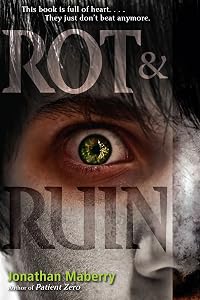
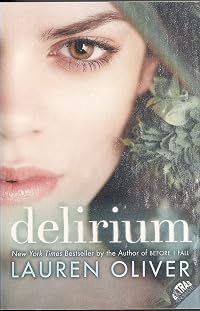
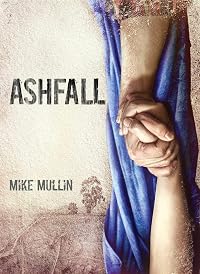
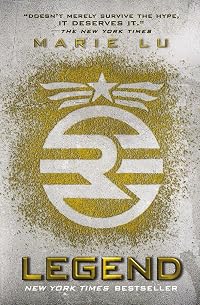



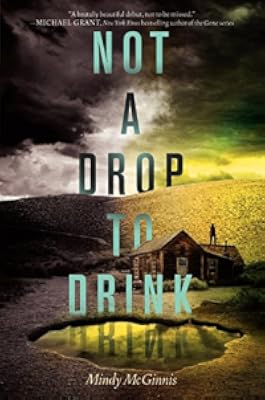
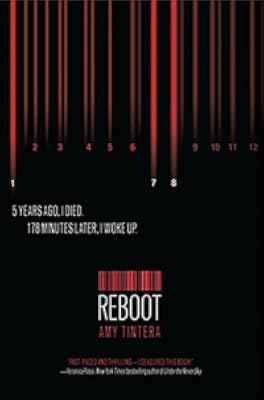
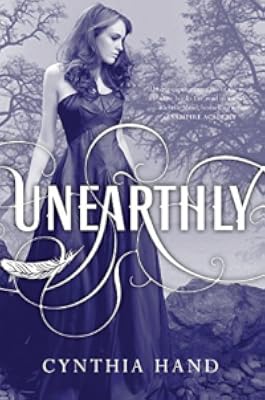

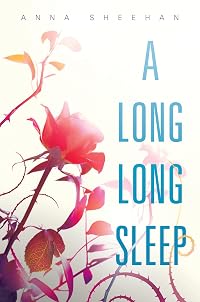







Member Recommendations

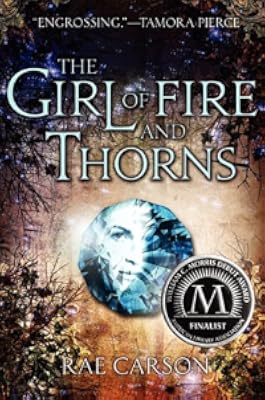
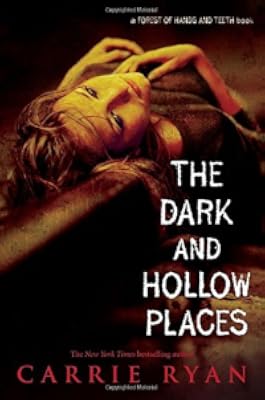
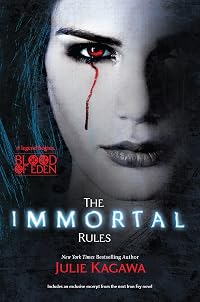
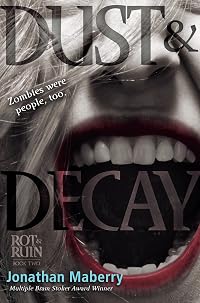
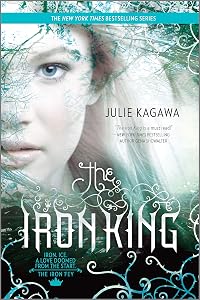
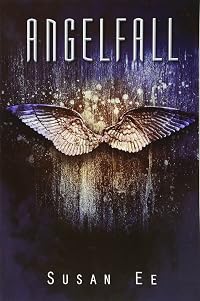
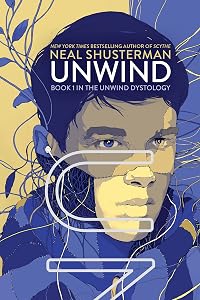
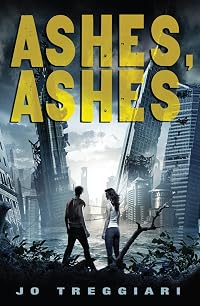
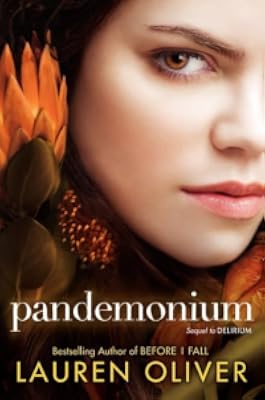
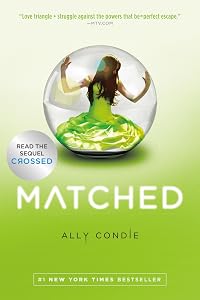
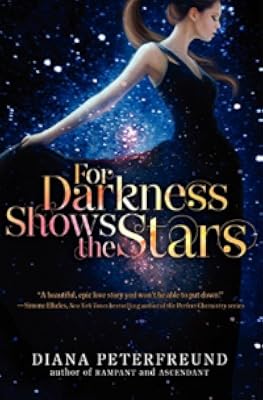
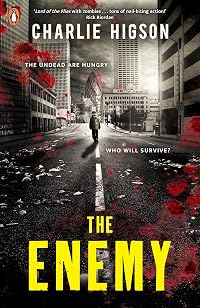
4leschats Both books feature a strong female lead who has just beomce an adult in a post-apocalyptic world where she must survive.
Member Reviews
One thing is definitely for sure, I wholeheartedly agree with Publishers Weekly when they said Enclave was "...for fans of The Hunger Games." Nope, I'm never going to take it back. Enclave was beyond thrilling and way beyond intense--I loved every chilling second of it.
A strong female character is something that appeals to me. A physically, mentally, and emotionally strong female character makes the best. character. ever. That's what Deuce, or Girl15 at the beginning, is. Deuce can kick a Freak's ugly behind with her deadly weapons, as well as with countless wounds on her body. What gives Deuce such a rich personality is that she's curious, timid, and hesitant (yet she still perseveres to reach the country), when it comes to the show more unfamiliar Topside, the long abandoned world above her enclave, College. Deuce reminds me of two of my favorite female protagonists ever: Katniss from The Hunger Games by Suzanne Collins and Katsa from Graceling by Kristin Cashore.
To balance the gritty, dark and vigorous feel, Ann Aguirre put in just the right amount of romance. It was enough to have me jump up and down in my seat. Fade, deadly with weapons and his hands, but tender and gentle when it came to Deuce. His character is interesting altogether and I couldn't stop myself falling for him in the first few pages he was first introduced. Stalker and Tegan, had contrasting personalities and they both aided in the development of the story as well as the characters, especially Deuce.
What I love the most about Ann Aguirre's writing is that she was able to describe the simplest emotions and items that we take for granted in our everyday life, and make it seem so foreign, because to Deuce--it is. I've tried doing so, and it's the hardest thing ever. Ann Aguirre pulled it off smoothly and seamlessly in her YA debut. It reminded me of a poem I read in English class, "A Martian Sends a Postcard Home" by Craig Raine.
Enclave has earned a notable spot on my favorite dystopian novels, alongside The Hunger Games and a few others. I'd recommend it a thousand times. I can't possibly hide my excitement for Outpost, the next book in the Razorland series, can I? Because I can't! show less
A strong female character is something that appeals to me. A physically, mentally, and emotionally strong female character makes the best. character. ever. That's what Deuce, or Girl15 at the beginning, is. Deuce can kick a Freak's ugly behind with her deadly weapons, as well as with countless wounds on her body. What gives Deuce such a rich personality is that she's curious, timid, and hesitant (yet she still perseveres to reach the country), when it comes to the show more unfamiliar Topside, the long abandoned world above her enclave, College. Deuce reminds me of two of my favorite female protagonists ever: Katniss from The Hunger Games by Suzanne Collins and Katsa from Graceling by Kristin Cashore.
To balance the gritty, dark and vigorous feel, Ann Aguirre put in just the right amount of romance. It was enough to have me jump up and down in my seat. Fade, deadly with weapons and his hands, but tender and gentle when it came to Deuce. His character is interesting altogether and I couldn't stop myself falling for him in the first few pages he was first introduced. Stalker and Tegan, had contrasting personalities and they both aided in the development of the story as well as the characters, especially Deuce.
What I love the most about Ann Aguirre's writing is that she was able to describe the simplest emotions and items that we take for granted in our everyday life, and make it seem so foreign, because to Deuce--it is. I've tried doing so, and it's the hardest thing ever. Ann Aguirre pulled it off smoothly and seamlessly in her YA debut. It reminded me of a poem I read in English class, "A Martian Sends a Postcard Home" by Craig Raine.
Enclave has earned a notable spot on my favorite dystopian novels, alongside The Hunger Games and a few others. I'd recommend it a thousand times. I can't possibly hide my excitement for Outpost, the next book in the Razorland series, can I? Because I can't! show less
Enclave is, hands down, the most terrifying book I’ve ever read. Set half in eerie underground subway tunnels and half in the desolated, crumbling remains of New York with enemy gangs and horrifying creatures, it definitely left me with nightmares to remember.
The scariest part about it is that I don’t think it was written to be that scary at all. The Freaks (mutated people-eating creatures that very much reminded me of the cave monsters from The Descent) are regarded as everyday nuisances, as if nothing more than a common house rat. What’s really terrifying is how realistic it felt. I’m aware that this is fiction, but the mere idea that our world would be reduced to that gives me goosebumps.
Something I loved was how careful the show more author was about the characters. Deuce and Fade get off to a rocky start, but as they explore the ruins of New York, just the two of them, their dynamic is extraordinary. When other characters are introduced, the rockiness returns. If you’re rooting for the characters to get together, it can be frustrating at times, but it’s definitely a trait that I admired the author for.
Overall, Enclave is terrifyingly realistic and disturbing and even depressing, but for some reason, I absolutely loved it. I couldn’t put it down. Even with all the dystopian novels being released lately, this one manages to differ from the rest. I definitely recommend! show less
The scariest part about it is that I don’t think it was written to be that scary at all. The Freaks (mutated people-eating creatures that very much reminded me of the cave monsters from The Descent) are regarded as everyday nuisances, as if nothing more than a common house rat. What’s really terrifying is how realistic it felt. I’m aware that this is fiction, but the mere idea that our world would be reduced to that gives me goosebumps.
Something I loved was how careful the show more author was about the characters. Deuce and Fade get off to a rocky start, but as they explore the ruins of New York, just the two of them, their dynamic is extraordinary. When other characters are introduced, the rockiness returns. If you’re rooting for the characters to get together, it can be frustrating at times, but it’s definitely a trait that I admired the author for.
Overall, Enclave is terrifyingly realistic and disturbing and even depressing, but for some reason, I absolutely loved it. I couldn’t put it down. Even with all the dystopian novels being released lately, this one manages to differ from the rest. I definitely recommend! show less
Enclave started out okay, a relatively bland but entertaining enough post-apocalyptic tale of Deuce, who lives underground in the ruins of the subway tunnels of New York City, and her new hunting partner, Fade. They discover that the elders in their Enclave might not be so wise after all, and they end up being exiled to "Topside," or aboveground - a place that is rumoured to be incredibly toxic, killing anyone who spends just a few minutes in Topside. Like I said, the book was okay - predictable, sure, but not a bad way to spend the afternoon if you're looking for a decent read that you'll likely forget much of as soon as you finish the series.
But then it got real bad real fast.
The first little nugget of joy was on page 153. Deuce and show more Fade are captured by a gang (more on THEM later) and separated from one another. Deuce, already told by Fade that she'd likely be raped if a gang took them captive, is quite aware of what her fate might be - and she is quite aware, also, about what has happened to the girl who is dressing her, Tegan, a captive of the gang who is covered in bruises. In Deuce's mind, as Tegan unbinds Deuce's feet but keeps her wrists bound, she says (all emphasis rendered as in original text): "She left my hands tied. Smart girl. Well, relatively. She couldn't be too smart if she took those bruises without complaining."
*record screech*
What the...did the main character just essentially say that a rape victim (Tegan) is stupid because she was violently raped and assaulted repeatedly by a gang?
This felt like it came out of left field here. Although Deuce hadn't been particularly kind in her thoughts about "breeders" (people in the Enclave who were deemed attractive enough to have children, or "brats" - those who were not designated "breeders" were not allowed to have children or even sex), she'd never been overtly misogynistic. To all of the sudden start calling a character stupid because she "allowed" herself to be raped and beaten seemed...odd.
Okay, I thought to myself, maybe she just doesn't understand how bad it is out in this world yet. Maybe I should give Deuce the benefit of the doubt, because until this point, she was an okay character - nothing particularly unique, but decent. Maybe it's just a poorly structured sentence?
So I kept reading, because, well, I really did want to give the book another chance. And so I went on, almost fifty more pages, before the second nugget of joy appeared, this time on page 198.
Fade and Deuce, along with Tegan, manage to escape from the gang (WITH TEGAN'S HELP, I MIGHT ADD), but they're being tracked by the gang. The gang finally finds them holed up in a building and attacks them. Tegan isn't trained in fighting, so essentially it is Fade and Deuce against four "Wolves" (what the gang members call themselves), including Stalker, the leader of the gang. Fortunately for Fade and Deuce, a horde of Freaks (zombie-like creatures) find them. In the ensuing battle, the badly outnumbered Fade, Deuce, and Wolves team up to fight off the Freaks. Fade and Deuce survive, but only Stalker, the leader of the gang, manages to stay alive. Stalker now wants to join Fade and Deuce (and Tegan, who also survived) on their trek north. Tegan, for obvious reasons, isn't thrilled with that idea and threatens to kill Stalker in his sleep (presumably for raping her or allowing his gang to rape her - Stalker only rapes certain girls, as we're told earlier in the book - but he is at LEAST guilty of kidnapping Tegan and forbidding her to leave, as well as sanctioning her rapes and abuse).
Deuce, however, seems to think differently of him: "He [Stalker, the gang leader] embodied the Hunter tenet: "The strong survive." Part of me hated him for what he'd let the other Wolves do to Tegan, but the Huntress half of me wondered why she hadn't fought until she died."
Oh.
So now we're going down THAT road, are we? The well-traveled one that says that rape victims secretly wanted it because they didn't just fight hard enough? Or is it its cousin, the also well-worn road that says that rape victims deserve to be raped because they didn't fight enough, or discourage him enough, or say no loud enough or often enough, or didn't wear the right clothes, or didn't do the right things, or didn't control their alcohol intake, or hung out with the wrong crowd, etc, etc, etc? Because either way, FUCK YOU NO.
I resolved to finish the chapter and then DNF the book. But there was one last nugget of joy to be had, just two pages from the one above, on page 200. In spite of Stalker having just wanted to kill all of them and having been a RAPIST LEADER OF A GANG FULL OF RAPISTS, Deuce (and presumably Fade) decides that they're going to let Stalker accompany them up north, even though Tegan is obviously very upset with their choice AND they have absolutely no reason to believe that Stalker is REMOTELY trustworthy. Tegan contradicts something that Stalker says (which would lend credence, besides the fact that he is a REMORSELESS RAPIST MURDERER, that he's probably not the guy to admit unquestioningly into the group, and then this happens:
Stalker shrugged, as though her [Tegan's] opinion didn't matter to him. I understood,, I thought. He could respect Fade and me because we'd fought. Because she hadn't, Tegan might never gain full value in his eyes.
WHAT
THE
FUCK
Now the rape and abuse victim has to strive to "gain full value" in her abuser's eyes? She has to try to earn his respect? What in the fuck is this shit?
And that was when I closed the book, went into my (personal) library, pulled the other two books from the series off the shelf (because, like a fool, I listened to the great reviews - which I do NOT understand the book even having! - and purchased the other two books in the series without reading the first one - WHEN WILL I LEARN?!?!), and threw all three into the trash. I don't even want to give these away, because I frankly don't want to expose anyone else to this level of fuckery.
I am so so so SO SO SO SO SO SO sick of this. I am so sick of authors showing how "strong" their female characters are by contrasting their "strength" with other female characters' "weaknesses." I am so sick of books having women looking down on other women in such a manner. I am so sick of books that feel like the female protagonist must show that she's not like "those other girls," that she's special and unique and not *insert female "weakness" here* like all the others. I am so sick of reading books where the female protagonist can never have a strong friendship (or, even better, more than one!) with another female character, where the female protagonist is either passively or actively sparring with all of the other female characters because she HAS to show just how different she is.
I've read some of the comments from people who are trying to defend the INDEFENSIBLE attitude in this book, and none of them have any credence in my eyes. "Oh, women are treated bad in the apocalypse" is one of the most common ones I see. Yes, we often are in post-apocalyptic fiction, and in a real apocalypse, I imagine we would be too. Just look at how women are treated (much like Tegan was) in war-torn areas of the world. But my problem here isn't that Tegan was treated badly - the GLARING issue is Tegan's poor treatment in DEUCE'S (another woman's) hands (and mind). I would expect empathy, acknowledgement, or understanding here. Hell, I'd even like to see some damned respect for what Tegan had endured and having managed to survive. What I do not want to fucking see is showing how "strong" Deuce is (because she was trained in combat and, therefore, wasn't raped) because Tegan is so "weak" (Tegan, who spent most of her life hiding from gangs just like the Wolves, who nearly died giving birth to two stillborn children [products of her rape], who was never trained in combat and has no idea how to use weapons and therefore has virtually NO option to fight, who risked her own life helping Fade and Deuce escape!!). Fuck the us vs. them mentality that pops up so often in women's relationships in fiction (and, unfortunately, real life). And fuck anyone who wants to try to defend it. show less
But then it got real bad real fast.
*record screech*
What the...did the main character just essentially say that a rape victim (Tegan) is stupid because she was violently raped and assaulted repeatedly by a gang?
This felt like it came out of left field here. Although Deuce hadn't been particularly kind in her thoughts about "breeders" (people in the Enclave who were deemed attractive enough to have children, or "brats" - those who were not designated "breeders" were not allowed to have children or even sex), she'd never been overtly misogynistic. To all of the sudden start calling a character stupid because she "allowed" herself to be raped and beaten seemed...odd.
Okay, I thought to myself, maybe she just doesn't understand how bad it is out in this world yet. Maybe I should give Deuce the benefit of the doubt, because until this point, she was an okay character - nothing particularly unique, but decent. Maybe it's just a poorly structured sentence?
So I kept reading, because, well, I really did want to give the book another chance. And so I went on, almost fifty more pages, before the second nugget of joy appeared, this time on page 198.
Fade and Deuce, along with Tegan, manage to escape from the gang (WITH TEGAN'S HELP, I MIGHT ADD), but they're being tracked by the gang. The gang finally finds them holed up in a building and attacks them. Tegan isn't trained in fighting, so essentially it is Fade and Deuce against four "Wolves" (what the gang members call themselves), including Stalker, the leader of the gang. Fortunately for Fade and Deuce, a horde of Freaks (zombie-like creatures) find them. In the ensuing battle, the badly outnumbered Fade, Deuce, and Wolves team up to fight off the Freaks. Fade and Deuce survive, but only Stalker, the leader of the gang, manages to stay alive. Stalker now wants to join Fade and Deuce (and Tegan, who also survived) on their trek north. Tegan, for obvious reasons, isn't thrilled with that idea and threatens to kill Stalker in his sleep (presumably for raping her or allowing his gang to rape her - Stalker only rapes certain girls, as we're told earlier in the book - but he is at LEAST guilty of kidnapping Tegan and forbidding her to leave, as well as sanctioning her rapes and abuse).
Deuce, however, seems to think differently of him: "He [Stalker, the gang leader] embodied the Hunter tenet: "The strong survive." Part of me hated him for what he'd let the other Wolves do to Tegan, but the Huntress half of me wondered why she hadn't fought until she died."
Oh.
So now we're going down THAT road, are we? The well-traveled one that says that rape victims secretly wanted it because they didn't just fight hard enough? Or is it its cousin, the also well-worn road that says that rape victims deserve to be raped because they didn't fight enough, or discourage him enough, or say no loud enough or often enough, or didn't wear the right clothes, or didn't do the right things, or didn't control their alcohol intake, or hung out with the wrong crowd, etc, etc, etc? Because either way, FUCK YOU NO.
I resolved to finish the chapter and then DNF the book. But there was one last nugget of joy to be had, just two pages from the one above, on page 200. In spite of Stalker having just wanted to kill all of them and having been a RAPIST LEADER OF A GANG FULL OF RAPISTS, Deuce (and presumably Fade) decides that they're going to let Stalker accompany them up north, even though Tegan is obviously very upset with their choice AND they have absolutely no reason to believe that Stalker is REMOTELY trustworthy. Tegan contradicts something that Stalker says (which would lend credence, besides the fact that he is a REMORSELESS RAPIST MURDERER, that he's probably not the guy to admit unquestioningly into the group, and then this happens:
Stalker shrugged, as though her [Tegan's] opinion didn't matter to him. I understood,, I thought. He could respect Fade and me because we'd fought. Because she hadn't, Tegan might never gain full value in his eyes.
WHAT
THE
FUCK
Now the rape and abuse victim has to strive to "gain full value" in her abuser's eyes? She has to try to earn his respect? What in the fuck is this shit?
And that was when I closed the book, went into my (personal) library, pulled the other two books from the series off the shelf (because, like a fool, I listened to the great reviews - which I do NOT understand the book even having! - and purchased the other two books in the series without reading the first one - WHEN WILL I LEARN?!?!), and threw all three into the trash. I don't even want to give these away, because I frankly don't want to expose anyone else to this level of fuckery.
I am so so so SO SO SO SO SO SO sick of this. I am so sick of authors showing how "strong" their female characters are by contrasting their "strength" with other female characters' "weaknesses." I am so sick of books having women looking down on other women in such a manner. I am so sick of books that feel like the female protagonist must show that she's not like "those other girls," that she's special and unique and not *insert female "weakness" here* like all the others. I am so sick of reading books where the female protagonist can never have a strong friendship (or, even better, more than one!) with another female character, where the female protagonist is either passively or actively sparring with all of the other female characters because she HAS to show just how different she is.
I've read some of the comments from people who are trying to defend the INDEFENSIBLE attitude in this book, and none of them have any credence in my eyes. "Oh, women are treated bad in the apocalypse" is one of the most common ones I see. Yes, we often are in post-apocalyptic fiction, and in a real apocalypse, I imagine we would be too. Just look at how women are treated (much like Tegan was) in war-torn areas of the world. But my problem here isn't that Tegan was treated badly - the GLARING issue is Tegan's poor treatment in DEUCE'S (another woman's) hands (and mind). I would expect empathy, acknowledgement, or understanding here. Hell, I'd even like to see some damned respect for what Tegan had endured and having managed to survive. What I do not want to fucking see is showing how "strong" Deuce is (because she was trained in combat and, therefore, wasn't raped) because Tegan is so "weak" (Tegan, who spent most of her life hiding from gangs just like the Wolves, who nearly died giving birth to two stillborn children [products of her rape], who was never trained in combat and has no idea how to use weapons and therefore has virtually NO option to fight, who risked her own life helping Fade and Deuce escape!!). Fuck the us vs. them mentality that pops up so often in women's relationships in fiction (and, unfortunately, real life). And fuck anyone who wants to try to defend it.
Newly named Deuce lives in an underground enclave known as College where the rules are strict to ensure survival. Her whole life has been spent training to be a Huntress, one who protects the enclave and fights the Freaks, diseased and cannibalistic creatures. Now that she's considered an adult, she sees more of the inner workings and it isn't what she expected. Everyone is expected to follow orders to the letter. Innovation or deviation are not allowed or appreciated. At first, she's distressed to be paired with wild card Fade because he doesn't really conform, but outside the enclave, he's shown himself to be an asset. They discover that the Freaks are getting smarter working together and formulating strategies. When they try to warn show more the leaders, they are brushed off and forced to make a dangerous trek to a neighboring enclave. Can Deuce and Fade get people to take them seriously? Will they even return alive?
Enclave had been on my reading list for years and I finally decided to read it because I had collected the whole series over time. I was pleasantly surprised. This dystopia takes place in the future where these Freaks have overrun the world. Since Deuce only lives underground, she only knows College and what they tell her. She lives in what used to be the New York subway system and has been told her whole life that above ground is too dangerous to live there. No one in her society lives past 40 and their eldest member is 25. No one gets named until their 15th birthday. Children are called Girl or Boy and a number instead. The enclave has 3 essential roles: breeder, builder, and hunter. Rules and commands are to be followed without question or comment. If core rules are broken, the perpetrator is exiled. At first Deuce is enamored at having some authority, but quickly sees the flaws and inconsistencies in the rulers culminating in being exiled to save an innocent friend.
The characters are compelling. Deuce struggles with her own identity, as teens do. She tries to exude a tough demeanor, but she hides the fear and uncertainty inside. She's clever and observant with a will to do what's right. Fade is an oddball for above ground that never really fit in. He and Deuce come to depend on each other and build their trust outside of the enclave as they fight Freaks and other enemies. Stalker is an interesting but offputting character. He led a gang called the Wolves who hunted people for sport and raped women to keep their numbers up. He sees a losing fight against the smarter Freaks and joins Fade Deuce's group. They begrudgingly accept him because of his skill in fighting and his vow to change his ways. This could be a hard pill to swallow for some readers because of his heinous actions, but I'm surprised it doesn't happen more often in post-apocalyptic stories. Both parties are being practical and weighing the risk against the reward.
The zombies called Freaks are a mutated variety that used to be completely mindless and driven by their hunger for flesh. They look like people, but have lesions all over their skin, large claws, and sharp teeth. They hunt in backs and their stench of carrion usually announces their presence. This new variety of Freak seems to have more ability to strategize and work with other Freaks for a greater goal, making them far more dangerous for the remnants of civilization. These zombies don't make other Freaks out of people it seems, but it begs the question how they haven't died out yet. Perhaps this will be revealed in further books.
Enclave is a fun zombie novel that has an interesting vision of a dystopic future that I haven't seen before. There were some things that weren't well thought out. For example, health doesn't seem to compromised by a poor diet in the enclave and how the stores above ground still had a lot of usuable supplies in them. These things and others like them didn't bother while I was reading, but seemed suspicious afterwards. Overall, I enjoyed Enclave and I plan to read the rest of the series. show less
Enclave had been on my reading list for years and I finally decided to read it because I had collected the whole series over time. I was pleasantly surprised. This dystopia takes place in the future where these Freaks have overrun the world. Since Deuce only lives underground, she only knows College and what they tell her. She lives in what used to be the New York subway system and has been told her whole life that above ground is too dangerous to live there. No one in her society lives past 40 and their eldest member is 25. No one gets named until their 15th birthday. Children are called Girl or Boy and a number instead. The enclave has 3 essential roles: breeder, builder, and hunter. Rules and commands are to be followed without question or comment. If core rules are broken, the perpetrator is exiled. At first Deuce is enamored at having some authority, but quickly sees the flaws and inconsistencies in the rulers culminating in being exiled to save an innocent friend.
The characters are compelling. Deuce struggles with her own identity, as teens do. She tries to exude a tough demeanor, but she hides the fear and uncertainty inside. She's clever and observant with a will to do what's right. Fade is an oddball for above ground that never really fit in. He and Deuce come to depend on each other and build their trust outside of the enclave as they fight Freaks and other enemies. Stalker is an interesting but offputting character. He led a gang called the Wolves who hunted people for sport and raped women to keep their numbers up. He sees a losing fight against the smarter Freaks and joins Fade Deuce's group. They begrudgingly accept him because of his skill in fighting and his vow to change his ways. This could be a hard pill to swallow for some readers because of his heinous actions, but I'm surprised it doesn't happen more often in post-apocalyptic stories. Both parties are being practical and weighing the risk against the reward.
The zombies called Freaks are a mutated variety that used to be completely mindless and driven by their hunger for flesh. They look like people, but have lesions all over their skin, large claws, and sharp teeth. They hunt in backs and their stench of carrion usually announces their presence. This new variety of Freak seems to have more ability to strategize and work with other Freaks for a greater goal, making them far more dangerous for the remnants of civilization. These zombies don't make other Freaks out of people it seems, but it begs the question how they haven't died out yet. Perhaps this will be revealed in further books.
Enclave is a fun zombie novel that has an interesting vision of a dystopic future that I haven't seen before. There were some things that weren't well thought out. For example, health doesn't seem to compromised by a poor diet in the enclave and how the stores above ground still had a lot of usuable supplies in them. These things and others like them didn't bother while I was reading, but seemed suspicious afterwards. Overall, I enjoyed Enclave and I plan to read the rest of the series. show less
After receiving a copy of this book from GoodReads friend Lucy, I was immediately drawn to the Publisher’s Weekly quote declaring the book to be “for fans of The Hunger Games”. Such comparison quotes, while attention grabbing and common practice amongst publishers, immediately set up a certain level of expectations, even in the most cynical of readers. While I haven’t actually finished reading The Hunger Games yet (I’ll get round to it eventually, I swear!), I began this book with the same expectations I have for every dystopian novel – strong world-building and a real threat & sense of danger.
There are books that make me consider discarding use of the flawed star rating system for reviews. Sometimes it’s close to show more impossible to summarise the qualities of a book into a simple rating out of 5, 10 or however one chooses to do so. A book can be a relatively enjoyable and competently written piece of work that would otherwise deserve a solid rating, but a certain element, event, etc, can bring its rating tumbling down. This happened to me with Sarah Beth Durst’s “Ice” and it happened with “Enclave”. But before I get to why I cannot give this book anything higher than one star, I shall discuss other elements of the book that succeed and fail.
I’m sure you’re all sick of me going on and on about this but the foundations of a strong dystopian novel lie in its world-building. Unusual or disturbing events can’t just happen for shock value. They need to be rooted in the origins of the society, grounded in reason, meaning the reason of this world. This fundamental lack of reason within the world-building in “Enclave” left more than a few questions unanswered. The underground society Deuce lives in does not name its young, known as brats, until a specific age, which is never mentioned. Why? There doesn’t seem to be any specific reasoning behind this rule and seems too impractical to fit in with a world that works to prove itself as fundamentally practical. There are hints of a cult-like mentality to the ruling class of the world but it’s barely touched upon and leaves us with half-built reasoning. Children are sanctioned into one of three groups – warriors, builders or breeders – yet the reasons for specific grouping once again seem at odds with the necessary practicality & needs of this society. One breeder, Deuce’s friend, is seen as ideal for his calling because he is handsome, but I failed to see why this would be a relevant quality in a world where death & disease are rampant. Other extremely questions go unanswered – how does this enclave have clean water after generations underground? How does Deuce go from a lifetime underground to full on exposure to sunlight and only get slightly burned with no damage to her eyesight?
The writing itself is adequate, if simple, and has well-paced action scenes, although the overall pacing is erratic. Certain scenes are evident padding and clumsy plotting, which coupled with several under-developed plot points proves to be somewhat frustrating. No character other than the heroine is given adequate time to develop beyond basic tropes, although I did warm to Deuce somewhat throughout the first half of the novel. However, it is one particular character and how others react to him that soured things for me.
A little more than midway through the novel, Deuce is kidnapped by a gang who make their intentions towards her clear – they intend to use her for breeding purposes, forcefully if need be. Later we are introduced to Tegan, a fellow kidnapped woman who has been raped repeatedly and given birth to stillborn children. After altercations with the story’s main monsters, the Freaks, the head of the gang, Stalker (yes, really), decides he will go along with Deuce, Tegan and main love interest Fade in order to have a better chance of surviving. Fade and Deuce agree to this, despite Tegan’s protests that she does not feel safe around the leader of the gang of rapists who repeatedly violated her for years. Later on, Stalker pushes Deuce against a tree and kisses her.
Deuce willingly reciprocates.
I’ve made my thoughts clear on the ‘bad boy’ trope in YA; I don’t like it. I understand the fantasy behind being the one girl who changes the rebel but ultimately I think it’s a problematic trope that is all too often used as an excuse to have the love interest treat the heroine like dirt, often being rough with her and belittling her.
Patch from “Hush Hush” held his love interest against a bed and talked about how much he wanted to kill her after stalking her, harassing her and generally making her feel uncomfortable and unsafe.
Stalker is the leader of a gang of rapists. It is hinted at in the book that he has raped women before. It is also implied that he may have raped Deuce during her kidnapped period.
He is presented as a potential love interest to Deuce.
The aim of a good dystopian novel is to create a sense of dread. I have seen rape mentioned in other dystopian novels and within the constraints of this world where humans die young and need to reproduce quickly, it makes sense that a patriarchy dominated society would view women in such a manner. However, I have never seen rape used so casually and tossed aside so simply by a character and an author in a YA novel. There is a cruel lack of empathy for Tegan in “Enclave”. Even within the constraints of the novel’s world, one ruled by social Darwinism, to force Tegan to interact daily with the man who stood by & let her be raped repeatedly, possibly ordering the rapes himself or even engaging in the horrific act himself, is baffling at best and disgusting at worst. As the novel progresses, Tegan grows (lazily from a characterisation point-of-view) from a victim into a ‘strong’ young woman who can fight back, but all I could think about was how her rape was used in such a cavalier fashion. Deuce, who started off with such potential (even if she did fall into the typical romantic plot tropes with mysterious bad boy Fade), does not question Stalker or his past actions. Instead, she lays some of the blame on Tegan. The dismissive attitude she has towards a victim of multiple rapes is abhorrent. At one point she asks herself how Tegan could have been so weak as to allow the events to happen. Deuce’s general attitude is that life is tough, and if she can suck it up and get on with her life, so can Tegan. Even within the context of the novel, this felt wrong on every level. Deuce, who had previously shown moments of true empathy, becomes someone who sympathises more with a rapist than the victim of rape. I shouldn’t even have to explain why this made me sick. And that’s why I can’t give this book anything more than one star.
I don’t expect every book in the world to be a beacon of social justice and feminism; that would be stupid. What I do expect is for a book to follow the rules it sets for itself. “Enclave” fails on this thanks to its inconsistent and confusing choices in its world-building, which seem to exist more for shock value than any real sense of reason. It’s a mediocre novel that becomes disgusting when something as serious, life changing and horrific as rape is used so clumsily. Rape is NEVER the woman’s fault. She’s never ‘asking for it’ and she’s certainly never deserving of pity or scorn because she was unable to fight back. Bad boys are problematic enough, but making a rapist not only a sympathetic character, one who receives a degree of sympathy from the heroine not rewarded to the victim, but a potential love interest is flat-out inexcusable.
1/5. show less
There are books that make me consider discarding use of the flawed star rating system for reviews. Sometimes it’s close to show more impossible to summarise the qualities of a book into a simple rating out of 5, 10 or however one chooses to do so. A book can be a relatively enjoyable and competently written piece of work that would otherwise deserve a solid rating, but a certain element, event, etc, can bring its rating tumbling down. This happened to me with Sarah Beth Durst’s “Ice” and it happened with “Enclave”. But before I get to why I cannot give this book anything higher than one star, I shall discuss other elements of the book that succeed and fail.
I’m sure you’re all sick of me going on and on about this but the foundations of a strong dystopian novel lie in its world-building. Unusual or disturbing events can’t just happen for shock value. They need to be rooted in the origins of the society, grounded in reason, meaning the reason of this world. This fundamental lack of reason within the world-building in “Enclave” left more than a few questions unanswered. The underground society Deuce lives in does not name its young, known as brats, until a specific age, which is never mentioned. Why? There doesn’t seem to be any specific reasoning behind this rule and seems too impractical to fit in with a world that works to prove itself as fundamentally practical. There are hints of a cult-like mentality to the ruling class of the world but it’s barely touched upon and leaves us with half-built reasoning. Children are sanctioned into one of three groups – warriors, builders or breeders – yet the reasons for specific grouping once again seem at odds with the necessary practicality & needs of this society. One breeder, Deuce’s friend, is seen as ideal for his calling because he is handsome, but I failed to see why this would be a relevant quality in a world where death & disease are rampant. Other extremely questions go unanswered – how does this enclave have clean water after generations underground? How does Deuce go from a lifetime underground to full on exposure to sunlight and only get slightly burned with no damage to her eyesight?
The writing itself is adequate, if simple, and has well-paced action scenes, although the overall pacing is erratic. Certain scenes are evident padding and clumsy plotting, which coupled with several under-developed plot points proves to be somewhat frustrating. No character other than the heroine is given adequate time to develop beyond basic tropes, although I did warm to Deuce somewhat throughout the first half of the novel. However, it is one particular character and how others react to him that soured things for me.
A little more than midway through the novel, Deuce is kidnapped by a gang who make their intentions towards her clear – they intend to use her for breeding purposes, forcefully if need be. Later we are introduced to Tegan, a fellow kidnapped woman who has been raped repeatedly and given birth to stillborn children. After altercations with the story’s main monsters, the Freaks, the head of the gang, Stalker (yes, really), decides he will go along with Deuce, Tegan and main love interest Fade in order to have a better chance of surviving. Fade and Deuce agree to this, despite Tegan’s protests that she does not feel safe around the leader of the gang of rapists who repeatedly violated her for years. Later on, Stalker pushes Deuce against a tree and kisses her.
Deuce willingly reciprocates.
I’ve made my thoughts clear on the ‘bad boy’ trope in YA; I don’t like it. I understand the fantasy behind being the one girl who changes the rebel but ultimately I think it’s a problematic trope that is all too often used as an excuse to have the love interest treat the heroine like dirt, often being rough with her and belittling her.
Patch from “Hush Hush” held his love interest against a bed and talked about how much he wanted to kill her after stalking her, harassing her and generally making her feel uncomfortable and unsafe.
Stalker is the leader of a gang of rapists. It is hinted at in the book that he has raped women before. It is also implied that he may have raped Deuce during her kidnapped period.
He is presented as a potential love interest to Deuce.
The aim of a good dystopian novel is to create a sense of dread. I have seen rape mentioned in other dystopian novels and within the constraints of this world where humans die young and need to reproduce quickly, it makes sense that a patriarchy dominated society would view women in such a manner. However, I have never seen rape used so casually and tossed aside so simply by a character and an author in a YA novel. There is a cruel lack of empathy for Tegan in “Enclave”. Even within the constraints of the novel’s world, one ruled by social Darwinism, to force Tegan to interact daily with the man who stood by & let her be raped repeatedly, possibly ordering the rapes himself or even engaging in the horrific act himself, is baffling at best and disgusting at worst. As the novel progresses, Tegan grows (lazily from a characterisation point-of-view) from a victim into a ‘strong’ young woman who can fight back, but all I could think about was how her rape was used in such a cavalier fashion. Deuce, who started off with such potential (even if she did fall into the typical romantic plot tropes with mysterious bad boy Fade), does not question Stalker or his past actions. Instead, she lays some of the blame on Tegan. The dismissive attitude she has towards a victim of multiple rapes is abhorrent. At one point she asks herself how Tegan could have been so weak as to allow the events to happen. Deuce’s general attitude is that life is tough, and if she can suck it up and get on with her life, so can Tegan. Even within the context of the novel, this felt wrong on every level. Deuce, who had previously shown moments of true empathy, becomes someone who sympathises more with a rapist than the victim of rape. I shouldn’t even have to explain why this made me sick. And that’s why I can’t give this book anything more than one star.
I don’t expect every book in the world to be a beacon of social justice and feminism; that would be stupid. What I do expect is for a book to follow the rules it sets for itself. “Enclave” fails on this thanks to its inconsistent and confusing choices in its world-building, which seem to exist more for shock value than any real sense of reason. It’s a mediocre novel that becomes disgusting when something as serious, life changing and horrific as rape is used so clumsily. Rape is NEVER the woman’s fault. She’s never ‘asking for it’ and she’s certainly never deserving of pity or scorn because she was unable to fight back. Bad boys are problematic enough, but making a rapist not only a sympathetic character, one who receives a degree of sympathy from the heroine not rewarded to the victim, but a potential love interest is flat-out inexcusable.
1/5. show less
Yes, Enclave by Ann Aguirre is another YA plague induced, dystopian, rather gloomy, slathering zombie story set both in the underground subway tunnels and the ruins of New York City. I wasn’t expecting to enjoy this book as much as I did. There is lots of zombie action and fighting by a strong ass-kicking heroine and her mysterious partner, and the author also took the time to develop an interesting world with an intriguing backdrop. Any gamers reading this book would be hard pressed not to see similarities between this story and the game of “Fallout”.
The timing appears to be a 100 years or so after end of civilization as we know it, and for the people living underground, this is all they know. They are convinced that no one can show more survive above ground, so they exist in groups called Enclaves and spend their time hunting for food (mostly rats and other small creatures) and killing the flesh-eating freaks that are to be found in the tunnels.
Girl 15 has been training her whole life, and upon her naming day becomes Deuce. She is now ready to embark on her career as a hunter. Career choices in the Enclave are limited to three, you become a builder, a breeder or a hunter. Partnered with the quiet outsider Fade, one of their first missions leads her to believe that the people of the Enclave are not being told the total truth by their leaders. Eventually her questions lead her and Fade to be exiled and thrust out on their own. They decide to head topside and see if they can find a place of safety.
This is the first book in a trilogy, and although it really doesn’t offer anything new in the zombie genre, it’s a fun read with full-on action, good writing and yes, slathering zombies. I read this book in one big gulp and it won’t be long before I am looking for my next fix in this series. show less
The timing appears to be a 100 years or so after end of civilization as we know it, and for the people living underground, this is all they know. They are convinced that no one can show more survive above ground, so they exist in groups called Enclaves and spend their time hunting for food (mostly rats and other small creatures) and killing the flesh-eating freaks that are to be found in the tunnels.
Girl 15 has been training her whole life, and upon her naming day becomes Deuce. She is now ready to embark on her career as a hunter. Career choices in the Enclave are limited to three, you become a builder, a breeder or a hunter. Partnered with the quiet outsider Fade, one of their first missions leads her to believe that the people of the Enclave are not being told the total truth by their leaders. Eventually her questions lead her and Fade to be exiled and thrust out on their own. They decide to head topside and see if they can find a place of safety.
This is the first book in a trilogy, and although it really doesn’t offer anything new in the zombie genre, it’s a fun read with full-on action, good writing and yes, slathering zombies. I read this book in one big gulp and it won’t be long before I am looking for my next fix in this series. show less
Oh. My. God.
I mean really, what else is there?
Enclave was FANTASTIC like you can't believe if you haven't already read it! (WHY haven't you read it?)
It seemed to me to be a cross between The Hunger Games and the Chaos Walking series with maybe a little, teensy tiny bit of The Maze Runner thrown in the mix. Since I freaking LOVED all those books... Well, for lack of anything better- WIN.
Deuce was an amazing heroine! She is fierce, brave and completely confident in her role as a Huntress. She was flat out breath-taking, and probably my favorite heroine of the year!
Then there was Fade... Ahhhh, Fade.
I rarely quote in my reviews, but I MUST quote Fade here,
"I never belonged anywhere until I met you."
MAJOR *SWOON* for Fade. I loved seeing show more Fade and Deuce together... then they are forced topside and they meet a few interesting people. I'm sorry, but when Stalker kisses Deuce in the woods... I almost, ALMOST forgot Fade. It was smokin' hot.
I loved so many things about this book, but one thing just made it all round FIVE stars... there were zombies!!!! YES! show less
I mean really, what else is there?
Enclave was FANTASTIC like you can't believe if you haven't already read it! (WHY haven't you read it?)
It seemed to me to be a cross between The Hunger Games and the Chaos Walking series with maybe a little, teensy tiny bit of The Maze Runner thrown in the mix. Since I freaking LOVED all those books... Well, for lack of anything better- WIN.
Deuce was an amazing heroine! She is fierce, brave and completely confident in her role as a Huntress. She was flat out breath-taking, and probably my favorite heroine of the year!
Then there was Fade... Ahhhh, Fade.
I rarely quote in my reviews, but I MUST quote Fade here,
"I never belonged anywhere until I met you."
MAJOR *SWOON* for Fade. I loved seeing show more Fade and Deuce together... then they are forced topside and they meet a few interesting people. I'm sorry, but when Stalker kisses Deuce in the woods... I almost, ALMOST forgot Fade. It was smokin' hot.
I loved so many things about this book, but one thing just made it all round FIVE stars... there were zombies!!!! YES! show less
Members
- Recently Added By
Published Reviews
ThingScore 94
With some graphic and gross imagery and a hard look at a post-apocalyptic world, Aguirre has taken themes from Scott Westerfeld and an assortment of zombie literature and created something that is very much her own — and a very engaging read.
added by 4leschats
Enclave is an impressive addition to the growing collection of dystopian young adult novels
added by 4leschats
All in all, this well-paced zombie-esque adventure in an urban wasteland will keep fans happy
added by 4leschats
Lists

Best Young Adult
399 works; 101 members

Children's and YA Dystopias
123 works; 11 members

SantaThing 2014 Gifts
299 works; 17 members

Books read in 2015
213 works; 5 members
Author Information

147+ Works 14,567 Members
Ann Aguirre is an author of speculative fiction. She writes urban fantasy, romantic science fiction, apocalyptic paranormal romantic suspense and post-apolcalyptic dystopian young adult fiction. She has earned a degree in English literature. She authors several series including: Sirantha Jax Series, Corine Solomon Series, The Skin Series, Dread show more Queen Series and The Immortal Game Trilogy. Her titles include Grimspace, Hell Fire, Outpost, Skin Game, Daybreak and Mortal Danger. (Bowker Author Biography) show less
Some Editions
Awards and Honors
Awards
Distinctions
Series

Work Relationships
Is contained in
Common Knowledge
- Canonical title
- Enclave
- Original title
- Enclave
- Original publication date
- 2011-04-12
- People/Characters
- Deuce; Fade; Stalker; Silk [in Razorland series]; Wordkeeper; Thimble (show all 14); Stone [in Razorland series]; Twist; Banner; Tegan; Longshot; Momma Oaks; Doc Tuttle; Pearl [in Razorland series]
- Important places
- College Enclave; Nassau Enclave; Underground; Topside; New York, New York, USA; New York, USA (show all 8); Down Below; USA
- Dedication
- For Andres, always. Though the path was sometimes strewn with thorns, you were always there to hold my hand or catch me when I stumbled
- First words
- I was born during the second holocaust.
- Last words
- (Click to show. Warning: May contain spoilers.)When she opened the door to us fully, we went inside.
- Publisher's editor
- Szabla, Liz
Classifications
- Genres
- Fiction and Literature, Teen, Young Adult, Science Fiction
- DDC/MDS
- 800 — Literature & rhetoric Literature, rhetoric & criticism Literature (Belles-lettres) and rhetoric
- LCC
- PZ7 .A26877 .E — Language and Literature Fiction and juvenile belles lettres Fiction and juvenile belles lettres Juvenile belles lettres
- BISAC
Statistics
- Members
- 2,046
- Popularity
- 10,186
- Reviews
- 157
- Rating
- (3.78)
- Languages
- 7 — English, French, German, Hungarian, Portuguese, Spanish, Swedish
- Media
- Paper, Audiobook, Ebook
- ISBNs
- 27
- ASINs
- 4