At Freddie's
by Penelope Fitzgerald
On This Page
Description
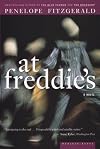
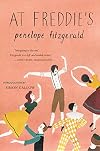
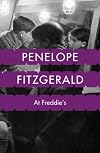
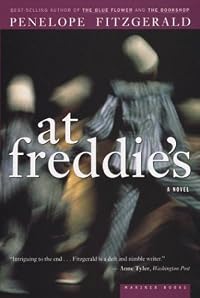
From the Booker Prize-winner of 'Offshore' comes this entertaining tale of a chaotic stage school and its singular headmistress. With a new introduction by Simon Callow. It is the 1960s, in London's West End, and Freddie is the formidable proprietress of the Temple Stage School. Of unknown age and provenance, Freddie is a skirt-swathed enigma - a woman who by sheer force of character and single-minded thrust has turned herself and her school into a national institution. Anyone who is anyone show more must know Freddie. At Freddie's is a wickedly droll comedy of the theatre and its terminally eccentric devotees. show lessTags
Recommendations
















Member Reviews
Penelope Fitzgerald's slender novels are so very brilliant that it is almost possible to miss their perfection. A subtle writer with a true understanding of human foibles and so full of compassion, she rarely misses her mark. At Freddie's, is true to her rare form. Centered around a children's acting school in London during the early 1960s, one meets characters as varied as the incompetent teacher hired to make sure the professional child actors have their state mandated hours of academics to a hard headed business man who is determined to save the school which is perennially broke, though some of his methods are, uh...unorthodox. Take the case of how he attempts to have the school's most gifted child wow the visiting Noel Coward. At show more the center of this theatric microcosm is Freddie, the aging director of the Temple Stage School. Freddie has been adept at cajoling and charming resources from everyone, but times are changing, and the school seems in peril. Besides the question of the school the reader has a love story and the antics of the small stars with their overweening egos and a sham maturity to amuse and worry her. Plus, there is the fate of the gifted Johnathon to be determined.
Fitzgerald actually spent time at such a school as a teacher in the '60s so she knows her stuff. In fact, one of the amazing things about the writer is the volumes of stuff she does know and her ability to weave it artlessly into her stories. Compare to the bookish, heavily researched novels of A. S. Byatt. Byatt will wow one with the mass of information she imports to her work and obvious meticulous research she pours into the crafting of her novels. But as a reader, one feels the burn. With Fitzgerald, the wow comes later. One never feels overwhelmed by the sheer volume of information, instead later one realizes one knows all sorts so things about turn of the century dining halls at Cambridge, bourgeoisie housekeeping in 17th century Germany, BBC regulations in WWII and educational laws as they pertain to little shits like Matty of At Freddie's.
A true treasure of 20th century English literature. show less
Fitzgerald actually spent time at such a school as a teacher in the '60s so she knows her stuff. In fact, one of the amazing things about the writer is the volumes of stuff she does know and her ability to weave it artlessly into her stories. Compare to the bookish, heavily researched novels of A. S. Byatt. Byatt will wow one with the mass of information she imports to her work and obvious meticulous research she pours into the crafting of her novels. But as a reader, one feels the burn. With Fitzgerald, the wow comes later. One never feels overwhelmed by the sheer volume of information, instead later one realizes one knows all sorts so things about turn of the century dining halls at Cambridge, bourgeoisie housekeeping in 17th century Germany, BBC regulations in WWII and educational laws as they pertain to little shits like Matty of At Freddie's.
A true treasure of 20th century English literature. show less
I've yet to meet a Penelope Fitzgerald book that I haven't liked, but I'm not sure that I loved this one, either. It is well-situated in its time in place: it's drawn -- at least in part -- from the author's own experiences and is set in comfortable, gray postwar London. We get an interesting behind-the-scenes of what goes in the theater, well, behind the scenes. The novel's characters are, as might be expected, impeccably drawn, not least the enigmatic title character, who, wheedles, charms and politicks relentlessly to ensure the survival of her Shakespeare-centric theater school.
"At Freddie's" is well constructed in the same way that Fitzgerald's "The Bookshop" is: the characters' fates are sealed so slowly that it's difficult for show more either the reader and the characters themselves to realize what is happening to them. Which only goes to show how good a writer Penelope Fitzgerald was. At the same time, things move so slowly here that I sort of wished, at times, that the plot manifested itself a little more clearly, for once. Simon Callow, who wrote the introduction to my edition, said that he'd always wanted to make a film version of this novel, but I'm not sure how you'd adapt such a subtle novel to the screen. I suspect that it might not really be possible.
As usual, Fitzgerald describes a world of aggressors and victims, but, unlike most of her books, the true natures of some of the novel's characters aren't really revealed until the last few pages of the book. It ends, in other words, with a twist, which is something that readers may or may not appreciate. The most memorable parts of this one, however, as mentioned by a previous reviewer, might be its portraits of two young actors, one of whom seems destined for stardom, the other of which, a true artist-in-the-making, has a much more uncertain road ahead of him. Even more impressive, however, are the careful parallels that the author draws between the way things are runs at Freddie's and the way power is being being concentrated in British society at large. Fitzgerald had, in addition to her many other gifts, an amazingly deep understanding of the machinations of power, and it's certainly on display here. Honestly, these parallels are drawn so artfully that I didn't realize they were there for some time after I'd finished reading this one. Even if I didn't particularly love this novel, I have to admit that this neat little allegory is a writerly feat of the highest order. Recommended to Fitzgerald's fans, theater folk, and lovers of well-written, clear-eyed novels everywhere. show less
"At Freddie's" is well constructed in the same way that Fitzgerald's "The Bookshop" is: the characters' fates are sealed so slowly that it's difficult for show more either the reader and the characters themselves to realize what is happening to them. Which only goes to show how good a writer Penelope Fitzgerald was. At the same time, things move so slowly here that I sort of wished, at times, that the plot manifested itself a little more clearly, for once. Simon Callow, who wrote the introduction to my edition, said that he'd always wanted to make a film version of this novel, but I'm not sure how you'd adapt such a subtle novel to the screen. I suspect that it might not really be possible.
As usual, Fitzgerald describes a world of aggressors and victims, but, unlike most of her books, the true natures of some of the novel's characters aren't really revealed until the last few pages of the book. It ends, in other words, with a twist, which is something that readers may or may not appreciate. The most memorable parts of this one, however, as mentioned by a previous reviewer, might be its portraits of two young actors, one of whom seems destined for stardom, the other of which, a true artist-in-the-making, has a much more uncertain road ahead of him. Even more impressive, however, are the careful parallels that the author draws between the way things are runs at Freddie's and the way power is being being concentrated in British society at large. Fitzgerald had, in addition to her many other gifts, an amazingly deep understanding of the machinations of power, and it's certainly on display here. Honestly, these parallels are drawn so artfully that I didn't realize they were there for some time after I'd finished reading this one. Even if I didn't particularly love this novel, I have to admit that this neat little allegory is a writerly feat of the highest order. Recommended to Fitzgerald's fans, theater folk, and lovers of well-written, clear-eyed novels everywhere. show less
In post-war Britain, the theatrical school offering professional training for child actors targeting the few child roles in Shakespeare or, more often, a run in a pantomime, was practically an anachronism. Television and film did not need children who could act; they just needed cuteness. Nevertheless, Freddie’s (otherwise known as the Temple Stage School) persevered. Led by the irrepressible proprietress, Freddie, the school survived through guile, charity, and outright bluff. A small cohort of teachers and staff took charge of the diminutive student body whose egos and charm more than made up for their age and size. Wise beyond their years, as a steady diet of the bard and panto is bound to make one, the child actors suffer the show more vicissitudes of life with appropriate tragic or comic excess.
The writing here is almost as light and ephemeral as the world in which the characters live. In essence, a series of comic set pieces punctuate the novel. In most, Freddie herself — ancient beyond years and surprisingly knowledgeable of the criminal underbelly of London’s east end as well as, oddly, obscure Italian dialects — takes centre stage. Seemingly on the edges of these stagey moments life continues to happen: love, death, small victories, and numerous defeats. It can seem inconsequential. So much so that the final moments of the novel may catch you entirely by surprise. As poignant and rich with existential anguish as Joyce’s ‘The Dead’. Breathtaking.
Always highly recommended. show less
The writing here is almost as light and ephemeral as the world in which the characters live. In essence, a series of comic set pieces punctuate the novel. In most, Freddie herself — ancient beyond years and surprisingly knowledgeable of the criminal underbelly of London’s east end as well as, oddly, obscure Italian dialects — takes centre stage. Seemingly on the edges of these stagey moments life continues to happen: love, death, small victories, and numerous defeats. It can seem inconsequential. So much so that the final moments of the novel may catch you entirely by surprise. As poignant and rich with existential anguish as Joyce’s ‘The Dead’. Breathtaking.
Always highly recommended. show less
''Although Freddie usually began by saying something gracious, the caller's first instinct was that of self-preservation, or even to make sure that the door, now to the rear, could be reached in a hurry. Yet in fact, no one left before they had to. The margin between alarm and fascination was soon crossed.''
At Freddie's, young students are preparing to conquer the London stage and film industry. At Freddie's, despairing teachers with questionable skills do the best they can through meager means. At Freddie's, a formidable headmistress has created an institution out of nothing. They say Theatre is hard but you have seen nothing like Freddie yet...
''You must tell me the moment I start going to pieces.''
Penelope Fitzgerald worked for the show more BBC during the nightmare of the Blitz. She offered her services in a small bookshop in Suffolk, she lived on a barge on the Thames, working as a teacher at a stage school. She is the ideal person to take us on a tour in a world - because that's what Theatre is - of talent and misfits, opportunities and disaster. And somewhere at the back of the auditorium, knowledge, and hope are clapping knowingly...
Freddie is a force on her own. She has succeeded in creating an institution but what happens now? The 1960s are changing the world day by day, the demands of the entertainment industry are different, the competent teachers are hard to find. The young students don't seem to care about knowledge and personality. They just want the right ''now'' that will bring them to the wealthy ''tomorrow.'' Pierce, an indifferent young man, is a teacher who wants a salary and a wife. On his own terms. Hannah is the ray of light. The idealist teacher that tries and tries but is in danger to fail because of her fleeting heart. She portrays the independence that is becoming a reality for the young women of the era.
One could say that not much happens in the course of the novel. But this is not that kind of a novel. This is a comedy of manners and characters. A look, however brief, to the reality of the children who saw Theatre as a way to success, in a country where Theatre runs in the blood of every citizen. The reality of the teachers who try to communicate with their students, while their problems have to be put aside in order not to crush them. In a time when values and codes of behaviour are being altered, a headmistress refuses to go with the flow. And where does Shakespeare stand in this situation?
In elegant sarcasm and acute characterization, Penelope Fitzgerald writes about a society and an institution that try to decide which direction to follow.
''It's a great mistake to live with past victories.''
My reviews can also be found on https://theopinionatedreaderblog.wordpress.com/ show less
At Freddie's, young students are preparing to conquer the London stage and film industry. At Freddie's, despairing teachers with questionable skills do the best they can through meager means. At Freddie's, a formidable headmistress has created an institution out of nothing. They say Theatre is hard but you have seen nothing like Freddie yet...
''You must tell me the moment I start going to pieces.''
Penelope Fitzgerald worked for the show more BBC during the nightmare of the Blitz. She offered her services in a small bookshop in Suffolk, she lived on a barge on the Thames, working as a teacher at a stage school. She is the ideal person to take us on a tour in a world - because that's what Theatre is - of talent and misfits, opportunities and disaster. And somewhere at the back of the auditorium, knowledge, and hope are clapping knowingly...
Freddie is a force on her own. She has succeeded in creating an institution but what happens now? The 1960s are changing the world day by day, the demands of the entertainment industry are different, the competent teachers are hard to find. The young students don't seem to care about knowledge and personality. They just want the right ''now'' that will bring them to the wealthy ''tomorrow.'' Pierce, an indifferent young man, is a teacher who wants a salary and a wife. On his own terms. Hannah is the ray of light. The idealist teacher that tries and tries but is in danger to fail because of her fleeting heart. She portrays the independence that is becoming a reality for the young women of the era.
One could say that not much happens in the course of the novel. But this is not that kind of a novel. This is a comedy of manners and characters. A look, however brief, to the reality of the children who saw Theatre as a way to success, in a country where Theatre runs in the blood of every citizen. The reality of the teachers who try to communicate with their students, while their problems have to be put aside in order not to crush them. In a time when values and codes of behaviour are being altered, a headmistress refuses to go with the flow. And where does Shakespeare stand in this situation?
In elegant sarcasm and acute characterization, Penelope Fitzgerald writes about a society and an institution that try to decide which direction to follow.
''It's a great mistake to live with past victories.''
My reviews can also be found on https://theopinionatedreaderblog.wordpress.com/ show less
Another flawless novel. Freddie runs a theatre school for children, right in the theatre district. Times are changing and Freddie is lagging behind and the school, always in dire financial straits, is going deeper than ever, perhaps fatally. Along comes Mr. Blatt with the money to help out, but he hasn't taken into account Freddie herself. PF tells you exactly what you need to know to fill in the rest of the picture. As in Offshore she chooses to illuminate a group of eccentric people who are gathered around a woman with charisma and participating in a life that is out of the mainstream, this time the theatrical life. There are children, cheeky and appealing, and more or less running wild and there is a doomed love affair . . . you are show more privileged to be dipped into a particular moment of change in a way of life that has gone on so long that it seems unshakeable - that is what the novel is focussed on and it supercedes what actually might happen to each character. ****1/2 show less
Penelope Fitzgerald is one of my favorite writers. I think this might be my favorite work of hers. I always notice how her wit turns on a dime in a somewhat conversational way, but it is unusual for me to laugh out loud as much as I did in this book. As ever, her humor is a little melancholy though. Her characters are fecklessly energetic and so, lots happens to them in a short amount of time and prose. I think her writing would appeals to someone like me who likes poetry. Every line in the book deserves a double-take. She packs a lot of meaning into small details. I find her characters eccentric, but haunting. I think about them for days afterwards.
Penelope Fitzgerald's slender novels are so very brilliant that it is almost possible to miss their perfection. A subtle writer with a true understanding of human foibles and so full of compassion, she rarely misses her mark. At Freddie's, is true to her rare form. Centered around a children's acting school in London during the early 1960s, one meets characters as varied as the incompetent teacher hired to make sure the professional child actors have their state mandated hours of academics to a hard headed business man who is determined to save the school which is perennially broke, though some of his methods are, uh...unorthodox. Take the case of how he attempts to have the school's most gifted child wow the visiting Noel Coward. At show more the center of this theatric microcosm is Freddie, the aging director of the Temple Stage School. Freddie has been adept at cajoling and charming resources from everyone, but times are changing, and the school seems in peril. Besides the question of the school the reader has a love story and the antics of the small stars with their overweening egos and a sham maturity to amuse and worry her. Plus, there is the fate of the gifted Johnathon to be determined.
Fitzgerald actually spent time at such a school as a teacher in the '60s so she knows her stuff. In fact, one of the amazing things about the writer is the volumes of stuff she does know and her ability to weave it artlessly into her stories. Compare to the bookish, heavily researched novels of A. S. Byatt. Byatt will wow one with the mass of information she imports to her work and obvious meticulous research she pours into the crafting of her novels. But as a reader, one feels the burn. With Fitzgerald, the wow comes later. One never feels overwhelmed by the sheer volume of information, instead later one realizes one knows all sorts so things about turn of the century dining halls at Cambridge, bourgeoisie housekeeping in 17th century Germany, BBC regulations in WWII and educational laws as they pertain to little shits like Matty of At Freddie's.
A true treasure of 20th century English literature. show less
Fitzgerald actually spent time at such a school as a teacher in the '60s so she knows her stuff. In fact, one of the amazing things about the writer is the volumes of stuff she does know and her ability to weave it artlessly into her stories. Compare to the bookish, heavily researched novels of A. S. Byatt. Byatt will wow one with the mass of information she imports to her work and obvious meticulous research she pours into the crafting of her novels. But as a reader, one feels the burn. With Fitzgerald, the wow comes later. One never feels overwhelmed by the sheer volume of information, instead later one realizes one knows all sorts so things about turn of the century dining halls at Cambridge, bourgeoisie housekeeping in 17th century Germany, BBC regulations in WWII and educational laws as they pertain to little shits like Matty of At Freddie's.
A true treasure of 20th century English literature. show less
Members
- Recently Added By
Author Information

24+ Works 12,068 Members
In 1997 Penelope Fitzgerald's novel The Blue Flower was named one of the New York Times Book Review's eleven Best Books of the Year. Winner of the 1979 Booker Prize for Offshore, Fitzgerald was also short-listed for the Booker for The Bookshop. The Beginning of Spring, and The Gate of Angels. Penelope Fitzgerald lives in England. (Bowker Author show more Biography) Penelope Fitzgerald, one of England's most-celebrated contemporary writers, is the author of "The Blue Flower," which won the National Book Critics Circle Award. Winner of the 1979 Booker Prize for "Offshore," she was also shortlisted for the Booker for "The Bookshop," "The Beginning of Spring," & "The Gate of Angels." She lives in London. (Bowker Author Biography) Admired by many as one of the leading English novelists of her day, Penelope Fitzgerald (1916-2000) wrote some twelve books of fiction and nonfiction over the course of her writing career; which began at the age of sixty. She won the National Book Critics Circle Award for "The Blue Flower" and the Booker Prize for "Offshore". She died on April 28, 2000, at the age of eighty-three. (Bowker Author Biography) show less
Some Editions
Awards and Honors
Common Knowledge
- Original publication date
- 1982
- Important places
- London, England, UK
Classifications
Statistics
- Members
- 401
- Popularity
- 77,441
- Reviews
- 13
- Rating
- (3.54)
- Languages
- English, Italian, Spanish
- Media
- Paper, Ebook
- ISBNs
- 14
- UPCs
- 1
- ASINs
- 5