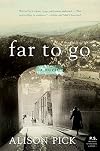
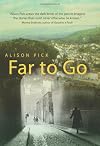
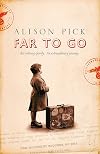
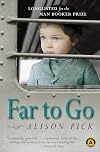
Far to Go
by Alison Pick
On This Page
Description
"Deftlystructured and . . . seamless." -Globe and Mail (Toronto) "[A]nuanced and layered portrait of betrayal. . . . The strength of Far to Golies in Pick's ability to show precisely why one person could turn on another,how a single word spoken on impulse could have devastating results." -MontrealGazette Alison Pick, acclaimed author of The Sweet Edge, delivers the moving and suspenseful story of an affluentJewish family in Czechoslovakia at the onset of World War II, and the governesswho show more forever alters their future when she seeks shelter in their midst.Interwoven with a present-day narrative revealing each character's fates after thewar, Far to Go is an emotionallyvivid, masterfully wrought narrative that the Montreal Gazette calls, "an intriguing experiment in the art ofstorytelling.". show lessTags
Recommendations






















Member Recommendations

Member Reviews
“I wish this were a happy story”, this tale begins. It’s a good warning. This is the tale of the invasion of Czechoslovakia by the Nazis in early WW2. Patel and Annaliese Bauer, their son Pepik, and nanny Marta are all shown adapting or not to the creeping evil that washes over their country- the gradually increasing restrictions, the enclosing sense of panic, the compromises one and all make- including the narrator of this story.
It is so well done! Though most of the characters were unsympathetic, I could not help but feel for them all, tied as they were to a doom so all-encompassing.
Throughout the book there are excerpts from the family letters, unfailingly ended with a postscript of their name, date of death, camp where show more killed.
I have been aware of the tragedy of Ww2 all of my life, I even lived in Germany for some time and was vaguely revolted by the way the fruit trees were so fertile (all that blood meal?). But this story affected me quite strongly and it is for that reason I highly recommend it. It is far too easy as time goes on to forget the inhumanity that occurred (and to be fair, is still occurring, with different victims and perpetrators). Sometimes a good story brings it all back, reminds us of how close we dance to a similar situation as fascism returns, as prejudice creates violence, as we watch it go by without comment. This story is a good, involving, and thought-provoking slap upside the head.
The ending has surprises but it will be the characters that pull you on.
Definitely worth a read. show less
It is so well done! Though most of the characters were unsympathetic, I could not help but feel for them all, tied as they were to a doom so all-encompassing.
Throughout the book there are excerpts from the family letters, unfailingly ended with a postscript of their name, date of death, camp where show more killed.
I have been aware of the tragedy of Ww2 all of my life, I even lived in Germany for some time and was vaguely revolted by the way the fruit trees were so fertile (all that blood meal?). But this story affected me quite strongly and it is for that reason I highly recommend it. It is far too easy as time goes on to forget the inhumanity that occurred (and to be fair, is still occurring, with different victims and perpetrators). Sometimes a good story brings it all back, reminds us of how close we dance to a similar situation as fascism returns, as prejudice creates violence, as we watch it go by without comment. This story is a good, involving, and thought-provoking slap upside the head.
The ending has surprises but it will be the characters that pull you on.
Definitely worth a read. show less
I chose to read this book because it was long-listed for the Booker Prize this year.
It was with some misgiving that I began reading. Here are my shameful thoughts presented to you in all honesty..."Not another book about the Holocaust...How many do I have to read?" My Jiminy Cricket conscience tells me - "Never enough". After all, I only have to read the stories, don't I? And perhaps it might be a good idea to tell them to my children - even though they are well beyond bedtime stories. And this is not the stuff of bedtime stories.
Do you wonder, as I do, how memories/history will change once our slim connection with the past evaporates? As the generation before you dies and you are pushed to the front line? What orders should you give ? show more What philosophy should you bequeath to the next generation? My children perceive me as ancient, of course. The way I perceived my mother as ancient. The 1940s to my young eyes were so funny and old-fashioned in terms of dress and hopelessly romantic love songs (think "We'll meet again, don't know where, don't know when"). And yet they were only 30 years ago when I was a teenager. Now my kids are close to 20. It's hard to imagine that they must see the 1970s as funny and old fashioned. What must they think of WWII and the Nazi atrocities? It must seem very far away and hard to believe.
And so, yes. Reading Far to Go wasn't easy - and yes, to a degree, we all know how it will end. But I didn't know about the Kindertransport. So it is a story from a different angle. And the angle is further fractured and complicated by the author's own connection to the tragedy which she chooses to present at this point in time in a fictionalised form.
It is a story about making difficult decisions. About trying to read "history" as it happens. About deciding what to pack. About sacrifice.
It is ultimately a story about identity. And what is identity but a jumbled up mass of stories that people have told you about yourself or you have told you about yourself. What if someone questions your identity? What if your identity becomes dangerous to own? What if you thought you were something and then you are told years later that in fact you are something else? How does that change you? Which bit of you is real?
It is a good story. And one that leaves many questions. The best kind really. show less
It was with some misgiving that I began reading. Here are my shameful thoughts presented to you in all honesty..."Not another book about the Holocaust...How many do I have to read?" My Jiminy Cricket conscience tells me - "Never enough". After all, I only have to read the stories, don't I? And perhaps it might be a good idea to tell them to my children - even though they are well beyond bedtime stories. And this is not the stuff of bedtime stories.
Do you wonder, as I do, how memories/history will change once our slim connection with the past evaporates? As the generation before you dies and you are pushed to the front line? What orders should you give ? show more What philosophy should you bequeath to the next generation? My children perceive me as ancient, of course. The way I perceived my mother as ancient. The 1940s to my young eyes were so funny and old-fashioned in terms of dress and hopelessly romantic love songs (think "We'll meet again, don't know where, don't know when"). And yet they were only 30 years ago when I was a teenager. Now my kids are close to 20. It's hard to imagine that they must see the 1970s as funny and old fashioned. What must they think of WWII and the Nazi atrocities? It must seem very far away and hard to believe.
And so, yes. Reading Far to Go wasn't easy - and yes, to a degree, we all know how it will end. But I didn't know about the Kindertransport. So it is a story from a different angle. And the angle is further fractured and complicated by the author's own connection to the tragedy which she chooses to present at this point in time in a fictionalised form.
It is a story about making difficult decisions. About trying to read "history" as it happens. About deciding what to pack. About sacrifice.
It is ultimately a story about identity. And what is identity but a jumbled up mass of stories that people have told you about yourself or you have told you about yourself. What if someone questions your identity? What if your identity becomes dangerous to own? What if you thought you were something and then you are told years later that in fact you are something else? How does that change you? Which bit of you is real?
It is a good story. And one that leaves many questions. The best kind really. show less
This novel treads familiar ground: the fate of a Jewish family in Czechoslovakia with the dismemberment of the state in 1939 following the Munich Agreement and the eventual occupation of Prague, followed by the relentless Aryanization of society with restrictions increasingly placed on personal, professional, academic lives of Jews, the loss of friends and businesses, the personal degradations and even murder on the streets, the increasing isolation; and it ties in the heart-breaking but life-saving Kindertransport that took thousands of Jewish children to safety in Britain and beyond. Pick tells the story largely through the eyes and thoughts of Marta, a nanny-housekeeper to Pavel and Anneliese Bauer and their son Pepik, non-observant show more Jews who consider themselves completely assimilated, although Pavel starts to feel the tug of his Jewish roots as his world compresses.
At first, with the surrender of Sudentenland, some Jews take flight, but Pavel is determined to stay. He owns a textile factory and while Anneliese says that she feels, “Like a rabbit in a hole”, Pavel clings to the belief that he only has to make himself “indispensable” to survive, a mistaken calculation that thousands of others were to make all across Europe because they did not understand that “indispensability” was, at best, a temporary reprieve; in the end, economic calculations did not outweigh racial policy. The net closes tighter around the family until finally they try to escape, but they are betrayed and turned back at the French border.
The story is told largely through the eyes of Marta, the nanny, but the perspective shifts with interludes of first-person narration by an academic who specializes in testimony of Holocaust survivors, especially those from the Kindertransport, and we gradually learn of a closer connection between this woman and the Bauer family. It is, as I said, an oft-told story, but what gives this novel its strength is that it is made quite clear from the beginning that there is no happy ending, that the Bauers will have their lives disrupted and betrayed and destroyed. It is a novel about the evil that can be done by omission as much as sins of commission, about slights perceived where none were intended and revenged with terrible consequences. It is about losing moral compass and committing desperate acts to survive. It is about the inherent instability of life and that the only thing that can be truly counted on is change. It is also about the impossibility of ever truly understanding or knowing the past, of ever finding a true causality in events because those causalities, those linkages are undecipherable in the past, even more so than the present. As Pick puts it:
“…the train of memory starts to move forward. Slowly at first, but gathering speed. The landscape drifts by like the last wisps of a dream. In the early morning hours the train begins to move into the opposite of memory. Into a future time when someone will look back at us now, wondering what our days were like and why we did the things we did. Or why we did not act, as the case might equally be. Someone will be unable to make our lives make sense. The train has no answers, only forward momentum. We open our eyes. It is moving very quickly now. Moving always ahead. It never arrives. “ (September, 2010) show less
At first, with the surrender of Sudentenland, some Jews take flight, but Pavel is determined to stay. He owns a textile factory and while Anneliese says that she feels, “Like a rabbit in a hole”, Pavel clings to the belief that he only has to make himself “indispensable” to survive, a mistaken calculation that thousands of others were to make all across Europe because they did not understand that “indispensability” was, at best, a temporary reprieve; in the end, economic calculations did not outweigh racial policy. The net closes tighter around the family until finally they try to escape, but they are betrayed and turned back at the French border.
The story is told largely through the eyes of Marta, the nanny, but the perspective shifts with interludes of first-person narration by an academic who specializes in testimony of Holocaust survivors, especially those from the Kindertransport, and we gradually learn of a closer connection between this woman and the Bauer family. It is, as I said, an oft-told story, but what gives this novel its strength is that it is made quite clear from the beginning that there is no happy ending, that the Bauers will have their lives disrupted and betrayed and destroyed. It is a novel about the evil that can be done by omission as much as sins of commission, about slights perceived where none were intended and revenged with terrible consequences. It is about losing moral compass and committing desperate acts to survive. It is about the inherent instability of life and that the only thing that can be truly counted on is change. It is also about the impossibility of ever truly understanding or knowing the past, of ever finding a true causality in events because those causalities, those linkages are undecipherable in the past, even more so than the present. As Pick puts it:
“…the train of memory starts to move forward. Slowly at first, but gathering speed. The landscape drifts by like the last wisps of a dream. In the early morning hours the train begins to move into the opposite of memory. Into a future time when someone will look back at us now, wondering what our days were like and why we did the things we did. Or why we did not act, as the case might equally be. Someone will be unable to make our lives make sense. The train has no answers, only forward momentum. We open our eyes. It is moving very quickly now. Moving always ahead. It never arrives. “ (September, 2010) show less
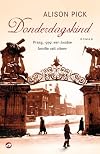
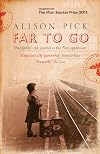
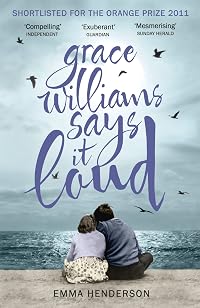
I must say, the UK cover of this book tells the story in a glance. I believe that's the first thing I noticed.
Novels about the Holocaust are nothing new, and I got to a point some time ago where I just quit reading them. Although it is an essential time that should remain as a period to never forget, at some point I got to where a) I felt saturated, having seen many of the same content and literary conventions reappearing again and again and b) I just had to turn away from the emotional toll some of these books brought on. I do have a few on my tbr shelf yet to read (Austerlitz and Panorama to name a couple), but in general I don't make this type of literature my first choice of reading material. Truthfully, had this book not been on show more the Booker Prize longlist this year I probably would never have picked it up, and as it turns out, that would have been a crying shame. Although it has many of the same elements from other Holocaust literature, there are some fundamental differences I didn't expect in Far to Go that set it apart.
Far to Go alternates between two times and two places: Czechoslovakia on the eve of and during the Nazi invasion and occupation, and modern Montreal. In Czechoslovakia, we meet the Bauer family, an ordinary upper middle-class family, living a normal life: Pavel, Annaliese and their young son Pepik, who is watched over by his nanny Marta. Pavel owns a textiles factory that allows his family to live well. Annaliese, who grew up in Prague, wears the most current fashions, sports "large Greta Garbo sunglasses and fresh red lipstick," and falls well into her social role as wife of a wealthy industrialist. Annaliese has had some tragedy in her life: she lost her baby daughter when she was only three weeks old. It was Marta who took care of her afterwards, and who takes on most of Pepik's upbringing as well. The fact that the family is Jewish isn't a major factor in their lives -- Pavel's self identity is more tied up in his love for his country and pride in his forbears.
But the Nazis begin to roll into Czechoslovakia. As they hear about and witness events by Nazi soldiers and ordinary people being caught up in the anti-Jewish rhetoric, and as the factory is taken over, Annaliese realizes that her family may not be so safe, and begins to try to convince Pavel that it's time to leave. Marta, who is not Jewish, is involved in a secret affair with Ernst, a married man, Pavel's foreman, and good friend to the Bauers. As the Nazis begin to get closer to home, she begins to sense a strange shift in him, one that runs contrary to the Ernst she thinks she knows.
While up to this point the novel employs several familiar components of other Holocaust literature, Pick intersperses a modern-day character in between the ongoing story of the Bauers that keeps this book from becoming like so many others. In Montreal, a woman named Lisa is busy pursuing her life's work, the collection and documentation of stories told by those who escaped the Holocaust as young children thanks to the Kindertransport program. As the Kindertransport Association website notes, this effort began after
"... the atrocities in Germany and Austria, the untiring persistence of the refuge advocates, and philosemitic sympathy in some high places – in the words of British Foreign Minister Samuel Hoare “Here is a chance of taking the young generation of a great people, here is a chance of mitigating to some extend the terrible suffering of their parents and their friends” – swayed the government to permit an unspecified number of children under the age of 17 to enter the United Kingdom. It was agreed to admit the children on temporary travel documents, with the idea that they would rejoin their parents when the crisis was over. A fifty Pound Sterling bond had to be posted for each child “to assure their ultimate resettlement.” The children were to travel in sealed trains. The first transport left on December 1, 1938, less than one month after Kristallnacht; the last left on September 1, 1939—just two days before Great Britain's entry into the war, which marked the end of the program. By that time, approximately 10,000 children had made the trip."
Part of Lisa's work involves letters sent to these children and to those who took them in by the parents left behind; the book actually opens with one of these that will immediately draw in the reader to find out more, and more letters and stories are scattered throughout the novel that could tell the story in their own right.
Lisa explains that the Kindertransport story is filled with ambiguities: while she's found many examples of things having worked out for these relocated children, the bulk of the stories are "cases of trauma and upset." Many of the children arrived speaking no English, to poor families, and have had "everything solid ... pulled out from under them." The addition of this researcher, who admittedly can't always "frame the world in objective terms," as academics are supposed to, and the Kindertransport at the heart of this novel, provides the novel with an added dimension. These elements set it apart from the more conventional aspects of the Bauer family story, as does the novel's end.
Far to Go is a wonderful book. What I appreciated most about this novel was not so much the story itself, but something else that may not seem so obvious as you're reading through it. I came away with this feeling that the book works so well because Alison Pick chose a subject that is important to her, and that although she's going to make some money on this book, in many ways it rises above the simply commercial. While she wants her readers to connect with their feelings about the Holocaust, there's so much more here than just riding the wave of emotions you feel about that time period to get you through the novel. I may get torched for saying this (and flame away), but sometimes I've spotted this approach in a few books set during the Holocaust. There is a real story at work here -- how the Kindertransport affected those who made it out, those who were left behind, and those who made room for these children in their homes. There are, of course, also the events leading up to the need for its creation. I don't mean to imply that Far to Go is at all clinical in the telling, because the opposite is true -- unless you're cold and unfeeling, the novel will unavoidably tug at your emotional heartstrings. I've often noticed that sometimes the best writing happens when an author is passionate about what he/she writes, and that is definitely the case here.
So go get a box of tissues and have nothing else planned while you're reading this book. You will not want to put it down. show less
Novels about the Holocaust are nothing new, and I got to a point some time ago where I just quit reading them. Although it is an essential time that should remain as a period to never forget, at some point I got to where a) I felt saturated, having seen many of the same content and literary conventions reappearing again and again and b) I just had to turn away from the emotional toll some of these books brought on. I do have a few on my tbr shelf yet to read (Austerlitz and Panorama to name a couple), but in general I don't make this type of literature my first choice of reading material. Truthfully, had this book not been on show more the Booker Prize longlist this year I probably would never have picked it up, and as it turns out, that would have been a crying shame. Although it has many of the same elements from other Holocaust literature, there are some fundamental differences I didn't expect in Far to Go that set it apart.
Far to Go alternates between two times and two places: Czechoslovakia on the eve of and during the Nazi invasion and occupation, and modern Montreal. In Czechoslovakia, we meet the Bauer family, an ordinary upper middle-class family, living a normal life: Pavel, Annaliese and their young son Pepik, who is watched over by his nanny Marta. Pavel owns a textiles factory that allows his family to live well. Annaliese, who grew up in Prague, wears the most current fashions, sports "large Greta Garbo sunglasses and fresh red lipstick," and falls well into her social role as wife of a wealthy industrialist. Annaliese has had some tragedy in her life: she lost her baby daughter when she was only three weeks old. It was Marta who took care of her afterwards, and who takes on most of Pepik's upbringing as well. The fact that the family is Jewish isn't a major factor in their lives -- Pavel's self identity is more tied up in his love for his country and pride in his forbears.
But the Nazis begin to roll into Czechoslovakia. As they hear about and witness events by Nazi soldiers and ordinary people being caught up in the anti-Jewish rhetoric, and as the factory is taken over, Annaliese realizes that her family may not be so safe, and begins to try to convince Pavel that it's time to leave. Marta, who is not Jewish, is involved in a secret affair with Ernst, a married man, Pavel's foreman, and good friend to the Bauers. As the Nazis begin to get closer to home, she begins to sense a strange shift in him, one that runs contrary to the Ernst she thinks she knows.
While up to this point the novel employs several familiar components of other Holocaust literature, Pick intersperses a modern-day character in between the ongoing story of the Bauers that keeps this book from becoming like so many others. In Montreal, a woman named Lisa is busy pursuing her life's work, the collection and documentation of stories told by those who escaped the Holocaust as young children thanks to the Kindertransport program. As the Kindertransport Association website notes, this effort began after
"... the atrocities in Germany and Austria, the untiring persistence of the refuge advocates, and philosemitic sympathy in some high places – in the words of British Foreign Minister Samuel Hoare “Here is a chance of taking the young generation of a great people, here is a chance of mitigating to some extend the terrible suffering of their parents and their friends” – swayed the government to permit an unspecified number of children under the age of 17 to enter the United Kingdom. It was agreed to admit the children on temporary travel documents, with the idea that they would rejoin their parents when the crisis was over. A fifty Pound Sterling bond had to be posted for each child “to assure their ultimate resettlement.” The children were to travel in sealed trains. The first transport left on December 1, 1938, less than one month after Kristallnacht; the last left on September 1, 1939—just two days before Great Britain's entry into the war, which marked the end of the program. By that time, approximately 10,000 children had made the trip."
Part of Lisa's work involves letters sent to these children and to those who took them in by the parents left behind; the book actually opens with one of these that will immediately draw in the reader to find out more, and more letters and stories are scattered throughout the novel that could tell the story in their own right.
Lisa explains that the Kindertransport story is filled with ambiguities: while she's found many examples of things having worked out for these relocated children, the bulk of the stories are "cases of trauma and upset." Many of the children arrived speaking no English, to poor families, and have had "everything solid ... pulled out from under them." The addition of this researcher, who admittedly can't always "frame the world in objective terms," as academics are supposed to, and the Kindertransport at the heart of this novel, provides the novel with an added dimension. These elements set it apart from the more conventional aspects of the Bauer family story, as does the novel's end.
Far to Go is a wonderful book. What I appreciated most about this novel was not so much the story itself, but something else that may not seem so obvious as you're reading through it. I came away with this feeling that the book works so well because Alison Pick chose a subject that is important to her, and that although she's going to make some money on this book, in many ways it rises above the simply commercial. While she wants her readers to connect with their feelings about the Holocaust, there's so much more here than just riding the wave of emotions you feel about that time period to get you through the novel. I may get torched for saying this (and flame away), but sometimes I've spotted this approach in a few books set during the Holocaust. There is a real story at work here -- how the Kindertransport affected those who made it out, those who were left behind, and those who made room for these children in their homes. There are, of course, also the events leading up to the need for its creation. I don't mean to imply that Far to Go is at all clinical in the telling, because the opposite is true -- unless you're cold and unfeeling, the novel will unavoidably tug at your emotional heartstrings. I've often noticed that sometimes the best writing happens when an author is passionate about what he/she writes, and that is definitely the case here.
So go get a box of tissues and have nothing else planned while you're reading this book. You will not want to put it down. show less
Far to Go is set mainly in the Sudetenland (the areas in Czechoslovakia near the border with Germany) and Prague in 1937 and 1938. It's written by a Canadian author, Alison Pick, and is based on her grandparents' lives. The main character, Marta, is nanny to Pepik Bauer, and very close to him - closer than his mother, almost. His parents, Pavel and Anneliese Bauer, are wealthy Jews in the Sudetenland, where Pavel owns a textile factory. As the novel progresses, Pavel changes from being a secular Jew who knows very little about his religious background to being much more observant. The novel is about life closing in on the family (and to a lesser extent Marta) as Hitler first takes over the Sudetenland then Prague. The detailed part of show more the story stops before World War 2 starts.
I really liked how Pick showed that a series of small decisions were crucial to what happened to the family, and Marta 's dilemmas were quite convincing. What I didn't like was the way she had a modern looking back story line woven through the book - it felt like a creative writing course device, and the twist wasn't necessary for a good story. A few too many sentences like "The moon rubbed the river's back" early on didn't help. I enjoyed Simon Mawer's The Glass Room more, mainly for his better writing, but this one made me cry.
Overall I found it good, with a different perspective from other Holocaust books I've read, and would like to read more about the Kindertransport children now. show less
I really liked how Pick showed that a series of small decisions were crucial to what happened to the family, and Marta 's dilemmas were quite convincing. What I didn't like was the way she had a modern looking back story line woven through the book - it felt like a creative writing course device, and the twist wasn't necessary for a good story. A few too many sentences like "The moon rubbed the river's back" early on didn't help. I enjoyed Simon Mawer's The Glass Room more, mainly for his better writing, but this one made me cry.
Overall I found it good, with a different perspective from other Holocaust books I've read, and would like to read more about the Kindertransport children now. show less
Far to Go is written by a Canadian writer , who based her book on her grandparents escape from Czechoslovakia during the second World War.Alison Pick, the author, not only based her book on her grandparents' experiences, but also has done quite a bit of research on the topic of Czechoslavakia during WW11, and also on Kindertransport.
Far to Go by Alison Pick is quite broad in scope, covering the time period leading up to WW11 and also the early days of WW11 in Czechoslovakia . She covers the topic of Kindertransport . Kindertransport, which I'd not been aware of before reading this book, was a rescue mission that took place about 9 months before the outbreak of WW11. The Kindertransport mission involved the transport of about 10,000 show more children from Nazi Germany, Poland, Austria and Czechoslovakia to the UK, where the young children were placed with UK foster homes, hostels, and farms. The vast majority of children survived the Kindertransport , but few of the children were reunited with their parents after WW11, because the vast majority of the parents were killed during WW11.
Anyway, although Far To Go involves the topic of Kindertransport , as well as getting into modern day feelings of one child who was a part of Kindertransport effort, the story tells so much more.
Although relatively broad in scope - it's also a very personal story, focusing on one family, a relatively secular Jewish family in Czechoslovakia in 1939. Annelise and Pavel Bauer are a fairly affluent young couple , with one child, Joseph, or " Pepik" as he is nicknamed , and they employ a non - Jewish nanny named Marta Mueller.
It was so interesting to read about the personal reactions of each of these people as war threatened. One of the members of the family is nearly ready to denounce the Jewish Religion - another embraces the traditions and Jewish Religion more strongly then ever in the face of the war on the Jewish. The denial or lack of denial as to what is happening in Czechoslovakia is also very interesting as it varies from person to person. The impact the of threatened war on the marriage is very realistic and the reaction of the young child to all of what is happening is also explored. Marta, the nanny, is both an observer and participant to all of what is happening. I found it to be a eye opening and insightful reading. It was a sad truth to see the Bauer family deceived by close friends who were a part of the Nazi movement.
I did not find the use of a present tense narrator along with the events taking place in 1939 to be confusing at all. In fact it added an element of both mystery and eventual enlightenment.
This is a wonderfully written, engaging story from which I learned much about Czechoslovakia during WW11 . I found it to be a real page turner - such is the mystery of what will happen next. I found myself very involved with the family making choices and suffering during pre WW11. None of the characters are perfect , but all are sympathetic to some degree.
All in all - a wonderful read. 4stars. Far To Go is Long Listed for the 2011 Man Booker prize . show less
Far to Go by Alison Pick is quite broad in scope, covering the time period leading up to WW11 and also the early days of WW11 in Czechoslovakia . She covers the topic of Kindertransport . Kindertransport, which I'd not been aware of before reading this book, was a rescue mission that took place about 9 months before the outbreak of WW11. The Kindertransport mission involved the transport of about 10,000 show more children from Nazi Germany, Poland, Austria and Czechoslovakia to the UK, where the young children were placed with UK foster homes, hostels, and farms. The vast majority of children survived the Kindertransport , but few of the children were reunited with their parents after WW11, because the vast majority of the parents were killed during WW11.
Anyway, although Far To Go involves the topic of Kindertransport , as well as getting into modern day feelings of one child who was a part of Kindertransport effort, the story tells so much more.
Although relatively broad in scope - it's also a very personal story, focusing on one family, a relatively secular Jewish family in Czechoslovakia in 1939. Annelise and Pavel Bauer are a fairly affluent young couple , with one child, Joseph, or " Pepik" as he is nicknamed , and they employ a non - Jewish nanny named Marta Mueller.
It was so interesting to read about the personal reactions of each of these people as war threatened. One of the members of the family is nearly ready to denounce the Jewish Religion - another embraces the traditions and Jewish Religion more strongly then ever in the face of the war on the Jewish. The denial or lack of denial as to what is happening in Czechoslovakia is also very interesting as it varies from person to person. The impact the of threatened war on the marriage is very realistic and the reaction of the young child to all of what is happening is also explored. Marta, the nanny, is both an observer and participant to all of what is happening. I found it to be a eye opening and insightful reading. It was a sad truth to see the Bauer family deceived by close friends who were a part of the Nazi movement.
I did not find the use of a present tense narrator along with the events taking place in 1939 to be confusing at all. In fact it added an element of both mystery and eventual enlightenment.
This is a wonderfully written, engaging story from which I learned much about Czechoslovakia during WW11 . I found it to be a real page turner - such is the mystery of what will happen next. I found myself very involved with the family making choices and suffering during pre WW11. None of the characters are perfect , but all are sympathetic to some degree.
All in all - a wonderful read. 4stars. Far To Go is Long Listed for the 2011 Man Booker prize . show less
A Holocaust book, yes, but one with a strikingly different story. Pick did a remarkable job with this book. The writing is elegant, but not self-consciously arty, and Pick manages to explore the impact of events on several characters in just a couple hundred pages.
Members
- Recently Added By
Published Reviews
ThingScore 88
The year is 1938. Betrayed at Munich by European countries desperate to appease Hitler — “Peace in our time,” infamously crowed Neville Chamberlain — Czechoslovakia is about to be invaded by Germany. Toronto poet and novelist Alison Pick dissects this national tragedy in a multilayered narrative, a tale of betrayals large and small, that focuses on the fates of the Bauers, secular show more Czech Jews.
So much has been written about the Holocaust. Still, Pick, born in 1975 in Toronto and inspired by her Czech grandparents’ grueling five-year journey to Canada, spins a mesmerizing story, threading the personal with the political, the mysterious with the factual. It’s a page-turner show less
So much has been written about the Holocaust. Still, Pick, born in 1975 in Toronto and inspired by her Czech grandparents’ grueling five-year journey to Canada, spins a mesmerizing story, threading the personal with the political, the mysterious with the factual. It’s a page-turner show less
added by vancouverdeb
Allison Pick brings her award-winning poetic sensibilities to a difficult historical subject in Far to Go. A complex story of a family’s struggle set against the backdrop of the Nazi takeover of Czechoslovakia’s Sudetenland, the novel focuses on the Bauer family, secular Jews caught in the rise of anti-Semitism...
added by vancouverdeb
Among readers of serious fiction, Jews and non-Jews, many cringe at the prospect of another novel centred on the Holocaust. Enough already, they moan. Is there anything new to be said? Move on, they urge. And yet. And yet.
By delicately tilting her observer’s mirror, Alison Pick glimpsed the outline of an original tale that could cast new light on old shadows — enough, I argue, that even show more the Holocaust-saturated will admit there’s room for more of these stories if their vantage point is well chosen....Pick wrote an earlier novel and several books of poetry. You might expect a few narrative arabesques; instead there are prosaic pratfalls, tired metaphors and similes, many involving fruit. A group of teenagers are “clustered together like grapes,” something inside of Marta hardens “like the pit at the centre of a piece of summer fruit” and then tightens “like the lid on a Mason jar.” Her story deserves more careful language....So the Holocaust persists in the literary imagination and through the refining fire of fiction a new generation confronts its own version of what it means to be human.
. show less
By delicately tilting her observer’s mirror, Alison Pick glimpsed the outline of an original tale that could cast new light on old shadows — enough, I argue, that even show more the Holocaust-saturated will admit there’s room for more of these stories if their vantage point is well chosen....Pick wrote an earlier novel and several books of poetry. You might expect a few narrative arabesques; instead there are prosaic pratfalls, tired metaphors and similes, many involving fruit. A group of teenagers are “clustered together like grapes,” something inside of Marta hardens “like the pit at the centre of a piece of summer fruit” and then tightens “like the lid on a Mason jar.” Her story deserves more careful language....So the Holocaust persists in the literary imagination and through the refining fire of fiction a new generation confronts its own version of what it means to be human.
. show less
added by vancouverdeb
Lists

Booker Prize
491 works; 62 members

Man Booker Prize Longlist 2011
13 works; 2 members

Books With Nursery Rhyme Titles
37 works; 8 members

Evergreen Award™ Winners and Nominees 2005–2024
200 works; 3 members
Talk Discussions
Past Discussions
Far to Go by Alison Pick in Booker Prize (October 2011)
Author Information

7 Works 618 Members
Some Editions
Awards and Honors
Common Knowledge
- Canonical title
- Far to Go
- Original publication date
- 2010
- People/Characters
- Pavel Bauer; Anneliese Bondy Bauer (Liesel); Joseph Tomas Bauer (Pepik); Marta Meuller; Ernst Anselm; Hella Anselm (show all 20); Eliza Bauer; Sophie; Max Stein; Alzbeta Stein (Bondy); Vera Stein; Eva Stein; Mrs. Milling; Frank Milling; Arthur Milling; Lisa Bauer (Meuller); Rose Berman Bauer; Misha Bauer; Lore Bauer (Leverton); Tomas Bauer
- Important places
- Prague, Czechoslovakia; Czechoslovakia; Sudetenland; Montréal, Québec, Canada
- Important events
- Holocaust; World War II; Kindertransport
- Epigraph
- Only guard yourself and guard your soul carefully, lest you forget the things your eyes saw, and lest these things depart from your heart all the days of your life, and you shall make the them known to your children , and to ... (show all)your children's children. - Deuteronomy 4:9
Monday's child is fair of face,
Tuesday's child is full of grace, Wednesday's child is full of woe, Thursday's child has far to go. ---Mother Goose. - Dedication
- For Ayla---Milacku---And for the one we lost who carried her here.
- First words
- The train will never arrive.
- Last words
- (Click to show. Warning: May contain spoilers.)Soon there'll be nobody left to remember.
(Click to show. Warning: May contain spoilers.)It never arrives
Classifications
Statistics
- Members
- 438
- Popularity
- 70,152
- Reviews
- 29
- Rating
- (3.70)
- Languages
- Dutch, English, French
- Media
- Paper, Audiobook, Ebook
- ISBNs
- 17
- ASINs
- 6