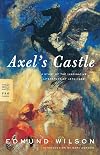
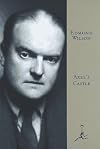
Axel's Castle: A Study of the Imaginative Literature of 1870-1930 (FSG Classics)
by Edmund Wilson
On This Page
Description
Published in 1931,Axel's Castle was Edmund Wilson's first book of literary criticism--a landmark book that explores the evolution of the French Symbolist movement and considers its influence on six major twentieth-century writers: William Butler Yeats, Paul Valéry, T. S. Eliot, Marcel Proust, James Joyce, and Gertrude Stein. As Alfred Kazin later wrote, "Wilson was an original, an extraordinary literary artist . . . He could turn any literary subject back into the personal drama it had been show more for the writer." show lessTags
Recommendations

















Member Reviews
Wilson, Edmund. Axel’s Castle: A Study in the Imaginative Literature of 1870-1930. Charles Scribner’s Sons, 1931.
Anyone interested in the modernist movement in literature should read Edmund Wilson’s Axel’s Castle. It is much less dated than any work of literary criticism that is almost 90 years old has any right to be. Wilson writes with an almost journalistic clarity about subjects that are themselves sometimes intentionally vague, abstruse, and arcane, and he does so at a time when many of the works he discusses were just beginning to be read and understood in any depth. He writes about James Joyce’s Finnegans Wake, for example, when it was still being published in draft pieces. If the romantic poets were reacting against show more classicism and connecting their own subjective experience to our objective understanding of nature, the late 19th-century French symbolist poets, Wilson tells us, reacted against the objectivity of romanticism and against realism and naturalism. Wilson then locates Yeats in this new symbolist tradition and shows how later in his career he blends it with more realistic elements, as did the early work of Joyce and T. S. Eliot. In discussing Joyce and Proust, he points out that consciousness for them had a much more evanescent quality than it did for the romantics. They needed to catch it on the fly and connect it, not to nature, but to the depths of their own unconscious minds. Language for many of these writers was more important for its suggestive, often private, values than for its denotative connections. This explains, Wilson says, why so many of these works are difficult to decipher. Axel’s Castle is Wilson’s ultimate symbol for language that has become completely self-absorbed and private. He somewhat unfairly, I think, disparages the poetry of Gertrude Stein for this tendency. On a less serious note, Wilson gives me good reason not to read Proust, and suggests that maybe I ought to try to really read all the layers I can in in the palimpsest that is Finnegans Wake. Wilson gets five stars for this one. show less
Anyone interested in the modernist movement in literature should read Edmund Wilson’s Axel’s Castle. It is much less dated than any work of literary criticism that is almost 90 years old has any right to be. Wilson writes with an almost journalistic clarity about subjects that are themselves sometimes intentionally vague, abstruse, and arcane, and he does so at a time when many of the works he discusses were just beginning to be read and understood in any depth. He writes about James Joyce’s Finnegans Wake, for example, when it was still being published in draft pieces. If the romantic poets were reacting against show more classicism and connecting their own subjective experience to our objective understanding of nature, the late 19th-century French symbolist poets, Wilson tells us, reacted against the objectivity of romanticism and against realism and naturalism. Wilson then locates Yeats in this new symbolist tradition and shows how later in his career he blends it with more realistic elements, as did the early work of Joyce and T. S. Eliot. In discussing Joyce and Proust, he points out that consciousness for them had a much more evanescent quality than it did for the romantics. They needed to catch it on the fly and connect it, not to nature, but to the depths of their own unconscious minds. Language for many of these writers was more important for its suggestive, often private, values than for its denotative connections. This explains, Wilson says, why so many of these works are difficult to decipher. Axel’s Castle is Wilson’s ultimate symbol for language that has become completely self-absorbed and private. He somewhat unfairly, I think, disparages the poetry of Gertrude Stein for this tendency. On a less serious note, Wilson gives me good reason not to read Proust, and suggests that maybe I ought to try to really read all the layers I can in in the palimpsest that is Finnegans Wake. Wilson gets five stars for this one. show less
This book is a classic of literary criticism written more than 85 years ago. The six authors Wilson treats in his essays—Yeats, Valéry, Eliot, Proust, Joyce, Stein—were then at the height of their fame as literary pathbreakers. They shared traits rooted in the Symbolist movement of the previous generation. Wilson sketches this Symbolism in an introductory essay, then returns to it in a final chapter in which he juxtaposes the protagonist of a long prose poem by Villiers de l’Isle-Adam, Axel, and the poet Arthur Rimbaud as exemplary of two extremes of existence open to the symbolist. The final section of that chapter offers a cautious, but informed prognosis of the future of literature in which Wilson hopes for a synthesis of show more Symbolism with the movement it rebelled against, Naturalism. He feels that Joyce’s Ulysses is an example of what this could look like.
Despite its age, I felt the book has held up well. Wilson responds sensitively to good literature and expresses his views in an elegant, clear style. His appreciation is mixed in each case with judicious criticism. Only in the case of Stein does the negative outweigh the positive, but Wilson nevertheless considers her, too, a significant writer.
I’m sure I consulted this many years ago for a paper for a lit course, which always made me think, when I saw it sitting on my shelf, I had read it. But when I looked through it recently, it was evident I had never read it from cover to cover. Better late than never, I guess. show less
Despite its age, I felt the book has held up well. Wilson responds sensitively to good literature and expresses his views in an elegant, clear style. His appreciation is mixed in each case with judicious criticism. Only in the case of Stein does the negative outweigh the positive, but Wilson nevertheless considers her, too, a significant writer.
I’m sure I consulted this many years ago for a paper for a lit course, which always made me think, when I saw it sitting on my shelf, I had read it. But when I looked through it recently, it was evident I had never read it from cover to cover. Better late than never, I guess. show less
Somewhere in the previous Wilson I recently read, the critic states that one of his favorite times in life is when he's able to describe a book to someone unfamiliar with such. That ripple of joy is on display here. Often. I truly wish I had read this book 30 years ago. It was probably the number of poets within which discouraged me at that time. Those childish things. A shrinking violet--in flannel. But a flaneur, nonetheless.
Wilson cites the advent of Symbolism as the movement which brought to the fore Joyce, Proust and Stein. The critic then develops a thesis of Romanticism being a response to Classicism. Naturalism then became a conservative easing of the Romantic fire which then led to the insular quest of Symbolism, crafted in a show more lab by the wonky Mallarmé and other, lesser, lights of contention. I find it odd that Valéry received a chapter but Huysmans did not. The effect of the Great War also appears nebulous in this reasoning.
There was much to learn in this ostensible primer. There was also a great deal of plot description. Some would wager an excessive amount. We can't deny Bunny his pleasure. My personal ax on Axel: not enough Freud and Faulkner. show less
Wilson cites the advent of Symbolism as the movement which brought to the fore Joyce, Proust and Stein. The critic then develops a thesis of Romanticism being a response to Classicism. Naturalism then became a conservative easing of the Romantic fire which then led to the insular quest of Symbolism, crafted in a show more lab by the wonky Mallarmé and other, lesser, lights of contention. I find it odd that Valéry received a chapter but Huysmans did not. The effect of the Great War also appears nebulous in this reasoning.
There was much to learn in this ostensible primer. There was also a great deal of plot description. Some would wager an excessive amount. We can't deny Bunny his pleasure. My personal ax on Axel: not enough Freud and Faulkner. show less
In this 1931 work, Wilson focuses on the Symbolist movement in literature, particularly the works of Yeats, Valéry, Eliot, Proust, Joyce, and Gertrude Stein. Eliot was in the prime of his career, and Remembrance of Things Past and Ulysses less than a decade old.
Wilson's writing is crystalline clear (though his use of huge block quotes is sometimes awkward), and it's refreshing to read a contemporary's thoughts on Yeats, Proust, Joyce and Eliot. Because I am reading Remembance of Things Past now, I particularly enjoyed the chapter on Proust, and found insights on the structure which blew me away.
Wilson does become tangled up in his shorts trying to connect advances in theoretical physics with the evolution of literature. I found show more Wilson's attempts to connect quantum physics and relativity to new forms of art unconvincing; I don't believe that any of these artists understood enough about science to have insights into how Einstein or Heisenberg could inform our views on literature, at least beyond the most surface level. It's both comical and touching to read some of these passages, which I understand had wide currency.
Besides this minor quibble, I really enjoyed my first foray into Wilson's work, and plan to read more. show less
Wilson's writing is crystalline clear (though his use of huge block quotes is sometimes awkward), and it's refreshing to read a contemporary's thoughts on Yeats, Proust, Joyce and Eliot. Because I am reading Remembance of Things Past now, I particularly enjoyed the chapter on Proust, and found insights on the structure which blew me away.
Wilson does become tangled up in his shorts trying to connect advances in theoretical physics with the evolution of literature. I found show more Wilson's attempts to connect quantum physics and relativity to new forms of art unconvincing; I don't believe that any of these artists understood enough about science to have insights into how Einstein or Heisenberg could inform our views on literature, at least beyond the most surface level. It's both comical and touching to read some of these passages, which I understand had wide currency.
Besides this minor quibble, I really enjoyed my first foray into Wilson's work, and plan to read more. show less
I am, virtually without qualification, a huge fan of Edmund Wilson’s essays, if less so of his fiction. While perhaps not at the level of a Macaulay, a Montaigne, a Johnson, a Benjamin, an Emerson, or even an H. L. Mencken, Wilson has written both eloquently and persuasively on a variety of topics. The Triple Thinkers and To the Finland Station come immediately and memorably to mind, even though I read both some thirty years ago.
I can’t express anything like the same kudos for Axel’s Castle. Wilson covers the gamut of interesting personalities and writers (Yeats; Valéry; Eliot; Proust; Joyce; Stein; and Rimbaud – not to mention the Symbolist Movement in general) – but either I lack the necessary enthusiasm for this Movement show more and these writers or Wilson has simply failed to convince me they’re worth reading.
God knows, Proust and Joyce both have their share of devotees. I’m just not among them. I’ve never read Proust. Joyce certainly proved his writer’s credentials with both Portrait of the Artist as a Young Man and Dubliners.v But I struggled to complete seventy pages of Ulysses before giving up in utter frustration. I’ve never even attempted Finnegans Wake.
And yes, I’ve read much of the poetry of Yeats and T. S. Eliot and found some of it inspiring. But would I feel the same degree of enthusiasm either for Gertrude Stein or for Paul Valéry? I doubt it. Rimbaud, of course, is in a category unto himself.
For the student of the Symbolist Movement, I suspect Axel’s Castle is a worthwhile undertaking. For the dilettante — which I admittedly am — I would suggest it’s not.
RRB
04/17/11
Brooklyn, NY, USA show less
I can’t express anything like the same kudos for Axel’s Castle. Wilson covers the gamut of interesting personalities and writers (Yeats; Valéry; Eliot; Proust; Joyce; Stein; and Rimbaud – not to mention the Symbolist Movement in general) – but either I lack the necessary enthusiasm for this Movement show more and these writers or Wilson has simply failed to convince me they’re worth reading.
God knows, Proust and Joyce both have their share of devotees. I’m just not among them. I’ve never read Proust. Joyce certainly proved his writer’s credentials with both Portrait of the Artist as a Young Man and Dubliners.v But I struggled to complete seventy pages of Ulysses before giving up in utter frustration. I’ve never even attempted Finnegans Wake.
And yes, I’ve read much of the poetry of Yeats and T. S. Eliot and found some of it inspiring. But would I feel the same degree of enthusiasm either for Gertrude Stein or for Paul Valéry? I doubt it. Rimbaud, of course, is in a category unto himself.
For the student of the Symbolist Movement, I suspect Axel’s Castle is a worthwhile undertaking. For the dilettante — which I admittedly am — I would suggest it’s not.
RRB
04/17/11
Brooklyn, NY, USA show less
Sharp analytical discussion of Symbolists and imaginative prose 1870-1930--opinionated and perceptive
Axel's Castle: A Study in the Imaginative Literature of 1870-1930 is a 1931 book of literary criticism by Edmund Wilson on the Symbolist movement in literature. It includes a brief overview of the movement's origins and chapters on W. B. Yeats, Paul Valéry, T. S. Eliot, Marcel Proust, James Joyce, and Gertrude Stein. The book's title refers to Axël, a prose poem by Auguste Villiers de l'Isle-Adam which is discussed along with the works of Arthur Rimbaud in the concluding chapter. Axel's Castle, truly should be considered one of the formative critical texts of American literary criticism.
Members
- Recently Added By
Lists

Trinity College Booklist (1951): Class Ten, English Literature
358 works; 5 members

Best Books of 1926-1935
403 works; 10 members

1964 College Preparatory Reading List
202 works; 8 members
Author Information

94+ Works 8,896 Members
Wilson roamed the world and read widely in many languages. He was a journalist for leading literary periodicals: Vanity Fair, where he was briefly managing editor; The New Republic, where he was associate editor for five years; and the New Yorker, where he was book reviewer in the 1940s. These varied experiences were typical of Wilson's range of show more interests and ability. Eternally productive and endlessly readable, he conquered American literature in countless essays. If he is idiosyncratic and lacks a rigid mold, that probably contributes to his success as a literary critic, since he was not committed to interpretation in the straitjacket of some popular approach or dogma. His critical position suits his cosmopolitan background---historical and sociological considerations prevail. He went through a brief Marxist period and experimented with Freudian criticism. Axel's Castle (1931), a penetrating analysis of the symbolist writer, has exerted a great influence on contemporary literary criticism. Its dedication, to Christian Gauss of Princeton, reads:"It was principally from you that I acquired.. .my idea of what literary criticism ought to be---a history of man's ideas and imaginings in the setting of the conditions which have shaped them."His volume of satiric short stories, Memoirs of Hecate County (1946), with its frankly erotic passages, was the subject of court cases in a less tolerant decade than the present one. It was Wilson's own favorite among his writings, but he complained that those individuals who like his other work tend to disregard it. (Bowker Author Biography) show less
Some Editions
Awards and Honors
Notable Lists
Series
Belongs to Publisher Series
Work Relationships
Common Knowledge
- Original title
- Axel's castle : a study in the imaginative literature of 1870–1930
- Original publication date
- 1931
- People/Characters
- Arthur Rimbaud; William Butler Yeats; Paul Valéry; T. S. Eliot; Marcel Proust; James Joyce (show all 7); Gertrude Stein
- Original language
- English
Classifications
- Genres
- Literature Studies and Criticism, Nonfiction
- DDC/MDS
- 809.915 — Literature & rhetoric Literature, rhetoric & criticism History, description, critical appraisal of more than two literatures Literature displaying specific features, miscellaneous writings Literature displaying specific qualities of style, mood, viewpoint Symbolism, allegory, fantasy, myth
- LCC
- PN771 .W55 — Language and Literature Literature (General) Literature (General) Literary history By period Modern
- BISAC
Statistics
- Members
- 730
- Popularity
- 38,750
- Reviews
- 7
- Rating
- (3.96)
- Languages
- 7 — Dutch, English, French, German, Italian, Portuguese, Spanish
- Media
- Paper, Ebook
- ISBNs
- 24
- UPCs
- 1
- ASINs
- 27