

The Diversity of Life
by Edward O. Wilson
On This Page
Description
"In the Amazon Basin the greatest violence sometimes begins as a flicker of light beyond the horizon. There in the perfect bowl of the night sky, untouched by light from any human source, a thunderstorm sends its premonitory signal and begins a slow journey to the observer, who thinks: the world is about to change." Watching from the edge of the Brazilian rain forest, witness to the sort of violence nature visits upon its creatures, Edward O. Wilson reflects on the crucible of evolution, and show more so begins his remarkable account of how the living world became diverse and how humans are destroying that diversity. Wilson, internationally regarded as the dean of biodiversity studies, conducts us on a tour through time, traces the processes that create new species in bursts of adaptive radiation, and points out the cataclysmic events that have disrupted evolution and diminished global diversity over the past 600 million years. The five enormous natural blows to the planet (such as meteorite strikes and climatic changes) required 10 to 100 million years of evolutionary repair. The sixth great spasm of extinction on earth - caused this time entirely by humans - may be the one that breaks the crucible of life. Wilson identifies this crisis in countless ecosystems around the globe: coral reefs, grasslands, rain forests, and other natural habitats. Drawing on a variety of examples such as the decline of bird populations in the United States, the extinction of many species of freshwater fish in Africa and Asia, and the rapid disappearance of flora and fauna as the rain forests are cut down, he poignantly describes the death throes of the living worlds diversity - projected to decline as much as 20 percent by the year 2020. All evidence marshaled here resonates through Wilson's tightly reasoned call for a spirit of stewardship over the worlds biological wealth. He makes a plea for specific actions that will enhance rather than diminish not just diversity but the quality of life on earth. Cutting through the tangle of environmental issues that often obscure the real concern, Wilson maintains that the era of confrontation between forces for the preservation of nature and those for economic development is over; he convincingly drives home the point that both aims can, and must, be integrated. Unparalleled in its range and depth, Wilson's masterwork is essential reading for those who care about preserving the worlds biological variety and ensuring our planets health. show lessTags
Recommendations

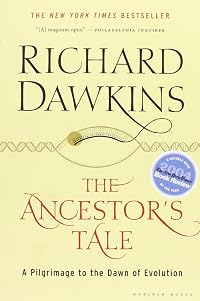
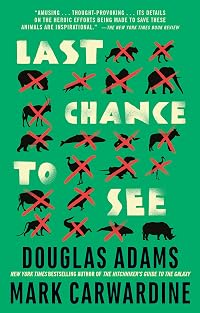
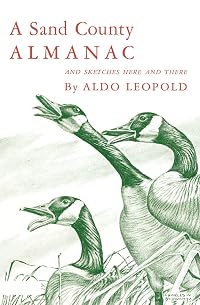
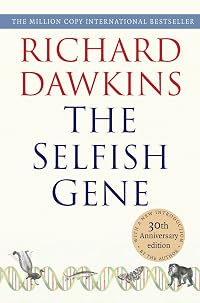




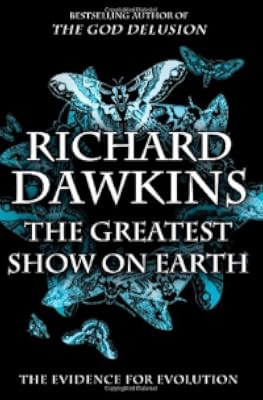
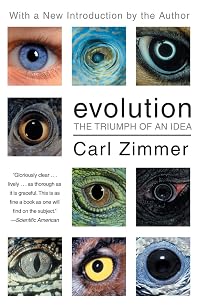
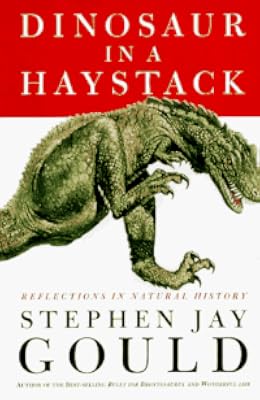
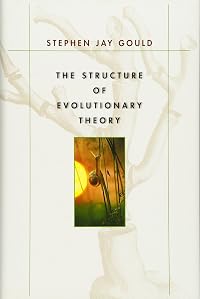
Member Recommendations
Member Reviews
A re-read of the wonderful Folio version after reading the original thirty years ago. At the time it was a clarion call of decisions to preserve the natural world as we knew it. Now it reads more like a funeral dirge of advice not taken. Things are not better, not okay, and we are all worse for it. The only saving grace that comes to mind is that speciation will again take hold as we exit the scene, having wasted our inheritance.
The Diversity of Life is more or less The Short History of Time of evolutionary ecology and biological diversity but with a disturbing twist. The cosmos and its workings are hardly threatened by man while we're destroying earth's ecosystems and its biodiversity at an alarming and depressing rate (and this book was published in 1992). The science is fascinating, and perhaps no one's better at communicating it to non-specialists than Wilson. But it's hard to imagine an ending to the story that's not very bad, possibly catastrophic (even for human life, eventually). Some of Wilson's ideas about how to address the problems seem pretty unlikely, but none of them are sci-fi or poorly thought through, much less fantasy as with too many others' show more ideas to save the planet (Lester Brown comes to mind). Surely better understanding of ecology and biodiversity by many more people is a place to start, probably a necessity, and this may well be the best general audience book for that purpose. show less
A wonderful and deeply disturbing book. It commences with a detailed explanation of how life came to be so stunningly diverse and ends by confronting us with the brutal reality of the destruction of the biosphere by our own hand. I was deeply affected by the exposition of this distruction and have been conscripted into action by Wilson's plea to save what little remains. Fifteen years have passed since it was written and I shudder to consider the scale of damage that we have caused in that time.
Somehow failed to inspire. It is quite dense, and I suppose I was hoping all the dull statistical arguments could be walled off from the general theses a bit more. He might have used his personal anecdotes a bit more too - the one he begins with is quite compelling, and helps to metaphorize the whole subject. Finally, it doubtless should be updated, 15 years further down the line of the anthropogenic Sixth Extinction.
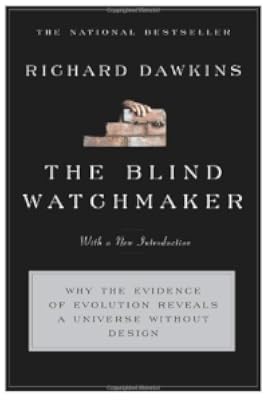
Wilson is at least somewhat less reductive than Dawkins, with whom he has been feuding, apparently, because he believes that the survival of particular genetic material is not enough to explain the existence of biodiversity, or the mechanisms of evolution that produce it. His sociobiological approach is welcome. But not his show more social Darwinism. He doesn’t appear to see the paradox in his view of modern humans as somehow the summit of natural selection and at the same time the greatest destructive force evolution has produced. What sort of progress is that?
He is apparently also a subscriber to the "zombie consciousness" view of the human mind, which shows he hasn't been paying close enough attention to neuroscience, and shouldn't be basing whole books (not this one) about what and why humans are on that approach. It's also contradictory to believe that a creature that sees itself primarily as a machine would put much stock in preserving the living world. This from the man who has been passionate about the need to preserve biodiversity by any means necessary, and gave us the term "biophilia" to describe ourselves. Disappointing. show less
Wilson is at least somewhat less reductive than Dawkins, with whom he has been feuding, apparently, because he believes that the survival of particular genetic material is not enough to explain the existence of biodiversity, or the mechanisms of evolution that produce it. His sociobiological approach is welcome. But not his show more social Darwinism. He doesn’t appear to see the paradox in his view of modern humans as somehow the summit of natural selection and at the same time the greatest destructive force evolution has produced. What sort of progress is that?
He is apparently also a subscriber to the "zombie consciousness" view of the human mind, which shows he hasn't been paying close enough attention to neuroscience, and shouldn't be basing whole books (not this one) about what and why humans are on that approach. It's also contradictory to believe that a creature that sees itself primarily as a machine would put much stock in preserving the living world. This from the man who has been passionate about the need to preserve biodiversity by any means necessary, and gave us the term "biophilia" to describe ourselves. Disappointing. show less
The Diversity of Life turned out to be a quick and, for me, fascinating read. While Wilson doesn't oversimplify the science, his book should be accessible to most people and it is well illustrated with drawings, maps, color plates, and graphs. From the first chapter the author tells us that the rate of species extinction has reached very high levels. Later, Wilson shows how humans are causing most of these extinctions and that we need to address this if we want our descendents to enjoy a biologically diverse world. Although written about 25 years ago this book is still timely in its cry for preserving the richness of the biosphere. Recommended.
I love, love, L O V E E.O. Wilson as a scientist, and I love reading him when the audience he's writing for is comprised of fellow scientists. Unfortunately, the Diversity of Life is not one of those works, and as such doesn't pack near the punch as Quammen's 1997 tome on biogeography--Wilson's for-the-layperson writing style made me a wee bits uncomfortable--, nor is it as far-reaching in its coverage.
It's also more noticeably out-dated (the early '90s were a time of many breakthroughs in ecology, or at least cementations of ideas proposed in the past decade-half, many of which were still being studied or assessed during the writing of this book: they are not explored in much detail as they are in Quammen's monstrous, highly readable show more book). I admit, Wilson's attempts at adding fancy and color to his writing (and his recounting of past events) to make it more 'artistic' and 'literary' occasionally had me groanin' and facepalmin'. (Makes me wonder if I should ever pick up his novel....)
I still dug Diversity--so don't pay too much attention to my overwhelmingly negative focus--and Wilson's still my bro, but damn, dude, it was a bit redundant and dry for me.
[Started off as a recommendation for [redacted] and became too much of a [bad] review in itself.] show less
It's also more noticeably out-dated (the early '90s were a time of many breakthroughs in ecology, or at least cementations of ideas proposed in the past decade-half, many of which were still being studied or assessed during the writing of this book: they are not explored in much detail as they are in Quammen's monstrous, highly readable show more book). I admit, Wilson's attempts at adding fancy and color to his writing (and his recounting of past events) to make it more 'artistic' and 'literary' occasionally had me groanin' and facepalmin'. (Makes me wonder if I should ever pick up his novel....)
I still dug Diversity--so don't pay too much attention to my overwhelmingly negative focus--and Wilson's still my bro, but damn, dude, it was a bit redundant and dry for me.
[Started off as a recommendation for [redacted] and became too much of a [bad] review in itself.] show less
It has been a good while since I read this book, a must read in any naturalist's study, and there are many reviews that give the potential reader an idea of its content. Thus here, I'm only opining about its significance.
Reading offers two paths in our journey through life. One is in strictly entertaining, even in escaping the troubling reality of our being, and the other is in broadening our horizons of reality in caring about the future — not only our future, but that of our progeny and our extended family of all physical life.
Such needn't be an either-or choice, as in combining there is to be found the mental balancing that enriches our individual umwelt. This book is an important read in paving our life path.
Reading offers two paths in our journey through life. One is in strictly entertaining, even in escaping the troubling reality of our being, and the other is in broadening our horizons of reality in caring about the future — not only our future, but that of our progeny and our extended family of all physical life.
Such needn't be an either-or choice, as in combining there is to be found the mental balancing that enriches our individual umwelt. This book is an important read in paving our life path.
Members
- Recently Added By
Lists

New York Public Library's Books of the Century - All
170 works; 14 members
Author Information

72+ Works 17,992 Members
He was born in Birmingham, Alabama, in 1929. He is currently Pellegrino University Research Professor & Honorary Curator in Entomology of the Museum of Comparative Zoology at Harvard. He is on the Board of Directors of the Nature Conservancy, Conservation International & the American Museum of Natural History. He lives in Lexington, Massachusetts. show more (Bowker Author Biography) show less
Some Editions
Awards and Honors
Awards
Notable Lists
Series
Belongs to Publisher Series
Work Relationships
Is contained in
Is abridged in
Has as a student's study guide
Common Knowledge
- Canonical title
- The Diversity of Life
- Original title
- The Diversity of Life
- Original publication date
- 1992
- Dedication
- To my mother Inez Linnette Huddleston in love and gratitude.
- First words
- In the Amazon Basin the greatest violence sometimes begins as a flicker of light beyond the horizon.
- Last words
- (Click to show. Warning: May contain spoilers.)An enduring environmental ethic will aim to preserve not only the health and freedom of our species, but access to the world in which the human spirit was born.
- Blurbers
- Gould, Stephen Jay; Mabey, Richard; Gribbin, John; Lehmann-Haupt, Christopher; Jones, Steve; Kohn, Marek (show all 10); Radin, Charles A; Lezard, Nicholas; Watkins, T H; Clements, Andrew
Classifications
Statistics
- Members
- 1,974
- Popularity
- 10,671
- Reviews
- 21
- Rating
- (3.98)
- Languages
- 14 — Chinese, Czech, Dutch, English, Finnish, French, German, Hebrew, Italian, Japanese, Polish, Portuguese, Spanish, Swedish
- Media
- Paper, Audiobook, Ebook
- ISBNs
- 31
- ASINs
- 17