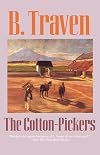
The Cotton-Pickers
by B. Traven
On This Page
Description
The first novel from the elusive author of The Treasure of the Sierra Madre.Set in the 1920s in Mexico, B. Traven's The Cotton-Pickers tells the story of Gerald Gales, who drifts in and out of jobs--on a cotton plantation, an oil field, in a pastry shop, and on a ranch--exposing the dangerous exploitation at each station and fomenting workers' rights along the way. Adventurous, funny, and full of humanity, The Cotton-Pickers challenges and delights readers to this day."B. Traven is coming to show more be recognized as one of the narrative masters of the twentieth century." The New York Times show lessTags
Recommendations




































Member Reviews
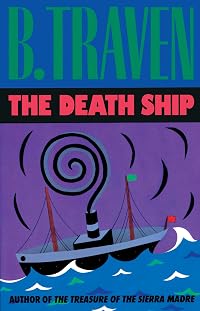
Ahh.. What a pleasure it is to give this bk a good review! The 1st bk I read of Traven's was probably "The Death Ship" - wch details the slow decay of a sailor's life as a result of facets of 'modern' life that the author & I abhor in common - like nationalistic borders & parasitic capitalism (is there any other kind?). I loved "The Death Ship" but it started out humorous & turned increasingly grim as the bk made its point clearer & clearer. Then I think I read 2 of the 6 "Jungle Novels" wch, according to a short description in the back of this bk, "describe the conditions of peonage and debt slavery under which the Indians suffered in Díaz's time." [ie: before the Mexican Revolution] These were extremely insightful political novels, show more as was "The Death Ship", & also GRIM - almost 'unbearable'. As such, even though I considered Traven to be a great political writer, I hesitated to read more - my mood is often too depressing as is.
SO, I read this anyway. & it was akin to "The Death Ship" in its sarcastic, philosophical, & subtle humour - BUT, the protaganist has a sortof 'easier' time of it & the Mexican Revolution is shown as being somewhat triumphant. It was a relief. I assume that it was historically accurate when it depicts greedy restaurant owners as being successfully forced into cooperation w/ unions BY THE POLICE! What a time that must've been!
Now, I've lumped this together w/ Tom Collins' great Australian cattle-driver novel "Such Is Life" by putting it on my "working-class-intellectuals" bookshelf. From me, that's an honor. Whether Traven's actual life trajectory deserves this or not I don't know. I've read sparse, & perhaps conflicting, bios about him. This bk's afterword claims:
"The mysterious B. Traven (1890-1969) was born in Chicago, spent his youth in Germany as an itinerant actor and revolutionary journalist, became a seaman on tramp steamers, settled in Mexico in the early 1920s, and began recording his experiences in novels and stories."
That rings 'true' - but then so do conflicting claims! Whatever the case, Traven writes like he's been there. Damn, he even makes reference to Baltimore row-homes! Making me wonder whether he'd ever been THERE. If he had, that perks my interest even more. To make Traven even more akin to Collins, there's even a cattle herding. It's all interesting, politically astute, sad, funny, & there's even some uplifting triumph for workers! &, unlike Collins, he wrote many bks! HOORAY FOR B. TRAVEN!
"The Cotton Pickers", by the by, was also called "DER WOBBLY", & was either Traven's 1st or 2nd novel. To make the plot even thicker, one supposedly unsubstantiated theory has it that Traven might've been Arthur Craven - the dadaist/boxer who's reputed to've disappeared off the coast of Mexico in a small boat. Wdn't THAT be a trip. show less
SO, I read this anyway. & it was akin to "The Death Ship" in its sarcastic, philosophical, & subtle humour - BUT, the protaganist has a sortof 'easier' time of it & the Mexican Revolution is shown as being somewhat triumphant. It was a relief. I assume that it was historically accurate when it depicts greedy restaurant owners as being successfully forced into cooperation w/ unions BY THE POLICE! What a time that must've been!
Now, I've lumped this together w/ Tom Collins' great Australian cattle-driver novel "Such Is Life" by putting it on my "working-class-intellectuals" bookshelf. From me, that's an honor. Whether Traven's actual life trajectory deserves this or not I don't know. I've read sparse, & perhaps conflicting, bios about him. This bk's afterword claims:
"The mysterious B. Traven (1890-1969) was born in Chicago, spent his youth in Germany as an itinerant actor and revolutionary journalist, became a seaman on tramp steamers, settled in Mexico in the early 1920s, and began recording his experiences in novels and stories."
That rings 'true' - but then so do conflicting claims! Whatever the case, Traven writes like he's been there. Damn, he even makes reference to Baltimore row-homes! Making me wonder whether he'd ever been THERE. If he had, that perks my interest even more. To make Traven even more akin to Collins, there's even a cattle herding. It's all interesting, politically astute, sad, funny, & there's even some uplifting triumph for workers! &, unlike Collins, he wrote many bks! HOORAY FOR B. TRAVEN!
"The Cotton Pickers", by the by, was also called "DER WOBBLY", & was either Traven's 1st or 2nd novel. To make the plot even thicker, one supposedly unsubstantiated theory has it that Traven might've been Arthur Craven - the dadaist/boxer who's reputed to've disappeared off the coast of Mexico in a small boat. Wdn't THAT be a trip. show less
I agree with the other reviewer that the novel is structured quite oddly. The narrator, Gales, appears to have a sixth sense as he narrates his way through most of the situations by relating stories of the people he meets in his travels. How would he know? He wouldn't--it's just Traven's way of getting the message across, and the message here is: a fair day's work for a fair day's pay. The narrator travels around Mexico doing odd jobs and suffering bosses who like him or don't. He meets some characters on his way, telling their stories as he goes. The last few chapters are really beautifully written. Gales finds himself in charge of breaking a horse and herding 1,000 cattle to a port. It's a dreamy little interlude after the rest of the show more novel.
Though I do think this Traven book is particularly odd, I still think it's worth reading, if only to get a feeling for Traven himself, as well as understand labor issues a little more deeply. show less
Though I do think this Traven book is particularly odd, I still think it's worth reading, if only to get a feeling for Traven himself, as well as understand labor issues a little more deeply. show less
Traven structures his novels in this odd way. It's as if he goes from one tall tale to the next. This was is connected by labor and union issues, going from one job to the next. It doesn't build like a personality-driven novel; more like Brecht. Well worth it. [close]
The author of this book also wrote the novel Treasure of the Sierra Madre. One of my favorite movies of all time!
Ratings
Members
- Recently Added By
Author Information

131+ Works 4,304 Members
Some Editions
Series
Belongs to Publisher Series
detebe-Klassiker (21099)
Meulenhoff editie (775)
rororo (509)
Common Knowledge
- Canonical title
- The Cotton-Pickers
- Original title
- Die Baumwollpflücker
- Alternate titles*
- I Wobbly
- Original publication date
- 1926
- People/Characters*
- Gerald Gales; Sam Woe; Antonio; Charley; Abraham; Gonzalo (show all 10); Mr. Shine; Mr. Pratt; Il señor Doux; La señora Doux
- Important places
- Mexico
- Related movies
- Die Baumwollpflücker (1970 | IMDb)
- Epigraph*
- CANTO DEI RACCOGLITORI DI COTONE DEL MESSICO
Il re porta addosso ciò che io dono;
lo porta il milionario, i presidente,
ma io, cencioso raccoglitore,
non ho un centesimo in tasco.
Su, trotta, trotta ... (show all)al campo!
Presto sorgerà il sole.
Prendi il sacco sulle spalle,
stringi forte la cintola!
Non senti la bilancia che stride?
I fagioli neri sono il mio pasto.
Invece della carne c'è dentro il pepe rosso,
la mia camicia se l'è mangiata la boscaglia
dacché son raccoglitore di cotone.
Su, trotta, trotta al capo!
Presto sorgerà il sole.
Prendi il sacco sulle spalle,
stringi forte la cintola!
Non senti la bilancia che mugghia?
Il cotone si vende a caro prezzo,
ma io non ho una scarpa buona,
i calzoni mi pendono a brandelli
sul didietro e hanno uno spacco sul davanti.
Su, trotta, trotta al campo!
Presto sorgerà il sole.
Prendi il sacco sulle spalle,
stringi forte la cintola!
Non senti la bilancia che si lagna?
Ho un cappello, un cappello vecchio,
non ha un filo di paglia intero,
ma debbo tener caro il mio cappello,
se no come faccio a raccogliere il cotone?
Su, trotta, trotta al campo!
Presto sorgerà il sole.
Prendi il sacco sulle spalle,
stringi forte la cintola!
Non vedi la bilancia che oscilla?
Son pieno di pidocchi, un vagabondo,
ma è giusto, così la deve andare,
perché se io non fossi un povero cane
non entrerebbe in casa il cotone.
Al passo, al passo!
Sorge il sole.
Metti nel sacco
il tuo raccolto!
La bilancia falla a pezzi! - First words*
- Ero alla stazione e mi guardavo intorno. Cercavo fra quei pochi indigeni che andavano bighellonando o se ne stavano accovacciati per terra qualcuno al quale potessi chiedere d'indicarmi la via.
- Last words*
- (Click to show. Warning: May contain spoilers.)Non è strano che ne risulti talvolta un mucchio di scempiaggini.
- Original language
- German
*Some information comes from Common Knowledge in other languages. Click "Edit" for more information.
Classifications
Statistics
- Members
- 166
- Popularity
- 196,520
- Reviews
- 4
- Rating
- (4.07)
- Languages
- 10 — Danish, Dutch, English, Estonian, Finnish, German, Italian, Norwegian (Bokmål), Spanish, Swedish
- Media
- Paper, Ebook
- ISBNs
- 16
- ASINs
- 2