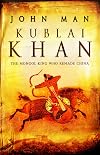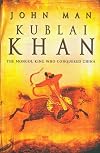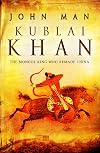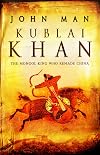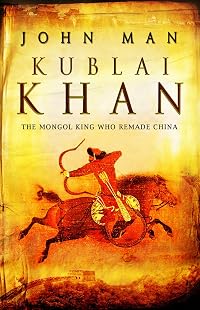
Kublai Khan
by John Man
On This Page
Description
The authoritative biography of the great Mongol warlord, by the author of Genghis Khan and Attila.In Xanadu did Kubla KhanA stately pleasure dome decreeKublai Khan lives on in the popular imagination thanks to these two lines of poetry by Coleridge. But the true story behind this legend is even more fantastic than the poem would have us believe.Tags
Recommendations







Member Reviews
In Xanadu did Kubla Khan a stately pleasure dome decree...
In 1797, British poet Samuel Taylor Coleridge did a little reading on Kublai Khan, smoked some opium, passed out and had a vivid dream the Great Khan’s majestic palaces. He awoke with a 300 line poem already in his head, but was interrupted by his opium dealer, who’d arrived in the middle of the night and took an hour to complete their transaction. Thus, Coleridge forgot most of his poem, and was able to scrounge together a mere 54 lines with which to write one of the most infamous poems in the English language.
John Man not only knows his history, but he also has a way of writing. It’s his prose. He knows exactly where to go with his narrative to convey the most amount of show more information and keep you interested. In “Genghis Khan: Life, Death and Resurrection”, he spent a good deal of time describing modern day Mongolia, the tribulations Mongols faced under Stalin and the emerging risk of Chinese cultural and economic domination, all by relating it to his travels through Mongolia and the Chinese province of Inner Mongolia. A sort of steppe travelogue that’s very heavy on the history. It’s not the sort of writing style that’s for everyone, but it really worked for me. Here, in Kublai Khan: The Mongol King Who Remade China” he does the same, recounting his travels through China, modern day Beijing and the ruins of Xanadu, but it’s less so. The bulk of Genghis’ life is, after all, a small collection of details painted over a wide canvas which he have only one limited source for, whereas Kublai’s life we have much more.
The book is divided into four parts – Spring, Summer, Autumn and Winter – which is divided into 17 chapters. Collectively, they cover Kublai’s beginnings; Hulegu’s atrocities in the Middle East; the conquest of Yunnan; the civil war with Ariq-Boke; Kublai’s bureaucratic and religious administration; the key to the Song conquest; both attempts at Japan; Kaidu’s challenge, the attempts at Burma, Vietnam and Java; and the end of his life and his secret burial (amongst other subjects). Oh, and the genesis of Coleridge’s poem.
While I applaud Man for his thoroughness, there is perhaps one area where the book could have used a more detailed history: Nayan’s Rebellion. He does cover it, briefly in the end, but it’s a by-the-way sort of mention. Also, he references the current China-Mongolia relationship in his epilogue, building upon what he’s written in “Genghis Khan”, but largely glossing over that as well. In that regard, it helps to have read the other book (which I would highly recommend).
An excellent book. I’ve always sort of found Kublai to be one of the boring ones in Mongol history – perhaps because, to me, he comes off more Chinese than Mongolian. Here, Man makes it interesting by exploring quandary in Kublai’s own cultural identity. show less
In 1797, British poet Samuel Taylor Coleridge did a little reading on Kublai Khan, smoked some opium, passed out and had a vivid dream the Great Khan’s majestic palaces. He awoke with a 300 line poem already in his head, but was interrupted by his opium dealer, who’d arrived in the middle of the night and took an hour to complete their transaction. Thus, Coleridge forgot most of his poem, and was able to scrounge together a mere 54 lines with which to write one of the most infamous poems in the English language.
John Man not only knows his history, but he also has a way of writing. It’s his prose. He knows exactly where to go with his narrative to convey the most amount of show more information and keep you interested. In “Genghis Khan: Life, Death and Resurrection”, he spent a good deal of time describing modern day Mongolia, the tribulations Mongols faced under Stalin and the emerging risk of Chinese cultural and economic domination, all by relating it to his travels through Mongolia and the Chinese province of Inner Mongolia. A sort of steppe travelogue that’s very heavy on the history. It’s not the sort of writing style that’s for everyone, but it really worked for me. Here, in Kublai Khan: The Mongol King Who Remade China” he does the same, recounting his travels through China, modern day Beijing and the ruins of Xanadu, but it’s less so. The bulk of Genghis’ life is, after all, a small collection of details painted over a wide canvas which he have only one limited source for, whereas Kublai’s life we have much more.
The book is divided into four parts – Spring, Summer, Autumn and Winter – which is divided into 17 chapters. Collectively, they cover Kublai’s beginnings; Hulegu’s atrocities in the Middle East; the conquest of Yunnan; the civil war with Ariq-Boke; Kublai’s bureaucratic and religious administration; the key to the Song conquest; both attempts at Japan; Kaidu’s challenge, the attempts at Burma, Vietnam and Java; and the end of his life and his secret burial (amongst other subjects). Oh, and the genesis of Coleridge’s poem.
While I applaud Man for his thoroughness, there is perhaps one area where the book could have used a more detailed history: Nayan’s Rebellion. He does cover it, briefly in the end, but it’s a by-the-way sort of mention. Also, he references the current China-Mongolia relationship in his epilogue, building upon what he’s written in “Genghis Khan”, but largely glossing over that as well. In that regard, it helps to have read the other book (which I would highly recommend).
An excellent book. I’ve always sort of found Kublai to be one of the boring ones in Mongol history – perhaps because, to me, he comes off more Chinese than Mongolian. Here, Man makes it interesting by exploring quandary in Kublai’s own cultural identity. show less
What a family the Khans were. A fascinating story about the grandson of Genghis. An empire which lasted nearly 300 years in one form or another, with some descendants being 'lost' in history by becoming Muslims. Superb warriors, butchers, administrators. All ended in nothing. But, an interesting attention-holding book.
Ratings
Members
- Recently Added By
Author Information

60+ Works 4,967 Members
John Man is a historian specializing in the nature of leadership. John's books have been published in over twenty languages around the world and include histories of the Great Wall of China and the Mongolian Empire. He lives in England.
Series
Belongs to Publisher Series
Common Knowledge
- Original publication date
- 2006
- People/Characters
- Kublai Khan
- Important places
- Mongolia
- Original language
- English
Classifications
Statistics
- Members
- 225
- Popularity
- 144,996
- Reviews
- 2
- Rating
- (3.60)
- Languages
- English, Indonesian, Polish
- Media
- Paper, Ebook
- ISBNs
- 7
- ASINs
- 2