On This Page
Description
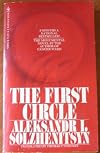
The thrilling cold war masterwork by the nobel prize winner, published in full for the first time Moscow, Christmas Eve, 1949.The Soviet secret police intercept a call made to the American embassy by a Russian diplomat who promises to deliver secrets about the nascent Soviet Atomic Bomb program. On that same day, a brilliant mathematician is locked away inside a Moscow prison that houses the country's brightest minds. He and his fellow prisoners are charged with using their abilities to show more sleuth out the caller's identity, and they must choose whether to aid Joseph Stalin's repressive state-or refuse and accept transfer to the Siberian Gulag camps . . . and almost certain death. First written between 1955 and 1958, In the First Circle is Solzhenitsyn's fiction masterpiece. In order to pass through Soviet censors, many essential scenes-including nine full chapters-were cut or altered before it was published in a hastily translated English edition in 1968. Now with the help of the author's most trusted translator, Harry T. Willetts, here for the first time is the complete, definitive English edition of Solzhenitsyn's powerful and magnificent classic. show lessTags
Recommendations






















Member Reviews
If you read this book several decades ago, it was called "The First Circle," and it was edited in a way that the author hoped would allow it to be published in the Soviet Union (though it wasn't, only being published in the West in 1968.) The version I read was published in 2009 and restores his original intent in writing the novel, restoring nine chapters that had been cut, and reverting to the original plot, which had been modified as well.
The novel is about prisoners who live occupants of a sharashka, which is kind of an R&D facility made up of political prisoners. The sharashka is in Moscow, and life in the sharashka is significantly better than living in the gulags. However, the inmates live in constant danger of being shipped to show more Siberia (and many of them spent time there.) The title refers to Dante's first circle of Hell in The Divine Comedy--in the first circle of hell, "good" pagans live in a walled garden, unable to enter heaven, but able to enjoy a bit of freedom in Hell. To the prisoners in the sharashka, they are in the first circle of hell.
The novel is a tour-de-force, exploring themes of authoritarianism, dissent, the arc of Soviet history, etc. I found the chapters that described Stalin and his inner thoughts fascinating (and a bit frightening when being read in conjunction with watching the reality show that is the Trump White House.) Not saying that Trump is Stalin, but, well, you gotta read it. Highly recommended. show less
The novel is about prisoners who live occupants of a sharashka, which is kind of an R&D facility made up of political prisoners. The sharashka is in Moscow, and life in the sharashka is significantly better than living in the gulags. However, the inmates live in constant danger of being shipped to show more Siberia (and many of them spent time there.) The title refers to Dante's first circle of Hell in The Divine Comedy--in the first circle of hell, "good" pagans live in a walled garden, unable to enter heaven, but able to enjoy a bit of freedom in Hell. To the prisoners in the sharashka, they are in the first circle of hell.
The novel is a tour-de-force, exploring themes of authoritarianism, dissent, the arc of Soviet history, etc. I found the chapters that described Stalin and his inner thoughts fascinating (and a bit frightening when being read in conjunction with watching the reality show that is the Trump White House.) Not saying that Trump is Stalin, but, well, you gotta read it. Highly recommended. show less
If you read this book several decades ago, it was called "The First Circle," and it was edited in a way that the author hoped would allow it to be published in the Soviet Union (though it wasn't, only being published in the West in 1968.) The version I read was published in 2009 and restores his original intent in writing the novel, restoring nine chapters that had been cut, and reverting to the original plot, which had been modified as well.
The novel is about prisoners who live occupants of a sharashka, which is kind of an R&D facility made up of political prisoners. The sharashka is in Moscow, and life in the sharashka is significantly better than living in the gulags. However, the inmates live in constant danger of being shipped to show more Siberia (and many of them spent time there.) The title refers to Dante's first circle of Hell in The Divine Comedy--in the first circle of hell, "good" pagans live in a walled garden, unable to enter heaven, but able to enjoy a bit of freedom in Hell. To the prisoners in the sharashka, they are in the first circle of hell.
The novel is a tour-de-force, exploring themes of authoritarianism, dissent, the arc of Soviet history, etc. I found the chapters that described Stalin and his inner thoughts fascinating (and a bit frightening when being read in conjunction with watching the reality show that is the Trump White House.) Not saying that Trump is Stalin, but, well, you gotta read it. Highly recommended. show less
The novel is about prisoners who live occupants of a sharashka, which is kind of an R&D facility made up of political prisoners. The sharashka is in Moscow, and life in the sharashka is significantly better than living in the gulags. However, the inmates live in constant danger of being shipped to show more Siberia (and many of them spent time there.) The title refers to Dante's first circle of Hell in The Divine Comedy--in the first circle of hell, "good" pagans live in a walled garden, unable to enter heaven, but able to enjoy a bit of freedom in Hell. To the prisoners in the sharashka, they are in the first circle of hell.
The novel is a tour-de-force, exploring themes of authoritarianism, dissent, the arc of Soviet history, etc. I found the chapters that described Stalin and his inner thoughts fascinating (and a bit frightening when being read in conjunction with watching the reality show that is the Trump White House.) Not saying that Trump is Stalin, but, well, you gotta read it. Highly recommended. show less
(Reprinted from the Chicago Center for Literature and Photography [cclapcenter.com]. I am the original author of this essay, as well as the owner of CCLaP; it is not being reprinted illegally.)
As an American who didn't do too much academic reading before opening CCLaP, there are of course numerous entire sections of the literary world that I could stand to learn a whole lot more about; take Russian literature for a good example, not just its beginnings with Pushkin and the like but also its heydey of the late 1800s and early 1900s (the time period of such famed authors as Dostoyevsky, Tolstoy and Chekhov), all the way through to both the sanctioned and underground writers of the Soviet period of the 1920s through '80s. And that's why I show more was so excited to find out that last fall, Harper Perennial ended up putting out a brand-new edition of Aleksandr Solzhenitsyn's 1968 In The First Circle (originally known as simply The First Circle, one of the hundreds of details that have been put back in the book for this 2009 edition), because this gave me a good excuse to sit and finally read the thing; after all, Solzhenitsyn is one of the most important writers of the entire Soviet era, essentially the first intellectual to break the news to the Western world of what Stalin's prison camps (or gulags) were actually like, a fact which earned him a Nobel Prize in 1970 even as he was still a Soviet prisoner.
And the irony, of course, is that less than ten years before In The First Circle, he had been able to publish the first of this highly anti-Stalinst work in the actual Soviet Union itself -- namely, 1962's One Day in the Life of Ivan Denisovich, which is what first gained him an international following; and this was because of Nikita Khrushchev's campaign of de-Stalinization in that country then, which came as news to me when first studying this book, which gives you a good idea of just how much about Russian history I still have to learn. Even though that book went well, Solzhenitsyn knew that the original 96-chapter version of his much more expansive follow-up would never pass the muster of Soviet censors, which is why he voluntarily cut almost a dozen of those chapters from the original In The First Circle before submitting it, and radically changed a dozen more; then when he later became critical of Khrushchev himself and was once more sent back into the camps, it was this trimmed-down version that was snuck out of the country, and published in the West in 1968 to huge infamy. But like many former dissidents, Solzhenitsyn made peace with his homeland again after the fall of communism in the early '90s, moving back there in his old age and for the first time in his life going back comprehensively over his entire oeuvre; and apparently at the end of his life, he decided it was important to get the original 96-chapter version out finally to the public, the project he was working on all the way up to his death in 2008, just a year before the completely uncensored version came out.
For those who don't know, the book is a highly autobiographical look at a special kind of work camp that existed during the "Stalinist Purge," the period of the 1930s and '40s when that Modernist leader and World War Two overseer had several tens of millions of his fellow citizens imprisoned and/or killed in order to keep himself and his supporters in power; because with that many people in the camps, you could of course fill entire prisons with nothing but scientists and artists if you wanted to, which is exactly what Stalinist authorities did, called "sharashkas" and actually more like college dorms than traditional prisons, where intellectuals were treated decently and fed well in exchange for them continuing to work on various cultural and scientific projects, like the space program or nuclear weapons or Bond-style spy devices. This is where the title In The First Circle comes from, in fact, inspired by Dante's concept in The Inferno of there being nine circles of Hell, the first one not actually that terrible and designed for only light sinners; because when all was said and done, except for the lack of free movement, these sharashkas actually weren't all that bad, or at least compared to the nightmarish conditions of the Siberian hard-labor camps, where said intellectuals were shipped off to if refusing to voluntarily work on these state projects. That's a major theme of the book, the philosophical argument over which of these options is better -- to remain ideologically pure yet pay a high price for it, or to do what is simply going to be done by someone else anyway, and in the meanwhile living to fight another day.
And besides this, the thousand-page tome is also of course a highly detailed look at what daily Soviet life was like during the Stalinist years of the late '40s; and in fact that may be the biggest surprise about this manuscript, is that its details regarding the real Soviet Union in those years are so eerily similar to the speculative fancifulness of George Orwell's anti-Stalinist 1984 to not even be funny. Because let's not forget, Orwell wrote 1984 in 1948 (which is how he came up with the title, by simply switching the last two numbers), while Solzhenitsyn's book is set just a year later, during Christmas week of 1949, retroactively backing up many of the most outrageous suppositions of Orwell's original, including the Soviet invention of a "Newspeak" type official new language, designed to be reductive so to literally remove from dictionaries the very words themselves that stood for subversive ideas, as well as the very real endeavor back then to officially erase the very existence of state enemies, including airbrushing them out of old photos and re-writing archived newspaper articles that once mentioned them. If nothing else, this might be the most important lasting legacy of In The First Circle, is that it dutifully chronicles many of the absurdly comedic yet horrifying things that took place during the Stalinist years, shows us just how right we in the West were to be terrified back then by the idea of a Stalinist planet, even if that did lead to some pretty horrible things on their own, like McCarthyism and book burnings.
But this isn't the only thing about In The First Circle to enjoy; there's also the inventive cyclical nature of its very structure, which like Richard Linklater's Slacker is told in a "vertical storytelling" style, where the different main characters of each chapter are introduced causally in the end paragraphs of the previous chapter. So in other words, one chapter might be about a prisoner in an electronics lab inside the camp, who at the end of the chapter has a conversation with the 21-year-old girl who's been hired to oversee them; the next chapter then might be about that girl now at home that evening, ending with her talking to her husband, a mid-level bureaucrat who works in the personal offices of Joseph Stalin, with the next chapter after that perhaps being about Stalin himself, one of the hundreds of both real and fictional people featured in this doorstop of a book. And then of course is the sly humor found throughout, the fascinating details about life inside one of these "intellectual prisons," the history lessons provided through the cynical discussions of the older "zeks," the ones old enough to remember the original 1917 communist revolution and who sit around endlessly debating what's gone wrong in the thirty years since, a big reason they're in the camps to begin with.
Now, just so we're on the same page, let me confess that there are problems as well with In The First Circle; for example, like so many other Russian novelists, Solzhenitsyn tends to be in love with the sound of his own voice, turning what could've been a truly mindblowing 400-page book into a merely important yet highly digressive thousand-page one. Despite its limitations, though, it's a highly rewarding book to actually make one's way through and eventually finish, and I applaud Harper for spending the time, energy and money needed to put out this restored version in the first place, when commercially speaking it is obviously only going to appeal to a small niche audience. This single book alone filled a huge chunk of that gaping hole in my life when it comes to Russian history and culture, and it comes highly recommended to those who are looking to fill such a similar hole in their own lives. show less
As an American who didn't do too much academic reading before opening CCLaP, there are of course numerous entire sections of the literary world that I could stand to learn a whole lot more about; take Russian literature for a good example, not just its beginnings with Pushkin and the like but also its heydey of the late 1800s and early 1900s (the time period of such famed authors as Dostoyevsky, Tolstoy and Chekhov), all the way through to both the sanctioned and underground writers of the Soviet period of the 1920s through '80s. And that's why I show more was so excited to find out that last fall, Harper Perennial ended up putting out a brand-new edition of Aleksandr Solzhenitsyn's 1968 In The First Circle (originally known as simply The First Circle, one of the hundreds of details that have been put back in the book for this 2009 edition), because this gave me a good excuse to sit and finally read the thing; after all, Solzhenitsyn is one of the most important writers of the entire Soviet era, essentially the first intellectual to break the news to the Western world of what Stalin's prison camps (or gulags) were actually like, a fact which earned him a Nobel Prize in 1970 even as he was still a Soviet prisoner.
And the irony, of course, is that less than ten years before In The First Circle, he had been able to publish the first of this highly anti-Stalinst work in the actual Soviet Union itself -- namely, 1962's One Day in the Life of Ivan Denisovich, which is what first gained him an international following; and this was because of Nikita Khrushchev's campaign of de-Stalinization in that country then, which came as news to me when first studying this book, which gives you a good idea of just how much about Russian history I still have to learn. Even though that book went well, Solzhenitsyn knew that the original 96-chapter version of his much more expansive follow-up would never pass the muster of Soviet censors, which is why he voluntarily cut almost a dozen of those chapters from the original In The First Circle before submitting it, and radically changed a dozen more; then when he later became critical of Khrushchev himself and was once more sent back into the camps, it was this trimmed-down version that was snuck out of the country, and published in the West in 1968 to huge infamy. But like many former dissidents, Solzhenitsyn made peace with his homeland again after the fall of communism in the early '90s, moving back there in his old age and for the first time in his life going back comprehensively over his entire oeuvre; and apparently at the end of his life, he decided it was important to get the original 96-chapter version out finally to the public, the project he was working on all the way up to his death in 2008, just a year before the completely uncensored version came out.
For those who don't know, the book is a highly autobiographical look at a special kind of work camp that existed during the "Stalinist Purge," the period of the 1930s and '40s when that Modernist leader and World War Two overseer had several tens of millions of his fellow citizens imprisoned and/or killed in order to keep himself and his supporters in power; because with that many people in the camps, you could of course fill entire prisons with nothing but scientists and artists if you wanted to, which is exactly what Stalinist authorities did, called "sharashkas" and actually more like college dorms than traditional prisons, where intellectuals were treated decently and fed well in exchange for them continuing to work on various cultural and scientific projects, like the space program or nuclear weapons or Bond-style spy devices. This is where the title In The First Circle comes from, in fact, inspired by Dante's concept in The Inferno of there being nine circles of Hell, the first one not actually that terrible and designed for only light sinners; because when all was said and done, except for the lack of free movement, these sharashkas actually weren't all that bad, or at least compared to the nightmarish conditions of the Siberian hard-labor camps, where said intellectuals were shipped off to if refusing to voluntarily work on these state projects. That's a major theme of the book, the philosophical argument over which of these options is better -- to remain ideologically pure yet pay a high price for it, or to do what is simply going to be done by someone else anyway, and in the meanwhile living to fight another day.
And besides this, the thousand-page tome is also of course a highly detailed look at what daily Soviet life was like during the Stalinist years of the late '40s; and in fact that may be the biggest surprise about this manuscript, is that its details regarding the real Soviet Union in those years are so eerily similar to the speculative fancifulness of George Orwell's anti-Stalinist 1984 to not even be funny. Because let's not forget, Orwell wrote 1984 in 1948 (which is how he came up with the title, by simply switching the last two numbers), while Solzhenitsyn's book is set just a year later, during Christmas week of 1949, retroactively backing up many of the most outrageous suppositions of Orwell's original, including the Soviet invention of a "Newspeak" type official new language, designed to be reductive so to literally remove from dictionaries the very words themselves that stood for subversive ideas, as well as the very real endeavor back then to officially erase the very existence of state enemies, including airbrushing them out of old photos and re-writing archived newspaper articles that once mentioned them. If nothing else, this might be the most important lasting legacy of In The First Circle, is that it dutifully chronicles many of the absurdly comedic yet horrifying things that took place during the Stalinist years, shows us just how right we in the West were to be terrified back then by the idea of a Stalinist planet, even if that did lead to some pretty horrible things on their own, like McCarthyism and book burnings.
But this isn't the only thing about In The First Circle to enjoy; there's also the inventive cyclical nature of its very structure, which like Richard Linklater's Slacker is told in a "vertical storytelling" style, where the different main characters of each chapter are introduced causally in the end paragraphs of the previous chapter. So in other words, one chapter might be about a prisoner in an electronics lab inside the camp, who at the end of the chapter has a conversation with the 21-year-old girl who's been hired to oversee them; the next chapter then might be about that girl now at home that evening, ending with her talking to her husband, a mid-level bureaucrat who works in the personal offices of Joseph Stalin, with the next chapter after that perhaps being about Stalin himself, one of the hundreds of both real and fictional people featured in this doorstop of a book. And then of course is the sly humor found throughout, the fascinating details about life inside one of these "intellectual prisons," the history lessons provided through the cynical discussions of the older "zeks," the ones old enough to remember the original 1917 communist revolution and who sit around endlessly debating what's gone wrong in the thirty years since, a big reason they're in the camps to begin with.
Now, just so we're on the same page, let me confess that there are problems as well with In The First Circle; for example, like so many other Russian novelists, Solzhenitsyn tends to be in love with the sound of his own voice, turning what could've been a truly mindblowing 400-page book into a merely important yet highly digressive thousand-page one. Despite its limitations, though, it's a highly rewarding book to actually make one's way through and eventually finish, and I applaud Harper for spending the time, energy and money needed to put out this restored version in the first place, when commercially speaking it is obviously only going to appeal to a small niche audience. This single book alone filled a huge chunk of that gaping hole in my life when it comes to Russian history and culture, and it comes highly recommended to those who are looking to fill such a similar hole in their own lives. show less
Believable and unbelievable at the same time, this is a riveting, gripping, mesmerizing, poignant, shocking saga about a special prison where the intellectuals of genius, under pretext of being political prisoners, slaved away as a result of cowardly iniquities of Stalin's rule. The time period is just about 4 days in December 1949, with, of course, steps back into the past of all the characters. One gets the feeling that these people are real, and that the author used his own experience in the labor camps to portray them. The conditions in the unusual prison were relatively "improved" (and there were several such "institutions" at the time) as compared to most labor camps. Why? So that imprisoned researchers and engineers could show more physically survive and produce top notch scientific research for the benefit of the ruling party. Prisoners and guards, party officials and apparatchiks - they all come to life, each with their personal history.
By now we all know of Stalin's atrocities. Yet this book is one of a kind. It made me forget the world around me while I was reading it, and if that is not an indication of a great book, I don't know what is. It made my heart wither in shame for the country of my birth, for the sordid crimes committed against the brightest minds of the land.
I was lucky that I came across this particular edition of the book, as, I understand, the author had to revise the novel several times over the years (due to censorship), but this was the final, most complete edition where he was able to fearlessly add quite an amount of material, and he died in 2008 knowing that it would be soon published in this form - and it was, in 2009. My only regret is that I didn't get my hands on the original Russian edition, but I can do that later. The translation is quite adequate. show less
By now we all know of Stalin's atrocities. Yet this book is one of a kind. It made me forget the world around me while I was reading it, and if that is not an indication of a great book, I don't know what is. It made my heart wither in shame for the country of my birth, for the sordid crimes committed against the brightest minds of the land.
I was lucky that I came across this particular edition of the book, as, I understand, the author had to revise the novel several times over the years (due to censorship), but this was the final, most complete edition where he was able to fearlessly add quite an amount of material, and he died in 2008 knowing that it would be soon published in this form - and it was, in 2009. My only regret is that I didn't get my hands on the original Russian edition, but I can do that later. The translation is quite adequate. show less
Rated: B+
There is wisdom in the advice to write what you know. Solzhenitsyn wrote about repression in Russia under Joseph Stalin and life in the Gulag prison system. His description and writing are masterful -- places you as a active observer with each scene and with each discussion. Wonderful character development. I was simply just carried along by his writing. Because of the length, I became exhausted by the end.
There is wisdom in the advice to write what you know. Solzhenitsyn wrote about repression in Russia under Joseph Stalin and life in the Gulag prison system. His description and writing are masterful -- places you as a active observer with each scene and with each discussion. Wonderful character development. I was simply just carried along by his writing. Because of the length, I became exhausted by the end.
This book was written by Solzhenitsyn from 1955 to 1958, after his first stint in one of the notorious Gulag prison camps. In order to get it published he removed nine chapters but it still took until 1968 for this "lightened version" to be published. Even this self-censored version did not garner approbation in the Soviet Union and in 1974 Solzhenitsyn was expelled from the USSR. This complete version was put together in 1978 when Sozhenitsyn replaced the nine chapters and substantially altered a dozen more. The first version was widely praised but this uncensored edition is peerless.
Most of the action in this book takes place in a prison research institute similar to one in which Solzhenitsyn spent three years. The prisoners in the show more institute are mainly engineers, physical scientists and technicians working on various projects that the KGB and Stalin wish to have. One of the main projects is to produce a working scrambler for telephone calls but there are other projects such as an attempt to categorize all Russian speech patterns. It is this project that brings top security officials to the prison. A telephone call from a pay phone to the American embassy was made on Christmas Eve. It tipped the Americans to a plan to steal the atomic bomb specifications from them in a few days time. Of course all the telephones at the American embassy were tapped and a recording made. Security officials wanted to know who had made the call and thought the experts in the prison could perhaps determine from a small group of diplomats privy to the plan.
Many of the prisoners were former soldiers from World War II who had been captured by the Germans. Their offence was that they had spent time in German POW camps and were thus suspected of having become Western agents. Sentenced to terms of at least 10 years they were estranged from their wives and families and even if they were released they would undoubtedly have trouble for the rest of their lives. Their wives were vilified by anyone who knew their husbands were in prison and they also had problems getting job and earning enough money to live. In some ways this research institute was a cushy incarceration; the prisoners had enough to eat, they earned money that could be sent to their families, they had a yard to exercise in and they had access to books. They also liked the mental challenge of the projects on which they worked but the fact remained that they were incarcerated for a long period of time. Most of them criticized the State when they thought it was safe to do so but they had to be careful because there were free citizens working along side them and it was known that many of their comrades were stoolies. The one gleam of hope in their lives was that if they were successful in their projects they might earn remission of their sentence. Juxtaposed with their hope of release was a concern that they would be furthering the USSR's totalitarian objectives by producing the work. Horns of a dilemma indeed.
So much of the state security system doesn't make sense to our Western eyes. The interminable levels of bureaucracy and oversight seem ludicrous now. When the guilty diplomat is finally arrested his experience as detailed by Solzhenitsyn is horrific. And yet he was guilty of a significant breach of security so perhaps the treatment was warranted. Except when you realize that another diplomat who was entirely innocent was arrested at the same time and put through the same treatment so guilt or innocence doesn't really matter.
All this took place decades ago and we can treat this as an historical novel now. Except that the news continues to show us examples of regimes that continue to deny basic human rights to many of their citizens. Unfortunately this book is as realistic now as it was at the time it was written. show less
Most of the action in this book takes place in a prison research institute similar to one in which Solzhenitsyn spent three years. The prisoners in the show more institute are mainly engineers, physical scientists and technicians working on various projects that the KGB and Stalin wish to have. One of the main projects is to produce a working scrambler for telephone calls but there are other projects such as an attempt to categorize all Russian speech patterns. It is this project that brings top security officials to the prison. A telephone call from a pay phone to the American embassy was made on Christmas Eve. It tipped the Americans to a plan to steal the atomic bomb specifications from them in a few days time. Of course all the telephones at the American embassy were tapped and a recording made. Security officials wanted to know who had made the call and thought the experts in the prison could perhaps determine from a small group of diplomats privy to the plan.
Many of the prisoners were former soldiers from World War II who had been captured by the Germans. Their offence was that they had spent time in German POW camps and were thus suspected of having become Western agents. Sentenced to terms of at least 10 years they were estranged from their wives and families and even if they were released they would undoubtedly have trouble for the rest of their lives. Their wives were vilified by anyone who knew their husbands were in prison and they also had problems getting job and earning enough money to live. In some ways this research institute was a cushy incarceration; the prisoners had enough to eat, they earned money that could be sent to their families, they had a yard to exercise in and they had access to books. They also liked the mental challenge of the projects on which they worked but the fact remained that they were incarcerated for a long period of time. Most of them criticized the State when they thought it was safe to do so but they had to be careful because there were free citizens working along side them and it was known that many of their comrades were stoolies. The one gleam of hope in their lives was that if they were successful in their projects they might earn remission of their sentence. Juxtaposed with their hope of release was a concern that they would be furthering the USSR's totalitarian objectives by producing the work. Horns of a dilemma indeed.
So much of the state security system doesn't make sense to our Western eyes. The interminable levels of bureaucracy and oversight seem ludicrous now. When the guilty diplomat is finally arrested his experience as detailed by Solzhenitsyn is horrific. And yet he was guilty of a significant breach of security so perhaps the treatment was warranted. Except when you realize that another diplomat who was entirely innocent was arrested at the same time and put through the same treatment so guilt or innocence doesn't really matter.
All this took place decades ago and we can treat this as an historical novel now. Except that the news continues to show us examples of regimes that continue to deny basic human rights to many of their citizens. Unfortunately this book is as realistic now as it was at the time it was written. show less
The conceit of the novel is that the narrative begins with the core group of prisoners and then spirals out in ever increasing circles to include their jailers, families, a new criminal, Stalin, more loved ones, etc. The plot itself is very very small--ludicrously small for such a long book. It's more a portrait of the Soviet state as lumbering behemoth that blithely destroys lives left and right.
Disability tag mainly for a mostly blind prisoner.
Gender politics tag for the roles women play. The book finally comes alive when the women characters appear, but there's only so much they (like anyone) can do.
GLBT-interest tag because the emotional climax of the book happens m/m kissing. There's a great deal of m/m UST, although the vast show more majority of it is channeled into endless circular annoying argument or flirtation with the handful of women they see.
This is ostensibly a novel, but it is semi-autobiographical (at least). Every bit of detail of setting and arrest procedure reads frighteningly true.
I don't know how many stars to give. It's an affecting book, but it's also a helluva long slog. The parts with women in them were most interesting to me, while I found the political/philosophical arguments deeply boring. show less
Disability tag mainly for a mostly blind prisoner.
Gender politics tag for the roles women play. The book finally comes alive when the women characters appear, but there's only so much they (like anyone) can do.
GLBT-interest tag because the emotional climax of the book happens m/m kissing. There's a great deal of m/m UST, although the vast show more majority of it is channeled into endless circular annoying argument or flirtation with the handful of women they see.
This is ostensibly a novel, but it is semi-autobiographical (at least). Every bit of detail of setting and arrest procedure reads frighteningly true.
I don't know how many stars to give. It's an affecting book, but it's also a helluva long slog. The parts with women in them were most interesting to me, while I found the political/philosophical arguments deeply boring. show less
Members
- Recently Added By
Lists

1001 Books You Must Read Before You Die
1,448 works; 1,134 members

Russian Literature
184 works; 35 members

Pleasant Surprises: Books That Exceeded Our Expectations
418 works; 143 members

Top Five Books of 2017
757 works; 231 members

Top Five Books of 2019
387 works; 111 members

Five star books
1,767 works; 110 members

All Things Russia
459 works; 11 members

Recommended Reading : 600 Classics Reviewed, Editors of Salem Press, 2015
634 works; 6 members
Author Information

360+ Works 44,717 Members
Aleksandr Solzhenitsyn was born on December 11, 1918 in Kislovodsk in the northern Caucusus Mountains. He received a degree in physics and math from Rostov University in 1941. He served in the Russian army during World War II but was arrested in 1945 for writing a letter criticizing Stalin. He spent the next decade in prisons and labor camps and, show more later, exile, before being allowed to return to central Russia, where he worked as a high school science teacher. His first novel, One Day in the Life of Ivan Denisovich, was published in 1962. In 1970, he was awarded the Nobel Prize for Literature. In 1974, he was arrested for treason and exiled following the publication of The Gulag Archipelago. He moved to Switzerland and later the U. S. where he continued to write fiction and history. When the Soviet Union collapsed, he returned to his homeland. His other works include The First Circle and The Cancer Ward. He died due to a heart ailment on August 3, 2008 at the age of 89. (Bowker Author Biography) show less
Some Editions
Series

Work Relationships
Is abridged in
Common Knowledge
- Canonical title
- In The First Circle: The First Uncensored Edition
- Disambiguation notice
- Please do not combine with other editions of The First Circle. This edition is very different: 12 restored to the original and 12 chapters were added that Solzhenitsyn had to cut in order to publish. Therefore different work.... (show all) Thank you.
Classifications
- Genres
- Fiction and Literature, General Fiction, Historical Fiction
- DDC/MDS
- 891.7344 — Literature & rhetoric Literatures of other languages East Indo-European and Celtic literatures Russian and East Slavic languages Russian fiction USSR 1917–1991 Late 20th century 1917–1991
- LCC
- PG3488 .O4 .V23 — Language and Literature Slavic languages and literatures. Baltic languages. Albanian language Slavic. Baltic. Albanian Russian literature Individual authors and works 1961-2000
- BISAC
Statistics
- Members
- 788
- Popularity
- 35,378
- Reviews
- 14
- Rating
- (4.34)
- Languages
- 5 — English, French, German, Russian, Swedish
- Media
- Paper, Audiobook, Ebook
- ISBNs
- 8
- ASINs
- 7