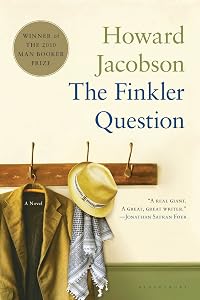
The Finkler Question
by Howard Jacobson
On This Page
Description
"He should have seen it coming. His life had been one mishap after another. So he should have been prepared for this one..."Julian Treslove, a professionally unspectacular and disappointed BBC worker, and Sam Finkler, a popular Jewish philosopher, writer and television personality, are old school friends. Despite a prickly relationship and very different lives, they've never quite lost touch with each other - or with their former teacher, Libor Sevick, a Czechoslovakian always more show more concerned with the wider world than with exam results.
Now, both Libor and Finkler are recently widowed, and with Treslove, his chequered and unsuccessful record with women rendering him an honorary third widower, they dine at Libor's grand, central London apartment.
It's a sweetly painful evening of reminiscence in which all three remove themselves to a time before they had loved and lost; a time before they had fathered children, before the devastation of separations, before they had prized anything greatly enough to fear the loss of it. Better, perhaps, to go through life without knowing happiness at all because that way you had less to mourn? Treslove finds he has tears enough for the unbearable sadness of both his friends' losses.
And it's that very evening, at exactly 11:30pm, as Treslove hesitates a moment outside the window of the oldest violin dealer in the country as he walks home, that he is attacked. After this, his whole sense of who and what he is will slowly and ineluctably change.
The Finkler Question is a scorching story of exclusion and belonging, justice and love, ageing, wisdom and humanity. Funny, furious, unflinching, this extraordinary novel shows one of our finest writers at his brilliant best. show less
Tags
Recommendations


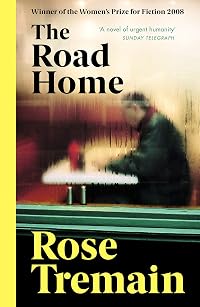
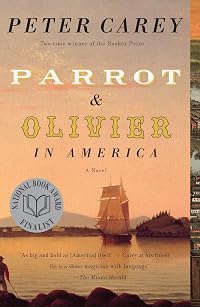
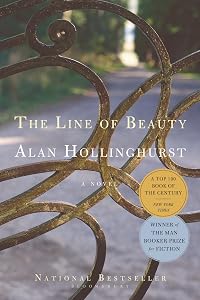
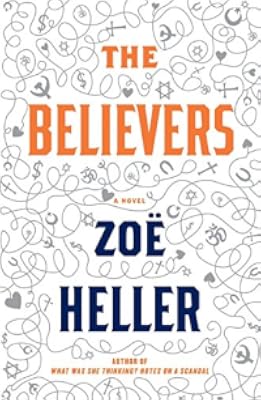

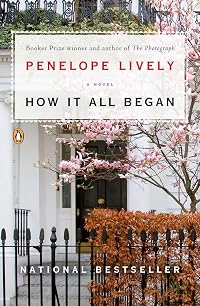
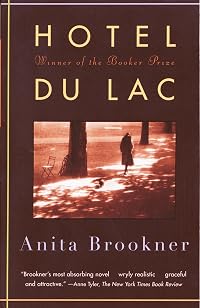
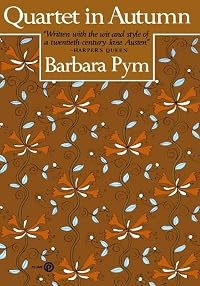
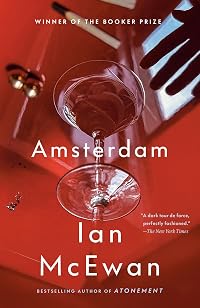


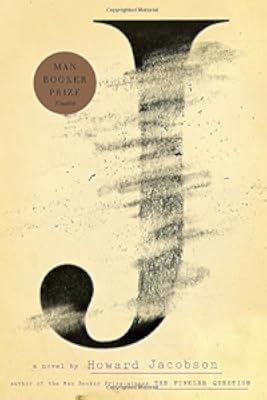


Member Recommendations
Member Reviews
Julian Treslove wants to be Jewish like his two best friends, or so he thinks. But he can't quite figure out what it means to be Jewish. He loves the suffering -- he's quite impressed by Jewish funerals -- but can't quite get behind the more mundane aspects of Jewish life, like going to Synagogue or being invited to a seder.
Author Howard Jacobson gets a lot right in this book. For example, he can certainly turn a phrase when he wants to; he describes Treslove's father as "a man who stood so straight that he created a kind of architectural silence around himself." And his Jewish anti-Israel group called "The Ashamed Jews" is dead-on accurate satire. Jacobson also gets the creepy fetishization that a lot of Gentiles engage in, failing to show more realize it's just another less overtly malign side of the anti-semitism coin.
(On that last topic, allow me to relate a story I swear to you is 100% true. I was once with a group of people, and we were discussing some anti-semitic incident; I no longer recall the particulars. One woman said, "Well, you find yourself not hating Jews after you've been invited to Passover supper a few times. They lure you in with food. They just know how people really work. So, people who don't know Jews, who have never had a good Jewish doctor really fix them up right, or a bowl of Mrs. Rosenberg's delicious soup (with a big 'doggie bag' to take home after dinner) or an evening of standup comedy with some young fellow with touseled hair making a ride on the bus sound hilarious -- they're just missing out." She was quite proud of herself for this pronouncement, and couldn't quite understand why I responded, "So...you hated Jews before you were invited to a Seder?" and then asked her to please continue, since I thought there were a few stereotypes she had missed, like the banker who runs the world. So yeah, this stuff does happen -- truly.)
But a lot of the time, it's hard to tell exactly what he's getting at. He seems to be making a point about friendship and how religion and ideology might inform our friendships, both for good and for bad. However, Jacobson also gets so much right that you'll likely want to keep reading in the hopes of finding that next good passage (best example: the face-painting incident and its aftermath, which happens in the last third somewhere). For that reason, reading this book might be either an exercise in frustration or a satisfying treasure hunt. show less
Author Howard Jacobson gets a lot right in this book. For example, he can certainly turn a phrase when he wants to; he describes Treslove's father as "a man who stood so straight that he created a kind of architectural silence around himself." And his Jewish anti-Israel group called "The Ashamed Jews" is dead-on accurate satire. Jacobson also gets the creepy fetishization that a lot of Gentiles engage in, failing to show more realize it's just another less overtly malign side of the anti-semitism coin.
(On that last topic, allow me to relate a story I swear to you is 100% true. I was once with a group of people, and we were discussing some anti-semitic incident; I no longer recall the particulars. One woman said, "Well, you find yourself not hating Jews after you've been invited to Passover supper a few times. They lure you in with food. They just know how people really work. So, people who don't know Jews, who have never had a good Jewish doctor really fix them up right, or a bowl of Mrs. Rosenberg's delicious soup (with a big 'doggie bag' to take home after dinner) or an evening of standup comedy with some young fellow with touseled hair making a ride on the bus sound hilarious -- they're just missing out." She was quite proud of herself for this pronouncement, and couldn't quite understand why I responded, "So...you hated Jews before you were invited to a Seder?" and then asked her to please continue, since I thought there were a few stereotypes she had missed, like the banker who runs the world. So yeah, this stuff does happen -- truly.)
But a lot of the time, it's hard to tell exactly what he's getting at. He seems to be making a point about friendship and how religion and ideology might inform our friendships, both for good and for bad. However, Jacobson also gets so much right that you'll likely want to keep reading in the hopes of finding that next good passage (best example: the face-painting incident and its aftermath, which happens in the last third somewhere). For that reason, reading this book might be either an exercise in frustration or a satisfying treasure hunt. show less
Julian Treslove is not a Jew. His friend Samuel Finkler is. Indeed, Finkler is Treslove’s standard of what it means to be Jewish. Often when he reflects Treslove replaces the words “Jew” and “Jewish” with “Finkler”. Therefore, The Finkler Question is author Harold Jacobson’s exploration of the Jewish Question (or is it questions?), primarily through the eyes of Gentile Treslove.
Or is he Gentile? It would appear so until Treslove is the victim of an attack by a woman, an attack which maybe anti-Semitic. Accordingly, Treslove becomes conflicted about his origins and so assumes that he is Jewish. Hence, Treslove becomes the source of ridicule. A Gentile who thinks he’s a Jew apparently can raise the merely silly into the show more farcical and a farce into highbrow comedy.
The writing in The Finkler Question is masterly. The prose is contemporary, casual yet intelligent. The characters usually are believable and yet comic. The balance in these elements usually falls in the novel’s favor.
Unfortunately, all too often the positions the characters find themselves in seem contrived. The resulting competing questions in Jacobson’s conception often fail to rise to a universal standard of humanity so that the novel cannot be counted as anything more than a stylish entertainment with a few plot problems thrown in based on the experiences of Jews, Gentiles and Arabs in the 21st century. That it won the Booker award is a bit of a mystery and reminds me somewhat of the award to Ian McEwan’s Amsterdam, a shallow mockery of Graham Greene’s The End of the Affair that must have tickled the fancies of the current literati with its facile plot twists. Yet, The Finkler Question is not exactly shallow. It simply is not as deep as it pretends and has blatant, unfortunate failings. Despite the inclusion of numerous good-natured opinions, judgments, thoughts, etc., demonstrating the diversity of thought within Jewish intellectual debate, Jacobson all too often appears to espouse prejudices that exist within certain segments of Jewish communities. Are they his beliefs?
A few:
1. The Gentile world is composed of 2 kinds of people: Jew haters and those who want to be Jews.
2. Jews are intellectual, urbane and witty. They are theatrical and full of life. Gentiles are obtuse failures.
3. Victimization in hate crimes is a special province of Jews.
4. Although there is plenty of bad behavior, including infidelity and betrayal, by Jews and Gentiles alike in the novel, there is only one betrayal committed by characters that matter. A conspiracy of Gentiles against a Finkler and by the type of Gentiles who want to be Finklers!
With respect to number 3 above I have found it almost always shocks people to know that the overwhelmingly favorite targets of hate crime, at least in the United States, are not Jews but rather African-Americans. It’s not even close. Blacks are the target of choice more than 51% of the time while Jews are the target a little over 20% of the time. A disproportionate share to be sure but remember that much of it is property crime, the obscene Swastika painted on Synagogues, while most of the crime against Blacks is against persons.
Blacks (or even East Indians) are curiously absent from Mr. Jacobson’s world except in one instance. The singular, derisive, gratuitous and ultimately crass “Thus spake Obama” in reference to a condition the fictional president (presumably) makes on Jewish settlements in Palestine. One is left to wonder what Mr. Jacobson’s stance is to the Other that is not Gentile or Jew. show less
Or is he Gentile? It would appear so until Treslove is the victim of an attack by a woman, an attack which maybe anti-Semitic. Accordingly, Treslove becomes conflicted about his origins and so assumes that he is Jewish. Hence, Treslove becomes the source of ridicule. A Gentile who thinks he’s a Jew apparently can raise the merely silly into the show more farcical and a farce into highbrow comedy.
The writing in The Finkler Question is masterly. The prose is contemporary, casual yet intelligent. The characters usually are believable and yet comic. The balance in these elements usually falls in the novel’s favor.
Unfortunately, all too often the positions the characters find themselves in seem contrived. The resulting competing questions in Jacobson’s conception often fail to rise to a universal standard of humanity so that the novel cannot be counted as anything more than a stylish entertainment with a few plot problems thrown in based on the experiences of Jews, Gentiles and Arabs in the 21st century. That it won the Booker award is a bit of a mystery and reminds me somewhat of the award to Ian McEwan’s Amsterdam, a shallow mockery of Graham Greene’s The End of the Affair that must have tickled the fancies of the current literati with its facile plot twists. Yet, The Finkler Question is not exactly shallow. It simply is not as deep as it pretends and has blatant, unfortunate failings. Despite the inclusion of numerous good-natured opinions, judgments, thoughts, etc., demonstrating the diversity of thought within Jewish intellectual debate, Jacobson all too often appears to espouse prejudices that exist within certain segments of Jewish communities. Are they his beliefs?
A few:
1. The Gentile world is composed of 2 kinds of people: Jew haters and those who want to be Jews.
2. Jews are intellectual, urbane and witty. They are theatrical and full of life. Gentiles are obtuse failures.
3. Victimization in hate crimes is a special province of Jews.
4. Although there is plenty of bad behavior, including infidelity and betrayal, by Jews and Gentiles alike in the novel, there is only one betrayal committed by characters that matter. A conspiracy of Gentiles against a Finkler and by the type of Gentiles who want to be Finklers!
With respect to number 3 above I have found it almost always shocks people to know that the overwhelmingly favorite targets of hate crime, at least in the United States, are not Jews but rather African-Americans. It’s not even close. Blacks are the target of choice more than 51% of the time while Jews are the target a little over 20% of the time. A disproportionate share to be sure but remember that much of it is property crime, the obscene Swastika painted on Synagogues, while most of the crime against Blacks is against persons.
Blacks (or even East Indians) are curiously absent from Mr. Jacobson’s world except in one instance. The singular, derisive, gratuitous and ultimately crass “Thus spake Obama” in reference to a condition the fictional president (presumably) makes on Jewish settlements in Palestine. One is left to wonder what Mr. Jacobson’s stance is to the Other that is not Gentile or Jew. show less
 This review was written for LibraryThing Early Reviewers.
On the one hand, this book is completely concerned about the Jewish (or should I say the Finklerish) question: For, Against, Wannabes, Supporters, Israel, etc. In this sense, I found it to be a very solipsistic story. I doubt a reader with no connection whatsoever with Judaism/Israel will ever get those parts (and they do represent the lion's share). I liked them and he gave me much to think about, but I can see how others won’t like it.
On the other hand, and I'm guessing this is why he won the Man Booker prize, Jacobson just writes beautifully. Whether it’s about love, death, friendship, betrayal or mourning, he crafts wonderful sentences and passages that are a delight to read. On top of that, what the novel lacks in conventional show more plot the characters feel real, and their interactions are marvelous and full of humor and humanity, warts and all. I, for one, liked it a lot. show less
On the other hand, and I'm guessing this is why he won the Man Booker prize, Jacobson just writes beautifully. Whether it’s about love, death, friendship, betrayal or mourning, he crafts wonderful sentences and passages that are a delight to read. On top of that, what the novel lacks in conventional show more plot the characters feel real, and their interactions are marvelous and full of humor and humanity, warts and all. I, for one, liked it a lot. show less
Jacobson impressed me with his review on the role of the Comic Novel in a weekend Guardian and this book doesn't disappoint; he covers the serious, dark themes of Anti-Zionism and Anti-Semitism within a poignant absurdity and eccentricity. You come to care about the three friends, Treslove, Finkler and Sevcik, despite or perhaps because of their obvious faults and weaknesses. Throughout the novel the theme of wanting to belong and feeling excluded, hope and loss, is explored in a manner that makes you want to both laugh and cry simultaneously.
Julian Treslove is a 49 year old Gentile living in present day London whose life has been a series of disappointments: he has movie star good looks but can't seem to sustain a relationship with a woman for more than a few months; he was let go from his production job at the BBC for his overly morbid programs on Radio 3, a station known for its solemnity; and he has fathered two boys, who ridicule and despise him. Even worse, he compares poorly to his friend, rival, and former school classmate Sam Finkler, a pop philosopher, radio and television personality, and author of best selling books such as The Existentialist in the Kitchen and John Duns Scotus and Self Esteem: A Manual for the Menstruating, which have made him wealthy and show more respected, with a beautiful wife and three successful children.
However, the one thing that Julian desires most of all is to become Jewish, like Sam and their mutual friend and former teacher Libor Sevcik, a Czech whose tell all biographies of Hollywood starlets such as Greta Garbo and Marlene Dietrich have earned him fortune and notoriety. Julian refers to Jews as Finklers, after his friend, and frequently wonders how they think, why they are smarter and more successful than him, and how he can understand and be more like them. The three men engage in frequent discussion about Israel, Palestine, and Jewish life in London; understandably, Julian is always an outsider, despite his desire to become one with his friends.
Libor and Sam are contrasts in character. Libor is pro-Israel yet reasonable in his beliefs, whereas Sam is fervently anti-Zionist, and openly supports the Palestinian cause.
At the beginning of the novel, the three men meet for dinner at Sevcik's lavish apartment in Regent's Park. Their discussion is more somber than usual, as Libor and Sam have recently become widowed, and Julian acts as a honorary third widower. Julian refuses Sam's offer of a ride in his limousine, and decides to walk home. While gazing at violins in a store window he is suddenly attacked and robbed, and he convinces himself that his assailant has mistaken him for a Jew. Other than a broken nose and a loss of pride he isn't badly injured, but the crime and its aftermath lead him to examine who he is (is he Jewish after all?), and his relationships with his friends, women he has dated, and his two sons.
As the crisis in the Middle East worsens, acts of violence against Jews and their establishments in London become more common. Sam is invited to join a group, which he co-opts and renames ASHamed Jews, which engages in verbal warfare against supporters of the state of Israel. Through his close friendships with Libor, Sam and other Jews of various backgrounds and beliefs that he meets, Julian becomes more exposed to their lives, in his fervent attempt to answer "The Finkler Question": what does it mean to be Jewish in the 21st century?
The Finkler Question touches on a number of other vital and compelling topics: men and their relationships to each other; male competition; the insecurity of middle aged men and women; infidelity; and multiculturalism in the modern society. Jacobson deftly weaves these topics throughout this brilliant novel, which is filled with humor and pathos. This is definitely one of my favorite novels of the year, and it replaces The Thousand Autumns of Jacob de Zoet as my favorite of the current list of Booker Prize finalists. show less
However, the one thing that Julian desires most of all is to become Jewish, like Sam and their mutual friend and former teacher Libor Sevcik, a Czech whose tell all biographies of Hollywood starlets such as Greta Garbo and Marlene Dietrich have earned him fortune and notoriety. Julian refers to Jews as Finklers, after his friend, and frequently wonders how they think, why they are smarter and more successful than him, and how he can understand and be more like them. The three men engage in frequent discussion about Israel, Palestine, and Jewish life in London; understandably, Julian is always an outsider, despite his desire to become one with his friends.
Libor and Sam are contrasts in character. Libor is pro-Israel yet reasonable in his beliefs, whereas Sam is fervently anti-Zionist, and openly supports the Palestinian cause.
At the beginning of the novel, the three men meet for dinner at Sevcik's lavish apartment in Regent's Park. Their discussion is more somber than usual, as Libor and Sam have recently become widowed, and Julian acts as a honorary third widower. Julian refuses Sam's offer of a ride in his limousine, and decides to walk home. While gazing at violins in a store window he is suddenly attacked and robbed, and he convinces himself that his assailant has mistaken him for a Jew. Other than a broken nose and a loss of pride he isn't badly injured, but the crime and its aftermath lead him to examine who he is (is he Jewish after all?), and his relationships with his friends, women he has dated, and his two sons.
As the crisis in the Middle East worsens, acts of violence against Jews and their establishments in London become more common. Sam is invited to join a group, which he co-opts and renames ASHamed Jews, which engages in verbal warfare against supporters of the state of Israel. Through his close friendships with Libor, Sam and other Jews of various backgrounds and beliefs that he meets, Julian becomes more exposed to their lives, in his fervent attempt to answer "The Finkler Question": what does it mean to be Jewish in the 21st century?
The Finkler Question touches on a number of other vital and compelling topics: men and their relationships to each other; male competition; the insecurity of middle aged men and women; infidelity; and multiculturalism in the modern society. Jacobson deftly weaves these topics throughout this brilliant novel, which is filled with humor and pathos. This is definitely one of my favorite novels of the year, and it replaces The Thousand Autumns of Jacob de Zoet as my favorite of the current list of Booker Prize finalists. show less
It's hard reading a prize winner after it's announced, I think, because one's expectations are high and, well, expectant. To this extent, I was a little disappointed at first and found the beginning rather slow. The main character, Julian Treslove, is a hard character to like, although by the end I felt I had begun to understand him, which is something different. Julian is a man in search of an identity, and his job as a party double for famous people, because of his ability to look like anyone, reflects this. After a particular incident, in which Treslove is obsessed with finding meaning, he decides that the identity he is meant to have is Jewish. The rest of the book is his attempt to "become" Jewish and what that means.
"That was the show more total of Treslove's findings after a year of being an adopted Finkler {Jew} in his own eyes if in no one else's--they didn't have a chance in hell. Just as he didn't."
Treslove isn't the only character trying to find his identity. Sam Finkler is Jewish, but that hasn't made his identity any easier to define. Much of his time, he belongs to a group he calls ASHamed Jews. Trying to escape the influence of his Orthodox father, and gather more aclaim by protesting Zionism, Sam struggles with what it means to be Jewish as well.
"He was a thinker who didn't know what he thought, except that he had loved and failed and now missed his wife, and that he hadn't escaped what was oppressive about Judaism by joining a Jewish group that gathered to talk feverishly about the oppressiveness of being Jewish. Talking feverishly about being Jewish was being Jewish."
There are other important themes carried through the book: the Jewish/Palestinian troubles, anti-Semitism, whether the Holocaust is still a necessary barometer of Jewish life, and the crises that face us as we age. Overall the novel is layer and intellectual, raising questions without answers, and challenging us all to question our self-concepts as Jews or our stereotypes about them. show less
"That was the show more total of Treslove's findings after a year of being an adopted Finkler {Jew} in his own eyes if in no one else's--they didn't have a chance in hell. Just as he didn't."
Treslove isn't the only character trying to find his identity. Sam Finkler is Jewish, but that hasn't made his identity any easier to define. Much of his time, he belongs to a group he calls ASHamed Jews. Trying to escape the influence of his Orthodox father, and gather more aclaim by protesting Zionism, Sam struggles with what it means to be Jewish as well.
"He was a thinker who didn't know what he thought, except that he had loved and failed and now missed his wife, and that he hadn't escaped what was oppressive about Judaism by joining a Jewish group that gathered to talk feverishly about the oppressiveness of being Jewish. Talking feverishly about being Jewish was being Jewish."
There are other important themes carried through the book: the Jewish/Palestinian troubles, anti-Semitism, whether the Holocaust is still a necessary barometer of Jewish life, and the crises that face us as we age. Overall the novel is layer and intellectual, raising questions without answers, and challenging us all to question our self-concepts as Jews or our stereotypes about them. show less
Complicated feelings about this book. On the one hand, it does two things very well: (a) it reframes “the Jewish question” in a clever and funny way, looking somewhat from the outside in at a fictional sliver of London’s Jewish community; and (b) it captures well the conflicting feelings within this community about topics such as Israel, its actions towards Palestinians, whether there is something like a Jewish morality that should govern the state’s approach, and (of course), the distinction between criticism and understanding from Jews versus non-Jews. Those pieces, and the relationships that bind them together, are done well. On the other hand, the book’s central character—Julian Treslove—feels, absent the other show more characters, jejune, lacking an inner life except where it intersects with some others. I get that this is the point, but it seemed to me to diminish rather than enhance the wonderful ways in which the other characters filled out their roles. show less
Members
- Recently Added By
Published Reviews
ThingScore 100
Fans of Howard Jacobson might be alarmed to discover that the main character in his latest novel is a Gentile. As it turns out, though, they needn’t worry. Julian Treslove may not be Jewish, but in most other respects he’s a typical Jacobson protagonist: a middle-aged man much given to tears, self-interrogation, a sense of imminent doom, falling heavily in love and regarding his male show more friends as his male rivals. Above all, he’s obsessed with Jews and Jewishness. show less
added by kidzdoc
The Finkler Question (longlisted for this year's Man Booker prize) is full of wit, warmth, intelligence, human feeling and understanding. It is also beautifully written with that sophisticated and near invisible skill of the authentic writer. Technically the characterisation is impeccable, the prose a subtle delight, the word selection everywhere perfect, the phrase-making fresh and arresting show more without self-consciousness. Indeed, there's so much that is first rate in the manner of Jacobson's delivery that I could write all day on his deployment of language without once mentioning what the book is about. A single line describing the hero's father will have to do: "a man who stood so straight that he created a kind of architectural silence around himself". show less
added by kidzdoc
The Finkler Question is very funny, utterly original, and addresses a topic of contemporary fascination. That is to say, it is about the anguish of middle-aged men, it consists of a series of loosely arranged episodes rich in argument and incident, and it examines how Jews now interrogate their relations with Israel.
It puts in play a gentile fascinated by Jews, and his two Jewish friends, one show more a Zionist comfortable in London, and the other an anti-Zionist comfortable in his outrage. They engage with each other in sometimes moving, sometimes bathetic ways, making their own journeys of self-understanding while they exasperatedly strive to educate each other.
The anti-Zionist Jew is called Finkler, hence the title of the novel. The "question" of "Finkler" is today's version of the "Jewish question". At the end of the 19th century, Jews asked of themselves, and were asked, "What is the future of the Jewish people?" At the end of the 20th century, this question had been reformulated as "What is the future of the Jewish state?" In Jacobson's book, Finkler dwells among those miscellaneous Jews who answer the question in versions of condemnation of Israel, Zionism, and Judaism. show less
It puts in play a gentile fascinated by Jews, and his two Jewish friends, one show more a Zionist comfortable in London, and the other an anti-Zionist comfortable in his outrage. They engage with each other in sometimes moving, sometimes bathetic ways, making their own journeys of self-understanding while they exasperatedly strive to educate each other.
The anti-Zionist Jew is called Finkler, hence the title of the novel. The "question" of "Finkler" is today's version of the "Jewish question". At the end of the 19th century, Jews asked of themselves, and were asked, "What is the future of the Jewish people?" At the end of the 20th century, this question had been reformulated as "What is the future of the Jewish state?" In Jacobson's book, Finkler dwells among those miscellaneous Jews who answer the question in versions of condemnation of Israel, Zionism, and Judaism. show less
added by kidzdoc
Lists

Booker Prize
491 works; 62 members

Jewish Books
367 works; 24 members
Best Contemporary Literary Fiction (Around the Last 30 Years)
400 works; 124 members

Best Friendship Stories
205 works; 16 members

Best 21st Century Books (So Far)
679 works; 86 members

Book Riot's 100 must-read works of Jewish Fiction
100 works; 8 members

Man Booker Prize Longlist 2010
12 works; 2 members

Booker Prize Shortlist: Titles Not Yet Read
161 works; 4 members

Books Read in 2017
4,249 works; 130 members

Biggest Disappointments
606 works; 165 members

Novels that you shouldn't waste your time on
94 works; 52 members

BBC World Book Club
267 works; 5 members

World Book Club (BBC World Service)
212 works; 1 member
Author Information

30+ Works 6,537 Members
Howard Jacobson was born on August 25, 1942 in Manchester, England. He is a Man Booker Prize-winning British author and journalist. He studied English at Downing College, Cambridge under F. R. Leavis. He lectured for three years at the University of Sydney before returning to England to teach at Selwyn College, Cambridge. His later teaching posts show more included a period at Wolverhampton Polytechnic from 1974 to 1980. His time at Wolverhampton was to form the basis of his first novel, Coming from Behind, a campus comedy about a failing polytechnic that plans to merge facilities with a local football club. He also wrote a travel book in 1987, titled In the Land of Oz, which was researched during his time as a visiting academic in Sydney. His fiction, particularly in the six novels he has published since 1998, is characterised chiefly by a discursive and humorous style. His 1999 novel The Mighty Walzer, about a teenage table tennis champion, won the Bollinger Everyman Wodehouse Prize for comic writing. In October 2010 Jacobson won the Man Booker Prize for his novel The Finkler Question, which was the first comic novel to win the prize since Kingsley Amis's The Old Devils in 1986. In 2013 he made The New York Times Best Seller List with his title Whole Rethinking the Science of Nutrition which he co-authored with T. Colin Campbell. He will be at the Oz, New Zealand festival of literature and arts program in 2015 in London. (Bowker Author Biography) show less
Some Editions
Awards and Honors
Awards
Distinctions
Series
Belongs to Publisher Series
A tot vent (557)
Common Knowledge
- Canonical title
- The Finkler Question
- Original title
- The Finkler Question
- Original publication date
- 2010-08-02
- People/Characters
- Julian Treslove; Sam Finkler; Libor Sevcik; Hephzibah Weisenbaum; Tamara Krausz; Emmy Oppenstein
- Important places
- London, England, UK; England, UK; Beachy Head, East Sussex, England, UK
- Dedication
- To the memory of three dear friends, great givers of laughter
Terry Collits (1940-2009)
Tony Errington (1944-2009)
Graham Rees (1944-2009)
Who now will set the table on a roar? - First words
- He should have seen it coming. His life had been one mishap after another. So he should have been prepared for this one.
- Quotations
- "Just when you think you've overcome the grief, you realise you are left with the loneliness."
- Last words
- (Click to show. Warning: May contain spoilers.)There are no limits to Finkler's mourning.
- Blurbers
- Bainbridge, Beryl; Pearson, Allison; Foer, Jonathan Safran; Taylor, Alan; Adair, Tom; Robson, Leo (show all 12); Herschthal, Eric; Felsenberg, Ben; Julius, Anthony; Beckman, Jonathan; Syed, Matthew; Walton, James
- Original language
- English
Classifications
Statistics
- Members
- 2,908
- Popularity
- 6,213
- Reviews
- 142
- Rating
- (3.00)
- Languages
- 16 — Catalan, Chinese, Czech, Danish, Dutch, English, Estonian, French, German, Greek, Italian, Lithuanian, Norwegian (Bokmål), Portuguese, Spanish, Turkish
- Media
- Paper, Audiobook, Ebook
- ISBNs
- 44
- ASINs
- 26
