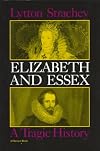
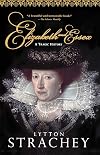
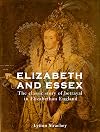
Elizabeth and Essex: A Tragic History
by Lytton Strachey
On This Page
Description
One of the most famous and tortured romances in history - between Elizabeth I, Queen of England, and Robert Devereux, Earl of Essex - began in 1587, when she was fifty-three and he was nineteen. Their passionate affair continued for five years, until Essex was beheaded for treason in 1601. In a fast-paced succession of brilliantly-rendered scenes, Lytton Strachey portrays Elizabeth and Essex's compelling attraction for each other, their impassioned disagreements and their mutual struggle for show more power, which culminated so tragically - for both of them. Alongside the doomed love affair, Strachey pi show lessTags
Recommendations





















Member Reviews
It would be amusing to put Lytton Strachey and Sir Francis Bacon in a box - like, say, a camel spider and a scorpion - to watch how they would fight. Lytton’s lashing stinger vs. Francis’s stridulating chelicerae. Ouch. Rattle. Ouch.
in Elizabeth and Essex, Strachey holds Bacon in low regard. Essex was a early patron of Bacon, and his loyal, if ineffectual, advocate in matters requiring Elizabeth’s beneficence. That loyalty was ultimately ill paid; Bacon chose to participate in the final prosecution of Essex. The Earl’s blunderous attempt at a coup d’etat predictably backfired. But better for Bacon, sub specie aeternitatis, to have abstained from the star chamber rather than take part in Essex’s fore-ordained destruction. show more Injecting his venom, Strachey labels Bacon’s reversed loyalty “serpentine”, thereby alluding to Bacon’s essay “On Truth, and turning back on the author his own words regarding civil falsehood “For these winding, and crooked courses, are the goings of the serpent; which goeth basely upon the belly, and not upon the feet.”
Bacon, were he allowed to rebut, would likely grind up in his pincers the psychological approach of Strachey to biography, in particular Strachey’s debt to Freud and Dostoyevsky.
Strachey observed that Elizabeth’s ultimate beheading of her suitor, Essex, could have been, on one level, a long postponed revenge - of the child/female over the parent/male - for Henry VIII’s beheading of her mother, Anne Boleyn. One can imagine Bacon’s sneer: “Really Sigmund?”
And one doesn’t have to squint very hard to see the Dostoyevsky in Strachey’s portraits of Elizabeth, Essex, and Cecil. Viz, the crafty vacillations of Karamazov pere (Elizabeth), the compulsive, ensnaring, humiliating passions of Dimitri (Essex), and the smooth patient frigid calculations of Ivan (Cecil).
Bacon would deflate Strachey's style easily, for Bacon has said - “Doth any man doubt, that if there were taken out of men's minds, vain opinions, flattering hopes, false valuations, imaginations as one would, and the like, but it would leave the minds, of a number of men, poor shrunken things, full of melancholy and indisposition, and unpleasing to themselves?”
For my vote, I prefer Strachey’s approach to “truth” over Bacon’s - the “diamond by dainty candlelight”, over the “pearl in daylight.” Please, dear psychobiographer, leave in those imaginations, opinions, and flattered hopes!
In fact, by candlelight, other useful truths and correspondences emerge. Case in point, I came to pick up Elizabeth and Essex last week because I was stimulated by the film Anonymous. That film dramatizes the theory that Edward De Vere, Earl of Oxford, wrote Shakespeare’s plays. De Vere chose anonymity over fame, so it goes, to avoid piquing retribution by Elizabeth or her advisors. That he would do so, seems far-fetched until you see the treacherous cross currents made vivid in Elizabeth and Essex,
The chapter regarding the Queen’s physician, Ruy Lopez, shows what could befall even an innocent bystander when ambition and paranoia were inflamed by intrigue. Lopez, a Portugese Jew, by a complicated series of events, became falsely implicated, in a Spanish plot that was in turn, falsed amplified and ultimately alleged to have as its objective the poisoning of the Queen. In return for Lopez’s many years of medical service, he was interrogated by both Cecil and Essex (who were usually rivals), tortured, convicted, and put to death in the following manner - he was castrated, then dis-embowled, and then quartered. (once again, ouch)
In between reading chapters from Essex and Elizabeth, I happened to chance on the BBC series Luther. The series concerns an anti-hero detective in modern London. It’s beautifully written, brilliantly photographed, and seemingly so distant from subject matter of Elizabeth and Essex. And yet, perhaps because of Strachey’s skill in evoking that volatile and criminal time, the 21st century criminal justice workplace, in Luther, seemed an echo to me of the intrigues, the impulsiveness, the moral quirkiness, and the vicious retributive justice of that earlier time - as though some perverse local goddess still haunts the shores of the Thames, and lingers in its miasmas. show less
in Elizabeth and Essex, Strachey holds Bacon in low regard. Essex was a early patron of Bacon, and his loyal, if ineffectual, advocate in matters requiring Elizabeth’s beneficence. That loyalty was ultimately ill paid; Bacon chose to participate in the final prosecution of Essex. The Earl’s blunderous attempt at a coup d’etat predictably backfired. But better for Bacon, sub specie aeternitatis, to have abstained from the star chamber rather than take part in Essex’s fore-ordained destruction. show more Injecting his venom, Strachey labels Bacon’s reversed loyalty “serpentine”, thereby alluding to Bacon’s essay “On Truth, and turning back on the author his own words regarding civil falsehood “For these winding, and crooked courses, are the goings of the serpent; which goeth basely upon the belly, and not upon the feet.”
Bacon, were he allowed to rebut, would likely grind up in his pincers the psychological approach of Strachey to biography, in particular Strachey’s debt to Freud and Dostoyevsky.
Strachey observed that Elizabeth’s ultimate beheading of her suitor, Essex, could have been, on one level, a long postponed revenge - of the child/female over the parent/male - for Henry VIII’s beheading of her mother, Anne Boleyn. One can imagine Bacon’s sneer: “Really Sigmund?”
And one doesn’t have to squint very hard to see the Dostoyevsky in Strachey’s portraits of Elizabeth, Essex, and Cecil. Viz, the crafty vacillations of Karamazov pere (Elizabeth), the compulsive, ensnaring, humiliating passions of Dimitri (Essex), and the smooth patient frigid calculations of Ivan (Cecil).
Bacon would deflate Strachey's style easily, for Bacon has said - “Doth any man doubt, that if there were taken out of men's minds, vain opinions, flattering hopes, false valuations, imaginations as one would, and the like, but it would leave the minds, of a number of men, poor shrunken things, full of melancholy and indisposition, and unpleasing to themselves?”
For my vote, I prefer Strachey’s approach to “truth” over Bacon’s - the “diamond by dainty candlelight”, over the “pearl in daylight.” Please, dear psychobiographer, leave in those imaginations, opinions, and flattered hopes!
In fact, by candlelight, other useful truths and correspondences emerge. Case in point, I came to pick up Elizabeth and Essex last week because I was stimulated by the film Anonymous. That film dramatizes the theory that Edward De Vere, Earl of Oxford, wrote Shakespeare’s plays. De Vere chose anonymity over fame, so it goes, to avoid piquing retribution by Elizabeth or her advisors. That he would do so, seems far-fetched until you see the treacherous cross currents made vivid in Elizabeth and Essex,
The chapter regarding the Queen’s physician, Ruy Lopez, shows what could befall even an innocent bystander when ambition and paranoia were inflamed by intrigue. Lopez, a Portugese Jew, by a complicated series of events, became falsely implicated, in a Spanish plot that was in turn, falsed amplified and ultimately alleged to have as its objective the poisoning of the Queen. In return for Lopez’s many years of medical service, he was interrogated by both Cecil and Essex (who were usually rivals), tortured, convicted, and put to death in the following manner - he was castrated, then dis-embowled, and then quartered. (once again, ouch)
In between reading chapters from Essex and Elizabeth, I happened to chance on the BBC series Luther. The series concerns an anti-hero detective in modern London. It’s beautifully written, brilliantly photographed, and seemingly so distant from subject matter of Elizabeth and Essex. And yet, perhaps because of Strachey’s skill in evoking that volatile and criminal time, the 21st century criminal justice workplace, in Luther, seemed an echo to me of the intrigues, the impulsiveness, the moral quirkiness, and the vicious retributive justice of that earlier time - as though some perverse local goddess still haunts the shores of the Thames, and lingers in its miasmas. show less
Though in some ways deeply silly, this was a very enjoyable read. Strachey's way with words can be hilarious.
Psychobiography made its appearance with Lytton Strachey's Elizabeth and Essex (1928). His retelling of the failure of the Essex/Elizabeth relationship is based on Strachey's notion of Elizabeth's traumatized childhood leading to "a compromised heterosexuality" (221). Strachey and Virginia Woolf, who discussed the book with him but in the end disliked it, both viewed Elizabethan England as a time of vitality and "young imagination," in contrast to stodgy Victorian modernism. Woolf went on to construct her own Elizabeth in Orlando (1928), a figure whom Dobson and Watson call "generative" rather than destructive, as she enables the progress of the young Orlando through future ages.
This was shorter and an easy read. It doesn't go into specific details incessantly about the time period but it is a good overview of the downfall of Robert Deveraux. I do recommend it to anyone interested in Elizabeth's character in her later years.
http://nwhyte.livejournal.com/1586764.html
A short (180 pages) but colourful account of the relationship in the 1590s between Elizabeth I and the second Earl of Essex, which ended with his execution in 1601. No footnotes or much sourcing at all, which makes one a bit suspicious of its historical accuracy, though it is told in suitably dramatic terms. I knew the basics already, but Strachey catches our attention by portraying a court struggle between Cecil (the younger son of Lord Burghley, who founded the Salisbury dynasty) and Essex's supporters, with Francis Bacon playing a key role ny switching sides and ensuring Essex's doom; the queen then dies of a broken heart. I had not realised that Essex was actually the great-grandson of the show more "other Boleyn girl", Anne's sister Mary - indeed his grandmother was quite possibly her daughter by Henry VIII, making him the queen's great-nephew. It also hadn't occurred to me that he was much the most prominent courtier ever to be made Lord Deputy or Lord Lieutenant of Ireland - I had vaguely assumed that his father had held the post at some point before his horrible death, but I was wrong. The involvement of William Shakespeare in the whole thing is interesting but incidental (and anyway covered better by Shapiro). show less
A short (180 pages) but colourful account of the relationship in the 1590s between Elizabeth I and the second Earl of Essex, which ended with his execution in 1601. No footnotes or much sourcing at all, which makes one a bit suspicious of its historical accuracy, though it is told in suitably dramatic terms. I knew the basics already, but Strachey catches our attention by portraying a court struggle between Cecil (the younger son of Lord Burghley, who founded the Salisbury dynasty) and Essex's supporters, with Francis Bacon playing a key role ny switching sides and ensuring Essex's doom; the queen then dies of a broken heart. I had not realised that Essex was actually the great-grandson of the show more "other Boleyn girl", Anne's sister Mary - indeed his grandmother was quite possibly her daughter by Henry VIII, making him the queen's great-nephew. It also hadn't occurred to me that he was much the most prominent courtier ever to be made Lord Deputy or Lord Lieutenant of Ireland - I had vaguely assumed that his father had held the post at some point before his horrible death, but I was wrong. The involvement of William Shakespeare in the whole thing is interesting but incidental (and anyway covered better by Shapiro). show less
Cuando el conde de Essex sucedió a su padrastro, el conde de Leicester, como el favorito de la reina Isabel I de Inglaterra, éste tenía veintiún años y ella, más de cincuenta. La soberana era autoritaria y exigente; su favorito, consentido y ambicioso, pero también inteligente y consciente de su privilegio.
Mar 23, 2023Spanish
Ratings
Members
- Recently Added By
Lists

Best Books of 1926-1935
403 works; 10 members

EGBERTINA'S List of childhood books worthy of merit or unspeakable delight
155 works; 6 members

Publisher's Weekly NON-Fiction list - 1912 - 1975
486 works; 4 members
Author Information

45+ Works 4,510 Members
Lytton Strachey (1880-1932), among the most famous writers of his time, was a member of the Bloomsbury group and the author of a number of biographies
Some Editions
Awards and Honors
Distinctions
Series
Belongs to Publisher Series
Common Knowledge
- Canonical title*
- Elisabeth en Essex
- Original title
- Elisabeth and Essex : a tragic history
- Original publication date
- 1928
- People/Characters
- Don Antonio (pretender to Portuguese crown); Anthony Bacon; Francis Bacon (1561-1626, afterward 1st Baron Verulam and Viscount St. Albans); Anne Cooke Bacon, Lady Bacon; Sir Henry Bagenal; Sir Richard Bingham (show all 82); Charles Blount, 8th Baron Mountjoy and 1st Earl of Devonshire; Sir Christopher Blount; Sir Thomas Bodley; Anne Boleyn; Mr. Booth; Lord Deputy Borough; Henry Brooke, 11th Baron Cobham; William Brooke, 10th Baron Cobham; Henri de La Tour d'Auvergne, duc de Bouillion; Richard Burke, 4th Earl of Clanricarde; Sir George Carew; Henry Carey, 1st Baron Hunsdon; Robert Carey, 1st Earl of Monmouth; Catherine of Aragon; Mildred Cecil, Lady Burghley; Robert Cecil, 1st Earl of Salisbury; Thomas Cecil, 1st Earl of Exeter (as Thomas Cecil, 2nd Baron Burghley); William Cecil, 1st Baron Burghley; Dorothy Bray, Lady Chandos; Charles V, King of Spain; Sir Conyers Clifford; Edward Coke; William Compton, 1st Earl of Northampton, 2nd Baron Compton; Henry Cuffe; Lord Cumberland; Sir Charles Davers; Gomez d'Avila; Eleanor de Bohun, Duchess of Glouchester; Huralt, Sieur de Maisse; Ana de Mendoza, Princess of Éboli (mentioned); Edward de Vere, 17th Earl of Oxford; Robert Devereux, 2nd Earl of Essex; John Donne; Sir Francis Drake; Robert Dudley, 1st Earl of Leicester; Sarah Harington, Lady Edmondes; Edward III, King of England; Thomas Egerton (Lord Keeper); Elizabeth I, Queen of England; Gomez Suarez de Figueroa of Cordova, Duke of Feria; Esteban Ferriera; Mr. Fleming; Sir Thomas Gerard; Sir Fulke Greville; Arthur Grey, 14th Baron Grey de Wilton; Henriy, Duke of Guise (mentioned); John Harington (writer); William Harvey; Elizabeth Hatton, Lady Hatton; Sir William Hatton (Lord Chancellor); John Hayward; Henri III, King of France; Henri IV, King of France; Henry IV, King of England (mentioned); Henry V, King of England (mentioned in context of the play); Henry VIII, King of England; Horace (mentioned); Charles Howard, 1st Earl of Nottingham, 2nd Baron Howard of Effingham; Henry Howard, 1st Earl of Northampton; Mary Howard FitzRoy, Duchess of Richmond and Somerset (as Lady Mary Howard); Thomas Howard, 1st Earl of Suffolk; James VI and I, King of Scots and King of England; Ben Jonson; Lettice Knollys; Sir William Knollys; Thomas Merke, Bishop of Carlisle (mentioned in the play Richard II); Sir John Leveson; Richard Bancroft, Archbishop of Canterbury (as Bishop of London); Ruy Lopez (doctor); F. L. Lucas; Don Manoel; John Erskine, 18th Earl of Mar; Robert Markham; Christopher Marlowe; Mary, Queen of Scots; Alonso Pérez de Guzmán, 7th Duke of Medina-Sidonia
- Important places
- England, UK (as England)
- Important events
- Essex Rebellion
- Related movies
- Elizabeth & Essex: Battle Royale (2005 | IMDb)
- Dedication
- To
Alix and James
Strachey - First words
- The English Reformation was not merely a religious event; it was also a social one.
- Quotations
- Human relationships must either move or perish. When two consciousnesses come to a certain nearness the impetus of their interactions, growing ever intenser and intenser, leads on to an inescapable climax. The crescendo must ... (show all)rise to its topmost note; and only then is the preordained solution of the theme made manifest.
- Last words
- (Click to show. Warning: May contain spoilers.)As the hand moved, the mind moved too, ranging sadly over the vicissitudes of mortal beings, reflecting upon the revolutions of kingdoms, and dreaming, with quiet clarity, of what the hours, even then, were bringing - the union of two nations - the triumph of the new rulers - success, power, and riches - a name in after-ages - a noble lineage - a great House.
- Original language*
- Engels
*Some information comes from Common Knowledge in other languages. Click "Edit" for more information.
Classifications
- Genres
- History, Nonfiction, Biography & Memoir, General Nonfiction
- DDC/MDS
- 942.055092 — History & geography History of Europe England and Wales England 1485-1603, Tudors 1558-1603, Elizabeth I History, geographic treatment, biography Biography
- LCC
- DA355 .S8 — History of Europe, Asia, Africa and Oceania Great Britain History of Great Britain England History By period Modern, 1485- Tudors, 1485-1603 Elizabeth I, 1558-1603. Elizabethan age
- BISAC
Statistics
- Members
- 588
- Popularity
- 49,932
- Reviews
- 6
- Rating
- (3.70)
- Languages
- 10 — Danish, Dutch, English, French, German, Hungarian, Italian, Norwegian (Bokmål), Spanish, Swedish
- Media
- Paper, Ebook
- ISBNs
- 29
- ASINs
- 46