On This Page
Description
The "untalented" child of a musical family finally discovers where she fits in.Tags
Recommendations






















Member Reviews
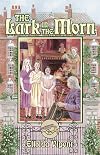
Jane Kitson Haverard, known to all and sundry as Kit, struggles to find her place in her family and her calling in life in this outstanding coming-of-age novel from English author Elfrida Vipont. The first of five children's books chronicling the saga of an extended Quaker family - the second, The Lark on the Wing, was Britain's Carnegie Medal winner in 1950 - The Lark in the Morn is part family story and part school story, opening in the village of Thornley, where Kit, whose three older brothers are all away at school, lives with her widowed professor father, and her managing cousin Laura, who has taken care of the family since the death of Mrs. Haverard many years before. Hemmed in by Laura's solid lack of understanding - her awkward show more groping towards meaning, in the Quaker Meeting, is condemned as "mocking the sacred," while her profound connection to music goes entirely unnoticed, because she cannot sing and play in the same style as some of her peers - Kit lives in a world of make-believe, engaging in imaginary games with her friends Pony and Helen. When an unexpected illness, in the form of a weak heart, necessitates a rest, she is sent to stay with her maternal great-aunts at Manningleigh, where she becomes acquainted with her mother's family for the first time. She also comes to a very different understanding of what music can be, a process that continues when she goes away to Heryot, the great Quaker boarding school for girls...
I found The Lark in the Morn, which was first published in the UK in 1948 - the American edition I read was released by Holt, Rinehart and Winston in 1970, although Bobbs-Merrill was the first American publisher to pick it up, in 1951 - to be an immensely engaging book, by turns entertaining and poignant. Kit is an appealing heroine, so terribly awkward (and so realistically resentful) at the start, and her gradual maturation, as she learns to look beyond appearances, and to judge matters for herself, is captured by Vipont with extraordinary sensitivity. I appreciated the fact that even the less appealing characters are seen to have redeeming qualities: Laura, despite her often clueless bossiness, and her obnoxious desire to monopolize Professor Haverard, is concerned for Kit's welfare, and terribly worried when she becomes ill; while Pony, although sometimes insensitive, and a little too determined to be the leader, and shine before all others, shows remorse for her momentary betrayal of her friend, and, through her actions in arranging the final concert, gives Kit a chance to shine. I was fascinated and moved, as I often am, by the depiction of Quaker beliefs here, and found the idea of waiting - waiting for the inner light, for that spark of the divine, for what Kit comes to call "the real me," to come to fruition - incredibly powerful. The discussion of changing mores, within the Quaker community - the fact that Great-Aunt Henrietta's life was ruined, because she couldn't pursue music, for instance - was quite interesting as well.
I do wish that the section devoted to Heryot had been a little more detailed - I felt the first portion of the book, centered around Kit's home life, was a little bit richer, probably because the time period being depicted was much shorter; while the second, in which she attends school, sometimes had an "outline" quality to it, probably because it frequently skipped entire years in one sentence. That said, I enjoyed the school story aspects that did appear, particularly Kit's friendship with the Chauntesingers, and her growing understanding of the differences between substance and style, as revealed in the characters of the two music teachers, Miss Fishwick and Miss Tattersall. Her evolving attitude toward music and singing, and the parallels that Vipont draws, between this development and her grasping for meaning in her Quaker beliefs, was also quite illuminating - in both, there is a sense of a search for truth, for authenticity, and above all, for self. As is made plain in a poignant discussion with Great-Aunt Maria, in which the necessity of breaking free, in order to truly come home is raised, Kit herself is the lark of which she sings, in the old Somersetshire folksong that gives this title its name. She must find a way to rise up in the morn, before she can truly return to the nest... show less
I found The Lark in the Morn, which was first published in the UK in 1948 - the American edition I read was released by Holt, Rinehart and Winston in 1970, although Bobbs-Merrill was the first American publisher to pick it up, in 1951 - to be an immensely engaging book, by turns entertaining and poignant. Kit is an appealing heroine, so terribly awkward (and so realistically resentful) at the start, and her gradual maturation, as she learns to look beyond appearances, and to judge matters for herself, is captured by Vipont with extraordinary sensitivity. I appreciated the fact that even the less appealing characters are seen to have redeeming qualities: Laura, despite her often clueless bossiness, and her obnoxious desire to monopolize Professor Haverard, is concerned for Kit's welfare, and terribly worried when she becomes ill; while Pony, although sometimes insensitive, and a little too determined to be the leader, and shine before all others, shows remorse for her momentary betrayal of her friend, and, through her actions in arranging the final concert, gives Kit a chance to shine. I was fascinated and moved, as I often am, by the depiction of Quaker beliefs here, and found the idea of waiting - waiting for the inner light, for that spark of the divine, for what Kit comes to call "the real me," to come to fruition - incredibly powerful. The discussion of changing mores, within the Quaker community - the fact that Great-Aunt Henrietta's life was ruined, because she couldn't pursue music, for instance - was quite interesting as well.
I do wish that the section devoted to Heryot had been a little more detailed - I felt the first portion of the book, centered around Kit's home life, was a little bit richer, probably because the time period being depicted was much shorter; while the second, in which she attends school, sometimes had an "outline" quality to it, probably because it frequently skipped entire years in one sentence. That said, I enjoyed the school story aspects that did appear, particularly Kit's friendship with the Chauntesingers, and her growing understanding of the differences between substance and style, as revealed in the characters of the two music teachers, Miss Fishwick and Miss Tattersall. Her evolving attitude toward music and singing, and the parallels that Vipont draws, between this development and her grasping for meaning in her Quaker beliefs, was also quite illuminating - in both, there is a sense of a search for truth, for authenticity, and above all, for self. As is made plain in a poignant discussion with Great-Aunt Maria, in which the necessity of breaking free, in order to truly come home is raised, Kit herself is the lark of which she sings, in the old Somersetshire folksong that gives this title its name. She must find a way to rise up in the morn, before she can truly return to the nest... show less
The Lark in the Morn is a charming tale of the coming of age of one Kit Haverard, a not so happy but extremely nice young girl. Her mother died shortly after her birth, and her father is an easily distracted professor, so most of her raising was done by her overbearing cousin Laura. And to say that Laura doesn't understand Kit would be a massive understatement, and as a result Kit makes for a rather unhappy child. But then she gets sick and goes to stay in the country with her mother's family for the first time and discovers that music and especially singing can be fun. But it's at boarding school where, away from Laura's constant criticisms, she begins to shine. Perhaps she has some control over her life after all.
A lovely mid-century show more boarding school novel with a Quaker twist, The Lark in the Morn is an excellent story about overcoming the odds and reaching self-acceptance. The characters are well-drawn and the plot is tightly woven. Highly recommended for those who like girl's coming of age stories, mid-century schoolgirl books, or just good story-writing. show less
A lovely mid-century show more boarding school novel with a Quaker twist, The Lark in the Morn is an excellent story about overcoming the odds and reaching self-acceptance. The characters are well-drawn and the plot is tightly woven. Highly recommended for those who like girl's coming of age stories, mid-century schoolgirl books, or just good story-writing. show less
3.5 rounded down because I had so much trouble figuring out when it took place. Turns out it's probably about contemporary with publication, but in 1949 I would think some mention would have been made of the recent war, if only 'praise to God our school didn't get bombed' or some such.
The Quakers here are almost unrecognizable to the other stories I've read that feature them, but then, it is indeed set a century or two more recent, and not in America. These Quakers seem very well able to live amongst others, to enjoy beautiful things, etc. But I do like their church service, which had not changed.
I love that Kit and her chums play Redcoats and Prince Charlie... just as boys of more recent decades play soldiers or cowboys & Indians. show more They're very athletic girls, with terrific imaginations... and are usually not scolded even for skinned knees and torn skirts.
There are characters we like at first and then not so much later, and vice-versa... this is not a book to dnf. Much is revealed, nuances are explored, etc. I assume the sequels reveal even more, but I have no interest in them.
If I had more interest in music, I probably would have gotten more out of it, may have rounded up my 3.5 stars to 4. I will try to find some of the mentioned pieces on youtube, but I suspect I won't appreciate them. show less
The Quakers here are almost unrecognizable to the other stories I've read that feature them, but then, it is indeed set a century or two more recent, and not in America. These Quakers seem very well able to live amongst others, to enjoy beautiful things, etc. But I do like their church service, which had not changed.
I love that Kit and her chums play Redcoats and Prince Charlie... just as boys of more recent decades play soldiers or cowboys & Indians. show more They're very athletic girls, with terrific imaginations... and are usually not scolded even for skinned knees and torn skirts.
There are characters we like at first and then not so much later, and vice-versa... this is not a book to dnf. Much is revealed, nuances are explored, etc. I assume the sequels reveal even more, but I have no interest in them.
If I had more interest in music, I probably would have gotten more out of it, may have rounded up my 3.5 stars to 4. I will try to find some of the mentioned pieces on youtube, but I suspect I won't appreciate them. show less
"Twelve-year-old Kit Haverard was the youngest member of a large Quaker family which had long been famous for its interest in music. Everyone had hoped that Kit would take after her exceptionally gifted mother, but after failing to learn the piano and seemingly not being able to sing, Kit's family concluded that she was a musical misfit. It wasn't until Kit went to stay with her cousins at Gramercie and met Papa Andreas, a fine singing teacher, that she became aware of her hidden talent. With grace and skill, [the author] develops the story of a young girl's search to understand herself and to find her place among the musical heritage of her family. "
Ratings
Members
- Recently Added By
Lists

Best Children's Books You've Read
197 works; 75 members

Best School Stories
219 works; 22 members

Books Set in Great Britain
191 works; 13 members

Best Books Set in Boarding Schools
160 works; 57 members
Female Protagonist
1,056 works; 57 members

1940s
221 works; 25 members

Books About Girls
219 works; 17 members

Top Five Books of 2013
1,562 works; 721 members

Top Five Books of 2014
1,064 works; 398 members

Books set in high school
89 works; 7 members

Quakers
4 works; 1 member
Author Information

54+ Works 1,690 Members
Series

Belongs to Publisher Series
Common Knowledge
- Canonical title
- The Lark in the Morn
- Original publication date
- 1948
- Epigraph
- As I was a- walking,
One morning in the spring,
I met a pretty damsel,
So sweetly she did sing.
And as we were a-walking,
Unto me this did she say:
There is no life like the ploughboy's,
All i... (show all)n the month of May.
The lark in the morn
She will rise up from her nest,
And mount up in the air
With the dew all on her breast.
And like the pretty ploughboy
She will whistle and will sing,
And at night she will return
To her own nest, back again. - Dedication
- For ROBIN, CAROLYN, DOROTHY, and ANN
Classifications
Statistics
- Members
- 131
- Popularity
- 250,037
- Reviews
- 4
- Rating
- (4.09)
- Languages
- English
- Media
- Paper, Audiobook
- ISBNs
- 5
- ASINs
- 4