On This Page
Description
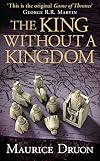
The seventh and final volume of The Accursed Kings series by Maurice Druon, The King Without a Kingdom, is available for the first time in English. The reign of the Capetian kings has ended and John II, 'The Good', first of the Valois dynasty, has taken the throne. But through the eyes of his Cardinal, Perigord, we see that a monarch, as vain and cruel as he is incompetent, now sits on one of the most powerful thrones in Europe. And so, under his leadership does The Hundred Years War show more commence, one of the most prolonged and bloody conflicts in history, as England and France tear each other apart. Warring factions plunder the land, famine threatens its people and the Black Death spreads far and wide, as France bleeds around the new king. show lessTags
Recommendations





























Member Reviews
This is the seventh and final novel in Druon's Accursed Kings series of novels set in 14th century France. The previous six novels were a splendid series of novels full of drama, conflict and scandal, a colourful Medieval soap opera of fighting kings and their families and nobles, marred on occasion by the author's tendency to "infodump" chunks of history instead of showing it through the plot. This final volume of the series jumps forward over 25 years to the reign of John II and the run up to the Battle of Poitiers. The style is very different and is told in the first person by the Cardinal of Perigord, who is travelling across France and between the lines trying to make peace between French and English. This unfortunately leads to show more even more infodumps, whole chapters of it, especially in the first part and not much of a feeling that I was reading a novel. So a bit of a disappointing close to the series. show less
I was not fond of this book, as it is told from the point of view of a traveling cardinal narrating happenings in France to (mostly) his nephew, and he includes the bumps in the road and rain during his journey. It just seemed very tedious. I enjoyed the other books in the series.
Druon trata com mordacidade o reinado do vaidoso e irrefletido Jean II, o Bom. A batalha de Crécy é impressionante. Mesmo quando Jean II age acertadamente, o autor nota que nem mesmo o maior dos ineptos pode ser desastroso ininterruptamente.
Os personagens que mais me interessaram foram o Delfim, o Cardeal de Périgord, o jovem Philippe da Borgonha, o Príncipe Negro e Johann de Hainaut. Alguns não somente por esse livro ou por essa série.
“E lá, ao que consta, quando chegaram, o Delfim teve dificuldade em retirar a manopla, de tão inflamada que se achava a sua mão direta, inteiramente roxa. E viram-no chorar.”
Adorei a mudança narrativa nesse livro.
Os personagens que mais me interessaram foram o Delfim, o Cardeal de Périgord, o jovem Philippe da Borgonha, o Príncipe Negro e Johann de Hainaut. Alguns não somente por esse livro ou por essa série.
“E lá, ao que consta, quando chegaram, o Delfim teve dificuldade em retirar a manopla, de tão inflamada que se achava a sua mão direta, inteiramente roxa. E viram-no chorar.”
Adorei a mudança narrativa nesse livro.
book 7/7 in the Accursed Kings series. No need to read this book! Books 1-6 are a superior read and the end of book 6 ties up all the story lines. Book 7 was written 17 years after book 6 and it's just a summation of book 6 with a few bits about John II. This book was narrated by a cardinal telling his life story to his nephew or cousin. What a sad way to end such a wonderful series. I would give this series a rating of 5 overall, but this particular book only a 3, and just barely! 368 pages.
I read this book long ago, so I do not remember pretty well several facts that are in it I just remember that I read it because I need it to finish the saga, it was such a good saga that I need it to know how the author close this story that is part of Europe´s history. The narrative is very different from the rest I will not say that this is bad but I just did not feel that this book was as rich as the others in it;s writing, maybe Druon did not know how to close it properly but I feel that he made this book just to close the last open stories of the other books, nevertheless is a pretty good saga.
C'est Hélie de Périgord, Cardinal, qui narre ce récit à la première personne, sous forme de souvenirs et sans dialogues. Cela déconcerte le lecteur qui ne retrouve plus ses personnages ni la verve entraînante de l'auteur. De ce fait, tous ceux qui ont bien accroché jusqu'au tome VI peuvent être déstabilisés par la rupture. Pour autant Maurice Druon réussit, avec l'attention soutenue du lecteur, à nous faire prendre de l’intérêt pour cette période compliquée centrée sur le règne fort peu glorieux de Jean II dit "le bon" qui perdit la France contre Edouard III
Tome intéressant mais dont on peu se passer.
Tome intéressant mais dont on peu se passer.
Jun 23, 2014French
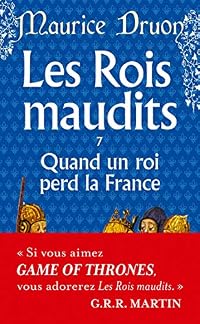
Quand un roi perd la France
Dans cet ultime volet des Rois maudits, Maurice Druon retrace le règne du roi que l’Histoire a retenu sous le nom de Jean II le Bon. Mal nommé en vérité, ce roi était indécis, cruel, incapable et vaniteux.
Dans une France en guerre où clans et factions se disputent le royaume, dévaluations des monnaies se succèdent, les impôts écrasent les paysans, une crise traverse l’Eglise, la peste traverse le pays. Avec les multiples faiblesses du pouvoir monarchique, le roi multiplie les erreurs et les fautes.
Dans ce tome, on suit le récit par l’intermédiaire d'Hélie de Périgord, légat pontifical, haut personnage qui par un monologue de 350 pages, nous raconte l’évolution du règne de ce piteux show more souverain qui par orgueil perdit la France. Ce dernier tome, un peu plus tardif, est une gageure puisque le récit nous est conté d’un bout à l’autre par le légat pontifical.
On regrette que la mort ait saisi si vite Maurice Druon. Cette saga aurait mille fois mérité de se conclure autrement que par ce tome demeurant moins bon que les six autres. show less
Dans cet ultime volet des Rois maudits, Maurice Druon retrace le règne du roi que l’Histoire a retenu sous le nom de Jean II le Bon. Mal nommé en vérité, ce roi était indécis, cruel, incapable et vaniteux.
Dans une France en guerre où clans et factions se disputent le royaume, dévaluations des monnaies se succèdent, les impôts écrasent les paysans, une crise traverse l’Eglise, la peste traverse le pays. Avec les multiples faiblesses du pouvoir monarchique, le roi multiplie les erreurs et les fautes.
Dans ce tome, on suit le récit par l’intermédiaire d'Hélie de Périgord, légat pontifical, haut personnage qui par un monologue de 350 pages, nous raconte l’évolution du règne de ce piteux show more souverain qui par orgueil perdit la France. Ce dernier tome, un peu plus tardif, est une gageure puisque le récit nous est conté d’un bout à l’autre par le légat pontifical.
On regrette que la mort ait saisi si vite Maurice Druon. Cette saga aurait mille fois mérité de se conclure autrement que par ce tome demeurant moins bon que les six autres. show less
Jun 2, 2016French
Members
- Recently Added By
Author Information

118+ Works 7,043 Members
Maurice Druon was a French resistance hero, a Knight of the British Empire and a holder of the Grand Croix de la Légion d'Honneur. He was also a member of the Académie française and a celebrated novelist, best known for his series of seven historical novels under the title of The Accursed Kings, which were twice adapted for television. A show more passionate Anglophile, he was a great expert on all things English, including its medieval history, which provides great inspiration for the series. His many and diverse fans include George RR Martin, Nicolas Sarkozy and Vladimir Putin. (Bowker Author Biography) show less
Series

Work Relationships
Common Knowledge
- Canonical title
- The King Without a Kingdom
- Original title
- Quand un roi perd la France
- Original publication date
- 1977
- People/Characters
- Hélie de Talleyrand-Périgord, Bishop of Auxerre (Narrator); John II, King of France ("John the Good"); Philip VI, King of France; Joan the Lame, Queen Consort of France; Blanche of Navarre (Blanche Evreux, born 1331); Jeanne of Evreux (born 1310, wife of Charles IV, aunt of Charles the Bad) (show all 24); Joan of Valois (Queen of Navarre, born 1343, daughter of John II, wife of Charles the Bad); Charles II, Charles the Bad, King of Navarre, son of Phillipe III of Navarre, born 1332; Robert le Coq; Guy de Boulogne, Cardinal of Boulogne; Robert de Lorris; Louis of Evreux (born 1341, Louis of Navarre, brother of Charles the Bad); Phillip of Navarre (Philip of Evreux, born 1336, brother of Charles the Bad); Pope Innocent VI; Louis I, Duke of Bourbon; Peter IV de la Foret, Archbishop of Rouen; Peter Bertrand, Cardinal of Arras; Henry of Grosmont, duke of Lancaster; Étienne Marcel, provost of Paris; Edward III, King of England; Catherine Montagu, Countess of Salisbury; Alice Perrers; Charles V the Dauphin, regent of John II; Edward, the Black Prince
- Important places
- France
- Important events
- Hundred Years' War (1337 | 1453); Death of Joan the Lame (1348); Marriage of Phillipe VI and Blanche of Navarre (1350); Death of Phillipe VI (1350); Peace Talks between France and England, promoted by Pope Innocent VI (1353); Treaty of Mantes (1354-02-22) (show all 9); Capture at Rouen and imprisonment of Charles the Bad by John II (1356); Battle of Poitiers (1356-09-19); Capture of John II by Edward the Black Prince (1356)
Classifications
- Genres
- Fiction and Literature, General Fiction, Historical Fiction
- DDC/MDS
- 843.914 — Literature & rhetoric French Literature French fiction 1900- 20th Century 1945-1999
- LCC
- PQ2607 .R75 .R6 — Language and Literature French, Italian, Spanish and Portuguese literatures French literature Modern literature 1900-1960
- BISAC
Statistics
- Members
- 454
- Popularity
- 67,027
- Reviews
- 15
- Rating
- (3.22)
- Languages
- 11 — Czech, English, French, German, Hungarian, Lithuanian, Polish, Portuguese, Russian, Slovak, Spanish
- Media
- Paper, Audiobook, Ebook
- ISBNs
- 34
- ASINs
- 11