Europe: Grandeur and Decline
by A. J. P. Taylor
On This Page
Description
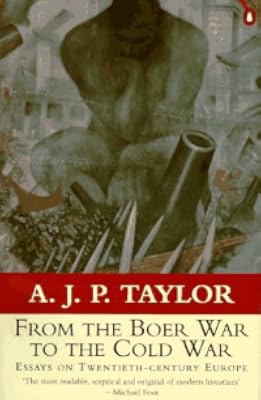
"AJP Taylor is one of the most eminent historians of our time. The essays in this selection, some of which were written as early as 1943, are both enjoyable in themselves and show the development of his thought. In them he discusses the important trends in European history from the fall of Napoleon 1 to Soviet Russia's emergence on the stage of world power after the Second World War. There are brilliant portraits of Metternich, Bismarck, Louis Napoleon, Trotsky, Hitler, Stalin, and many show more others. These essays demonstrate a great width of interest and AJP Taylor's judgements are always stimulating and provocative."--Provided by publisher. show lessTags
Recommendations




















Member Reviews
My school book
Meesterlijke essays die een heel breed veld bestrijken, maar vanuit een brede eruditie en in een knappe, vertellende stijl.
Oct 11, 2015Dutch
Ratings
Members
- Recently Added By
Author Information

191+ Works 6,207 Members
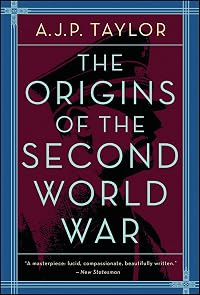
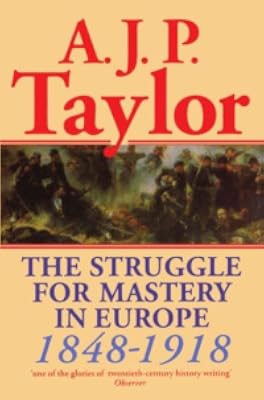
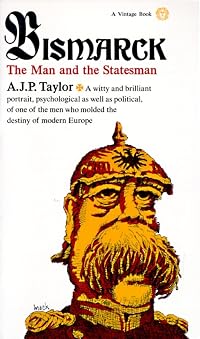
British historian A.J.P. Taylor studied at Oxford University and in 1938 became a fellow of Magdalen College. Interested chiefly in diplomatic and central European history, he is a prolific and masterful writer. Fritz Stern wrote of him and his The Struggle for Mastery in Europe, 1848--1918 (1954) in the Political Science Quarterly: "There is show more something Shavian about A. J. P. Taylor and his place among academic historians; he is brilliant, erudite, witty, dogmatic, heretical, irritating, insufferable, and withal inescapable. He sometimes insults and always instructs his fellow-historians, and never more so than in his present effort to reinterpret the diplomatic history of Europe from 1848 to the end of the First World War. . . . After a brilliant introduction, in which he defines the balance of power and assesses the relative and changing strength of the Great Powers, Mr. Taylor presents a chronological survey, beginning with the diplomacy of war, 1914--1918. . . . [He] writes on two levels. He narrates the history of European diplomacy and compresses it admirably into a single volume. Imposed upon the narrative is his effort to probe the historical meaning of given actions and conditions. . . . He has a peculiar sense of inevitability, growing out of what he regards the logic of a given development, as well as a delicate feeling for live options and alternatives. Mr. Taylor suggests that fear, not aggression, was the dominant impulse of pre-war diplomacy." The Origins of the Second World War (1961), again controversial and lively, starts from the premise (in Taylor's words) that "the war of 1939, far from being premeditated, was a mistake, the result on both sides of diplomatic blunders." The New Statesman said of it: "Taylor is the only English historian now writing who can bend the bow of Gibbon and Macaulay. [This is] a masterpiece: lucid, compassionate, beautifully written in a bare, sparse style, and at the same time deeply disturbing." Several of Taylor's other works also received high praise. Among these were Bismarck, the Man and the Statesman (1955), in which he exonerated Bismarck; Hapsburg Monarchy, 1809--1914, a survey of the era; and English History, 1919--1945, a volume in the Oxford History of England Series, greeted by the N.Y. Review of Books as "an astonishing tour de force." (Bowker Author Biography) show less
Series
Belongs to Publisher Series
Pelican Books (A909)
Common Knowledge
- Canonical title
- Europe: Grandeur and Decline
- People/Characters
- Georges Bonet; Otto von Bismarck; Joseph Caillaux; Cavour; Charles de Gaulle; Alexis de Tocqueville (show all 25); Pierre-Étienne Flandin; Franz Joseph, Emperor of Austria; Maurice Gamelin; Giuseppe Garibaldi; Adolf Hitler; Friedrich von Holstein; William D. Leahy; Vladimir Lenin; Karl Marx; Tomáš Garrigue Masaryk; Klemens Wenzel, Prince von Metternich; Benito Mussolini; Napoleon Bonaparte; Napoleon III; Nietzsche, Friedrich Wilhelm, 1844-1900; Leopold von Ranke; Joseph Stalin; Leon Trotsky; Wilhelm II, German Kaiser and King of Prussia
- Important places
- Europe
- Important events
- Revolutions of 1848; Crimean War (1853 | 1856); Unification of Germany (1871); Entente Cordiale of 1904; World War I (1914 | 1918); Spanish Civil War (1936 | 1939) (show all 10); Munich Agreement (1938-09-30); World War II (1939 | 1945); Vichy France (1940 | 1944); Cold War (1947 | 1991)
- Original language
- English
Classifications
Statistics
- Members
- 155
- Popularity
- 212,152
- Reviews
- 2
- Rating
- (3.44)
- Languages
- English, Hungarian
- Media
- Paper
- ISBNs
- 4
- ASINs
- 7