On This Page
Description
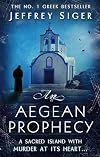
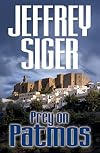
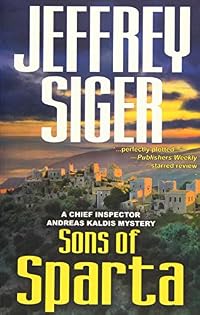
Saint John wrote the apocalyptic Book of Revelation over nineteen hundred years ago in a cave on Greece's eastern Aegean island of Patmos. But now there has been a murder. A revered monk from that holy island's thousand-year-old monastery is murdered in Patmos' town square during Easter week. Called in on the matter is Chief Inspector Andreas Kaldis of Greece's Special Crimes Division. Kaldis must find the killer before all hell breaks loose-in a manner of speaking. Kaldis' impolitic search show more for answers brings him face-to-face with a scandal haunting the world's oldest surviving monastic community. On the pristine Aegean peninsula of Mount Athos, isolated from the rest of humanity, twenty monasteries sit protecting the secrets of Byzantium amid a way of life virtually unchanged for more than fifteen hundred years. But today this sacred refuge harbors modern international intrigues that threaten to destroy the very heart of the Church-in a matter of days. A Poisoned Pen Press Mystery show lessTags
Recommendations




















Member Reviews
In the third book of this excellent series, Jeffrey Siger has two objectives. One, to show Kaldis's deepening relationship with Lila and their impending parenthood, and two, to show the importance of religion in Greece. He succeeds in both cases.
Kaldis is his normal, acerbic self-- more concerned with putting the bad guys behind bars than he is of being politically correct or of avoiding trampling the feelings of others. But that is his work face and not at all the way his relationship is with the woman he loves. Lila is smart, rich, cosmopolitan, beautiful... and deeply in love with Andreas. The only cloud on the horizon is Kaldis's reluctance to make their partnership a formal one. Watching these two work this out is alternately show more touching, funny, and downright sexy.
The tougher of Siger's two assignments is showing how important religion is to Greece through the chief inspector's murder investigation. Saint John wrote the Book of Revelation over 1900 years ago in a cave on Patmos, and to this day the Greek Orthodox Church plays a huge role in the lives of the Greek people. I found the entire situation with Turkey, Russia and Greece to be fascinating-- as well as how it could affect monastic life on such a small island.
Jeffrey Siger continues to enthrall me with his savvy characters and his interpretations of life in an ancient and vibrant country. I highly recommend this series. show less
Kaldis is his normal, acerbic self-- more concerned with putting the bad guys behind bars than he is of being politically correct or of avoiding trampling the feelings of others. But that is his work face and not at all the way his relationship is with the woman he loves. Lila is smart, rich, cosmopolitan, beautiful... and deeply in love with Andreas. The only cloud on the horizon is Kaldis's reluctance to make their partnership a formal one. Watching these two work this out is alternately show more touching, funny, and downright sexy.
The tougher of Siger's two assignments is showing how important religion is to Greece through the chief inspector's murder investigation. Saint John wrote the Book of Revelation over 1900 years ago in a cave on Patmos, and to this day the Greek Orthodox Church plays a huge role in the lives of the Greek people. I found the entire situation with Turkey, Russia and Greece to be fascinating-- as well as how it could affect monastic life on such a small island.
Jeffrey Siger continues to enthrall me with his savvy characters and his interpretations of life in an ancient and vibrant country. I highly recommend this series. show less
After the death of a monk on the island of Patmos, Inspector Kaldis and his partner Kouros are called in to investigate. Patmos is known in Christian history as the place where the apostle John wrote the book of Revelation. If Kaldis isn’t careful, his investigation could have apocalyptic results as the effect could shake the foundation of the Orthodox Church. Meanwhile, Kaldis’s partner, Lila, is due to give birth any day. Kaldis wants nothing more than to wrap up the investigation in order to be at home in Athens in time for Easter and for the birth of his child.
This series is shaping up to be an edgier version of Donna Leon’s Commissario Brunetti series, with an honest policeman trying to serve the ends of justice within a show more politically corrupt system. He is supported at work by a loyal and trustworthy subordinate and a well-connected office manager who can discreetly run background checks on suspects and informants. He is supported at home by an intelligent, beautiful, and unpretentious upper class partner. A major tourist destination provides the backdrop. This series pushes my limits for strong language and explicit sexual content in a way that Leon’s doesn’t. show less
This series is shaping up to be an edgier version of Donna Leon’s Commissario Brunetti series, with an honest policeman trying to serve the ends of justice within a show more politically corrupt system. He is supported at work by a loyal and trustworthy subordinate and a well-connected office manager who can discreetly run background checks on suspects and informants. He is supported at home by an intelligent, beautiful, and unpretentious upper class partner. A major tourist destination provides the backdrop. This series pushes my limits for strong language and explicit sexual content in a way that Leon’s doesn’t. show less
PREY ON PATMOS is the third book in the Chief Inspector Andreas Kaldis series and, like its predecessors, is an entertaining police procedural and an engrossing look at twenty-first century social problems against the background of an ancient culture.
“There was an unusual cadence to the man’s walk. Maybe it was the uneven stone lane. But he’d walked this path ten thousand times, thought not so soon before first light. Still, he knew it well enough. He paused, as if to listen, then moved five paces and paused again….Perhaps he should have been looking as carefully as he listened, but it wouldn’t have mattered. The men stood quietly at the bottom of the path, just beyond where it opened in the the town square. He could not see show more them.” In an instant, his throat cut, Kalogeros Vassilis lies dead in the town square of Patmos, the island home of monasteries built on the holy ground where St. John wrote the Book of Revelations. Vassilis was an old man who had lived a life of devotion to his faith. Why would anyone kill him?
The answer to that question becomes the responsibility of Chief Inspector Andreas Kaldis and his partner, Yianni Kouros. Andreas is the head of the Greek Police’s Special Crimes Division and the murder of a monk on Patmos just before Easter, the most important day in the Christian calendar, is a very special crime. Andreas isn’t just confronted with satisfying the demands of the government functionaries who want credit for a quick solution of the murder; Andreas is up against the formidable power and position of the Eastern Orthodox Church.
As they investigate, Andreas and Yianni learn that Vassilis was a committed researcher, using the internet to unravel the rules that governed the choice of the Ecumenical Patriarch, the leader of all the branches of the Orthodox church. To the secular world such issues hardly seem the stuff of life and death. But the religious world is also a world of human beings and a religious life doesn’t mean a life without temptation and sin.
The death of Vassilis reveals that monasteries that have thrived for over a thousand years are not immune from the intrusion of twenty-first century political reality. For a thousand years, men have withdrawn from the world to do penance for the evils they have committed and men have escaped from the world to avoid punishment for the crimes they do not regret. Andreas and Yianni, with the help of Mykonos cop Tassos Stamatos, are faced with investigation by secret meetings, hidden identities, and role playing. Gaining control of the great wealth of the Orthodox church is a powerful motivator for the ruthless and the amoral.
The author creates this piece of dialogue: “So much of life is illusion, driven by masters of manipulation who incite passions, instill mortal fears, justify actions. They’ve always existed, always will. But those to fear, to guard against – and yes, to pray against – are illusionists who act without conscience, without values, without any moral compass.” It succinctly expresses the theme of this excellent book.
On one level, PREY ON PATMOS is an excellent police procedural. On another level, the book continues Jeffrey Siger’s look at some of the most profound problems faced by society now. MURDER IN MYKONOS examined the phenomenon of the serial killer, a person who kills simply for the joy of killing. Victims are random, there is no motive other the compulsion of the killer and, in that, lies the fear that no one is safe. ASSASSINS OF ATHENS uses the murder of the scion of a wealthy family, intense family rivalries, and a return to some of the practices of ancient Athens to undermine the democracy that the Athenians invented. PREY ON PATMOS goes to the core of the Greek character. In the Author’s Note at the beginning of the book, Siger writes, “Today, Greece is a land of unwavering faith in God and a unique commitment to the Eastern Orthodox Church as an integral part of its way of life.” In this third book, that for which people have been willing to die is under attack by those willing to use God and faith as an instrument for societal erosion.
PREY ON PATMOS led me to do something I would never have dreamed of doing before reading this book. The story captures the reader from the first paragraph so I couldn’t stop reading but there was so much information I wanted to investigate that I made marks in the margin, an unforgivable sin for a bibliophile.
Jeffrey Siger succeeds in a complicated balancing act. In a work of fiction, the author creates a murder that is tied to characters who use religion as a cover for their sinful actions while never being, in anyway, disrespectful to the Eastern Orthodox Church or the Christian faith. show less
“There was an unusual cadence to the man’s walk. Maybe it was the uneven stone lane. But he’d walked this path ten thousand times, thought not so soon before first light. Still, he knew it well enough. He paused, as if to listen, then moved five paces and paused again….Perhaps he should have been looking as carefully as he listened, but it wouldn’t have mattered. The men stood quietly at the bottom of the path, just beyond where it opened in the the town square. He could not see show more them.” In an instant, his throat cut, Kalogeros Vassilis lies dead in the town square of Patmos, the island home of monasteries built on the holy ground where St. John wrote the Book of Revelations. Vassilis was an old man who had lived a life of devotion to his faith. Why would anyone kill him?
The answer to that question becomes the responsibility of Chief Inspector Andreas Kaldis and his partner, Yianni Kouros. Andreas is the head of the Greek Police’s Special Crimes Division and the murder of a monk on Patmos just before Easter, the most important day in the Christian calendar, is a very special crime. Andreas isn’t just confronted with satisfying the demands of the government functionaries who want credit for a quick solution of the murder; Andreas is up against the formidable power and position of the Eastern Orthodox Church.
As they investigate, Andreas and Yianni learn that Vassilis was a committed researcher, using the internet to unravel the rules that governed the choice of the Ecumenical Patriarch, the leader of all the branches of the Orthodox church. To the secular world such issues hardly seem the stuff of life and death. But the religious world is also a world of human beings and a religious life doesn’t mean a life without temptation and sin.
The death of Vassilis reveals that monasteries that have thrived for over a thousand years are not immune from the intrusion of twenty-first century political reality. For a thousand years, men have withdrawn from the world to do penance for the evils they have committed and men have escaped from the world to avoid punishment for the crimes they do not regret. Andreas and Yianni, with the help of Mykonos cop Tassos Stamatos, are faced with investigation by secret meetings, hidden identities, and role playing. Gaining control of the great wealth of the Orthodox church is a powerful motivator for the ruthless and the amoral.
The author creates this piece of dialogue: “So much of life is illusion, driven by masters of manipulation who incite passions, instill mortal fears, justify actions. They’ve always existed, always will. But those to fear, to guard against – and yes, to pray against – are illusionists who act without conscience, without values, without any moral compass.” It succinctly expresses the theme of this excellent book.
On one level, PREY ON PATMOS is an excellent police procedural. On another level, the book continues Jeffrey Siger’s look at some of the most profound problems faced by society now. MURDER IN MYKONOS examined the phenomenon of the serial killer, a person who kills simply for the joy of killing. Victims are random, there is no motive other the compulsion of the killer and, in that, lies the fear that no one is safe. ASSASSINS OF ATHENS uses the murder of the scion of a wealthy family, intense family rivalries, and a return to some of the practices of ancient Athens to undermine the democracy that the Athenians invented. PREY ON PATMOS goes to the core of the Greek character. In the Author’s Note at the beginning of the book, Siger writes, “Today, Greece is a land of unwavering faith in God and a unique commitment to the Eastern Orthodox Church as an integral part of its way of life.” In this third book, that for which people have been willing to die is under attack by those willing to use God and faith as an instrument for societal erosion.
PREY ON PATMOS led me to do something I would never have dreamed of doing before reading this book. The story captures the reader from the first paragraph so I couldn’t stop reading but there was so much information I wanted to investigate that I made marks in the margin, an unforgivable sin for a bibliophile.
Jeffrey Siger succeeds in a complicated balancing act. In a work of fiction, the author creates a murder that is tied to characters who use religion as a cover for their sinful actions while never being, in anyway, disrespectful to the Eastern Orthodox Church or the Christian faith. show less
We have the gang back together to solve a bizarre and brutal murder of a beloved Orthodox monk on the island of revelations--Patmos--heading into Easter. While Kaldis is trying to ruin his perfect life relationship with a rich, beautiful, and very pregnant Lila, his gang of regulars, Kouros, Tassos, and Maggie are aiding him from all sides in hunting down the criminal. As is customary with a Kaldis mystery, a substantial portion of the narration comes from the murderer's perspective. A pleasant trip to another Greek locale as if one were actually there.
Chief Inspector Andreas Kaldis investigates the murder of a monk on the island of Patmos during Holy Week. At the same time, Lila (to whom he is not married) is about to give birth to their first child. Kaldis hopes he can wrap the investigation up quickly so he can return home quickly, but it becomes apparent that this murder was committed by professionals. Readers become versed in church politics and the tensions between the Greek and Russian Orthodox factions. Stefan Rudnicki did a good job narrating the Blackstone Audio version of the book. Siger skillfully plotted the book, creating tensions at the right moments and keeping the reader interested from start to finish. The only negative for me was the use of more profanity than I am show more comfortable reading or hearing. This is the third in the series, and I've only read the first. Siger overcame the flaws of the first novel with better development of plot and characters in this one. show less
The topic (church politics) and, for me, exotic location (various Greek islands, mostly Patmos) drew me to this book. It actually didn't do badly on those criteria. I now know a lot more about the complexities of the current Eastern Orthodox church than I did previously, and the descriptions of various Cyclades and Dodecanese islands were a tempting travelogue.
So that's the good stuff. On the flip side, there was a bit too much testosterone permeating nearly every page for my tastes. This seems to be a problem for me with most crime novels set in southern Europe. This book had a few female characters with speaking roles, but they were each either involved romantically with the male characters or femmes fatale.
And the plot, which show more started our pretty well, ended up with some preposterous coincidences (see reference to femme fatale above) that would have been more appropriate for an international spy thriller than a police procedural.
Ah well. It did read quickly and kept my attention for the first half. 2.5 stars rounded up to three. show less
So that's the good stuff. On the flip side, there was a bit too much testosterone permeating nearly every page for my tastes. This seems to be a problem for me with most crime novels set in southern Europe. This book had a few female characters with speaking roles, but they were each either involved romantically with the male characters or femmes fatale.
And the plot, which show more started our pretty well, ended up with some preposterous coincidences (see reference to femme fatale above) that would have been more appropriate for an international spy thriller than a police procedural.
Ah well. It did read quickly and kept my attention for the first half. 2.5 stars rounded up to three. show less
An enjoyable third Inspector Kaldis mystery, set primarily on the Greek island of Patmos, where Saint John wrote the Book of Revelation. A beloved elderly monk is murdered, and as Kaldis and his partner investigate, all trails lead to a conspiracy to influence the future location of the Ecumenical Patriarchate of Constantinople (at either Mount Athos in Greece or somewhere in Russia). The mystery is secondary here to island and church history, described in interesting detail by various characters. In fact, I'd say read this book for the setting more than the mystery. The characters are a bit too quick with repartee to be completely believable, but, the book is great beach reading or entertainment for an evening before the fire. (Read in show more galley format via netgalley.com. The book will be published in January 2011.) show less
Members
- Recently Added By
Author Information

Some Editions
Series

Common Knowledge
- Canonical title
- Prey on Patmos
- Alternate titles
- An Aegean Prophecy
- Original publication date
- 2011-01-04
- People/Characters
- Andreas Kaldis; Lila; The Protos; Yianni Kouros; Kalogeros Vassilis; Dimitri (show all 11); Abbot Christodoulos; Tassos Stamatos; Kalogeros Giorgos; Kalogeros Zacharias; Maggie Sikestis
- Important places
- Patmos, Greece; Mount Athos, Greece; Athens, Greece
- Disambiguation notice
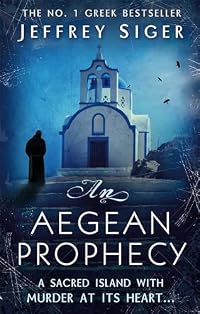
- **'Prey On Patmos' is also published as 'An Aegean Prophecy'
Classifications
Statistics
- Members
- 88
- Popularity
- 358,827
- Reviews
- 9
- Rating
- (3.63)
- Languages
- English, French
- Media
- Paper, Audiobook, Ebook
- ISBNs
- 13
- ASINs
- 6