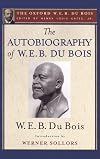
The Autobiography of W. E. B. Du Bois: A Soliloquy on Viewing My Life from the Last Decade of Its First Century
by W. E. B. Du Bois
On This Page
Description
The present volume is quite different from the other two autobiographies by Du Bois not only because of its additional two-decade span, and the significantly altered outlook of its author, but also because in it-unlike the others-he seeks, as he writes, "to review my life as frankly and fully as I can." Of course, with the directness and honesty which so decisively characterized him, he reminds the reader of this book of the intense subjectivity that inevitably permeates autobiography; show more hence, he writes, he offers this account of his life as he understood it and as he-would like others to believe-it to have been. Certainly, while Dr. Du Bois was deep in his ninth decade when he died, longevity was the least remarkable feature of his life. As editor, author, lecturer, scholar, organizer, inspirer, and fighter, he was among the most consequential figures of the twentieth century. Necessarily, therefore, the full and final accounting of that life and his times becomes an indispensable volume. show lessTags
Recommendations








































Member Reviews
An essential for the understanding of the American Civil Rights Movement.
Ratings
Members
- Recently Added By
Lists

Books in the Bibliography of Freethinkers by Susan Jacoby
155 works; 1 member
Author Information

187+ Works 13,035 Members
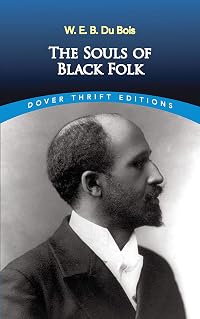
Civil rights leader and author, William Edward Burghardt Du Bois was born in Great Barrington, Massachusetts on February 23, 1868. He earned a B.A. from both Harvard and Fisk universities, an M.A. and Ph.D. from Harvard, and studied at the University of Berlin. He taught briefly at Wilberforce University before he came professor of history and show more economics at Atlanta University in Ohio (1896-1910). There, he wrote The Souls of Black Folk (1903), in which he pointed out that it was up to whites and blacks jointly to solve the problems created by the denial of civil rights to blacks. In 1905, Du Bois became a major figure in the Niagara Movement, a crusading effort to end discrimination. The organization collapsed, but it prepared the way for the founding of the National Association for the Advancement of Colored People (NAACP), in which Du Bois played a major role. In 1910, he became editor of the NAACP magazine, a position he held for more than 20 years. Du Bois returned to Atlanta University in 1932 and tried to implement a plan to make the Negro Land Grant Colleges centers of black power. Atlanta approved of his idea, but later retracted its support. When Du Bois tried to return to NAACP, it rejected him too. Active in several Pan-African Congresses, Du Bois came to know Fwame Nkrumah, the first president of Ghana, and Jono Kenyatta the president of Kenya. In 1961, the same year Du Bois joined the Communist party, Nkrumah invited him to Ghana as a director of an Encyclopedia Africana project. He died there on August 27, 1963, after becoming a citizen of that country. (Bowker Author Biography) show less
Some Editions
Series
Belongs to Publisher Series
The Oxford W. E. B. Du Bois (Volume 14)
Common Knowledge
- Canonical title
- The Autobiography of W. E. B. Du Bois: A Soliloquy on Viewing My Life from the Last Decade of Its First Century
- Original publication date
- 1968
- People/Characters
- W. E. B. Du Bois
- Dedication
- For Cornel West
Classifications
- Genres
- Biography & Memoir, Nonfiction, History
- DDC/MDS
- 305.8960730092 — Society, government, & culture Social sciences, sociology & anthropology Social group - Age, Gender, Ethnicity Ethnic and national groups Other ethnic and national groups Africans and people of African descent; Blacks of African origin standard subdivisions / located in North America African Americans {United States Blacks}
- LCC
- E185.97 .D73 .A3 — History of the United States United States Elements in the population Afro-Americans Biography. Genealogy
- BISAC
Statistics
- Members
- 162
- Popularity
- 200,445
- Reviews
- 1
- Rating
- (4.43)
- Languages
- English
- Media
- Paper, Ebook
- ISBNs
- 7
- ASINs
- 3