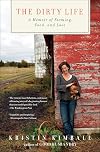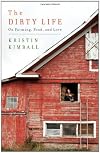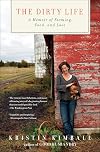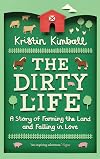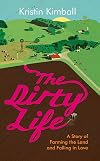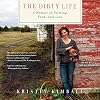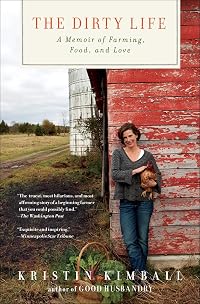
The Dirty Life: A Memoir of Farming, Food, and Love
by Kristin Kimball
On This Page
Description
After interviewing a young farmer, writer Kristen Kimball gave up her urban lifestyle to begin a farm with her interviewee near Lake Champlain in northern New York.Tags
Recommendations

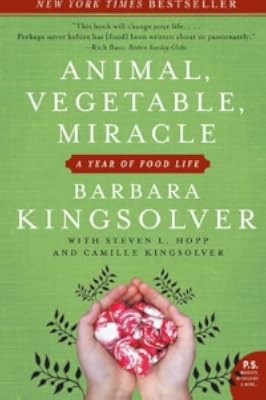
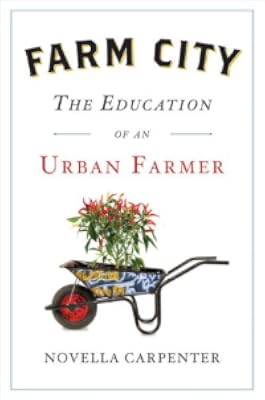
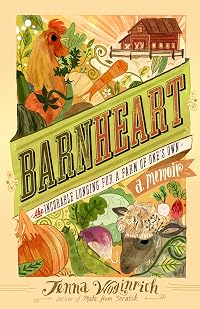
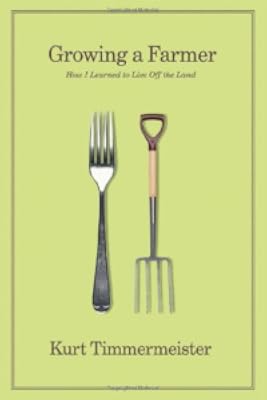
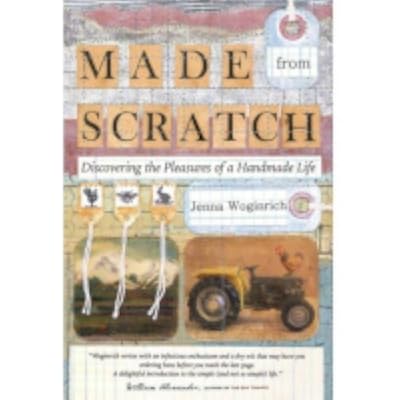
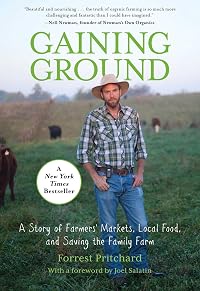
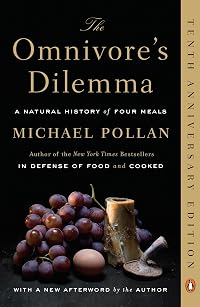
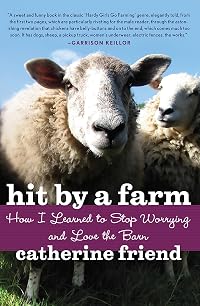
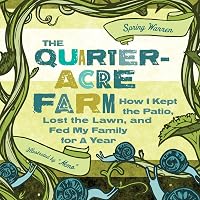
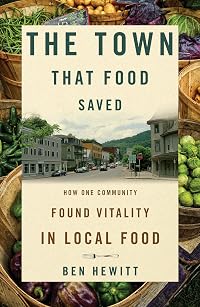
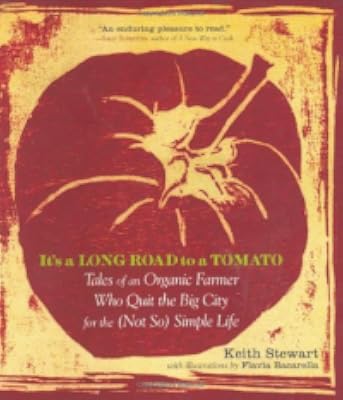
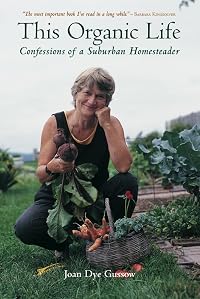
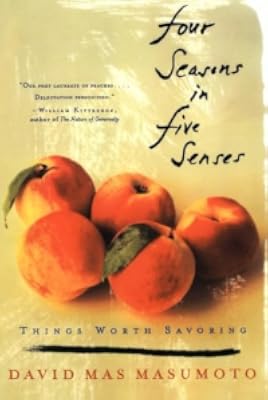
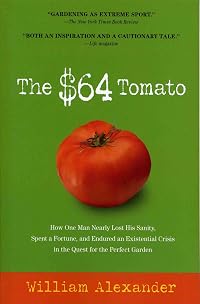
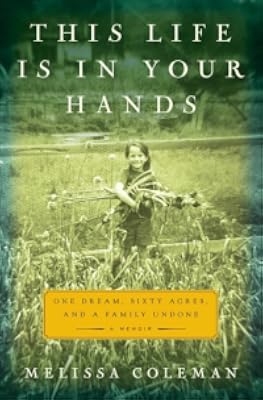
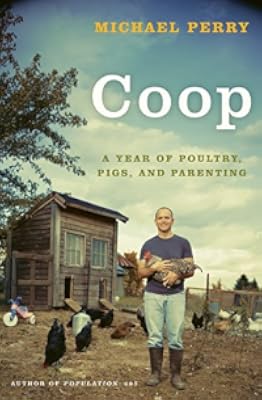
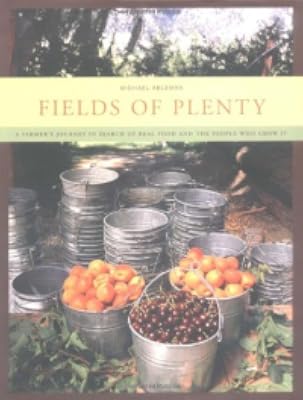
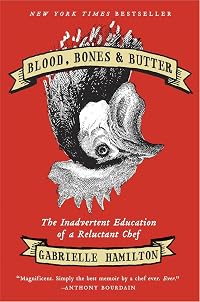
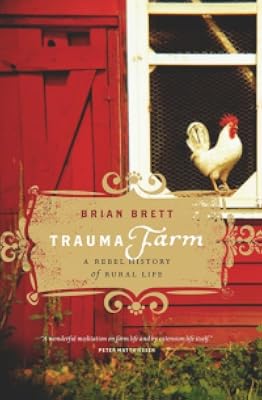
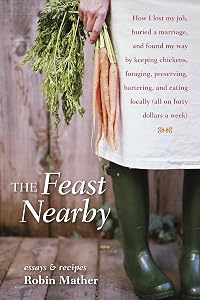
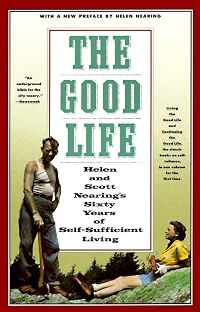
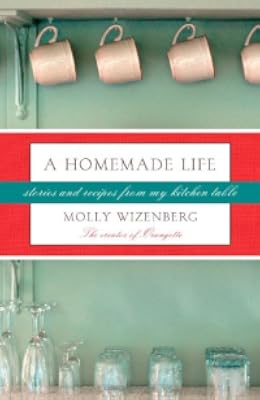

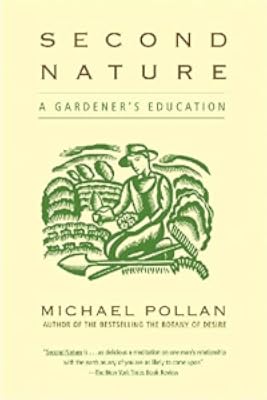
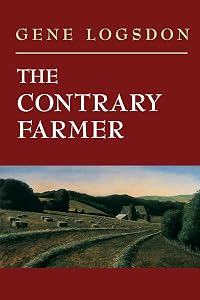
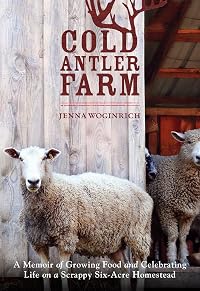
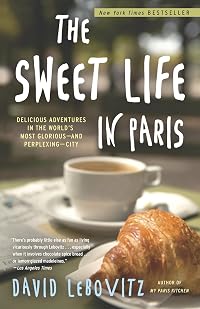
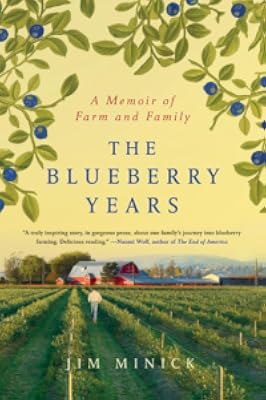
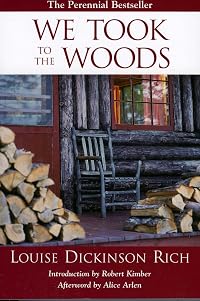
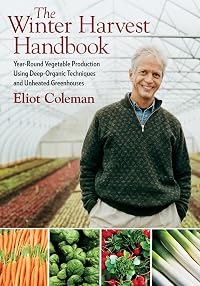
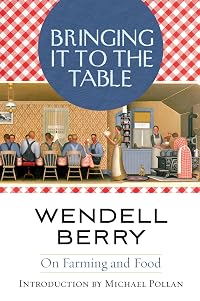
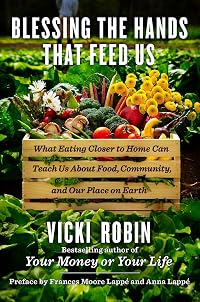
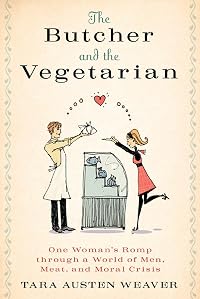
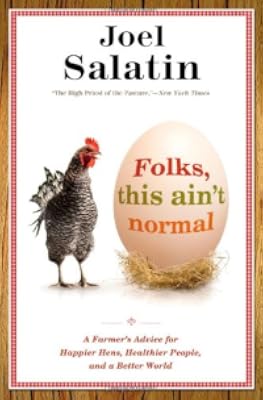
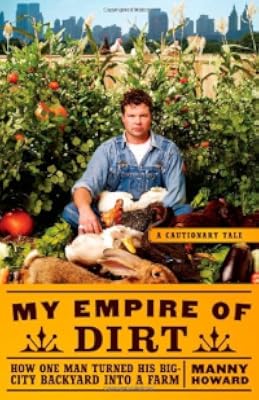

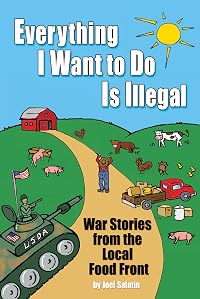
Member Recommendations
Collinsjd Another writer takes off on her own to face the challenge of farming. It is a wonderful book that displays the author's passion with a healthy dose of reality.
Member Reviews
As a woman who is about to move from the comfy suburbs of Strip Mall America to 5 acres in the country on a gravel road, I was very interested in this book and happy to have it recommended to me. It was easy-to-read, well-written, and enjoyable. What stood out to me, though, was not what Kimball tells about but rather what she omits.
Or am I just a person who doesn't accept happiness at face value? If so, then I apologize and I recognize that maybe it really was all that easy.
I loved reading about the process of farming, livestock raising, the temperaments of horses, making do with less, and "shopping with the Amish"... but was there no culture shock, depression, sadness at leaving her entire civilized life behind? We read occasionally show more (maybe 2-3 times?) about vague conflicts between her and her husband, but I never get inside her head to learn about the struggles between leaving friends, jobs, and familiarity of the city to being an outsider in the country, wholly dependent on the decisions of her partner. I wanted to read more about what it's like to go from self-sufficient singledom in NYC to sudden coupledom in a totally isolated setting.
I really like this woman, I do! I loved the feminist in her --that she didn't in any way deliver what seems so common in women's memoirs, i.e. "finding herself" in her new husband or birthing children. But I find it hard to believe that upon transitioning to this new life there was no second-guessing, no disappointment -- just a lot of toned arms, gourmet meals thrown together from lichen, dandelions, and steer balls, and extreme generosity from dozens of the kindest, most welcoming neighbors that any small town has ever produced.
Let me bore you with an analogy. In college, I studied abroad with a friend in Madrid and kept a diary because my mom asked me to. When I returned home with 4 full notebooks, she loved reading about the characters we met, the delicious (and often bizarre) food we ate, the troubles we had with our landlady, and the encounters we had with locals all over Europe as we learned to navigate a completely foreign landscape. She passed the journal to other family members and everyone had a good time reading about our adventures. I was happy to have provided people who've never been outside of the USA such a diversion!
But because I knew my mom would read them, those journals didn't say things that I thought were too personal or shameful. I was too embarrassed to write about was the extreme loneliness, the sobbing homesickness, my longing for letters from my boyfriend that never came. I couldn't put down in words the times I got drunk, the episodes of being lost and frustrated, the ugly and jealous feelings I had every time someone else got a care package and I didn't. I didn't have the guts to put my guts on paper because I wanted everyone reading it to like me.
There is also a possibility that Kristin Kimball is just a much, much nicer and more adaptable person than I am. Which is probably the case. show less
Or am I just a person who doesn't accept happiness at face value? If so, then I apologize and I recognize that maybe it really was all that easy.
I loved reading about the process of farming, livestock raising, the temperaments of horses, making do with less, and "shopping with the Amish"... but was there no culture shock, depression, sadness at leaving her entire civilized life behind? We read occasionally show more (maybe 2-3 times?) about vague conflicts between her and her husband, but I never get inside her head to learn about the struggles between leaving friends, jobs, and familiarity of the city to being an outsider in the country, wholly dependent on the decisions of her partner. I wanted to read more about what it's like to go from self-sufficient singledom in NYC to sudden coupledom in a totally isolated setting.
I really like this woman, I do! I loved the feminist in her --that she didn't in any way deliver what seems so common in women's memoirs, i.e. "finding herself" in her new husband or birthing children. But I find it hard to believe that upon transitioning to this new life there was no second-guessing, no disappointment -- just a lot of toned arms, gourmet meals thrown together from lichen, dandelions, and steer balls, and extreme generosity from dozens of the kindest, most welcoming neighbors that any small town has ever produced.
Let me bore you with an analogy. In college, I studied abroad with a friend in Madrid and kept a diary because my mom asked me to. When I returned home with 4 full notebooks, she loved reading about the characters we met, the delicious (and often bizarre) food we ate, the troubles we had with our landlady, and the encounters we had with locals all over Europe as we learned to navigate a completely foreign landscape. She passed the journal to other family members and everyone had a good time reading about our adventures. I was happy to have provided people who've never been outside of the USA such a diversion!
But because I knew my mom would read them, those journals didn't say things that I thought were too personal or shameful. I was too embarrassed to write about was the extreme loneliness, the sobbing homesickness, my longing for letters from my boyfriend that never came. I couldn't put down in words the times I got drunk, the episodes of being lost and frustrated, the ugly and jealous feelings I had every time someone else got a care package and I didn't. I didn't have the guts to put my guts on paper because I wanted everyone reading it to like me.
There is also a possibility that Kristin Kimball is just a much, much nicer and more adaptable person than I am. Which is probably the case. show less
This was a delightful, honest account of one woman's adventure going from the life of a Manhattan writer to a full-time farmer on a farm that is not only self-sustaining but provides enough animal products, grain, and vegetables to support more than one hundred other people.
Kimball's story begins when she travels from New York to Pennsylvania to interview a man who runs a community farm that provides subscribers with eggs, vegetables, pork, and chicken. To her surprise, she finds herself not simply sitting down and interviewing the farmer but hoeing rocks from the tomato patch and assisting in the slaughter of a pig. To her even greater surprise, the farming life -- and the rugged, college-educated, idealistic farmer -- capture her show more imagination and she starts returning again and again. Eventually she and Mark become a couple and start their own farm in upstate New York, where they eschew tractors for draft horses and set out to build a completely self-sustaining lifestyle.
This a story in which the romance of the idea of having a farm and becoming engaged to someone you love is balanced by the intense challenges of farming and the personality conflicts of two strong-willed people who are in love with each other. Neither the success of the farm or the relationship is guaranteed. show less
Kimball's story begins when she travels from New York to Pennsylvania to interview a man who runs a community farm that provides subscribers with eggs, vegetables, pork, and chicken. To her surprise, she finds herself not simply sitting down and interviewing the farmer but hoeing rocks from the tomato patch and assisting in the slaughter of a pig. To her even greater surprise, the farming life -- and the rugged, college-educated, idealistic farmer -- capture her show more imagination and she starts returning again and again. Eventually she and Mark become a couple and start their own farm in upstate New York, where they eschew tractors for draft horses and set out to build a completely self-sustaining lifestyle.
This a story in which the romance of the idea of having a farm and becoming engaged to someone you love is balanced by the intense challenges of farming and the personality conflicts of two strong-willed people who are in love with each other. Neither the success of the farm or the relationship is guaranteed. show less
Kristin was very much a city girl until a writing assignment brought her to Mark's small plot of land where he was growing food to feed many, many families. It was love at first sight, at least for the farming. Falling for Mark didn't take too much more time after that. They get together and find a farm that a generous man who fell for the both of them let them have for free for a year. It was no prize, at least to the eye, but they dive in and manage to have it up and running within a year. It's completely organic and very old school--the cows are milked by hand, the chickens free range during the day, and most of the heavy work is done with horses and old fashioned farming tools. Their CSA (Community Supported Agriculture)is a new show more model--the idea is that the members can be completely supported by the produce, meat, eggs and cheese they can pick up weekly year round that should require very little to no additional grocery purchasing. They are up to 80 acres that they now own and 100 members and counting. It is a completely fascinating story of what the love of the land and the desire to feed people can do for individuals and communities, and what potential impact that could have on a global scale, with no varnish on how difficult and demanding the work is. Loved it! show less
Just can't get enough of these "I trashed my city life and moved to a farm even though I know nothing about farming" books. Not only is this a great story, with plenty of humor and quotable parts, but Kimball writes phrases that just seem extra profound and well-crafted. As a backyard gardener, I couldn't ever grow everything that she and her fiancee attempt to do, but I sure enjoy reading about their efforts and taking a few moments to imagine myself in that situation. I think this is one of my favorite farming books so far.
This book left me seriously conflicted. I learned quite a bit about the realities of farming, and about CSA models (the whole diet model is ambitious but really cool in concept), but I had difficulty believing the authenticity of the author's expressed feelings.
There is nothing finer than farm-fresh produce, and local dairies serve up some amazing milk, butter and cream; however, I can honestly say that that lifestyle is not for me. It is too difficult, too demanding, too full of sacrifice and a learned comfort with accident and death. Will I strongly consider (as I do every year) a small vegetable garden in the one unshaded patch of our yard? Of course! But, I do not have any illusions about it. I would not assume that because I liked show more it that I was cut out for farming or, if I traded in my husband for a green-thumbed nomad, that I'd upend my life to the degree Ms. Kimball did. Frankly, her snap decision to join Mark on their wild adventure smacked as a desperate maneuver to impress a good-looking guy and then finding herself dragged along.
I guess what troubles me is that I don't believe. I can't buy into Kimball's professed sincerity - the "miracle" and mystery of a "tablespoon of soil". It sounds like the flowery prose of a travel writer, which was her bread and butter before (and during) her early life as a farmer, and made me emotionally disengage. show less
There is nothing finer than farm-fresh produce, and local dairies serve up some amazing milk, butter and cream; however, I can honestly say that that lifestyle is not for me. It is too difficult, too demanding, too full of sacrifice and a learned comfort with accident and death. Will I strongly consider (as I do every year) a small vegetable garden in the one unshaded patch of our yard? Of course! But, I do not have any illusions about it. I would not assume that because I liked show more it that I was cut out for farming or, if I traded in my husband for a green-thumbed nomad, that I'd upend my life to the degree Ms. Kimball did. Frankly, her snap decision to join Mark on their wild adventure smacked as a desperate maneuver to impress a good-looking guy and then finding herself dragged along.
I guess what troubles me is that I don't believe. I can't buy into Kimball's professed sincerity - the "miracle" and mystery of a "tablespoon of soil". It sounds like the flowery prose of a travel writer, which was her bread and butter before (and during) her early life as a farmer, and made me emotionally disengage. show less
I’ve lived most of my adult life in farming communities and many of my friends are farmers, so while I’ve never farmed, I know enough about the way they talk. And it ain’t like this. Seriously, I enjoyed this book and leaned a lot about organic farming, but I couldn’t help but laugh as I listened (I had the audio version of “The Dirty Life”) to Kimball’s poetic descriptions of the agrarian life. Much of it sounded more like an English literature PhD dissertation than a memoir about farming a la Amish style. And how often has a distressed cow had The New Yorker read to her the way Kimball did. And who would possibly see Sandra Cisneros in the face of another cow. Well, Kimball did. The wedding scene near the end of the show more books was a cross between Woodstock Hippie and Fifth Avenue Chic. After all, don’t we all have guests “coming from Europe”? Enough snark. Kimball is really an excellent writer. It just mixes a little strangely with the…dirt. show less
Kristin Kimball’s transition from tenacious New Yorker to muddied farm wife is lovingly documented in The Dirty Life: A Memoir of Farming, Food, and Love – and it almost made me want to get dirty myself.
It’s hard to describe the immense satisfaction we get from a hard day’s work — far away from a computer. Kristin and her then-fiance, Mark, take over a rundown farm in Essex, New York, with the idea of creating a CSA (community-supported agriculture) and living off the land.
While Mark has extensive farming experience, Kristin does not. She’s just a woman tired of fighting the good fight in New York’s cutthroat journalism world . . . and when she meets muddy, sincere, unassuming Mark, the pair fall into easy conversation. show more And love.
I felt for Kristin from the beginning, relating to her lack of experience but her drive to learn. She starts out visiting Mark for a story and, with time, finds she enjoys her hours spent on the farm with the crew — especially when it comes to the fresh, organic and healthy meals they’re served. It’s farm-to-table on a literal level, and the authenticity of it all stands in stark contrast to Manhattan’s manufactured happiness.
The Dirty Life chronicles Kristin and Mark’s early courtship and the origins of Essex Farm, which starts as nothing but bare fields and slowly becomes a booming, productive enterprise that brings the community together. I’ve long been interested in the concept of CSAs, and Kristin makes the idea of joining one immensely appealing.
One of the most interesting parts of the story is the idea that, when times are tough, people return to the land. Published in 2010, The Dirty Life arrives in the thick of the recession — and I thought a bit about how and why farming is still considered the noble American profession. While farmers themselves have seen their numbers dwindle significantly over the decades, we all still need to eat. This food must come from somewhere. So why not Essex Farm?
Increasing attention is paid to what we’re eating, where it’s coming from and why. Shoppers seeking “organic” foods have more options at the grocery store than ever before, and farmers’ markets — especially in and around my hometown — seem to be booming. It’s appealing to shake hands with the man or woman who grew your tomatoes, you know? It’s refreshing to hand cash over to farmers living, working and supporting your own community.
So it’s easy to see why Kristin and Mark — with their passion, drive and hard work — would eventually succeed. Her story is quick, interesting and entertaining. The steep learning curve Kristin faces while working with Mark on their great farming adventure is realistic and human. I loved that she did not romanticize all the long hours, exhausting work and painful sacrifices, but she’s not complaining, either. She acknowledges both the slog and tremendous reward of working side-by-side with your family in a place you love. How they have really built something together.
Kristin feels like that cool, bold friend who leaps first and figures it out later . . . and, by the close of the story, I found myself proud by proxy of all she and Mark have accomplished. The Dirty Life is a very enjoyable read — especially for those interested in agriculture. show less
It’s hard to describe the immense satisfaction we get from a hard day’s work — far away from a computer. Kristin and her then-fiance, Mark, take over a rundown farm in Essex, New York, with the idea of creating a CSA (community-supported agriculture) and living off the land.
While Mark has extensive farming experience, Kristin does not. She’s just a woman tired of fighting the good fight in New York’s cutthroat journalism world . . . and when she meets muddy, sincere, unassuming Mark, the pair fall into easy conversation. show more And love.
I felt for Kristin from the beginning, relating to her lack of experience but her drive to learn. She starts out visiting Mark for a story and, with time, finds she enjoys her hours spent on the farm with the crew — especially when it comes to the fresh, organic and healthy meals they’re served. It’s farm-to-table on a literal level, and the authenticity of it all stands in stark contrast to Manhattan’s manufactured happiness.
The Dirty Life chronicles Kristin and Mark’s early courtship and the origins of Essex Farm, which starts as nothing but bare fields and slowly becomes a booming, productive enterprise that brings the community together. I’ve long been interested in the concept of CSAs, and Kristin makes the idea of joining one immensely appealing.
One of the most interesting parts of the story is the idea that, when times are tough, people return to the land. Published in 2010, The Dirty Life arrives in the thick of the recession — and I thought a bit about how and why farming is still considered the noble American profession. While farmers themselves have seen their numbers dwindle significantly over the decades, we all still need to eat. This food must come from somewhere. So why not Essex Farm?
Increasing attention is paid to what we’re eating, where it’s coming from and why. Shoppers seeking “organic” foods have more options at the grocery store than ever before, and farmers’ markets — especially in and around my hometown — seem to be booming. It’s appealing to shake hands with the man or woman who grew your tomatoes, you know? It’s refreshing to hand cash over to farmers living, working and supporting your own community.
So it’s easy to see why Kristin and Mark — with their passion, drive and hard work — would eventually succeed. Her story is quick, interesting and entertaining. The steep learning curve Kristin faces while working with Mark on their great farming adventure is realistic and human. I loved that she did not romanticize all the long hours, exhausting work and painful sacrifices, but she’s not complaining, either. She acknowledges both the slog and tremendous reward of working side-by-side with your family in a place you love. How they have really built something together.
Kristin feels like that cool, bold friend who leaps first and figures it out later . . . and, by the close of the story, I found myself proud by proxy of all she and Mark have accomplished. The Dirty Life is a very enjoyable read — especially for those interested in agriculture. show less
Members
- Recently Added By
Lists

Top Five Books of 2020
982 works; 348 members

Recommend the 20 best books you've read in the last five years
2,168 works; 602 members

What do you know about Food?
13 works; 1 member
Author Information

5 Works 1,061 Members
Some Editions
Awards and Honors
Awards
Common Knowledge
- Original title
- The Dirty Life: On Farming, Food, and Love
- Original publication date
- 2010-10-12
- People/Characters
- Kristen Kimball; Mark
- Important places
- New York, New York, USA; Essex, New York, USA; New York, USA
- Dedication
- For Mom and Dad
- First words
- Saturday night, midwinter.
- Last words
- (Click to show. Warning: May contain spoilers.)That's the closest I've come to surety, and it is enough for me.
- Blurbers
- Benson, Richard
- Original language
- English
- Disambiguation notice
- Has several sub-title versions:
Orig. 2010 h.c.: The Dirty Life : On Farming, Food, and Love.
2011 trade pbk.: The Dirty Life: A Memoir of Farming, Food, and Love.
2012 UK ed.: The Dirty Life: A... (show all) Story of Farming the Land and Falling in Love.
Classifications
- Genres
- Biography & Memoir, General Nonfiction, Nonfiction, Home & Garden
- DDC/MDS
- 631.5840974753092 — Applied science & technology Agriculture Specific techniques; apparatus, equipment, materials Cultivation and harvesting Special methods Natural farming
- LCC
- S605.5 .K56 — Agriculture Agriculture (General) Melioration: Improvement, reclamation, fertilization, Organic farming. Organiculture
- BISAC
Statistics
- Members
- 890
- Popularity
- 30,278
- Reviews
- 46
- Rating
- (4.05)
- Languages
- Dutch, English, French, Italian
- Media
- Paper, Audiobook, Ebook
- ISBNs
- 16
- ASINs
- 8