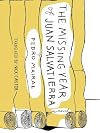
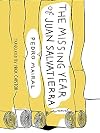
The Missing Year of Juan Salvatierra
by Pedro Mairal
On This Page
Description
At the age of nine, Juan Salvatierra became mute following a horse riding accident. At twenty, he began secretly painting a series of long rolls of canvas in which he minutely detailed six decades of life in his village on Argentina's river frontier with Uruguay. After the death of Salvatierra, his sons return to the village from Buenos Aires to deal with their inheritance: a shed packed with painted rolls stretching over two miles in length and depicting personal and communal history. show more Museum curators from Europe come calling to acquire this strange, gargantuan artwork. But an essential one of its rolls is missing. A search that illuminates the links between art and life ensues, as an intrigue of family secrets buried in the past cast their shadows on the present. show lessTags
Recommendations

























Member Recommendations
Member Reviews
The sons of Juan Salvatierra have returned to their home village in an Argentinian border town to claim their inheritance, a decade after their father's death. Salvatierra, rendered mute by a childhood accident, spent much of his free time during the last 60 years of his life painting on long scrolls of canvas, one scroll for each year of his life beginning at the age of twenty. His works, housed in a shed, give voice to the history of his town and the lives of his family and close friends, in a continuous fashion akin to a book of non-fiction:
Salvatierra painted without any lateral divisions so as to achieve continuity between the different scenes. That was something that obsessed him. He wanted his painting to encapsulate the fluidity show more of a river, of dreams, the way in which they can transform things in a completely natural way without the change seeming absurd but entirely inevitable, as if he were revealing the violent metamorphosis hidden within each being, thing, or situation.
Salvatierra received little attention for his work during his life, but after his death several European museums expressed interest in purchasing and displaying his canvases, while his own country's institutions seemed largely disinterested in it.
As the two sons examine the canvases, they discover that the scroll painted in 1961 is missing. The youngest son embarks on a quest to find this scroll, in order to complete the collection, but also to investigate what led to its disappearance. In doing so, he learns about his father's life, family secrets, and how his past life fits into the story told in the canvases.
The Missing Year of Juan Salvatierra is a short but multilayered and evocative novel, which would appear to be a mystery novel but is also an homage to the life of an artist who is voiceless, yet uses his paintings to tell his story and communicate with those who view his work. The rich descriptions provided by Mairal allowed this reader to easily envision and reflect on Salvatierra's paintings, and, like a work of art that reveals more of itself on a repeat viewing, this book would seem to lend itself to a second or third reading to appreciate it more fully. show less
Salvatierra painted without any lateral divisions so as to achieve continuity between the different scenes. That was something that obsessed him. He wanted his painting to encapsulate the fluidity show more of a river, of dreams, the way in which they can transform things in a completely natural way without the change seeming absurd but entirely inevitable, as if he were revealing the violent metamorphosis hidden within each being, thing, or situation.
Salvatierra received little attention for his work during his life, but after his death several European museums expressed interest in purchasing and displaying his canvases, while his own country's institutions seemed largely disinterested in it.
As the two sons examine the canvases, they discover that the scroll painted in 1961 is missing. The youngest son embarks on a quest to find this scroll, in order to complete the collection, but also to investigate what led to its disappearance. In doing so, he learns about his father's life, family secrets, and how his past life fits into the story told in the canvases.
The Missing Year of Juan Salvatierra is a short but multilayered and evocative novel, which would appear to be a mystery novel but is also an homage to the life of an artist who is voiceless, yet uses his paintings to tell his story and communicate with those who view his work. The rich descriptions provided by Mairal allowed this reader to easily envision and reflect on Salvatierra's paintings, and, like a work of art that reveals more of itself on a repeat viewing, this book would seem to lend itself to a second or third reading to appreciate it more fully. show less
On the surface, this is a quiet & lovely book revolving around art & family & memories. Like Ernest Hemingway & Eduardo Galeano, Mairal spins a tale of great detail in few words. (And never before have I so wanted to see a work of art that has been depicted in words. I so wish Salvatierra's art was a reality that could be visited & seen.)
But considering the history of Argentina, as well as the impact of silence in relation to Argentina's history, The Missing Year of Juan Salvatierra takes on much deeper meaning exploring the impact of silence, the witnessing of history & the destruction of the past even as it informs the future. (The link is from a short interview with Nancy J. Gates-Madsen who authored the book, Trauma, Taboo, and show more Truth-Telling: Listening to Silences in Postdictatorship Argentina.)
Still waters run deep.
Recommended. show less
But considering the history of Argentina, as well as the impact of silence in relation to Argentina's history, The Missing Year of Juan Salvatierra takes on much deeper meaning exploring the impact of silence, the witnessing of history & the destruction of the past even as it informs the future. (The link is from a short interview with Nancy J. Gates-Madsen who authored the book, Trauma, Taboo, and show more Truth-Telling: Listening to Silences in Postdictatorship Argentina.)
Still waters run deep.
Recommended. show less
I thought I would love this book, and I did. It's the story of coming to terms with a death, a loss and a discovery. Juan Salvatierra was a mute and an artist; his sole work was a huge painting that he worked on for his entire adult life. When he dies, his son tries to find a single scroll of the painting representing a year of his father's life. What he finds, what he loses and what he finds out roll out in a simple and beautiful story. It turns out sometimes the trees must be gone in order to find the forest.
http://www.bostonbibliophile.com/2015/12/review-missing-year-of-juan-salvatierra...
http://www.bostonbibliophile.com/2015/12/review-missing-year-of-juan-salvatierra...
The short, sharp and often beautiful descriptions of the 2 miles of continuous paintings of Juan Salvatierra
may well make readers long for a movie or illustrated book!
As his first two sons eventually come to search for the mysterious missing 1961 roll of canvas, it also becomes a mystery why
they did not immediately move this valuable inheritance into a concrete guarded building.
Fire always loomed as a strong possibility, as did theft.
This obvious choice would also have delivered a different and way less predictable and disappointing ending.
may well make readers long for a movie or illustrated book!
As his first two sons eventually come to search for the mysterious missing 1961 roll of canvas, it also becomes a mystery why
they did not immediately move this valuable inheritance into a concrete guarded building.
Fire always loomed as a strong possibility, as did theft.
This obvious choice would also have delivered a different and way less predictable and disappointing ending.
Somehow, without intruding on the story, the language in this short novel makes the painting so real that you feel you are actually seeing the painting. As you view it, the artist’s son is sitting beside you, telling you a remarkable story of how it came to be created, how a part was missing, and how he and his brother went searching for the missing part. Their search is a journey of discovery, both for them and for the reader.
Salvatierra, pintor mudo por un accidente cuando era niño, deja a sus hijos la herencia de su obra, cuatro kilómetros de pintura donde ha intentado plasmar toda su vida. Los diferentes rollos en los que está dispuesta la obra llevan sus fechas correspondiente. La búsqueda de uno de los rollos en un intento de rescatar y resguardar toda la obra, y con ello, el descubrimiento del padre, es la línea argumental de esta novela de Mairal. Una delicia.
The Missing Year of Juan Salvatierra
A charming, imaginative and magical short novel by Pedro Mairal, an Argentine poet and novelist.
Two brothers return to their hometown in Barrancales. Their mission is to find a home for their father’s paintings. A mute caused by a childhood accident his mother apprenticed him to a German painter while his father ignored him.
Salvatierra, as he is known, worked for 40 years at the Post Office but his passion was a giant scroll of painting that memorialized the life he led and the town they came from.
Miguel and Luis travel from Buenos Aires at intermittent times. Their father’s work has been designated a cultural artifact, yet it collects dust in the abandoned shed in which his father painted and show more hung out with assorted neighborhood characters. The brothers contact museums, one of which, located in Amsterdam expresses an interest in acquiring this unique work for their Latin American wing.
The story unfolds with intrigue and a powerful ending that will be your delight to discover.
Passages:
“Salvatierra painted without any lateral divisions so as to achieve continuity between the different scenes. That was something that obsessed him. He wanted his painting to encapsulate the fluidity of a river, of dreams, the way in which they can transform things in a completely natural way without the change seeming absurd but entirely inevitable, as if he were revealing the violent metamorphosis hidden within each being, thing, or situation.”
“In the canvas from that time there is a slow transition from nocturnal scenes to those with the brightness of morning. First there are lengthily twilight landscapes with black women washing clothes on the riverbank. Salvatierra painted the hour when the first stars are reflected in the water, and everything is beginning to merge into the shadows. In one segment, somebody is striking a match, and in the darkness, you can just make out a woman, who is smiling provocatively from behind the bushes.” show less
A charming, imaginative and magical short novel by Pedro Mairal, an Argentine poet and novelist.
Two brothers return to their hometown in Barrancales. Their mission is to find a home for their father’s paintings. A mute caused by a childhood accident his mother apprenticed him to a German painter while his father ignored him.
Salvatierra, as he is known, worked for 40 years at the Post Office but his passion was a giant scroll of painting that memorialized the life he led and the town they came from.
Miguel and Luis travel from Buenos Aires at intermittent times. Their father’s work has been designated a cultural artifact, yet it collects dust in the abandoned shed in which his father painted and show more hung out with assorted neighborhood characters. The brothers contact museums, one of which, located in Amsterdam expresses an interest in acquiring this unique work for their Latin American wing.
The story unfolds with intrigue and a powerful ending that will be your delight to discover.
Passages:
“Salvatierra painted without any lateral divisions so as to achieve continuity between the different scenes. That was something that obsessed him. He wanted his painting to encapsulate the fluidity of a river, of dreams, the way in which they can transform things in a completely natural way without the change seeming absurd but entirely inevitable, as if he were revealing the violent metamorphosis hidden within each being, thing, or situation.”
“In the canvas from that time there is a slow transition from nocturnal scenes to those with the brightness of morning. First there are lengthily twilight landscapes with black women washing clothes on the riverbank. Salvatierra painted the hour when the first stars are reflected in the water, and everything is beginning to merge into the shadows. In one segment, somebody is striking a match, and in the darkness, you can just make out a woman, who is smiling provocatively from behind the bushes.” show less
Members
- Recently Added By
Author Information

15 Works 486 Members
Some Editions
Awards and Honors
Common Knowledge
- Canonical title
- The Missing Year of Juan Salvatierra
- Original title
- Salvatierra
- Original publication date
- 2008 (Argentina) (Argentina); 2013-07-15 (United States) (United States); 2013-07-15 (United Kingdom) (United Kingdom)
- Important places
- Argentina
- First words
- The painting (the reproduction of the painting) is in the Röell Museum.
- Quotations
- Salvatierra painted without any lateral divisions so as to achieve continuity between the different scenes. That was something that obsessed him. He wanted his painting to encapsulate the fluidity of a river, of dreams, the w... (show all)ay in which they can transform things in a completely natural way without the change seeming absurd but entirely inevitable, as if he were revealing the violent metamorphosis hidden within each being, thing, or situation.
- Last words
- (Click to show. Warning: May contain spoilers.)And I was there with my twenty-three year old son, who could see what his grandfather had done, this painting that enveloped us all, this space where his creations could move freely, limitlessly, because there were no boundaries, there was no end, because after we had sat there for a long while, Gastón and I could see that the fish and circles in the water painted on what we thought was the end of the last roll matched up exactly with the circles and fish of the very beginning, painted by Salvatierra when he was barely twenty.
- Original language
- Spanish
Classifications
- Genres
- General Fiction, Fiction and Literature
- DDC/MDS
- 863.7 — Literature & rhetoric Spanish Literature Spanish fiction 21st Century
- LCC
- PQ7798.23 .A369 .S3513 — Language and Literature French, Italian, Spanish and Portuguese literatures Spanish literature Provincial, local, colonial, etc. Spanish America
- BISAC
Statistics
- Members
- 131
- Popularity
- 248,599
- Reviews
- 12
- Rating
- (3.99)
- Languages
- 7 — Dutch, English, French, German, Portuguese (Portugal), Spanish, Turkish
- Media
- Paper, Audiobook, Ebook
- ISBNs
- 16
- ASINs
- 4