On This Page
Description
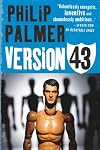
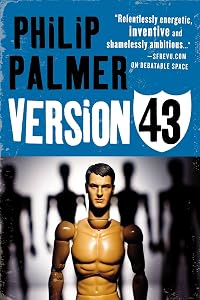
The odds of surviving quantum teleportation to the Exodus Universe are, more or less, fifty/fifty. The only ones crazy enough to try it are the desperate, the insane and those sentenced to death for their crimes. Belladonna is home to the survivors and, in a planet run by criminals and desperados, death is commonplace. But a particularly horrific (and improbable) killing attracts the Galactic Police force, and a cyborg cop is sent to investigate. Version 43 has been here before, and has old show more scores to settle. The cop was human once, but is now more programme than man. And he intends to clean up this planet, permanently, whatever the cost. show lessTags
Recommendations



















Member Reviews
This enjoyed this book immensely. Don't have time for a full review (as usual), but here are some 'review notes'.
-This book is filled with a hyperbolic amount of sex, drugs, violence, and death. If this kind of stuff bothers you, I heartily recommend not reading this book. Or even leaving it in a room with small children. However, I should point out that all this material is presented in such an Over-The-Top (OTT) fashion that I don't think it's gratuitous. Some authors might present such material in elaborate detail and with profound seriousness. This is appealing if you are a 12-year old boy or an adult with developmental problems. Palmer presents it as All! Totally! Awesome!--that is, as a joke. Of course, you may not find it funny, show more but I think the difference of intent matters here. As always, context is key.
-The prose is a little stiff. I don't know if this is typical of Palmer's work, or specific to this novel (since I've only read the one). Regardless, there are two elements that make it work anyway: 1) the narrator is a cyborg who is frequently characterized as being cold and robotic (so it's consistent, at least) and 2) Palmer has great comedic timing (or pacing) which makes the stiffness of the prose work as a kind of deadpan delivery, making an already funny book even funnier.
-The (I think deliberately) cheesy hyperbole of the violence etc. conceals a lot of clever bits. For me personally, my favorite bits were the academic satire of the 'Principles of Quantum Teleportation' section and a throwaway joke from page 407 where Palmer refers to 'husserls of consciousness'-where a 'husserl' is a unit of measurement of consciousness. That's hysterically funny 1) if you ever studied phenomenology or 2) appreciate the sort of 'authorial personality' that would drop an obscure-for-almost-everybody philosophy joke into a book superficially about an intergalactic police robot, just because. There's lots of physics jokes too, and I'm sure there's more I missed.
-Palmer uses a lot of interesting stylistic devices that would be, by themselves, worth the price of admission. I already mentioned the fake academic article (which I think is a Borges reference). There's also sections of the book written as a flowchart, another as song lyrics. In one passage, he seems to invent a kind of Dadaist rap. The book is also full of dramatic irony. In short, Palmer presents his ostensibly silly material ('Galactic Cop Fights Crime!') in numerous complex and interesting ways. The contrast creates a neat sort of 'stylistic irony', where the content is opposed to the form. Imagine if someone wrote, say, a profound theological argument into a series of dirty limericks, and you'd have some idea of the kind of stylistic contrasts that Palmer is working with. If you've got a strong stomach, then working it all out with him is both interesting and fun--a combination that is, in my experience, exceedingly rare.
-Recommended if you like Philip K. Dick or Rudy Rucker. show less
-This book is filled with a hyperbolic amount of sex, drugs, violence, and death. If this kind of stuff bothers you, I heartily recommend not reading this book. Or even leaving it in a room with small children. However, I should point out that all this material is presented in such an Over-The-Top (OTT) fashion that I don't think it's gratuitous. Some authors might present such material in elaborate detail and with profound seriousness. This is appealing if you are a 12-year old boy or an adult with developmental problems. Palmer presents it as All! Totally! Awesome!--that is, as a joke. Of course, you may not find it funny, show more but I think the difference of intent matters here. As always, context is key.
-The prose is a little stiff. I don't know if this is typical of Palmer's work, or specific to this novel (since I've only read the one). Regardless, there are two elements that make it work anyway: 1) the narrator is a cyborg who is frequently characterized as being cold and robotic (so it's consistent, at least) and 2) Palmer has great comedic timing (or pacing) which makes the stiffness of the prose work as a kind of deadpan delivery, making an already funny book even funnier.
-The (I think deliberately) cheesy hyperbole of the violence etc. conceals a lot of clever bits. For me personally, my favorite bits were the academic satire of the 'Principles of Quantum Teleportation' section and a throwaway joke from page 407 where Palmer refers to 'husserls of consciousness'-where a 'husserl' is a unit of measurement of consciousness. That's hysterically funny 1) if you ever studied phenomenology or 2) appreciate the sort of 'authorial personality' that would drop an obscure-for-almost-everybody philosophy joke into a book superficially about an intergalactic police robot, just because. There's lots of physics jokes too, and I'm sure there's more I missed.
-Palmer uses a lot of interesting stylistic devices that would be, by themselves, worth the price of admission. I already mentioned the fake academic article (which I think is a Borges reference). There's also sections of the book written as a flowchart, another as song lyrics. In one passage, he seems to invent a kind of Dadaist rap. The book is also full of dramatic irony. In short, Palmer presents his ostensibly silly material ('Galactic Cop Fights Crime!') in numerous complex and interesting ways. The contrast creates a neat sort of 'stylistic irony', where the content is opposed to the form. Imagine if someone wrote, say, a profound theological argument into a series of dirty limericks, and you'd have some idea of the kind of stylistic contrasts that Palmer is working with. If you've got a strong stomach, then working it all out with him is both interesting and fun--a combination that is, in my experience, exceedingly rare.
-Recommended if you like Philip K. Dick or Rudy Rucker. show less
Ratings
Members
- Recently Added By
Author Information

15+ Works 627 Members
Series

Classifications
Statistics
- Members
- 96
- Popularity
- 336,715
- Reviews
- 1
- Rating
- (3.76)
- Languages
- English
- Media
- Paper, Ebook
- ISBNs
- 4
- ASINs
- 3