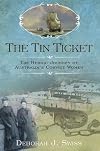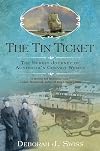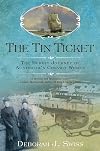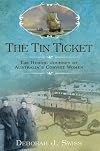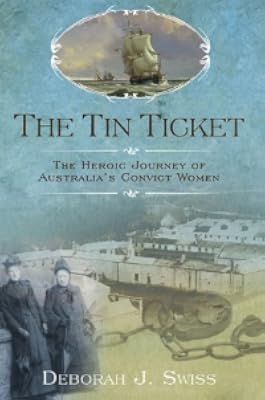
The Tin Ticket: The Heroic Journey of Australia's Convict Women
by Deborah J. Swiss
On This Page
Description
The heartbreaking, horrifying, and ultimately triumphant story of the women exiled from the British Isles and forced into slavery and savagery-- and who created the most liberated society of their time.Tags
Recommendations


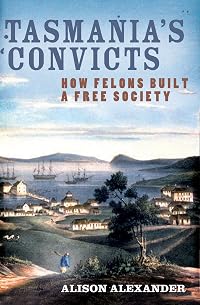
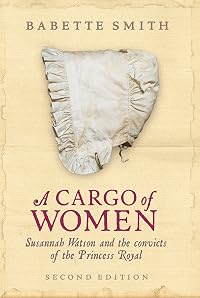












Member Recommendations

Member Reviews
Just prior to the reign of Queen Victoria, the British government attempted to solve two of its problems (the threat of losing its Australian colonies due to a lack of colonists and a massive underclass of working poor forced to steal simply to survive) by transporting its prisoners to the far-flung colonies and forcing them to serve their time there. Some 25,000 of these transportees were women (their dependent children were often transported, too), most convicted of petty theft. Their lives in Britain were miserable and cruel, prison was worse, the transport itself was dangerous, and the life awaiting them was no improvement. Swiss uses the stories of a few women to illustrate the whole situation, and does a remarkable job. It's show more impossible to read about these women's lives and not be moved by their sheer stubborn survival. Awesome book. show less
I have divided feelings about this book.
On one hand, I found it fascinating, because it is an unusual topic and well researched.
On the other hand, while reading I kept thinking that the author must have had access to family records or diaries to know what the women were thinking. I felt cheated when I realized that the author had fictionalized the book somewhat, as it calls into question the accuracy of the rest.
On one hand, I found it fascinating, because it is an unusual topic and well researched.
On the other hand, while reading I kept thinking that the author must have had access to family records or diaries to know what the women were thinking. I felt cheated when I realized that the author had fictionalized the book somewhat, as it calls into question the accuracy of the rest.
In the early to mid-1800s, women “criminals” were transported from England, Scotland, Ireland, and Wales to Tasmania (a small island off Australia) to serve their time. Of course, almost none of them came home when they served their time. Not only that, a large number of these criminals were merely stealing food or clothing because they couldn’t afford it.
This book takes a look at a few of these women throughout their lives – how they grew up and what caused them to steal, which caused them to be sent to Tasmania; it followed them into the horrible gaols of the time; and it followed them to Tasmania – their time imprisoned, as well as a short section on how they lived after they were freed. There was also a Quaker woman who, show more ahead of her time, realized the horrible conditions these women were living in in the jails, and worked hard to make things better for them, as much as she could.
I found this very interesting. I knew that criminals had been sent to Australia, but I had never before read any of their stories. It’s pretty sad how little it took to be charged and sent away. show less
This book takes a look at a few of these women throughout their lives – how they grew up and what caused them to steal, which caused them to be sent to Tasmania; it followed them into the horrible gaols of the time; and it followed them to Tasmania – their time imprisoned, as well as a short section on how they lived after they were freed. There was also a Quaker woman who, show more ahead of her time, realized the horrible conditions these women were living in in the jails, and worked hard to make things better for them, as much as she could.
I found this very interesting. I knew that criminals had been sent to Australia, but I had never before read any of their stories. It’s pretty sad how little it took to be charged and sent away. show less
Deborah J. Swiss's new book The Tin Ticket will appeal to lovers of history and historical fiction.
Although I knew that Australia had been populated by convicts during it's early settlement, I really didn't know the full story.
"For nearly one hundred years, England had routinely disposed of its convict population in the American colonies, and built its rich empire on the backs of convict and slave labor. However, the American Revolution, followed by the abolition of slavery, eliminated this option. Great Britain could not persuade its "proper" citizenry to homestead its new colonies in Van Diemen's Land (Tasmania) and in New South Wales (Australia). Under the Transportation Act of 1718, 162,000 women, men and children were exiled to show more Australia from 1788 to 1868."
Swiss's research unearthed the story of quite a few women, but follows the journey of four of them in detail, from trying to survive day to day in Great Britain through to meeting the descendants of these women in present day Oz. But Swiss's telling of their stories reads almost like fiction. She has given these unsung settlers a human face and vividly brings their stories to life. I truly was amazed at the fortitude of these women, surviving inhumane treatment and conditions. I think I enjoyed the story of Agnes McMillan the most. She was abandoned at 12 in Glasgow and finished her life, surrounded by her family in a lovely valley in her own home. Her journey is truly remarkable.
Swiss's book is full of information on a time period in history that I wager few of us really know much about. What makes this book stand out are the personal stories and just how strong women really are. This would be a great discussion book for clubs. Recommended show less
Although I knew that Australia had been populated by convicts during it's early settlement, I really didn't know the full story.
"For nearly one hundred years, England had routinely disposed of its convict population in the American colonies, and built its rich empire on the backs of convict and slave labor. However, the American Revolution, followed by the abolition of slavery, eliminated this option. Great Britain could not persuade its "proper" citizenry to homestead its new colonies in Van Diemen's Land (Tasmania) and in New South Wales (Australia). Under the Transportation Act of 1718, 162,000 women, men and children were exiled to show more Australia from 1788 to 1868."
Swiss's research unearthed the story of quite a few women, but follows the journey of four of them in detail, from trying to survive day to day in Great Britain through to meeting the descendants of these women in present day Oz. But Swiss's telling of their stories reads almost like fiction. She has given these unsung settlers a human face and vividly brings their stories to life. I truly was amazed at the fortitude of these women, surviving inhumane treatment and conditions. I think I enjoyed the story of Agnes McMillan the most. She was abandoned at 12 in Glasgow and finished her life, surrounded by her family in a lovely valley in her own home. Her journey is truly remarkable.
Swiss's book is full of information on a time period in history that I wager few of us really know much about. What makes this book stand out are the personal stories and just how strong women really are. This would be a great discussion book for clubs. Recommended show less
Wow, an excellent picture into a time when being poor was a crime - stealing food or the smallest thing would get you sent to a prison with no heat, sanitary facilities, clothing, etc and from there banished to what is now Tasmania. I would like all the people who are unconcerned about the way conservatives are now going, cutting social safety nets, to be able to read this and tell me they are willing to return to a time like this.
Just an excellent picture into a time most of us have no clue about.
Just an excellent picture into a time most of us have no clue about.
The premise of this book started out very strong, and I found it read much like fiction, following the life of one convict in particular as opposed to a general overview of all of the convicts. But after effectively following her through crime, conviction, transport and prison sentence in Australia, the author then chose another target, and proceeded to explain the same process again. Yes, aspects were different, but the general tale was similar enough, and it became repetitive. When these two characters then meet up in Australia, it made their inclusion relevant, but in the end, these two (along with a third) become representative of the criminal relocation system which took place over more than 40 years. I felt a little more time in show more the relationships between the territory and the prisoners and then more on the transition of prisoners to residents could have provided more depth. Well written and a good concept, it just fell a little short for me. show less
Meticulous research, great storytelling - from streets of Glasgow to great grandmothers in Australia follows the lives of three female convicts.
Members
- Recently Added By
Lists

Women's Stories
88 works; 13 members
Author Information

4+ Works 245 Members
Awards and Honors
Awards
Notable Lists
Work Relationships
Common Knowledge
- People/Characters
- Agnes McMillan; Janet Houston; Bridget Mulligan; Ludlow Tedder; Elizabeth Gurney Fry
- Important places
- Glasgow, Scotland, UK; Van Diemen's Land
- Dedication
- To Digney Fignus
- First words
- The lush coastal hinterland offered a perfect day for Christmas 1869.
- Last words
- (Click to show. Warning: May contain spoilers.)They were all Australians now.
- Blurbers
- Hochschild, Adam; Fainin, Mairtin; Regine, Birute; Sharma, Ritu
Classifications
- Genres
- History, Nonfiction, General Nonfiction, Biography & Memoir
- DDC/MDS
- 994.602092 — History & geography Oceania & Polar Regions Australia Tasmania
- LCC
- HV8950 .T3 .S95 — Social sciences Social pathology. Social and public welfare. Criminology Social pathology. Social and public welfare. Criminal justice administration Penology. Prisons. Corrections
- BISAC
Statistics
- Members
- 229
- Popularity
- 142,145
- Reviews
- 13
- Rating
- (3.93)
- Languages
- English
- Media
- Paper, Ebook
- ISBNs
- 4
- ASINs
- 2