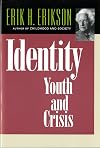
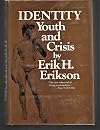
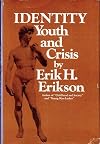
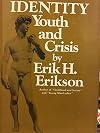
Identity: Youth and Crisis
by Erik H. Erikson
On This Page
Description
Essays in ego psychology, based on papers written from 1951 to 1967, by a neo-Freudian analyst and theorist. This edition is a collection of Erik H. Erikson's major essays on topics originating in the concept of adolescent identity crisis. Identity, Erikson writes, is an unfathomable as it is all-pervasive. It deals with a process that is located both in the core of the individual and in the core of the communal culture. As the culture changes, new kinds of identity questions arise--Erikson show more comments, for example, on issues of social protest and changing gender roles that were particular to the 1960s. Representing two decades of groundbreaking work, the essays are not so much a systematic formulation of theory as an evolving report that is both clinical and theoretical. The subjects range from "creative confusion" in two famous lives--the dramatist George Bernard Shaw and the philosopher William James--to the connection between individual struggles and social order. "Race and the Wider Identity" and the controversial "Womanhood and the Inner Space" are included in the collection. show lessTags
Recommendations



































Member Reviews
Psychology
Ratings
Members
- Recently Added By
Lists

Tom's Bookstore
346 works; 2 members
Author Information

34+ Works 4,260 Members
Erik H. Erikson, a German-born American psychologist and psychoanalyst, developed theories about the sequence of human development that have had an impact on clinical psychoanalysis, ethics, history, literature, child care, and the emerging interdisciplinary study of the life course. Erikson was an art student, but after undergoing psychoanalysis show more by Anna Freud in Vienna in 1927, he turned to the field of psychology. According to Erikson's life-cycle theory, first published in Childhood and Society (1950), there are eight developmental stages, which are biologically determined but environmentally shaped: infancy, early childhood, play age, school age, adolescence, young adulthood, mature adulthood, and old age. Each of these stages is associated with a particular crisis that the individual must successfully resolve in order to proceed normally to the next stage-for example, identity versus confusion in adolescence. The concept of the identity crisis is now firmly embedded in psychiatric theory. Erikson also studied the relationship between a person's life and the times in which he or she lives; and his historical-biographical studies of Luther and Gandhi are outstanding products of this inquiry. Erikson taught at Harvard University for 30 years (Bowker Author Biography) show less
Some Editions
Series
Belongs to Publisher Series
Common Knowledge
- Canonical title
- Identity: Youth and Crisis
- Original title
- Identity : youth and crisis
- Original publication date
- 1968
- Canonical DDC/MDS
- 155.2
- Canonical LCC
- BF1400.A1E67
Classifications
Statistics
- Members
- 497
- Popularity
- 60,838
- Reviews
- 2
- Rating
- (3.25)
- Languages
- 9 — Danish, Dutch, English, French, German, Italian, Latvian, Spanish, Swedish
- Media
- Paper, Ebook
- ISBNs
- 17
- ASINs
- 8