On This Page
Description
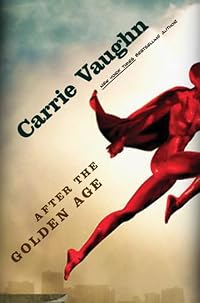
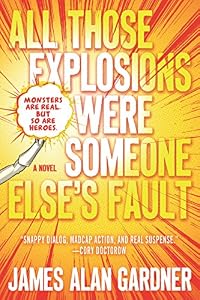
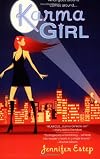
Forensic accountant Celia West is the powerless and estranged daughter of two of Commerce City's great heroes, Captain Olympus and Spark. When the city prosecutes the evil Destructor for tax evasion, Celia gets pulled in to track down evidence. As a new crime spree creates tension between the city's heroes and the police force, Celia's investigation uncovers long-buried secrets about her family and the city.Tags
Recommendations





Member Recommendations

Member Reviews
This is an excellent book about the human condition in a superhuman world, engagingly written, compellingly plotted, with deeply well-developed characters (with flaws as big as their bigger-than-life roles) and intriguingly insightful perspectives on the relationships of people's psyches to the world around them. I read it in two sittings. It's not quite as amazing as Worm, but it might be the second-best prose fiction treatment of a world with actual superheroes I've ever read.
So it seems that this book was destined to help me make up for lost time! I absolutely could not put this book down once I started it. And I have to say that I was completely surprised by this book. It was so much better than I ever thought it would be.
It starts out feeling a little comicbookish, a little cartoony. I mean, it's about super heroes, for goodness sake. And that aspect of the story is very comicbookish - not that that is a bad thing. If that was all there was to the story, I'd have still liked it, but it would have been a 3-star like, rather than a 5-star love. But there was so much more to this story than a good vs bad, superhero vs villain story. This was a really interesting and innovative twist on the story that sucked show more me right in and kept me glued to the pages until there weren't any more of them. And now I feel a bit sad that it's over.
I was very surprised at how emotional this book was. I completely identified with the main character's feelings of isolation and desperation and despair and frustration and everything in the situation that she was in. In fact, I thought she handled the situation infinitely better than I would have. I would have probably shut down and closed up shop and said 'screw it, then'. I have to give Celia credit for not doing that, and not giving up.
I really loved this book, and as an introduction to Carrie Vaughn's writing, it was amazing. Now my only concern is that her other books might not live up to this one. show less
It starts out feeling a little comicbookish, a little cartoony. I mean, it's about super heroes, for goodness sake. And that aspect of the story is very comicbookish - not that that is a bad thing. If that was all there was to the story, I'd have still liked it, but it would have been a 3-star like, rather than a 5-star love. But there was so much more to this story than a good vs bad, superhero vs villain story. This was a really interesting and innovative twist on the story that sucked show more me right in and kept me glued to the pages until there weren't any more of them. And now I feel a bit sad that it's over.
I was very surprised at how emotional this book was. I completely identified with the main character's feelings of isolation and desperation and despair and frustration and everything in the situation that she was in. In fact, I thought she handled the situation infinitely better than I would have. I would have probably shut down and closed up shop and said 'screw it, then'. I have to give Celia credit for not doing that, and not giving up.
I really loved this book, and as an introduction to Carrie Vaughn's writing, it was amazing. Now my only concern is that her other books might not live up to this one. show less
Most writing in superhero mythology paints the heroes as larger than life, more powerful than we could hope to be...gods among us, if you will...swooping in when all hope seems lost to fight the evil that we could never fight ourselves. The heroes are distant, aloof most often, typically because their position and power has left them that way, too far separated by definition from those that they pledge to defend...or, in the case of the villains, attempt to enslave. Due to their power, they can never be like us, and understand the obligation that comes with that power.
The better writing in superhero mythology explores the heroes' struggle with that power, with a destiny that has often been thrust upon them by forces outside of show more themselves. They take up the mantel of defender because they have no other option. With great power, Uncle Ben reminds us, comes great responsibility.
The best writing in superhero mythology steps back from this, though, and remembers what the heroes truly are: people like the rest of us, but choosing to use what they have been given for good. Aliens, perhaps, or mutants, but still touched by a common thread of humanity that leads to a driving impulse to preserve life. Our heroes find common ground with us, even when they are so much larger than us.
There are a few explorations of the people behind the masks that are original enough to cause us to re-examine what lies behind their heroic natures, a handful that are memorable enough to, while not re-defining of a genre, certainly motivation to re-examine a genre. Somewhat out of the blue, Carrie Vaughn, a self-proclaimed lover of comic books and superheroes, has done exactly that, and done so with an interesting starting point: what if these huge, larger-than-life, indestructible heroes were but a blip in the history of heroism? What if their self-sacrificial desire to place the good of others, of their cities, before themselves were not tied to their superhuman abilities, but rather merely better facilitated by them? Wouldn't that make them even greater heroes?
And wouldn't that widen the definition of who we consider to be a hero, and what we consider heroism to be?
Vaughn's protagonist, Celia West, is the daughter of the greatest superheroes that Commerce City has known. Her parents formed a team known as the Olympiad, fittingly titled protectors who watch the city from on high and strike hard against evil. Yet, she is born with no abilities, and lives in the shadow of superhuman parents whose superhuman nature has exacted a toll on their family life. Celia fights for good in her own way, however, in her role as an accountant of all things, with the same determination and passion to right wrongs that her parents hold, without all of the grandiose battles and conflicts. Yet, she is constantly compared to them, constantly made to appear to fall short...and constantly haunted by the one mistake for which she will seemingly find no forgiveness, despite her attempts to make her repentance felt.
Vaughn pays homage to the superhero tales of our youth in an offhandedly humorous but deeply respectful way that demonstrates her love for the tradition, gently touching stereotypes with the love of genre conventions without ever making anything seem unbelievable or silly. Her characters stay with you, her succinct prose and thought-provoking dialogue leave the reader with the moments that define a great book: the moments when you have to put the book down and walk away to digest what it is you've just read. Vaughn isn't just de-constructing classic superhero story arcs here, she's using the mythology to examine much larger questions: destiny vs. free will, the nature of a hero in each of us, the driving impulses behind self-sacrificing behaviors. She's questioning what it means to be a hero from every angle, and disabusing us of many of the notions that we have held with conviction up to this point. The heroes that are most visible, we realize, perhaps aren't the greatest heroes after all, but are merely following in the footsteps of heroes that are greater, and more normal, than we might otherwise imagine, heroes whose convictions were stronger than their powers.
This is the first novel I've read from Vaughn, and I'm impressed. The pacing is fluid, the story accessible and only minimally predictable. On the rare occasion in which I found myself suspecting that something didn't fit, she made it fit within a few pages. Vaughn has done something fascinating with superhero culture here, something redemptive in it's own right. If you grew up in love with these heroes as I did, this is a novel that will broaden the way you think. If you didn't, you might just find yourself falling in love with the genre for the first time, because it is accessible to everyone in Vaughn's prose.
In fact, of all the legacy that this book is likely to leave, that may well be its greatest.
An easy read at just under 400 pages, I recommend this novel for anyone. show less
The better writing in superhero mythology explores the heroes' struggle with that power, with a destiny that has often been thrust upon them by forces outside of show more themselves. They take up the mantel of defender because they have no other option. With great power, Uncle Ben reminds us, comes great responsibility.
The best writing in superhero mythology steps back from this, though, and remembers what the heroes truly are: people like the rest of us, but choosing to use what they have been given for good. Aliens, perhaps, or mutants, but still touched by a common thread of humanity that leads to a driving impulse to preserve life. Our heroes find common ground with us, even when they are so much larger than us.
There are a few explorations of the people behind the masks that are original enough to cause us to re-examine what lies behind their heroic natures, a handful that are memorable enough to, while not re-defining of a genre, certainly motivation to re-examine a genre. Somewhat out of the blue, Carrie Vaughn, a self-proclaimed lover of comic books and superheroes, has done exactly that, and done so with an interesting starting point: what if these huge, larger-than-life, indestructible heroes were but a blip in the history of heroism? What if their self-sacrificial desire to place the good of others, of their cities, before themselves were not tied to their superhuman abilities, but rather merely better facilitated by them? Wouldn't that make them even greater heroes?
And wouldn't that widen the definition of who we consider to be a hero, and what we consider heroism to be?
Vaughn's protagonist, Celia West, is the daughter of the greatest superheroes that Commerce City has known. Her parents formed a team known as the Olympiad, fittingly titled protectors who watch the city from on high and strike hard against evil. Yet, she is born with no abilities, and lives in the shadow of superhuman parents whose superhuman nature has exacted a toll on their family life. Celia fights for good in her own way, however, in her role as an accountant of all things, with the same determination and passion to right wrongs that her parents hold, without all of the grandiose battles and conflicts. Yet, she is constantly compared to them, constantly made to appear to fall short...and constantly haunted by the one mistake for which she will seemingly find no forgiveness, despite her attempts to make her repentance felt.
Vaughn pays homage to the superhero tales of our youth in an offhandedly humorous but deeply respectful way that demonstrates her love for the tradition, gently touching stereotypes with the love of genre conventions without ever making anything seem unbelievable or silly. Her characters stay with you, her succinct prose and thought-provoking dialogue leave the reader with the moments that define a great book: the moments when you have to put the book down and walk away to digest what it is you've just read. Vaughn isn't just de-constructing classic superhero story arcs here, she's using the mythology to examine much larger questions: destiny vs. free will, the nature of a hero in each of us, the driving impulses behind self-sacrificing behaviors. She's questioning what it means to be a hero from every angle, and disabusing us of many of the notions that we have held with conviction up to this point. The heroes that are most visible, we realize, perhaps aren't the greatest heroes after all, but are merely following in the footsteps of heroes that are greater, and more normal, than we might otherwise imagine, heroes whose convictions were stronger than their powers.
This is the first novel I've read from Vaughn, and I'm impressed. The pacing is fluid, the story accessible and only minimally predictable. On the rare occasion in which I found myself suspecting that something didn't fit, she made it fit within a few pages. Vaughn has done something fascinating with superhero culture here, something redemptive in it's own right. If you grew up in love with these heroes as I did, this is a novel that will broaden the way you think. If you didn't, you might just find yourself falling in love with the genre for the first time, because it is accessible to everyone in Vaughn's prose.
In fact, of all the legacy that this book is likely to leave, that may well be its greatest.
An easy read at just under 400 pages, I recommend this novel for anyone. show less
4.5/5
It's no secret that the past few books by Carrie Vaughn I read I was disappointed with, but this glorious novel restored my faith in her writing talent.
Seriously, this book was absolutely fantastic. Think of Hancock and The Watchmen. It's surreal, full of life and very grounded. This is not a story about a cloaked and masked super men and women, this is Celia's story.
Celia, who has no talent and had to grow up in the shadow of her famous parents. Celia, whose achievements were never enough for her imposing father. Celia, who has to live with every villain in the city kidnapping her again and again to prove themselves against her parents.
She is bone tired of constant questions and starry eyes of her parents fans, she just wants a show more normal uncomplicated life, but when Celia is asked to help to nail down a famous villain with her forensic accounting skills, not only her lifestyle is on the verge of crumbling for in her rebellious past she worked for that same super villain, she just might uncover the strange source of her parents power as well.
I loved, loved Celia! She is just a normal, snarky, young woman, and you really feel for her from the beginning to the end of the novel. All the supporting characters, the team of supermen, her policeman boyfriend, her friends and co-workers are fully fleshed out and alive.
That girl also has some hidden depths which will take you by surprise! Overall, highly recommended to anyone. show less
It's no secret that the past few books by Carrie Vaughn I read I was disappointed with, but this glorious novel restored my faith in her writing talent.
Seriously, this book was absolutely fantastic. Think of Hancock and The Watchmen. It's surreal, full of life and very grounded. This is not a story about a cloaked and masked super men and women, this is Celia's story.
Celia, who has no talent and had to grow up in the shadow of her famous parents. Celia, whose achievements were never enough for her imposing father. Celia, who has to live with every villain in the city kidnapping her again and again to prove themselves against her parents.
She is bone tired of constant questions and starry eyes of her parents fans, she just wants a show more normal uncomplicated life, but when Celia is asked to help to nail down a famous villain with her forensic accounting skills, not only her lifestyle is on the verge of crumbling for in her rebellious past she worked for that same super villain, she just might uncover the strange source of her parents power as well.
I loved, loved Celia! She is just a normal, snarky, young woman, and you really feel for her from the beginning to the end of the novel. All the supporting characters, the team of supermen, her policeman boyfriend, her friends and co-workers are fully fleshed out and alive.
That girl also has some hidden depths which will take you by surprise! Overall, highly recommended to anyone. show less
Prelim Review: I grew up adoring superheroes. Barry Allen (Silver Age Flash) was my absolute hands down favorite of them all. I idolized him like most people idolized movie stars. He was Silver Age (50's/60's/70's) of comics, in the 90's, when I began branching out I stumbled upon Alex Ross and Mark Waid's epic [b:Kingdom Come|93338|Kingdom Come|Elliot S. Maggin|https://images.gr-assets.com/books/1328005937s/93338.jpg|43059188].
It changed how I viewed heroes rather profoundly.
This too has changed how I view certain aspects of being a hero. I read very 'hero' books in which the characters have a kid. Sometimes it'll happen, but almost never did I stick with a series (or character) long enough to watch that kid grow up. I didn't consider show more how it must be on either side of the equation, the helplessness both sides feel, the uncertainty of what could happen at any moment. Its not really that different from regular parents or kids who's parents are in law enforcement (like cops or fire fighters), but there's a stark difference between the Joker and Joe Schmo bank robber.
I wish that we could have seen more flashbacks of Celia's childhood. The brief interludes did a lot to sort of bridge the gap between the Celia of now and the Celia who was then. I'll tell you one thing, the memory of her at two years old had me practically crying it was sad...heart-wrenchingly so.
I was captivated by this story. It held me engrossed as I watched how the completely ordinary daughter of the world's greatest heroes struggled to come to terms with herself. Whether Celia truly felt reconciled to the fact that she was merely normal, especially after the past reveals how involved her family has been from the very beginning, is left up in the air. I don't think by the end of it she felt bitter that she wasn't the Golden Child her parents had wanted. And they weren't the heroes everyone saw them as. It was hard for her to reconcile that the most--the world kept telling her 'Your parents are heroes. They're like Gods.' and to her they were just Mom and Dad, adults who let her down more often then she liked.
There's a little romance throughout, and anyone with braincells will be able to see how things turn out for Celia, but I was more interested in how everyone around her reacted when her secret came out. In one memorable rant after it comes out, Celia demands to know if she is any different then she was before:
[Celia]"..How many times do I have to say it: I've spent the last eight years trying to make up for one mistake, and the only message I'm getting is that isn't possible. Yesterday I was a respectable upstanding citizen, and today, suddenly, I'm dirt...what the hell happened?"
[Analise]"How do I know you won't do something like that again?" (pg. 139)
That interchange, about halfway through the book, sums up something important I think. Never mind heroes vs. villains, everybody faces this. You can spend your entire life as the good kid and one mistake, one misstep, and that's something know one will forget. After the Golden Age, the title in and of itself I think refers to this. There's the Celia before The Incident, the Celia who tried her best but couldn't live up to her parents' expectations, when there was still the chance she could be so much more.
Then there's the Celia after The Incident, who couldn't fully reconcile with her parents, who felt inadequate next to almost everyone around her. She wasn't alone though. It wasn't touched upon directly, but through the flashes of time from Celia's childhood and beyond we kind of see that her parents weren't just disappointed in her lack of superpowers, but weren't sure how to deal with her because of it. Its fairly typical when a family is so devoted to one certain aspect--sports, the arts, music--and is confronted with a child with no aptitude. How do they relate? How do they treat that kid? It must have been worse for the Wests since the added burden that Celia couldn't protect herself--physically at least--like they could.
I'll discuss the romance only briefly, because its not a big deal of the book. The connection is the draw, the force behind it. Through her connection with the her love interest she feels understood. Not perfect or a disappointment, but a flawed human being stumbling around trying to find her way. Its a little heavy-handed at times, especially after the Incident is publicly known, but effective. I wish she had this same feeling with someone else--Analise maybe, who I can't quite forgive for being so judgmental of Celia's past.
And the ending...well. There was tears. I don't think we needed the extra 'and this is what happened' bit after the confrontation, but the confrontation was almost perfect to my mind whether you are a comic fan or not. It had the big life or death plot, but very real consequences and emotions that took center stag show less
It changed how I viewed heroes rather profoundly.
This too has changed how I view certain aspects of being a hero. I read very 'hero' books in which the characters have a kid. Sometimes it'll happen, but almost never did I stick with a series (or character) long enough to watch that kid grow up. I didn't consider show more how it must be on either side of the equation, the helplessness both sides feel, the uncertainty of what could happen at any moment. Its not really that different from regular parents or kids who's parents are in law enforcement (like cops or fire fighters), but there's a stark difference between the Joker and Joe Schmo bank robber.
I wish that we could have seen more flashbacks of Celia's childhood. The brief interludes did a lot to sort of bridge the gap between the Celia of now and the Celia who was then. I'll tell you one thing, the memory of her at two years old had me practically crying it was sad...heart-wrenchingly so.
I was captivated by this story. It held me engrossed as I watched how the completely ordinary daughter of the world's greatest heroes struggled to come to terms with herself. Whether Celia truly felt reconciled to the fact that she was merely normal, especially after the past reveals how involved her family has been from the very beginning, is left up in the air. I don't think by the end of it she felt bitter that she wasn't the Golden Child her parents had wanted. And they weren't the heroes everyone saw them as. It was hard for her to reconcile that the most--the world kept telling her 'Your parents are heroes. They're like Gods.' and to her they were just Mom and Dad, adults who let her down more often then she liked.
There's a little romance throughout, and anyone with braincells will be able to see how things turn out for Celia, but I was more interested in how everyone around her reacted when her secret came out. In one memorable rant after it comes out, Celia demands to know if she is any different then she was before:
[Celia]"..How many times do I have to say it: I've spent the last eight years trying to make up for one mistake, and the only message I'm getting is that isn't possible. Yesterday I was a respectable upstanding citizen, and today, suddenly, I'm dirt...what the hell happened?"
[Analise]"How do I know you won't do something like that again?" (pg. 139)
That interchange, about halfway through the book, sums up something important I think. Never mind heroes vs. villains, everybody faces this. You can spend your entire life as the good kid and one mistake, one misstep, and that's something know one will forget. After the Golden Age, the title in and of itself I think refers to this. There's the Celia before The Incident, the Celia who tried her best but couldn't live up to her parents' expectations, when there was still the chance she could be so much more.
Then there's the Celia after The Incident, who couldn't fully reconcile with her parents, who felt inadequate next to almost everyone around her. She wasn't alone though. It wasn't touched upon directly, but through the flashes of time from Celia's childhood and beyond we kind of see that her parents weren't just disappointed in her lack of superpowers, but weren't sure how to deal with her because of it. Its fairly typical when a family is so devoted to one certain aspect--sports, the arts, music--and is confronted with a child with no aptitude. How do they relate? How do they treat that kid? It must have been worse for the Wests since the added burden that Celia couldn't protect herself--physically at least--like they could.
I'll discuss the romance only briefly, because its not a big deal of the book. The connection is the draw, the force behind it. Through her connection with the her love interest she feels understood. Not perfect or a disappointment, but a flawed human being stumbling around trying to find her way. Its a little heavy-handed at times, especially after the Incident is publicly known, but effective. I wish she had this same feeling with someone else--Analise maybe, who I can't quite forgive for being so judgmental of Celia's past.
And the ending...well. There was tears. I don't think we needed the extra 'and this is what happened' bit after the confrontation, but the confrontation was almost perfect to my mind whether you are a comic fan or not. It had the big life or death plot, but very real consequences and emotions that took center stag show less
The daughter of the world's greatest superheroes has no superpowers, and just wants to be left alone to have a nice, normal life as an accountant. But then she's kidnapped yet again, and then her parents' arch-nemesis is put on trial for tax evasion--and she's called as a star witness.
Modern stories about superheroes usually go one of two routes: as grim and depressing as they can get (ex: Watchmen, anything by Frank Miller...) or wry and ironic, like the genre is a joke and they're above it. Rarely, a book manages to do neither, but still manages to feel realistic and current. This is one of those books. The characters have believably complicated emotional lives and motivations, even while there are dastardly plans and superpowers show more all around. The end is a little weak, but overall I really enjoyed this. show less
Modern stories about superheroes usually go one of two routes: as grim and depressing as they can get (ex: Watchmen, anything by Frank Miller...) or wry and ironic, like the genre is a joke and they're above it. Rarely, a book manages to do neither, but still manages to feel realistic and current. This is one of those books. The characters have believably complicated emotional lives and motivations, even while there are dastardly plans and superpowers show more all around. The end is a little weak, but overall I really enjoyed this. show less
Celia West is an ordinary young woman, an accountant, who lives in a small apartment and rides the bus to work. But her estranged parents are superheroes, leaders of the Olympiad, a group which has been keeping Commerce City safe for more than twenty years. Ever since they were unmasked when Celia was a teen, she has been repeatedly kidnapped by villains who want leverage against her parents. Her adolescent rebellion did not go well, and her relationship with her parents is spotty at best.
When Celia is abducted yet again, her chief emotion is annoyance at the disruption of her daily routine. But this time, her kidnapping is the start of an unusual crime wave. Is it orchestrated by the Destructor, now in an asylum and on trial? Or is show more there another mastermind at work?
This is several things: the story of a young woman finding her place in the world and making peace with her dysfunctional family, an examination of the proper role of superheroes (and supervillains), and an exciting tale of a city under siege. It does all of these things well. Recommended. show less
When Celia is abducted yet again, her chief emotion is annoyance at the disruption of her daily routine. But this time, her kidnapping is the start of an unusual crime wave. Is it orchestrated by the Destructor, now in an asylum and on trial? Or is show more there another mastermind at work?
This is several things: the story of a young woman finding her place in the world and making peace with her dysfunctional family, an examination of the proper role of superheroes (and supervillains), and an exciting tale of a city under siege. It does all of these things well. Recommended. show less
Members
- Recently Added By
Lists

Superhero Fantasy
81 works; 7 members
Author Information

134+ Works 20,576 Members
Some Editions
Series

Common Knowledge
- Original publication date
- 2011-04-12
- People/Characters
- Celia West; Damon Parks/The Hawk; Dr. Arthur Mentis
- Important places
- Commerce City
- Epigraph
- To Max,
who introduced me to the Silver and Golden Ages,
and who always shares his comics - First words
- Celia took the late bus home, riding along with other young workaholic professionals, the odd student, and late-shift retail clerks.
- Last words
- (Click to show. Warning: May contain spoilers.)The baby slept, for now.
- Blurbers
- Robin Hobb; Jackie Kessler; Mur Lafferty; Rob Rogers
Classifications
Statistics
- Members
- 633
- Popularity
- 45,661
- Reviews
- 48
- Rating
- (3.63)
- Languages
- English
- Media
- Paper, Ebook
- ISBNs
- 5
- ASINs
- 4