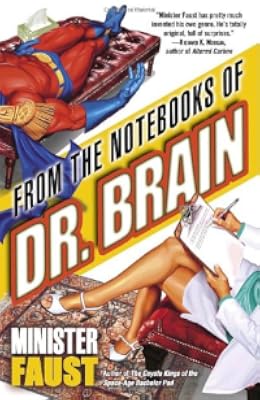
From the Notebooks of Dr. Brain
by Minister Faust
On This Page
Description
An outlandish, outrageous tour de force by the most innovative prose stylist in the field.-Robert J. Sawyer, author of Hominids They're Earth's mightiest superteam-and dysfunctional as hell. OMNIPOTENT MAN-a body with the density of steel, and a brain to match THE FLYING SQUIRREL-aging playboy industrialist by day, avenging krypto-fascist by night IRON LASS-mythology's greatest warrior-but the world might be safer if she had a husband X-MAN-formerly of the League of Angry Blackmen . . . but show more not formerly enough THE BROTHERFLY-radioactively fly POWER GRRRL-perpetually deciding between fighting crime or promoting her latest album, clothing line, or sex scandal Having finally defeated all archenemies, the members of the Fantastic Order of Justice are reduced to engaging in toxic office politics that could very well lead to a superpowered civil war. Only one woman can save them from themselves: Dr. Eva Brain-Silverman, aka Dr. Brain, the world's leading therapist for the extraordinarily abled. Faust has pretty much invented his own genre. He's totally original, full of surprises.-Richard K. Morgan, author of Altered Carbon Samuel Delany, Harlan Ellison, and Ishmael Reed all rolled into one. Faust's writing is biting, insightful, and hugely entertaining.-Ernest Dickerson, director show lessTags
Recommendations


























Member Recommendations
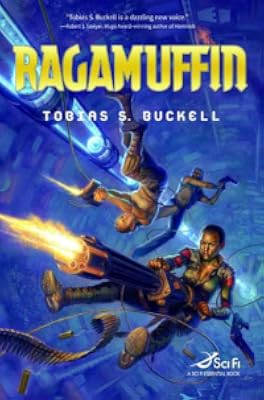
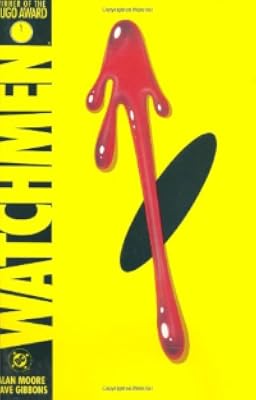
FFortuna Very similar in concept. After the Golden Age is more realistic/not so over-the-top.

Member Reviews
This is just a clever, clever book. The conceit is that this is a self-help book for superheroes, by a psychologist for superheroes. The author is clearly self-aggrandizing and selling her product, but Faust gets his story through with awesome aplomb. He also gets an amazing amount of commentary in by what the psychologist chooses to ignore or focus on in her patients, such as the utter bloody racism of one of the characters, and minimizing the rape of one of the male characters. The entire time you read the book you have to remember that it's being written after the events of the book, and what we know to be true reading through the lines and what the "author" (not Faust, but Dr. Brain) presents to be true are not one and the show more same.
It's... there are a lot of layers to this book, and I'm somewhat at a loss for how to describe it. It's really just very good and I'm quite sad that I've already read the only two books I can find records of Minister Faust having published, honestly. show less
It's... there are a lot of layers to this book, and I'm somewhat at a loss for how to describe it. It's really just very good and I'm quite sad that I've already read the only two books I can find records of Minister Faust having published, honestly. show less
Like the best comic books and graphic novels, Dr. Brain can be read as a kick-ass actioneer or, if you prefer, as a sly satire of our world. Faust is not exactly subtle with the metaphors; racism, paranoia, and xenophobia are all staples of the superhero subculture, and Dr. Brain follows this path fairly closely. What Faust brings to the party is intricately funny word-play, ingenious plot developments, and true love for his subject matter. And fun. Man, is this fun.
Read the rest of the review here.
Read the rest of the review here.
Six of the world's biggest superheroes in employer-mandated group therapy to resolve the in-fighting that is tearing the Fantastic Order Of apart. Narrated by their celebrity therapist in the form what is nominally a self-help book for superheroes; unfortunately, she is too busy writing a gossipy, self-aggrandizing tell-all to realize that she is anything but an objective observer. Some of the superheroes map to iconic DC and Marvel characters (but contextualized against the real world, instead of the fantastical worlds of DC and Marvel); others are superheroized historical figures. (Malcom X! Whose superpower is his words!) Riddled with pop-culture and history references, Notebooks of Dr. Brain is scythingly sharp meta on popular show more culture and post-Civil Rights era racism. show less
My essential ethos with book recommending has been to let bad book fall into the obscurity they so richly deserve--any kind of attention a terrible book gets fans that spark of interest in it... and there are so many good books out there deserving of attention and praise.
So, I hardly (I think never) rate a book 1 star. I just leave it off the radar-you won't know I even read it.
But in the case of this book I have to make an exception.
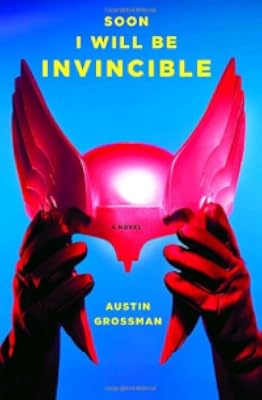
Having read the delightful "Soon I will be Invincible" by Austin Grossman, I was disturbed by how poorly written this book was.
The tone was hackneyed and uneven; little episodic bursts meant, I guess, to emulate the "In the Meantime" of comic book narrative.
Like Grossman's novel there are allusions to show more existing superhero characters (Brotherfly = Spiderman, The Flying Squirrel = Batman)and teams, cute creator names-as-locations (Los Diktos), but what derails this book is a sense of agenda--I don't know if Faust means this as an homage to comic book culture or a bitch-slap wake-up call; there's an almost Scientologist-like glee in messing with the processes of psychoanalysis; a weak, ham-fisted attempt at addressing the racist mis-steps of Comic Books of yore. Ultimately ideas are retread again and again into flatness, ludicrousness.
The spur of my writing this was it's mind-boggling runner-up status for this Year Philip K. Dick Award. This book shouldn't have been on a short list, let alone a long one. I feel that Faust's editor should've sat him down and helped him trim the manuscript, tighten the narrative, and brush off that chip on his should before finalizing the book. show less
So, I hardly (I think never) rate a book 1 star. I just leave it off the radar-you won't know I even read it.
But in the case of this book I have to make an exception.
Having read the delightful "Soon I will be Invincible" by Austin Grossman, I was disturbed by how poorly written this book was.
The tone was hackneyed and uneven; little episodic bursts meant, I guess, to emulate the "In the Meantime" of comic book narrative.
Like Grossman's novel there are allusions to show more existing superhero characters (Brotherfly = Spiderman, The Flying Squirrel = Batman)and teams, cute creator names-as-locations (Los Diktos), but what derails this book is a sense of agenda--I don't know if Faust means this as an homage to comic book culture or a bitch-slap wake-up call; there's an almost Scientologist-like glee in messing with the processes of psychoanalysis; a weak, ham-fisted attempt at addressing the racist mis-steps of Comic Books of yore. Ultimately ideas are retread again and again into flatness, ludicrousness.
The spur of my writing this was it's mind-boggling runner-up status for this Year Philip K. Dick Award. This book shouldn't have been on a short list, let alone a long one. I feel that Faust's editor should've sat him down and helped him trim the manuscript, tighten the narrative, and brush off that chip on his should before finalizing the book. show less
I approached this book with a mixture of excitement and trepidation. On one hand, the idea of superheroes undergoing therapy is interesting, and great for comedic potential, but in the wrong hands, it could be a terrible foray into stereotypes and too-broad humour.
Thankfully, the author managed to avoid all of that, creating a book that is simultaneously a critique and love letter to comic book heroes, while at the same time lampooning self-help books as well, and providing some contemporary political commentary. Taking the format of the notes of a therapist to post-humans, Faust tells the story of heroes in therapy, dealing with their own convoluted back stories and family histories, while at the same time asking the question of what show more happens to someone after they've won all of their battles and faced all their demons.
The characters are all a lot more fleshed-out than I would have expected for something like this, and the plot fairly engaging as well (although there are a couple of bits where the internal logic of the story is a little held up by the therapy-notes format of the book). Overall, though, a good book if you're a fan of superheroes (although, as a warning, the author is what some might characterize as a 'black militant', and this informs some of the characters and their interactions). show less
Thankfully, the author managed to avoid all of that, creating a book that is simultaneously a critique and love letter to comic book heroes, while at the same time lampooning self-help books as well, and providing some contemporary political commentary. Taking the format of the notes of a therapist to post-humans, Faust tells the story of heroes in therapy, dealing with their own convoluted back stories and family histories, while at the same time asking the question of what show more happens to someone after they've won all of their battles and faced all their demons.
The characters are all a lot more fleshed-out than I would have expected for something like this, and the plot fairly engaging as well (although there are a couple of bits where the internal logic of the story is a little held up by the therapy-notes format of the book). Overall, though, a good book if you're a fan of superheroes (although, as a warning, the author is what some might characterize as a 'black militant', and this informs some of the characters and their interactions). show less
From the Notebooks of Dr. Brain is definitely superhero fiction, though perhaps not quite what you would expect to come from that particular sub-genre. The book was a somewhat controversial nomination and finalist for the 2007 Philip K. Dick Award, which is given to an "original science fiction paperback published for the first time." The exact definition of "science fiction" is something that is perpetually being debated. And where exactly do superheros and their ilk fall in the spectrum? Like most things, there are arguments both ways. I first learned about the book when it was glowingly referred to by one of the judges from that year, Steven Piziks, who was participating in the Kerrytown Bookfest's SF panel. Despite almost being show more tossed aside initially because of the superhero element, it eventually ended up winning the award's Special Citation (basically, it was the runner-up). Not bad for a sub-genre parody.
Although the cover says the book is From the Notebooks of Dr. Brain by Minister Faust, a Canadian author, inside is really a copy of Unmasked!: When Being a Superhero Can't Save You from Yourself: Self-Help for Today's Hyper-Hominids, the newest self-help bestseller by Dr. Eva Brain-Silverman (aka Dr. Brain), celebrity shrink of superheroes and supervillains everywhere. The case study she has chosen deals with her work with a highly dysfunctional superhero team ordered to undergo counseling or risk being suspended from the F*O*O*J (the Fantastic Order of Justice): Iron Lass (aka Hnossi Icegaard), the Flying Squirrel (aka Festus Piltdown III), Omnipotent Man (aka Wally W. Watchtower), Brotherfly (aka André "P-Fly" Parker), X-Man (aka Philip Kareem Edgerton), and Power Grrl (aka Syndi Tycho). The group member's external conflicts with each other are only a mere shadow of their own personal inner turmoil and anxieties. And when Hawk King, supposedly immortal and the leading founder of F*O*O*J, is found dead, the heroes suddenly have even more problems that they need to deal with.
I really wanted to like this book. I mean, come on, the premise is hilarious. Super humans (and non-humans) are going to have super problems and they're going to need exceptionally talented therapists to put them back together. Unfortunately, it just wasn't as good as I was expecting and hoping it to be. The author pokes fun at and parodies all sorts of stereotypes but in doing so relies too heavily on those stereotypes. Almost every main character is written with an accent which was amusing at first but I found it to be more distracting than anything else. And for something that's supposed to be a self-help book, it gets too caught up in the narrative for me to be entirely convinced. Not all is bad, however. There are some genuinely funny bits. I particularly enjoyed the absolutely outrageous and absurd names, histories, organizations, and powers of the superheros and supervillains.
Ultimately, I thought the book fell flat, though I know of plenty of people who really enjoyed it. I'm still trying to make sense of the ending. Perhaps I was trying to take From the Notebooks of Dr. Brain too seriously, or maybe I just wasn't in the mood, but I really felt like I had to slog through the book. While I like to think I'm fairly knowledgeable about comics, I'm not particularly well versed in superheroes. Therefore, I probably wasn't catching all of the references and parodies, which could have been part of the problem. So, while at times amusing, From the Notebooks of Dr. Brain just didn't work for me.
Experiments in Reading show less
Although the cover says the book is From the Notebooks of Dr. Brain by Minister Faust, a Canadian author, inside is really a copy of Unmasked!: When Being a Superhero Can't Save You from Yourself: Self-Help for Today's Hyper-Hominids, the newest self-help bestseller by Dr. Eva Brain-Silverman (aka Dr. Brain), celebrity shrink of superheroes and supervillains everywhere. The case study she has chosen deals with her work with a highly dysfunctional superhero team ordered to undergo counseling or risk being suspended from the F*O*O*J (the Fantastic Order of Justice): Iron Lass (aka Hnossi Icegaard), the Flying Squirrel (aka Festus Piltdown III), Omnipotent Man (aka Wally W. Watchtower), Brotherfly (aka André "P-Fly" Parker), X-Man (aka Philip Kareem Edgerton), and Power Grrl (aka Syndi Tycho). The group member's external conflicts with each other are only a mere shadow of their own personal inner turmoil and anxieties. And when Hawk King, supposedly immortal and the leading founder of F*O*O*J, is found dead, the heroes suddenly have even more problems that they need to deal with.
I really wanted to like this book. I mean, come on, the premise is hilarious. Super humans (and non-humans) are going to have super problems and they're going to need exceptionally talented therapists to put them back together. Unfortunately, it just wasn't as good as I was expecting and hoping it to be. The author pokes fun at and parodies all sorts of stereotypes but in doing so relies too heavily on those stereotypes. Almost every main character is written with an accent which was amusing at first but I found it to be more distracting than anything else. And for something that's supposed to be a self-help book, it gets too caught up in the narrative for me to be entirely convinced. Not all is bad, however. There are some genuinely funny bits. I particularly enjoyed the absolutely outrageous and absurd names, histories, organizations, and powers of the superheros and supervillains.
Ultimately, I thought the book fell flat, though I know of plenty of people who really enjoyed it. I'm still trying to make sense of the ending. Perhaps I was trying to take From the Notebooks of Dr. Brain too seriously, or maybe I just wasn't in the mood, but I really felt like I had to slog through the book. While I like to think I'm fairly knowledgeable about comics, I'm not particularly well versed in superheroes. Therefore, I probably wasn't catching all of the references and parodies, which could have been part of the problem. So, while at times amusing, From the Notebooks of Dr. Brain just didn't work for me.
Experiments in Reading show less
The latest trend I've noticed in my reading has been superhero fiction. From the Notebooks of Dr Brain is the second such book I've read lately (Soon I Will Be Invincible was the first), and a third (Leaper) is on my to-be-read list. Does three in close succession make a sub-genre? If so, I'm enjoying it.
Notebooks wasn't as good as Invincible, but it was still pretty good. The plot gets a little muddy in the middle, but Minister Faust pulls a good ending out of the stew at the end. I really liked the ambiguity of the ending here - much better than Invincible.
Notebooks wasn't as good as Invincible, but it was still pretty good. The plot gets a little muddy in the middle, but Minister Faust pulls a good ending out of the stew at the end. I really liked the ambiguity of the ending here - much better than Invincible.
Members
- Recently Added By
Published Reviews
ThingScore 75
While fanboys might wish Faust had played it more straight, Brain is entertaining and impishly savvy about comics.
added by ShelfMonkey
Author Information

11+ Works 542 Members
Awards and Honors
Common Knowledge
- People/Characters
- Dr. Eva Brain-Silverman; Omnipotent Man; The Flying Squirrel; Power Grrrl; Iron Lass; Götterdämmerung (show all 8); X-Man; The Brotherfly
- Blurbers
- Morgan, Richard K.; Sawyer, Robert J.; Dickerson, Ernest
Classifications
Statistics
- Members
- 203
- Popularity
- 161,270
- Reviews
- 9
- Rating
- (3.17)
- Languages
- English
- Media
- Paper
- ISBNs
- 1