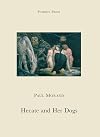
Hecate and Her Dogs
by Paul Morand
On This Page
Description
Hecate and Her Dogs, set in the 1920s, is the story of a love affair which turns into a nightmare. The narrator, sent to an African country to run a branch of a large French bank, begins a liaison with Clotilde, only to discover in her unexpected and shocking depths of perversity. Tense and bleak, Hecate and Her Dogs is a novella of high literary quality and disconcerting power. This elegant novella of disturbing eroticism was the book with which Morand returned triumphantly to the literary show more scene in 1954. Paul Morand's Venices and The Allure of Chanel are also available from Pushkin Press. Pushkin Collection editions feature a spare, elegant series style and superior, durable components. The Collection is typeset in Monotype Baskerville, litho-printed on Munken Premium White Paper and notch-bound by the independently owned printer TJ International in Padstow. The covers, with French flaps, are printed on Colorplan Pristine White Paper. Both paper and cover board are acid-free and Forest Stewardship Council (FSC) certified. show lessTags
Recommendations






























Member Reviews
Some books seem really contemporary, long after they were published. Some, like this one, do not. Not only was Morand a Nazi sympathiser and Petainist, he also palled around with Coco Chanel. The disgust is overpowering. At the same time, Ezra Pound translated him, and Marcel Proust wrote a preface to that volume. The man was a prick, but a talented prick.
This little book, then, will only appeal to people who aren't convinced that bad politics necessarily leads to bad literature, i.e., this book does not seem contemporary. It also doesn't seem contemporary in its, well, gross orientalism, or its narrator's attitude to women.
Are you still here? Have you not unfriended me on goodreads? Well, then, know that despite all that, it's an show more interesting, short read, which is quite pleasant if you don't mind a bit of overblown Olympian prose, as in this randomly chosen sentence:
"We wallowed and rolled in the trough of depression cause by the confluence of two vast air flows, one oceanic, the other continental."
The book's interest comes from the clash between the style and plot, or perhaps the way they work together, but there's no way to describe that without spoiling the plot. So, plot spoilers ahead.
The narrator meets, and falls for, a woman. He thinks all is hunky dory. It turns out that he isn't satisfying her sexually, perhaps because she's a pedophile. He becomes desperate, and starts to procure children for her. His company hears about this through the grapevine, and sends him home. Years later, he meets her husband, who implies that she's led him down the same path. Finally, he meets her again; she accuses him of depravity; he tells her he's met her husband.
So we're left to wonder, did she lead him down this path, or was it all his own doing? Either way, he clearly was not in control, despite his controlled style. Contemporary readers are just as likely to ask: are the author, and the narrator behind him, both sincerely blaming this woman for their own repulsive instincts? show less
This little book, then, will only appeal to people who aren't convinced that bad politics necessarily leads to bad literature, i.e., this book does not seem contemporary. It also doesn't seem contemporary in its, well, gross orientalism, or its narrator's attitude to women.
Are you still here? Have you not unfriended me on goodreads? Well, then, know that despite all that, it's an show more interesting, short read, which is quite pleasant if you don't mind a bit of overblown Olympian prose, as in this randomly chosen sentence:
"We wallowed and rolled in the trough of depression cause by the confluence of two vast air flows, one oceanic, the other continental."
The book's interest comes from the clash between the style and plot, or perhaps the way they work together, but there's no way to describe that without spoiling the plot. So, plot spoilers ahead.
The narrator meets, and falls for, a woman. He thinks all is hunky dory. It turns out that he isn't satisfying her sexually, perhaps because she's a pedophile. He becomes desperate, and starts to procure children for her. His company hears about this through the grapevine, and sends him home. Years later, he meets her husband, who implies that she's led him down the same path. Finally, he meets her again; she accuses him of depravity; he tells her he's met her husband.
So we're left to wonder, did she lead him down this path, or was it all his own doing? Either way, he clearly was not in control, despite his controlled style. Contemporary readers are just as likely to ask: are the author, and the narrator behind him, both sincerely blaming this woman for their own repulsive instincts? show less
Hecate and Her Dogs (French 1954) was first translated to English in 2009 in an artfully produced little book by Pushkin Press. On the surface it's a disturbing novella, sort of a mix of Jekyll and Hyde and Lolita, but darker, dealing with an evil perversion. The title alludes to it in an elliptical manner. This sort of ellipsis is the style of the book, rarely is anything said explicitly, although on occasion the truth comes clear with devastating force, hanging on a single word or phrase. It is a literary novel, not entirely an erotic story, yet at its core a hellish portrayal of sexual addiction seeking new and greater thrills. In the Afterword, Unberto Pasti says the book is best seen as "camp", that Morand was really writing about show more his wife, who he apparently disliked at the time (although it is doubtful she had the perversions depicted here). Nicholas Lezard, reviewing in The Guardian, sees it as autobiographical. Moran in real-life was a "Collaborator" with the Nazi's during WWII. Just as the fictional character collaborates with a perverse partner to his own demise, as did Moran in the 1940s with the Germans. Whatever the case, it's a story that will stick with and haunt you with what is left unsaid. Our own imagination can be taken to heights of evil with such polite and gentlemanly turn of phrase. I often found myself shocked that such a book could have been written in 1954, and unsurprised that no English translation appeared until now - but it is a work of serious literature. Like Emile Zola's classic The Earth: La Terre - first published in France in 1887 but not fully translated to English until 1980 because of its strong sexual taboo content - Hecate and Her Dogs has finally found an English publisher and hopefully will be (re) discovered among new readers.
--Review by Stephen Balbach, via CoolReading (c) 2008 cc-by-nd show less
--Review by Stephen Balbach, via CoolReading (c) 2008 cc-by-nd show less
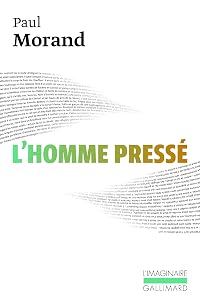
Paul Morand n'a pas très bonne réputation. La légende l'identifie au personnage de l'un de ses romans, «l'homme pressé», à la bourgeoisie cossue et mondaine, aux idéologies qui ont sévi sous Vichy, dont il fut un temps l'ambassadeur. Comme l'ont suggéré certains critiques depuis sa mort en 1976, cette mythologie offusque les soleils d'une oeuvre qui prit un nouveau départ en 1944, dans l'exil. Bien différent de Lewis et Irène (1924), Hécate et ses chiens n'en est pas moins, trente ans après, au plein coeur d'une création qui semblait seulement paillettes pour les yeux. Exorcisme d'un Morand janséniste? Roman d'éducation ironique? Œuvre d'art qui hésite entre poétique et fantastique tout en les rejetant? Moment de show more la crise du désir et du discours ? Ce récit d'érotisme, retour paradoxal aux sources grecques, est peut-être la tragédie maigre de l'aveu moderne. «C'est donc l'histoire d'un mauvais rêve — et dans le roman de Bernanos qui porte ce titre, on trouve une autre Clotilde, chasseresse de bergers, comme Clotilde chasse les jeunes Arabes. C'étaient aussi, dit le narrateur, les pires années de ma vie.» show less
Jun 7, 2011French
1
Sulfureux et impressionnant.
Oct 23, 2025French
Ratings
Members
- Recently Added By
Lists

Fish Out of Water: The Perils of Abroad
25 works; 5 members
Author Information

172+ Works 1,338 Members
Series
Belongs to Publisher Series
Common Knowledge
- Canonical title
- Hecate and Her Dogs
- Original title
- Hécate et ses chiens
- Original publication date
- 1954; 2009 (English translation) (English translation)
- People/Characters*
- Spitzgartner; Clotilde
- Important places
- Tangier, Morocco
- First words
- Single, I caused chaos around me;
double, oh how much more so.
Helen, in Faust Part II, Goethe
Once I shook the dust of the place from my boots swearing never to return.
*Some information comes from Common Knowledge in other languages. Click "Edit" for more information.
Classifications
Statistics
- Members
- 63
- Popularity
- 494,353
- Reviews
- 4
- Rating
- (3.43)
- Languages
- Dutch, English, French
- Media
- Paper
- ISBNs
- 5
- ASINs
- 2