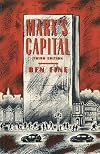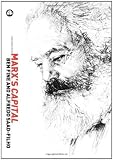
Marx's Capital
by Ben Fine (Author), Alfredo Saad-Filho (Author)
On This Page
Description
Fully revised and updated sixth edition of the internationally established guide to Marx's CapitalTags
Recommendations










Member Reviews
An excellent summary of all 3 volumes of Capital that can be read separately. Although it obviously can't cover everything, it looks at all the key concepts in enough detail and understandable language, striking a good balance between depth and accessibility. Obviously some concepts are tough, but the author does a good job of making them easier to understand. One nice touch is that after summarising, he provides a couple paragraphs just to point out the existence of other important interpretations, which is very handy. Very much recommended for anyone interested in Marxism and needs a guide to the major economic ideas.
I think that I understood between 60-70% of this, on first reading. I shall press on with the MML reading list and come back to this later, when more of the ideas have sunk in from other sources.
This is a fairly short book (171 pages) and starts deceptively simply but, goes on to deal with some complex issues.
A first class read.
This is a fairly short book (171 pages) and starts deceptively simply but, goes on to deal with some complex issues.
A first class read.
This brilliantly concise book is a classic introduction to Marx's key work, Capital. In print now for over a quarter of a century, and previously translated into many languages, the new edition has been fully revised and updated, making it an ideal modern introduction to one of the most important texts in political economy. Book jacket.
Reviewed in the December 1989 issue of the Socialist Standard:
http://socialiststandardmyspace.blogspot.com/2015/09/marxs-economics-1989.html
Also reviewed in the June 1978 issue of the Socialist Standard:
http://socialiststandardmyspace.blogspot.com/2018/01/a-useful-introduction-to-ma...
http://socialiststandardmyspace.blogspot.com/2015/09/marxs-economics-1989.html
Also reviewed in the June 1978 issue of the Socialist Standard:
http://socialiststandardmyspace.blogspot.com/2018/01/a-useful-introduction-to-ma...
Ratings
Members
- Recently Added By
Published Reviews
ThingScore 63
Review of third edition:
Harold Wilson's comment that he couldn't get past the footnote on the first page of Marx's Capital echoes a concern felt by some newcomers to Marx that they really do find this work daunting.
This is probably in part due to some of the genuinely difficult economic analysis involved, but no doubt also to the sheer bulk of the thousands of pages which comprise the three show more volumes. However, this problem should be seen in a proper perspective. If you think Marxian economics is difficult, you should see what orthodox economics is like. Replete with its own technical jargon and mathematical formulae, bewildering to all but the initiated, orthodox economics tries desperately to pass itself off as a science. But it isn't; it's an ideology in which economists ("hired prize-fighters" Marx called them) defend the claims of capital against the claims of Capital.
There are easier ways into Marx. For instance, his own Value, Price and Profit is fairly clear and concise. But for those who want to know what he is saying in Capital itself there is this book by Ben Fine. In a substantially revised and expanded edition of a work first published in 1973, Fine sets out to give an introductory account of Capital in a remarkably short space (102 pages).
Overall he succeeds in this attempt although the sheer brevity in itself causes some problems. With only a few pages devoted to each, there are chapters on Marx's method, commodity production, the labour theory of value, capital accumulation, exploitation, the transition to capitalism, crises, and more besides. For this new edition there are new chapters on controversial issues such as the transformation problem and the law of the tendency of the rate of profit to fall. These, in addition to the new and longer chapters on interest-bearing capital and rent theory, will, as Fine admits, require careful reading.
Marx's theory of inflation is not mentioned at all. There is also a passing reference (on page 4) to Marx holding that in a socialist society "classes would eventually disappear". Eventually? Surely socialism is the abolition of class society. Despite these, Fine's treatment of Marxian economics is true to Marx. It should help many to prepare for tackling the real thing. show less
Harold Wilson's comment that he couldn't get past the footnote on the first page of Marx's Capital echoes a concern felt by some newcomers to Marx that they really do find this work daunting.
This is probably in part due to some of the genuinely difficult economic analysis involved, but no doubt also to the sheer bulk of the thousands of pages which comprise the three show more volumes. However, this problem should be seen in a proper perspective. If you think Marxian economics is difficult, you should see what orthodox economics is like. Replete with its own technical jargon and mathematical formulae, bewildering to all but the initiated, orthodox economics tries desperately to pass itself off as a science. But it isn't; it's an ideology in which economists ("hired prize-fighters" Marx called them) defend the claims of capital against the claims of Capital.
There are easier ways into Marx. For instance, his own Value, Price and Profit is fairly clear and concise. But for those who want to know what he is saying in Capital itself there is this book by Ben Fine. In a substantially revised and expanded edition of a work first published in 1973, Fine sets out to give an introductory account of Capital in a remarkably short space (102 pages).
Overall he succeeds in this attempt although the sheer brevity in itself causes some problems. With only a few pages devoted to each, there are chapters on Marx's method, commodity production, the labour theory of value, capital accumulation, exploitation, the transition to capitalism, crises, and more besides. For this new edition there are new chapters on controversial issues such as the transformation problem and the law of the tendency of the rate of profit to fall. These, in addition to the new and longer chapters on interest-bearing capital and rent theory, will, as Fine admits, require careful reading.
Marx's theory of inflation is not mentioned at all. There is also a passing reference (on page 4) to Marx holding that in a socialist society "classes would eventually disappear". Eventually? Surely socialism is the abolition of class society. Despite these, Fine's treatment of Marxian economics is true to Marx. It should help many to prepare for tackling the real thing. show less
added by kleh
Subject to certain reservations dealt with below, Marx's Capital by Ben Fine (Macmillan’s Studies in Economics, Paperback, 76 pages, £1.50) achieves what the author set out to do and should serve as a useful introduction to the three volumes of Capital.
The author, who is Lecturer in Economics at Birkbeck College, describes his work as both introduction and interpretation. His method is to show more summarise and simplify, in his own words, various aspects of Marx’s economics, including the labour theory of value and surplus value, commercial and interest-bearing capital, rent of land, crises and the tendency of the rate of profit to fall. On the last of these he writes (p.57) that it would be nonsense “to hypothesize a long-run tendency of the rate of profit to fall in the sense that over a period of one hundred years the rate of profit must have become lower”, and he stresses the relationship of a short-term fall to the cycle of booms and depressions.
He warns readers that his book must not be regarded as a substitute for reading Capital itself. Its merit is that, by clearing away some popular misconceptions, it should make it easier for the student to understand what Marx was getting at in his detailed treatment.
Marx’s Capital begins with an outline of the materialist conception of history and an account of the way Marx moved on from his early Hegelianism. It reminds the reader of the impossibility of separating economic theory from the class basis of society. Other economists’ attempts to explain profits are briefly dealt with, including “abstinence theories” and “marginal productivity” (pages 31-2).
In the treatment of Marx's economics a serious defect is that, although present-day inflation is several times referred to, there is no mention whatever of Marx’s explanation, based on the labour theory of value that inflation is caused by an excess issue of inconvertible paper currency. As the author can hardly be unaware of Marx’s explanation the possibility is that he rejects it (as some rather obscure remarks suggest), but he makes no attempt to disprove it or to offer an argued alternative explanation.
His treatment of the very low post-war unemployment is equally unsatisfactory. He writes (p.76) that capitalism has changed, as evidenced by the fact that “capitalism since the second world war has enjoyed an unprecedented boom, free from the shattering crises . . . that characterised the earlier laissez-faire period . . ."
Several things can be said about this. Did capitalism in general enjoy an unprecedented post-war boom? In the four years 1948-1951, for example, unemployment was at depression levels in several countries. The average for the four years was over 9 per cent in Belgium and 8 per cent in Germany. In Italy it was continuously over one and a half million.
As regards low post-war unemployment in Britain all that was unusual was that it lasted as long as it did. It was always normal for unemployment to be low in periods of expansion, and in the second half of the nineteenth century there were several periods of 3 to 5 years when the average was less than 3 per cent.
Nor is the enormous belief in permanent boom a new one. Kautsky, in his “Economic Doctrines of Karl Marx” (p. 230), after noting that there had been a belief in permanent depression, wrote:-
From 1895 to 1900 we had again a period of economic prosperity, which led not a few optimists to the opposite assumption, viz. that the period of crises had passed away.
Mr. Fine’s book was published first in 1975. If he had waited till unemployment rose above 1,600,000 in 1977 we may guess that he would have worded differently the passage quoted earlier.
The book contains two mentions of the dictatorship of the proletariat, the first a quotation from Marx, in the Foreword, and the second on the last page. It reads:-
The future will herald a new era founded on the revolution and the dictatorship of the proletariat.
The author does not go into the question of what Marx meant by the phrase or explain what he (the author) means by it (the dictatorship in capitalist Russia?) or give his reasons for believing that it is a way to the classless society, Socialism. show less
The author, who is Lecturer in Economics at Birkbeck College, describes his work as both introduction and interpretation. His method is to show more summarise and simplify, in his own words, various aspects of Marx’s economics, including the labour theory of value and surplus value, commercial and interest-bearing capital, rent of land, crises and the tendency of the rate of profit to fall. On the last of these he writes (p.57) that it would be nonsense “to hypothesize a long-run tendency of the rate of profit to fall in the sense that over a period of one hundred years the rate of profit must have become lower”, and he stresses the relationship of a short-term fall to the cycle of booms and depressions.
He warns readers that his book must not be regarded as a substitute for reading Capital itself. Its merit is that, by clearing away some popular misconceptions, it should make it easier for the student to understand what Marx was getting at in his detailed treatment.
Marx’s Capital begins with an outline of the materialist conception of history and an account of the way Marx moved on from his early Hegelianism. It reminds the reader of the impossibility of separating economic theory from the class basis of society. Other economists’ attempts to explain profits are briefly dealt with, including “abstinence theories” and “marginal productivity” (pages 31-2).
In the treatment of Marx's economics a serious defect is that, although present-day inflation is several times referred to, there is no mention whatever of Marx’s explanation, based on the labour theory of value that inflation is caused by an excess issue of inconvertible paper currency. As the author can hardly be unaware of Marx’s explanation the possibility is that he rejects it (as some rather obscure remarks suggest), but he makes no attempt to disprove it or to offer an argued alternative explanation.
His treatment of the very low post-war unemployment is equally unsatisfactory. He writes (p.76) that capitalism has changed, as evidenced by the fact that “capitalism since the second world war has enjoyed an unprecedented boom, free from the shattering crises . . . that characterised the earlier laissez-faire period . . ."
Several things can be said about this. Did capitalism in general enjoy an unprecedented post-war boom? In the four years 1948-1951, for example, unemployment was at depression levels in several countries. The average for the four years was over 9 per cent in Belgium and 8 per cent in Germany. In Italy it was continuously over one and a half million.
As regards low post-war unemployment in Britain all that was unusual was that it lasted as long as it did. It was always normal for unemployment to be low in periods of expansion, and in the second half of the nineteenth century there were several periods of 3 to 5 years when the average was less than 3 per cent.
Nor is the enormous belief in permanent boom a new one. Kautsky, in his “Economic Doctrines of Karl Marx” (p. 230), after noting that there had been a belief in permanent depression, wrote:-
From 1895 to 1900 we had again a period of economic prosperity, which led not a few optimists to the opposite assumption, viz. that the period of crises had passed away.
Mr. Fine’s book was published first in 1975. If he had waited till unemployment rose above 1,600,000 in 1977 we may guess that he would have worded differently the passage quoted earlier.
The book contains two mentions of the dictatorship of the proletariat, the first a quotation from Marx, in the Foreword, and the second on the last page. It reads:-
The future will herald a new era founded on the revolution and the dictatorship of the proletariat.
The author does not go into the question of what Marx meant by the phrase or explain what he (the author) means by it (the dictatorship in capitalist Russia?) or give his reasons for believing that it is a way to the classless society, Socialism. show less
added by kleh
Author Information

Ben Fine is Professor of Economics at the University of London's School of Oriental and African Studies. He is the co-author of Macroeconomics (2016) and Mary's 'Capital' (now in its sixth edition) and co-editor of Beyond the Developmental Slate (2013). He was awarded both the Deutscher and Myrdal Prizes in 2009.

Alfredo Saad-Filho is Professor of Political Economy and International Development at King's College London. He is the author of Value and Crisis (Brill, 2019) and co-author of Brazil: Neoliberalism versus Democracy (Pluto, 2018) and Marx's Capital (Pluto, 2016), and numerous works on Marxist political economy, neoliberalism, democracy, and show more alternative economic policies. show less
Some Editions
Work Relationships
Reference guide/companion to
Common Knowledge
- Canonical title
- Marx's Capital
- Original publication date
- 1975; 2016 (6th. edition) (6th. edition)
- People/Characters
- Karl Marx
- Original language
- English
Classifications
- Genres
- Economics, Nonfiction, General Nonfiction, Politics and Government, Philosophy, Business
- DDC/MDS
- 335.41 — Social sciences Economics Socialism and related systems Marxian systems Philosophic foundations, economic concepts, aims
- LCC
- HB97.5 .F55 — Social sciences Economic theory. Demography Economic theory. Demography History of economics. History of economic
- BISAC
Statistics
- Members
- 178
- Popularity
- 181,047
- Reviews
- 4
- Rating
- (3.59)
- Languages
- 5 — English, Italian, Norwegian, Portuguese (Portugal), Spanish
- Media
- Paper, Ebook
- ISBNs
- 29
- ASINs
- 3