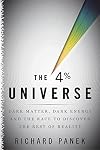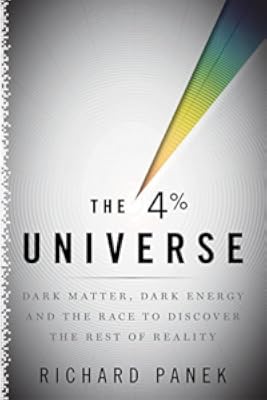
The 4 Percent Universe: Dark Matter, Dark Energy, and the Race to Discover the Rest of Reality
by Richard Panek
On This Page
Description
In exhilarating and behind-the-scenes detail, Panek takes his readers on a tour of the bitter rivalries and fruitful collaborations, the eureka moments and blind alleys, that have fueled the search, redefined science, and reinvented the universe. Science journalist Panek (The Invisible Century) offers an insider's view of the quest for what could be the ultimate revelation: the true substance of the unseen dark matter and energy that makes up some 96% of our universe.Tags
Recommendations

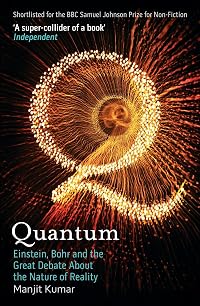
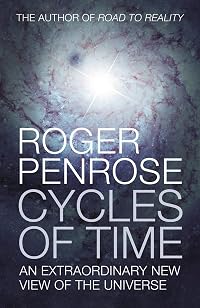
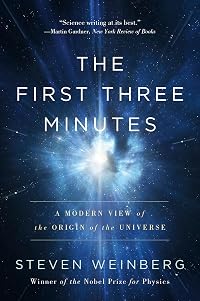
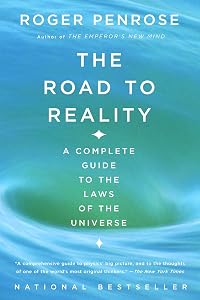
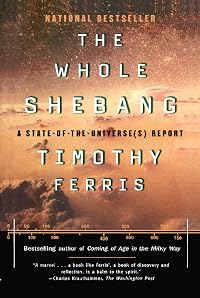
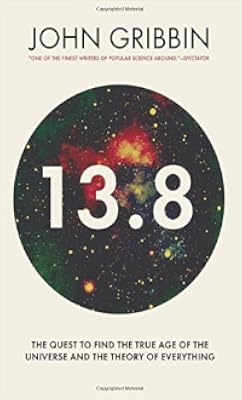
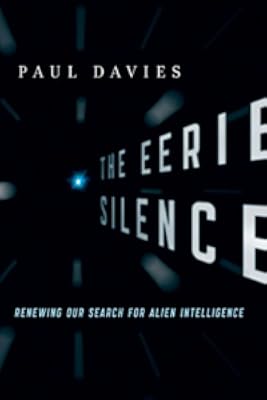
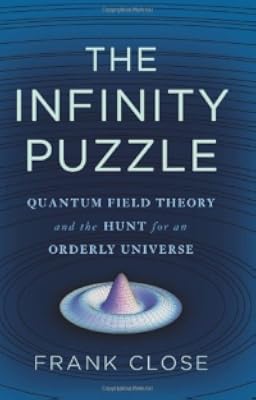
Member Recommendations
Member Reviews
I have an amateur’s interest in physics and astronomy. I once took a class (and still have the course book) called Physics for Poets. I’m ok but not brilliant at math, but love the abstract thinking, the scientific deduction and inference, of rigorous attempts to understand the world (at whatever scale). This is the kind of book that is written for someone like me – an understanding, or at least an ability to understand, some pretty complex theoretical concepts if explained well, and without too much math.
This book routinely blew my mind. Over and over I had to put it down, walk away, and think about what I had just been told. Some of it is the enormity of scale. Billions of galaxies, hundreds of millions of light-years apart, in show more an observable universe billions of years old. It’s hard, even for a poet, to get there, to not merely accept but really imagine it. And some of it is the enormity of the implications of these theories about the universe. The analogy Panek makes at the beginning of the book to Copernicus and Galileo is apt: the scientific revolution he describes changes not just what we understand, but our capacity to understand the universe in which we live. And that change is deceptively simple: we can’t see most of what’s out there. Not only can we not see it, we mostly don’t even know what kind of affects to look for. What is unknown, what is dark, is so much more than what is known.
Read the rest: http://alluringlyshort.com/2014/03/23/4-percent-universe-by-richard-panek/ show less
This book routinely blew my mind. Over and over I had to put it down, walk away, and think about what I had just been told. Some of it is the enormity of scale. Billions of galaxies, hundreds of millions of light-years apart, in show more an observable universe billions of years old. It’s hard, even for a poet, to get there, to not merely accept but really imagine it. And some of it is the enormity of the implications of these theories about the universe. The analogy Panek makes at the beginning of the book to Copernicus and Galileo is apt: the scientific revolution he describes changes not just what we understand, but our capacity to understand the universe in which we live. And that change is deceptively simple: we can’t see most of what’s out there. Not only can we not see it, we mostly don’t even know what kind of affects to look for. What is unknown, what is dark, is so much more than what is known.
Read the rest: http://alluringlyshort.com/2014/03/23/4-percent-universe-by-richard-panek/ show less
Had my math skills been just a little bit better, my understanding of the cosmos would not rest upon the great works of Douglas Adams, and Monty Python. The names of Oppenheimer, Fermi, Einstein, and Hubble would roll off my tongue as though I knew more about them than just the first two paragraphs of their Wikipedia pages.
Richard Panek’s 4 Percent Universe: Dark Matter, Dark Energy, and the Race to Discover the Rest of Reality certainly enlightens one’s understanding of the infinite neighborhood that is our universe, but the real fun is the soap opera surrounding the scientists themselves. Rivaling any episode of As the World Turns, the quantum psychology taking place between these men and women of science as they attempt to show more explain the laws of the universe, thus attaching their name to the very fabric of existence, is the gravity that held my attention.
In a time long, long ago, in a galaxy that really wasn’t far away at all, the world of cosmological greatness was within my grasp. Renowned Baylor School physics professor, Dr. George Taylor struggled valiantly for much of 1979 and part of 1980 to propel me into the gravitational pull of the science of physics. I don’t know when Dr. Taylor realized the mission would have to be aborted, but for me it was not until the very last day of class. Our comprehensive final exam was held at the laboratory known as “Six Flags Over Georgia”, and consisted of problems requiring the student to demonstrate their knowledge of the Newtonian laws regulating The Great American Scream Machine, or Riverview Carousel.
The bus ride home revealed that my day would have been just as fruitful if I had signed my name to the test, turned it in, and enjoyed the late spring day. Though my grade of 47 accurately measured my understanding of the discoveries of Galileo, Kepler, Einstein and the boys, it in no way captured the awe created in me by viewing the universe through the lens Dr. Taylor called “physics”.
Awe, inspired by Dr. Taylor’s passion for the forces at work in the cosmos, fortunately overpowered my limited understanding, and helped make 4 Percent Universe a fascinating read. Thanks Dr. Taylor! Oh yeah, you too Richard Panek. show less
Richard Panek’s 4 Percent Universe: Dark Matter, Dark Energy, and the Race to Discover the Rest of Reality certainly enlightens one’s understanding of the infinite neighborhood that is our universe, but the real fun is the soap opera surrounding the scientists themselves. Rivaling any episode of As the World Turns, the quantum psychology taking place between these men and women of science as they attempt to show more explain the laws of the universe, thus attaching their name to the very fabric of existence, is the gravity that held my attention.
In a time long, long ago, in a galaxy that really wasn’t far away at all, the world of cosmological greatness was within my grasp. Renowned Baylor School physics professor, Dr. George Taylor struggled valiantly for much of 1979 and part of 1980 to propel me into the gravitational pull of the science of physics. I don’t know when Dr. Taylor realized the mission would have to be aborted, but for me it was not until the very last day of class. Our comprehensive final exam was held at the laboratory known as “Six Flags Over Georgia”, and consisted of problems requiring the student to demonstrate their knowledge of the Newtonian laws regulating The Great American Scream Machine, or Riverview Carousel.
The bus ride home revealed that my day would have been just as fruitful if I had signed my name to the test, turned it in, and enjoyed the late spring day. Though my grade of 47 accurately measured my understanding of the discoveries of Galileo, Kepler, Einstein and the boys, it in no way captured the awe created in me by viewing the universe through the lens Dr. Taylor called “physics”.
Awe, inspired by Dr. Taylor’s passion for the forces at work in the cosmos, fortunately overpowered my limited understanding, and helped make 4 Percent Universe a fascinating read. Thanks Dr. Taylor! Oh yeah, you too Richard Panek. show less
Engaging, even enlightening overview of the growth of cosmology from the 1964 accidental discovery of background radiation echoes of The Big Bang through the solidification of Dark Matter & Dark Energy as that mysterious 96%; the non-baryonic reality of our universe. This telling seems to highlight the unfortunate fact that even among scientists exploring nature, human nature's saddest aspects are in full display: sexism, pettiness, envy, vanity, etc.
This a highly readable history of the transformation of cosmology from metaphysics to physics, from philosophy and speculation to hard science, and in the process, the discovery of most of the universe.
Historically, astronomy and physics didn't have a great deal to do with each other. Astronomers studied the stars by observation, very patient and detailed observation and record-keeping. Theoretical physicists theorized and calculated, and experimental physicists experimented, and they fed each other's work, very occasionally coming up with something, most notably gravity, that made a real difference to astronomy. Then Einstein gave us general relativity, and began a century of ever-deeper entanglement of physics and astronomy, and the show more transformation of cosmology--the study of the nature and origins of the entire universe--from something utterly beyond the scope of physics into its core. The questions of how big the universe is, whether it is eternal in space and time or had a beginning and might have an end, became real questions.
Edwin Hubble, early in the century, discovered that the universe is expanding, but also that there are other galaxies beyond our own, and that they're all moving away from us. This was a major, exciting, and initially controversial change in our conception of the universe. In the 1960s, Vera Rubin, looking for a research project she could do within the constraints of raising two young children, studied other astronomers' observations and discovered that the galaxies were rotating as well as moving away from us. Also in the mid-1960s, Robert Dicke, Jim Peebles, and a small group of theoretical physicists had a prediction for which they had no supporting data: If the Big Bang theory of the history of the universe were correct, there should be low-level cosmic microwave radiation, at a temperature of about 3 degrees Kelvin. Then two astronomers at Bell Labs, Arno Penzias and Robert Wilson, had data for which they had no explanation: While trying to calibrate the Bell Labs' Crawford Hill antenna to study radio waves from the fringes of the Milky Way, they found they had a tiny background hiss which no amount of calibration would eliminate. They'd found the background cosmic radiation, echo of the Big Bang.
That's one small step along the way, from Einstein to the discovery that most of our universe is invisible. As the back and forth played out between the theoretical physicists and the experimental and observational scientists, increasingly astronomers, each theoretical question drew forth an observation, a find, a discovery that answered that question, and raised another. The most startling of these was the discovery that visible, directly detectable matter is just over 4% of the total make-up of a universe far larger and more complex than ever suspected at the start of the 20th century. If what we see were all there were, the galaxies would not be, could not be, relatively compact, stable spirals (or their other shapes), but should be torn apart by the speed of their rotation. Outside, among, around, the visible matter of the galaxies was dark matter.
Dark matter was soon joined by the even more mysterious dark energy.
The largest part of Panek's book is devoted to the research to detect and identify dark matter and dark energy, He takes us through not only the science, fascinating enough in itself, but also the human drama as two teams, one primarily physicists and the other primarily astronomers, raced against each other to gather enough observations of sufficiently distant (and therefore ancient) supernovae to answer essential questions about the conditions of the early universe. In the answers to those questions, and questions about changes since that early time, would lie the answers to the reality of dark energy, dark matter, and maybe the ultimate fate of the universe.
Highly recommended.
This book is not yet published but can be pre-ordered from Amazon or Barnes & Noble.
I received a free electronic galley of this book from the publisher via NetGalley. show less
Historically, astronomy and physics didn't have a great deal to do with each other. Astronomers studied the stars by observation, very patient and detailed observation and record-keeping. Theoretical physicists theorized and calculated, and experimental physicists experimented, and they fed each other's work, very occasionally coming up with something, most notably gravity, that made a real difference to astronomy. Then Einstein gave us general relativity, and began a century of ever-deeper entanglement of physics and astronomy, and the show more transformation of cosmology--the study of the nature and origins of the entire universe--from something utterly beyond the scope of physics into its core. The questions of how big the universe is, whether it is eternal in space and time or had a beginning and might have an end, became real questions.
Edwin Hubble, early in the century, discovered that the universe is expanding, but also that there are other galaxies beyond our own, and that they're all moving away from us. This was a major, exciting, and initially controversial change in our conception of the universe. In the 1960s, Vera Rubin, looking for a research project she could do within the constraints of raising two young children, studied other astronomers' observations and discovered that the galaxies were rotating as well as moving away from us. Also in the mid-1960s, Robert Dicke, Jim Peebles, and a small group of theoretical physicists had a prediction for which they had no supporting data: If the Big Bang theory of the history of the universe were correct, there should be low-level cosmic microwave radiation, at a temperature of about 3 degrees Kelvin. Then two astronomers at Bell Labs, Arno Penzias and Robert Wilson, had data for which they had no explanation: While trying to calibrate the Bell Labs' Crawford Hill antenna to study radio waves from the fringes of the Milky Way, they found they had a tiny background hiss which no amount of calibration would eliminate. They'd found the background cosmic radiation, echo of the Big Bang.
That's one small step along the way, from Einstein to the discovery that most of our universe is invisible. As the back and forth played out between the theoretical physicists and the experimental and observational scientists, increasingly astronomers, each theoretical question drew forth an observation, a find, a discovery that answered that question, and raised another. The most startling of these was the discovery that visible, directly detectable matter is just over 4% of the total make-up of a universe far larger and more complex than ever suspected at the start of the 20th century. If what we see were all there were, the galaxies would not be, could not be, relatively compact, stable spirals (or their other shapes), but should be torn apart by the speed of their rotation. Outside, among, around, the visible matter of the galaxies was dark matter.
Dark matter was soon joined by the even more mysterious dark energy.
The largest part of Panek's book is devoted to the research to detect and identify dark matter and dark energy, He takes us through not only the science, fascinating enough in itself, but also the human drama as two teams, one primarily physicists and the other primarily astronomers, raced against each other to gather enough observations of sufficiently distant (and therefore ancient) supernovae to answer essential questions about the conditions of the early universe. In the answers to those questions, and questions about changes since that early time, would lie the answers to the reality of dark energy, dark matter, and maybe the ultimate fate of the universe.
Highly recommended.
This book is not yet published but can be pre-ordered from Amazon or Barnes & Noble.
I received a free electronic galley of this book from the publisher via NetGalley. show less
Really enjoy this book. Kept the science understandable for us non-scientist and add enough of the personality of the researchers to keep from being too dry.
One of the strangest and most fascinating developments in modern science is the realization that the stuff you and I and the stars and planets are made out of constitutes less than five percent of the universe. What's the rest of it made of? Well, we don't know, exactly, but at least we can put labels on it. There's dark matter, the invisible stuff whose existence we are aware of only because of its gravitational influences. And dark energy, which apparently has been causing the expansion of the universe to accelerate all the time we were blithely assuming it must be slowing down.
It's a terrific subject -- one that will literally determine the fate of the universe -- but Panek's treatment of it, while well-written enough, just wasn't show more quite what I was hoping for. There's a phrase I've often heard applied to works of non-fiction, frequently on the back cover blurbs: "It reads like a novel!" That's pretty much always intended to be a compliment, but it seems to me that, honestly, it's not always a good thing. Some topics lend themselves well to the "reads like a novel!" treatment, and some just... don't. And I'm not at all sure this is one that does.
Don't get me wrong. I think it's great to have some human interest in books on scientific subjects and to portray scientists as the human beings they are. And I think it's very important to accurately depict science as a process of figuring things out, rather than treating it as a series of facts handed down from some authority on high. And Panek definitely does both of these things. But... Well, it seems to me as if he's doing his darndest to make this a story full of DRAMA! and CONFLICT! and CHARACTERS! There are times over the course of this book when I think that works, when the science itself makes for an exciting story. But there are other times when it just feels forced and distracting.
Mind you, this may be just a case of me going into the book with the wrong set of expectations. What I was really hoping for was a nice succinct overview of how scientific thinking on this topic has progressed since I studied it in college, twenty years ago. What I got was a bit less of that and a bit more "Ooh, let me tell you the juicy story of the rivalry between these two groups of researchers studying supernovae!" Yes, the science was still there, but not quite in the form I wanted it. Other people, particularly those who may be interested in this kind of topic but find complicated scientific stuff easier to process if it's a bit less concentrated, may find it more up their alley. show less
It's a terrific subject -- one that will literally determine the fate of the universe -- but Panek's treatment of it, while well-written enough, just wasn't show more quite what I was hoping for. There's a phrase I've often heard applied to works of non-fiction, frequently on the back cover blurbs: "It reads like a novel!" That's pretty much always intended to be a compliment, but it seems to me that, honestly, it's not always a good thing. Some topics lend themselves well to the "reads like a novel!" treatment, and some just... don't. And I'm not at all sure this is one that does.
Don't get me wrong. I think it's great to have some human interest in books on scientific subjects and to portray scientists as the human beings they are. And I think it's very important to accurately depict science as a process of figuring things out, rather than treating it as a series of facts handed down from some authority on high. And Panek definitely does both of these things. But... Well, it seems to me as if he's doing his darndest to make this a story full of DRAMA! and CONFLICT! and CHARACTERS! There are times over the course of this book when I think that works, when the science itself makes for an exciting story. But there are other times when it just feels forced and distracting.
Mind you, this may be just a case of me going into the book with the wrong set of expectations. What I was really hoping for was a nice succinct overview of how scientific thinking on this topic has progressed since I studied it in college, twenty years ago. What I got was a bit less of that and a bit more "Ooh, let me tell you the juicy story of the rivalry between these two groups of researchers studying supernovae!" Yes, the science was still there, but not quite in the form I wanted it. Other people, particularly those who may be interested in this kind of topic but find complicated scientific stuff easier to process if it's a bit less concentrated, may find it more up their alley. show less
The 4% Universe is a succinct history of astronomy as it pertains to the quest to reconcile observation with theory. Starting from Einstein's "cosmological constant," astronomers have used a fudge factor to make the data fit into a comprehensive model. Astronomers believe that with complete understanding, these constants will vanish, but until then, they are a necessary part of creating models that fit current data.
Panek's book covers the who's who of astronomy and physics over the past century. Einstein, Hubble, Feynman and Hawking are the best-known, but the who's who of astrophysics appear somewhere in this book. Anecdotal stories describing how certain think tanks came together provide insight on how up-and-coming astronomers gain show more their cred.
The over-arching theme is the search for dark matter. Dark matter, by definition, is mass that is heretofore unobserved, but must exist for the universe to behave the way it does. A scientifically important pursuit, it is also costly in terms of research teams,. time on the world's largest telescopes, and supercomputing power. This quest is largely an academic one, and those are none to popular during times of austerity. Still, the pursuit goes on, and as long as brilliant minds dedicate themselves to proving the ultimate story of the universe, it is worth the effort from time to time to check in on the progress. Panek's progress report is well written and can get anyone up to speed on the current state of research as well as the historical research preceding it. show less
Panek's book covers the who's who of astronomy and physics over the past century. Einstein, Hubble, Feynman and Hawking are the best-known, but the who's who of astrophysics appear somewhere in this book. Anecdotal stories describing how certain think tanks came together provide insight on how up-and-coming astronomers gain show more their cred.
The over-arching theme is the search for dark matter. Dark matter, by definition, is mass that is heretofore unobserved, but must exist for the universe to behave the way it does. A scientifically important pursuit, it is also costly in terms of research teams,. time on the world's largest telescopes, and supercomputing power. This quest is largely an academic one, and those are none to popular during times of austerity. Still, the pursuit goes on, and as long as brilliant minds dedicate themselves to proving the ultimate story of the universe, it is worth the effort from time to time to check in on the progress. Panek's progress report is well written and can get anyone up to speed on the current state of research as well as the historical research preceding it. show less
Members
- Recently Added By
Published Reviews
ThingScore 100
The success of "The 4 Percent Universe" also stems from Panek's wisdom about how science works. It's easy to think that the discovery of dark matter and dark energy - the realization that we have no idea what most of the universe is made of - is a story of failure. Actually, scientists are delighted to have learned that they have blasted beyond any ready explanation that physics can offer for show more how the universe works. Now they have the opportunity to build a new physics that can make sense of how the universe, both light and dark, really works. "What greater legacy could a scientist leave a universe?" Panek asks. show less
added by jimroberts
All in all, this is a terrific book, and I'm happy to recommend it to anybody who is interested in either modern cosmology or the nitty-gritty details of Big Science. It's a really good read, and the sort of inside look at how science gets done that you don't often get to see.
added by jimroberts
Lists

Houghton Mifflin Harcourt
45 works; 1 member
Author Information

14+ Works 1,175 Members
Richard Panek, a Guggenheim fellow in science writing, is the author of The 4 Percent Universe, which received the Science Communication Award from the American Institute of Physics. He is also the coauthor, with Temple Grandin, of the New York Times bestseller The Autistic Brain. He lives in New York City.
Some Editions
Awards and Honors
Awards
Series
Belongs to Publisher Series
Work Relationships
Common Knowledge
- Canonical title
- The 4 Percent Universe: Dark Matter, Dark Energy, and the Race to Discover the Rest of Reality
- Original title
- The 4% Universe: Dark Matter, Dark Energy, and the Race to Discover the Rest of Reality; The 4 percent universe
- Original publication date
- 2011
Classifications
Statistics
- Members
- 592
- Popularity
- 49,551
- Reviews
- 29
- Rating
- (3.50)
- Languages
- 7 — Czech, English, Estonian, German, Hungarian, Italian, Polish
- Media
- Paper, Audiobook, Ebook
- ISBNs
- 21
- ASINs
- 10