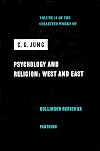
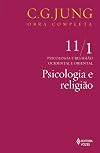
Psychology and Religion: West and East
by Carl Gustav Jung
On This Page
Description
Sixteen studies in religious phenomena, including Psychology and Religion and Answer to Job. ?Tags
Recommendations

















Member Reviews
This seven-hundred-page tome is volume eleven of Jung's Collected Works. I already own and have read many of its more substantial pieces in other editions. For example, I have the Bollingen series Answer to Job under its own cover, "Transformation Symbolism and the Mass" is in the Eranos Yearbook anthology The Mysteries, and I have recently read "Psychologists or the Clergy?" as part of Modern Man in Search of a Soul. In this review, I will confine myself to some comments on the objects of my recent reading in a copy borrowed from the library of Colorado Mountain College: the several essays concerned with Trinitarian doctrine and symbolism in Christianity.
Jung found various cross-cultural precedents for the Trinity. Most significantly, show more he focused on an ancient Egyptian notion grouping the Royal Father Osiris and the Royal Son Horus with the Ka-mutef, or “Bull of his Mother,” the third term being explained as “the procreative power of the deity.” He also pointed to the triune nature of the World Soul in Plato’s Timaeus, and to Plato’s Demiurge, created world, and World Soul as their own trinity. He mentioned the cultural continuity from Egypt to the Hellenistic world in which Christianity was incubated, but he saw the Christian Trinity not so much as derivative from these earlier examples but as a later, parallel expression of the same generic spiritual function. In Jung’s jargon, the Trinity is an archetype of the collective unconscious. His interest in it, he claims, is not metaphysical but psychological. He wants to understand why this idea should have gained such pre-eminence, and what its ongoing role in the mind of humanity is.
He observes the unreasonable and unnatural aspects of the Trinity as evidence of their grounding in the unconscious. He points to the systematic exclusion of the Mother or feminine element from both Egyptian and Christian expressions of the Trinity. Jung knew that in some early Christian theologies the Holy Spirit was feminized in the form of the Christ-counterpart Sophia. But he was also aware of the evanescence of that doctrine and the predominant concept of the Holy Ghost—like the Ka-mutef—as a “hypostasis of procreative power,” writing:
"The masculine father-son relationship is thus lifted out of the natural order … and translated to a sphere from which the feminine element is excluded. … Father-son-life … constitute the patriarchal formula that was ‘in the air’ long before the advent of Christianity." (par. 197-198)
Despite the Trinity’s archetypal status, Jung takes it to be incomplete, excluding not only the maternal but the material of the world. It is also impaired in its Christian recension by a moral one-sidedness. He discusses approaches to completing a “quaternity” with a fourth term personifying the unconscious operation of the psyche. Where he stresses the moral limits of the Trinity, Jung identifies this fourth term with Satan or the psychological shadow. But if we allow the Trinity itself to be beyond good and evil, then the fourth term is certainly the feminine complement of the Trinity, the anima as presented in Jung’s system. And he claims:
"Medieval iconology, embroidering on the old speculations about the Theotokos, evolved a quaternity symbol in its representations of the coronation of the Virgin and surreptitiously put it in place of the Trinity." (par. 251)
An example of such representations serves as a frontispiece to Jung’s book: Jean Fouquet’s painting of The Trinity with the Virgin Mary from a medieval Book of Hours. The imputation of agency to "iconology" in this case does not reflect official church doctrines or underground teachings, but rather an exercise of the collective unconscious in the course of conventional expressions. As Barbara Newman has shown in her study God and the Goddesses, these representations were in no way heterdox for their period.
Although the clearest theoretical articulation of these ideas is in the second set of lectures "A Psychological Approach to the Dogma of the Trinity," the first set, titled simply "Psychology and Religion," touches on them often, in the context of an account of therapeutic practice involving the dreams of a psychiatric client, showing the relevance of the "archetype" to those who are neither theologians nor mystics. show less
Jung found various cross-cultural precedents for the Trinity. Most significantly, show more he focused on an ancient Egyptian notion grouping the Royal Father Osiris and the Royal Son Horus with the Ka-mutef, or “Bull of his Mother,” the third term being explained as “the procreative power of the deity.” He also pointed to the triune nature of the World Soul in Plato’s Timaeus, and to Plato’s Demiurge, created world, and World Soul as their own trinity. He mentioned the cultural continuity from Egypt to the Hellenistic world in which Christianity was incubated, but he saw the Christian Trinity not so much as derivative from these earlier examples but as a later, parallel expression of the same generic spiritual function. In Jung’s jargon, the Trinity is an archetype of the collective unconscious. His interest in it, he claims, is not metaphysical but psychological. He wants to understand why this idea should have gained such pre-eminence, and what its ongoing role in the mind of humanity is.
He observes the unreasonable and unnatural aspects of the Trinity as evidence of their grounding in the unconscious. He points to the systematic exclusion of the Mother or feminine element from both Egyptian and Christian expressions of the Trinity. Jung knew that in some early Christian theologies the Holy Spirit was feminized in the form of the Christ-counterpart Sophia. But he was also aware of the evanescence of that doctrine and the predominant concept of the Holy Ghost—like the Ka-mutef—as a “hypostasis of procreative power,” writing:
"The masculine father-son relationship is thus lifted out of the natural order … and translated to a sphere from which the feminine element is excluded. … Father-son-life … constitute the patriarchal formula that was ‘in the air’ long before the advent of Christianity." (par. 197-198)
Despite the Trinity’s archetypal status, Jung takes it to be incomplete, excluding not only the maternal but the material of the world. It is also impaired in its Christian recension by a moral one-sidedness. He discusses approaches to completing a “quaternity” with a fourth term personifying the unconscious operation of the psyche. Where he stresses the moral limits of the Trinity, Jung identifies this fourth term with Satan or the psychological shadow. But if we allow the Trinity itself to be beyond good and evil, then the fourth term is certainly the feminine complement of the Trinity, the anima as presented in Jung’s system. And he claims:
"Medieval iconology, embroidering on the old speculations about the Theotokos, evolved a quaternity symbol in its representations of the coronation of the Virgin and surreptitiously put it in place of the Trinity." (par. 251)
An example of such representations serves as a frontispiece to Jung’s book: Jean Fouquet’s painting of The Trinity with the Virgin Mary from a medieval Book of Hours. The imputation of agency to "iconology" in this case does not reflect official church doctrines or underground teachings, but rather an exercise of the collective unconscious in the course of conventional expressions. As Barbara Newman has shown in her study God and the Goddesses, these representations were in no way heterdox for their period.
Although the clearest theoretical articulation of these ideas is in the second set of lectures "A Psychological Approach to the Dogma of the Trinity," the first set, titled simply "Psychology and Religion," touches on them often, in the context of an account of therapeutic practice involving the dreams of a psychiatric client, showing the relevance of the "archetype" to those who are neither theologians nor mystics. show less
I've just finished reading Psychology and Religion by Carl Jung.
Carl Jung (1875 – 1961) was a Swiss psychiatrist and psychoanalyst who founded analytical psychology. Jung's work has been influential in the fields of psychiatry, anthropology, archaeology, literature, philosophy, psychology, and religious studies.
This book is a transcript of three Terry Lectures Jung gave at Yale University in 1938.
In this short book of 131 pages, read in a couple of hours, Jung explains what he regards as an authentic religious function in the unconscious mind. He mines ancient and mediaeval gnosticism, alchemy, and occult literature, together with both Western and Eastern world religions, to bring forward hypotheses regarding the symbolism of show more unconscious processes and the possibility of religious forms that have appeared and reappeared through the centuries, which he calls archetypes.
He explores all this in the context of a doctor - patient relationship, during which he reveals the symbolism present in his patients 350 dreams.
I found the book challenging and at the same time extremely thought provoking, particularly in the context of the rapidly secularising English speaking world. I haven't read any Jung before coming to this book, so many of the concepts were new to me and I need to explore them further.
I am planning to do this through a couple of other books on my reading list - [b:Nine Theories of Religion|22638057|Nine Theories of Religion|Daniel L. Pals|https://i.gr-assets.com/images/S/compressed.photo.goodreads.com/books/1410765246l/22638057._SY75_.jpg|42138028] and [b:Freud and Jung on Religion|338473|Freud and Jung on Religion|Michael F. Palmer|https://i.gr-assets.com/images/S/compressed.photo.goodreads.com/books/1348691920l/338473._SY75_.jpg|6890775]. show less
Carl Jung (1875 – 1961) was a Swiss psychiatrist and psychoanalyst who founded analytical psychology. Jung's work has been influential in the fields of psychiatry, anthropology, archaeology, literature, philosophy, psychology, and religious studies.
This book is a transcript of three Terry Lectures Jung gave at Yale University in 1938.
In this short book of 131 pages, read in a couple of hours, Jung explains what he regards as an authentic religious function in the unconscious mind. He mines ancient and mediaeval gnosticism, alchemy, and occult literature, together with both Western and Eastern world religions, to bring forward hypotheses regarding the symbolism of show more unconscious processes and the possibility of religious forms that have appeared and reappeared through the centuries, which he calls archetypes.
He explores all this in the context of a doctor - patient relationship, during which he reveals the symbolism present in his patients 350 dreams.
I found the book challenging and at the same time extremely thought provoking, particularly in the context of the rapidly secularising English speaking world. I haven't read any Jung before coming to this book, so many of the concepts were new to me and I need to explore them further.
I am planning to do this through a couple of other books on my reading list - [b:Nine Theories of Religion|22638057|Nine Theories of Religion|Daniel L. Pals|https://i.gr-assets.com/images/S/compressed.photo.goodreads.com/books/1410765246l/22638057._SY75_.jpg|42138028] and [b:Freud and Jung on Religion|338473|Freud and Jung on Religion|Michael F. Palmer|https://i.gr-assets.com/images/S/compressed.photo.goodreads.com/books/1348691920l/338473._SY75_.jpg|6890775]. show less
il contenuto
Nella prospettiva di Jung i dati religiosi vanno considerati come la manifestazione storica infinitamente varia di un autonomo livello di realtà, autonomo in quanto, pur rivelandosi attraverso la vita, esso non è il frutto della sublimazione di una realtà biologica, come Freud pretendeva. ma è parte costitutiva e irriducibile della condizione umana. I dati religiosi vanno perciò compresi come la formulazione psicologica di esperienze interiori che hanno sempre, all'origine, i caratteri della rivelazione individuale. anche se subiscono poi il travaglio secolare dei tentativi di rielaborazione culturale tendenti a renderle assimilabili ai più; e che possono sempre riemergere nei materiali onirici o visionari individuali, show more in quanto essi hanno radice nel fondo archetipico comune. Psicologia e religione (1938/ 1940). il Saggio d'interpretazione psicologica del dogma della Trinità (1942/1948), Il simbolo della trasformazione nella messa (1942/1954) e gli altri scritti sulla religione in Occidente sono costruiti in questa prospettiva, che l'immensa dottrina di Jung sostanzia e conferma. A questi saggi seguono quelli da Jung dedicati alla religione in Oriente: i commenti psicologici al Libro tibetano della grande liberazione (1954) e al Libro tibetano dei morti (193511953), la Prefazione alla "Introduzione al buddhismo zen" di D. T. Suzuki (1939). Psicologia della meditazione orientale (1943), e così via. Essi mostrano magistralmente come i diversi metodi orientali d'introversione favoriscano il suddetto carattere individuale dell'esperienza religiosa; sottolineando tuttavia nel contempo l'estraneità di Jung, terapeuta impregnato del mito cristico della redenzione, alle tentazioni di fuga dal mondo presenti in così larghi strati della religiosità orientale. show less
Nella prospettiva di Jung i dati religiosi vanno considerati come la manifestazione storica infinitamente varia di un autonomo livello di realtà, autonomo in quanto, pur rivelandosi attraverso la vita, esso non è il frutto della sublimazione di una realtà biologica, come Freud pretendeva. ma è parte costitutiva e irriducibile della condizione umana. I dati religiosi vanno perciò compresi come la formulazione psicologica di esperienze interiori che hanno sempre, all'origine, i caratteri della rivelazione individuale. anche se subiscono poi il travaglio secolare dei tentativi di rielaborazione culturale tendenti a renderle assimilabili ai più; e che possono sempre riemergere nei materiali onirici o visionari individuali, show more in quanto essi hanno radice nel fondo archetipico comune. Psicologia e religione (1938/ 1940). il Saggio d'interpretazione psicologica del dogma della Trinità (1942/1948), Il simbolo della trasformazione nella messa (1942/1954) e gli altri scritti sulla religione in Occidente sono costruiti in questa prospettiva, che l'immensa dottrina di Jung sostanzia e conferma. A questi saggi seguono quelli da Jung dedicati alla religione in Oriente: i commenti psicologici al Libro tibetano della grande liberazione (1954) e al Libro tibetano dei morti (193511953), la Prefazione alla "Introduzione al buddhismo zen" di D. T. Suzuki (1939). Psicologia della meditazione orientale (1943), e così via. Essi mostrano magistralmente come i diversi metodi orientali d'introversione favoriscano il suddetto carattere individuale dell'esperienza religiosa; sottolineando tuttavia nel contempo l'estraneità di Jung, terapeuta impregnato del mito cristico della redenzione, alle tentazioni di fuga dal mondo presenti in così larghi strati della religiosità orientale. show less
The authoritative edition of sixteen of Jung's studies on the psychology of religious phenomena, including Aion and Psychology and Alchemy This volume collects Jung's shorter writings on religion and psychology, including several that are of major importance, as well as two full-length works on the subject, Aion and Psychology and Alchemy. Together, these writings present Jung's significant statement on a vital theme. The shorter pieces on Western religion are: Psychology and Religion - A Psychological Approach to the Dogma of the Trinity - Transformation Symbolism in the Mass - Forewords to White's God and the Unconscious and Werblowsky's Lucifer and Prometheus - Brother Klaus - Psychotherapists or the Clergy - Psychoanalysis and the show more Cure of Souls - Answer to Job The shorter pieces on Eastern religion are: Psychological Commentaries on The Tibetan Book of the Great Liberation and The Tibetan Book of the Dead - Yoga and the West - Foreword to Suzuki's Introduction to Zen Buddhism - The Psychology of Eastern Meditation - The Holy Men of India - Foreword to the I Ching "Nowhere else than in this study of the interplay of East and West is the point so forcefully made that man's cultural past somehow molds his feelings and thinking as well as his highly contrasting attitudes toward reality." Source: Publisher show less
ACERCA DE LA PSICOLOGÍA DE LA RELIGIÓN OCCIDENTAL Y DE LA RELIGIÓN
La religión ocupa un lugar central en la obra de Jung quien, especialmente en los escritos de sus últimos años, prestó una atención especial al fenómeno religioso. El gran mérito de Jung estriba en haber sabido reconocer que las representaciones originarias que subyacen y son comunes a las distintas religiones constituyen contenidos arquetípicos del alma humana. La primera parte de este volumen reune escritos como "Psicología y religión" o "Respuesta a Job". En la segunda se recopilan sobre todo comentarios y prólogos a textos religiosos orientales como I Ching o el Bardo Todol.
La religión ocupa un lugar central en la obra de Jung quien, especialmente en los escritos de sus últimos años, prestó una atención especial al fenómeno religioso. El gran mérito de Jung estriba en haber sabido reconocer que las representaciones originarias que subyacen y son comunes a las distintas religiones constituyen contenidos arquetípicos del alma humana. La primera parte de este volumen reune escritos como "Psicología y religión" o "Respuesta a Job". En la segunda se recopilan sobre todo comentarios y prólogos a textos religiosos orientales como I Ching o el Bardo Todol.
Jan 20, 2018Spanish
Ratings
Members
- Recently Added By
Lists

Jordan B. Peterson's Recommended Books
104 works; 5 members
Author Information

901+ Works 42,813 Members
Carl Gustav Jung was born in Switzerland on July 26, 1875. He originally set out to study archaeology, but switched to medicine and began practicing psychiatry in Basel after receiving his degree from the University of Basel in 1902. He became one of the most famous of modern psychologists and psychiatrists. Jung first met Sigmund Freud in 1907 show more when he became his foremost associate and disciple. The break came with the publication of Jung's Psychology of the Unconscious (1912), which did not follow Freud's theories of the libido and the unconscious. Jung eventually rejected Freud's system of psychoanalysis for his own "analytic psychology." This emphasizes present conflicts rather than those from childhood; it also takes into account the conflict arising from what Jung called the "collective unconscious"---evolutionary and cultural factors determining individual development. Jung invented the association word test and contributed the word complex to psychology, and first described the "introvert" and "extrovert" types. His interest in the human psyche, past and present, led him to study mythology, alchemy, oriental religions and philosophies, and traditional peoples. Later he became interested in parapsychology and the occult. He thought that unidentified flying objects (UFOs) might be a psychological projection of modern people's anxieties. He wrote several books including Studies in Word Association, Flying Saucers: A Modern Myth of Things Seen in the Skies, and Psychology and Alchemy. He died on June 6, 1961 after a short illness. (Bowker Author Biography) show less
Some Editions
Series
Belongs to Publisher Series
Bollingen Series (20.11)
Work Relationships
Contains
Has as a student's study guide
Common Knowledge
- Canonical title
- Psychology and Religion: West and East
- Original title
- Zur Psychologie westlicher und östlicher Religion
- Original publication date
- 1958
- Original language
- German
- Disambiguation notice
- Do not combine with Psychology and Religion, which is around 150 pages and is included in this Collected Works Edition titled Psychology and Religion: West and East, which has around 700 pages.
Classifications
Statistics
- Members
- 328
- Popularity
- 97,167
- Reviews
- 5
- Rating
- (4.23)
- Languages
- 12 — Dutch, English, French, German, Hungarian, Italian, Lithuanian, Norwegian (Bokmål), Portuguese (Brazil), Spanish, Swedish, Turkish
- Media
- Paper, Ebook
- ISBNs
- 29
- ASINs
- 15