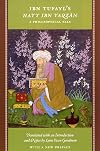
Hayy Ibn Yaqzan: A Philosophical Tale
by Ibn Tufayl
On This Page
Description
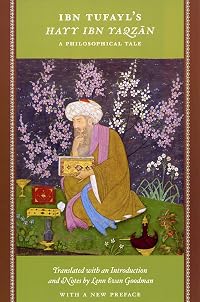
The Arabic philosophical fable Hayy Ibn Yaqzan is a classic of medieval Islamic philosophy. Ibn Tufayl (d. 1185), the Andalusian philosopher, tells of a child raised by a doe on an equatorial island who grows up to discover the truth about the world and his own place in it, unaided--but also unimpeded--by society, language, or tradition. Hayy's discoveries about God, nature, and man challenge the values of the culture in which the tale was written as well as those of every contemporary show more society. Goodman's commentary places Hayy Ibn Yaqzan in its historical and philosophical context. The volume features a new preface and index, and an updated bibliography. "One of the most remarkable books of the Middle Ages."--Times Literary Supplement "An enchanting and puzzling story. . . . The book transcends all historical and cultural environments to settle upon the questions of human life that perpetually intrigue men."--Middle East Journal "Goodman has done a service to the modern English reader by providing a readable translation of a philosophically significant allegory."--Philosophy East and West "Add[s] bright new pieces to an Islamic mosaic whose general shape is already known."--American Historical Review show lessTags
Recommendations



Member Reviews
Ibn Tufayl was a medieval thinker and an heir to the oriental philosophy of Avicenna (Ibn Sina) and the scholarship of Algazel (Al-Ghazali). His work Hayy Ibn Yaqzan is a fable treating the life of an ideal man who comes to physical, intellectual, and spiritual maturity outside any human community. Only in the final pages of the tale does Hayy encounter society, culture, and religious tradition, and the encounter is a disappointing one in many respects.
The narrative itself is reasonably compact, but the University of Chicago 2009 edition of the English translation includes a great deal of useful apparatus. Translator Lenn E. Goodman supplies two prefaces and an introduction. The 2009 preface is primarily concerned with the historical show more context of the original work, outlining the Almohad patronage for Ibn Tufayl's work, but it also concludes with a view of the change in philosophical context for Goodman's work, since the 1960s when he first read Ibn Tufayl. The 2003 preface is shorter and more autobiographically focused. The 91-page introduction includes far-ranging comparisons and a theory of religion as a tripartite phenomenon that appears to be original with Goodman, and is definitely food for thought in its own right.
Goodman's end-notes are extensive, and so useful to the contemporary reader that they made me resent (again) the 21st-century publishing preference for end-notes over footnotes. I'd prefer to read with a single bookmark, thanks. He calls out likely sources, Quranic citations and allusions, and comparisons to medieval, classical, and modern philosophy. Wide prior reading is necessary in order to make the most of these.
Ibn Tufayl's story has been compared to Kipling's Mowgli from The Jungle Book: Hayy is raised by a doe rather than a wolf, and his feral nature is correspondingly peaceable. There are no large predators on the island where he is the only human. Even more interesting comparisons can be drawn with Robert Heinlein's 20th-century science fiction novel Stranger in a Strange Land, itself consciously derived from the Mowgli archetype. Like the Martian protégé Valentine Michael Smith, Hayy discovers a religious vocation when introduced to society. He hopes to "save" others by orienting them to the mystical appreciation of the human condition that he was able to achieve in his exotic circumstance.
At the end, Ibn Tufayl claims that his story of Hayy is the heritage of "a hidden branch of study" (165), as he had promised at the outset in intending to "unfold ... the secrets of the oriental philosophy" (95). It is esoteric in both the colloquial and the Straussian senses, though it is not occultist. I am grateful to the fellow initiate who directed my attention to it, and I expect to return to the study of this text in future years. show less
The narrative itself is reasonably compact, but the University of Chicago 2009 edition of the English translation includes a great deal of useful apparatus. Translator Lenn E. Goodman supplies two prefaces and an introduction. The 2009 preface is primarily concerned with the historical show more context of the original work, outlining the Almohad patronage for Ibn Tufayl's work, but it also concludes with a view of the change in philosophical context for Goodman's work, since the 1960s when he first read Ibn Tufayl. The 2003 preface is shorter and more autobiographically focused. The 91-page introduction includes far-ranging comparisons and a theory of religion as a tripartite phenomenon that appears to be original with Goodman, and is definitely food for thought in its own right.
Goodman's end-notes are extensive, and so useful to the contemporary reader that they made me resent (again) the 21st-century publishing preference for end-notes over footnotes. I'd prefer to read with a single bookmark, thanks. He calls out likely sources, Quranic citations and allusions, and comparisons to medieval, classical, and modern philosophy. Wide prior reading is necessary in order to make the most of these.
Ibn Tufayl's story has been compared to Kipling's Mowgli from The Jungle Book: Hayy is raised by a doe rather than a wolf, and his feral nature is correspondingly peaceable. There are no large predators on the island where he is the only human. Even more interesting comparisons can be drawn with Robert Heinlein's 20th-century science fiction novel Stranger in a Strange Land, itself consciously derived from the Mowgli archetype. Like the Martian protégé Valentine Michael Smith, Hayy discovers a religious vocation when introduced to society. He hopes to "save" others by orienting them to the mystical appreciation of the human condition that he was able to achieve in his exotic circumstance.
At the end, Ibn Tufayl claims that his story of Hayy is the heritage of "a hidden branch of study" (165), as he had promised at the outset in intending to "unfold ... the secrets of the oriental philosophy" (95). It is esoteric in both the colloquial and the Straussian senses, though it is not occultist. I am grateful to the fellow initiate who directed my attention to it, and I expect to return to the study of this text in future years. show less
Great book by Tufayl; unbelievably bad introduction and uneven annotations by Lenn Evan Goodman, who, among other things, equates Stokeley Carmichael and Adolf Hitler, and spends pages talking about Rousseau and Skinner and setting up ludicrous binaries (either rational or irrational; either mass religion or rational religion...). Skip the intro. Read the book.
Highly important work in medieval Islamic philosophy, and a profound and illuminating story in itself. Beautifully translated by Goodman, but his introduction is less helpful.
Fascinating and illuminating piece of medieval Islamic thought; very interesting to put in conversation with Augustine, Aquinas, or Plato.
> Voir un extrait : https://books.google.fr/books?id=d1EZBXltgA4C&hl=fr&printsec=frontcover&...
Par Carolune (Carolune lit) : Le Philosophe autodidacte, de Ibn Tufayl
12 jan. 2011 ... Le Philosophe autodidacte est non seulement une lecture agréable et souvent amusante, mais aussi une excellente initiation aux thèmes de la philosophie antique, et notamment platonicienne, dont Ibn Tufayl fait ici la synthèse d’une manière très pédagogique...un vrai régal, qui, en 800 ans, n'a rien perdu de sa fraîcheur !
> Par Archipress : Vivien, l'éveillé loin de la foule moutonnière
Véritable roman philosophique, dont la forme préfigure Gracián, Voltaire et Diderot, l’ouvrage relate la « formation » d’un homme isolé sur une île show more déserte. Hayy, le héros solitaire, mi-Robinson mi-Tarzan, part à la conquête de lui-même et du monde, et ses aventures nourrissent une réflexion sur les rapports de la nature et de la culture, de la civilisation et de la vie « sauvage ». Le philosophe arabe Ibn Tufayl (1100-1181) fut le maître d’Averroès. Son œuvre mêle la tradition mystique et le rationalisme, illustrant parfaitement la situation de l’Andalousie médiévale, carrefour entre Orient et Occident, entre Antiquité et modernité. show less
Par Carolune (Carolune lit) : Le Philosophe autodidacte, de Ibn Tufayl
12 jan. 2011 ... Le Philosophe autodidacte est non seulement une lecture agréable et souvent amusante, mais aussi une excellente initiation aux thèmes de la philosophie antique, et notamment platonicienne, dont Ibn Tufayl fait ici la synthèse d’une manière très pédagogique...un vrai régal, qui, en 800 ans, n'a rien perdu de sa fraîcheur !
> Par Archipress : Vivien, l'éveillé loin de la foule moutonnière
Véritable roman philosophique, dont la forme préfigure Gracián, Voltaire et Diderot, l’ouvrage relate la « formation » d’un homme isolé sur une île show more déserte. Hayy, le héros solitaire, mi-Robinson mi-Tarzan, part à la conquête de lui-même et du monde, et ses aventures nourrissent une réflexion sur les rapports de la nature et de la culture, de la civilisation et de la vie « sauvage ». Le philosophe arabe Ibn Tufayl (1100-1181) fut le maître d’Averroès. Son œuvre mêle la tradition mystique et le rationalisme, illustrant parfaitement la situation de l’Andalousie médiévale, carrefour entre Orient et Occident, entre Antiquité et modernité. show less
Nov 20, 2016 (Edited)French
Ratings
Members
- Recently Added By
Lists

Books Read in 2019
4,052 works; 108 members

Favourite Medieval Books
49 works; 17 members

Philip Ward's Lifetime Reading Plan
592 works; 22 members

Arab and Arab Diaspora Literature We Recommend
112 works; 53 members

DigitalDreamDoor top 300
300 works; 4 members
Author Information

18 Works 390 Members
Although known in his day as a philosopher, some of whose views were criticized by Averroes, ibn Tufayl is today remembered as the author of the philosophical novel Hayy ibn Yaqzan. An allegory of the conflict between reason and religion, the story traces the intellectual development of a man secluded on a desert island who, through his own show more unaided efforts, arrives at knowledge of the divine. Later, he encounters a wise man of religion, who is astonished to discover that, despite all his training and knowledge of doctrine, he knows no more than the untutored hermit. (Bowker Author Biography) show less
Some Editions
Awards and Honors
Series
Belongs to Publisher Series
Common Knowledge
- Canonical title
- Hayy Ibn Yaqzan: A Philosophical Tale
- Original publication date
- 1160
- Original language
- Arabic
Classifications
Statistics
- Members
- 336
- Popularity
- 94,335
- Reviews
- 5
- Rating
- (3.73)
- Languages
- 13 — Arabic, Dutch, English, Estonian, French, German, Italian, Latin, Portuguese, Russian, Spanish, Swedish, Turkish
- Media
- Paper, Ebook
- ISBNs
- 31
- ASINs
- 6