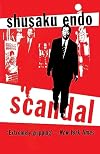
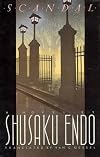
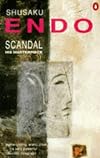
Scandal
by Shusaku Endo
On This Page
Description
Suguro is an eminent Catholic novelist who is about to receive a major literary award. When a drunk woman he has never met before approaches him at the award ceremony, claiming she knows him well from his regular visits to Tokyo's red-light district, he assumes she must surely be mistaken. But with a scurrilous press campaign damaging Suguro's reputation, his sleazy doppelgänger appears more and more, as if deliberately trying to discredit him. He is sighted touring the love hotels and show more brothels of Shinjuku; a leering portrait of him appears in an exhibition--and Suguro is forced to undertake a journey into Tokyo's seedy heart in order to discover the dreadful truth. show lessTags
Recommendations

















Member Reviews
An account of a Christian author, who (very much like the author) is aging and unwell. His books tend to depict "the black, dark, ugly realms within his characters" and yet he is aware that "as he described the murky hearts of his characters, his own mind too became cloudy."
In an unexciting, "respectable" marriage, Sugaru's world is turned upside down when a dubious young woman confronts him at a literary event, reminding this pillar of respectability of their previous encountes in the red light district. A dogged reporter hears and begins checking out the story.
But is it- as Sugaru claims- just a lookalike? Or another facet to his personality?
As he becomes unsuitably interested in a teenage girl; as he befriends the kindly, respectable show more Madame Naruse (whose compassion for the patients at the hospital she works in seems at total variance with her recollections of the excitement she experienced at her husband's war atrocities)...the author confronts the mystery of the subconscious. How can a normal, upright person have such dark inner thoughts? show less
In an unexciting, "respectable" marriage, Sugaru's world is turned upside down when a dubious young woman confronts him at a literary event, reminding this pillar of respectability of their previous encountes in the red light district. A dogged reporter hears and begins checking out the story.
But is it- as Sugaru claims- just a lookalike? Or another facet to his personality?
As he becomes unsuitably interested in a teenage girl; as he befriends the kindly, respectable show more Madame Naruse (whose compassion for the patients at the hospital she works in seems at total variance with her recollections of the excitement she experienced at her husband's war atrocities)...the author confronts the mystery of the subconscious. How can a normal, upright person have such dark inner thoughts? show less
While I found this book to be a little lighter than some of Endo's other novels, I enjoyed it immensely. Scandal is a later novel and Endo seems to have moved on from East vs. West panoramas to the conflicts with an individual's psyche--- good vs. evil. He captures the "mostly normal person but with a slight twisted side" very well. Though we see later that slight can become significant under the right influences. The feel of the book reminded me of The Picture of Dorian Gray (though I prefer Endo's writing to Wilde's). It was a quick and compelling read that I highly recommend. I wonder if everyone sees a bit of themselves in Endo's dual characterizations? 4.25 stars
There's a wonderful moment in Vladimir Nabokov's Strong Opinions. It's part of a transcript from an interview conducted sometime in the mid-1970s.
If only Shusako Endo had felt the same way. His penultimate novel, Scandal, is so tightly woven around the concept that it hamstrings itself. Here's the story, roughly: A mid- 20th century Japanese Christian writer, not unlike Endo himself, whose novels are highly popular investigations of sin in modern man, is close to death when he realizes that he has neglected show more an entire aspect of human nature. That is the dark, selfish, often cruel impulses that can overtake us in the midst of passion, desire, erotic pursuit. Author Suguro has so thoroughly expunged such darkness from his life and works that his critics say he is missing something elemental in his work.
But Suguro has paid a price for such deep Christian piety. So much so that his dark, carnal side has split off in a Jekyll-and-Hyde manner to go roving unchecked through Tokyo's pleasure districts. Suguro for most of the novel views this double an imposter, someone who chance has happened to give the same physical look and voice as himself. And granted, in this day of faux Rockefellers grifting entire communities, it's believable. Through blameless association with a number of simultaneously depraved and compassionate individuals--paradoxes in Suguro's view--he is able to run his double to earth. Only when he does so, he witnesses himself sexually abusing a young servant, does he acknowledge the terrible split rending his psyche and his conscience.
The passages in which Endo considers human eroticism and kinkiness in light of Christian virtue are not without interest. Sadly, however, self forgiveness is something that Suguro seems incapable of, thus his suffering. There's something terribly sad about this. For nowhere in Surguro's self conception, so overwhelmed by his bête noire, "sin," is there room for self forgiveness. All Suguro can think of is how tainted he is, how he has failed morally, how he is in the end just like all the other human filth.
There are frequent passages of interest: such as when Suguro considers certain Buddhist and Freudian precepts that closely align with his Christian views. But he can never see the forest for the trees. He is too self involved. He cannot for the life of him understand how God can love beings simultaneously both so wretched and so beautiful. That is his failing, and in the end he seems ready to take it to the grave. Recommended with reservations. show less
Q: Would you care to comment on how the Doppelgänger motif has been both used and abused from Poe, Hoffman, Andersen... Which Doppelgänger fictions would you single out for praise?
VN: The Doppelgänger subject is a frightful bore.
If only Shusako Endo had felt the same way. His penultimate novel, Scandal, is so tightly woven around the concept that it hamstrings itself. Here's the story, roughly: A mid- 20th century Japanese Christian writer, not unlike Endo himself, whose novels are highly popular investigations of sin in modern man, is close to death when he realizes that he has neglected show more an entire aspect of human nature. That is the dark, selfish, often cruel impulses that can overtake us in the midst of passion, desire, erotic pursuit. Author Suguro has so thoroughly expunged such darkness from his life and works that his critics say he is missing something elemental in his work.
But Suguro has paid a price for such deep Christian piety. So much so that his dark, carnal side has split off in a Jekyll-and-Hyde manner to go roving unchecked through Tokyo's pleasure districts. Suguro for most of the novel views this double an imposter, someone who chance has happened to give the same physical look and voice as himself. And granted, in this day of faux Rockefellers grifting entire communities, it's believable. Through blameless association with a number of simultaneously depraved and compassionate individuals--paradoxes in Suguro's view--he is able to run his double to earth. Only when he does so, he witnesses himself sexually abusing a young servant, does he acknowledge the terrible split rending his psyche and his conscience.
The passages in which Endo considers human eroticism and kinkiness in light of Christian virtue are not without interest. Sadly, however, self forgiveness is something that Suguro seems incapable of, thus his suffering. There's something terribly sad about this. For nowhere in Surguro's self conception, so overwhelmed by his bête noire, "sin," is there room for self forgiveness. All Suguro can think of is how tainted he is, how he has failed morally, how he is in the end just like all the other human filth.
There are frequent passages of interest: such as when Suguro considers certain Buddhist and Freudian precepts that closely align with his Christian views. But he can never see the forest for the trees. He is too self involved. He cannot for the life of him understand how God can love beings simultaneously both so wretched and so beautiful. That is his failing, and in the end he seems ready to take it to the grave. Recommended with reservations. show less
I think this is a novel that took courage to write. The author, Susaku Endo, offers his own self-exploration up to the reader as a guide to accepting our own humanity, including the darkest aspects of self. His protagonist, Seguro, is an author at the pinnacle of his career, at which moment he is confronted by his own doppelganger, or spirit double. Thus begins a painful exploration of the aspects of self we try to hide from. With references to "The Divine Comedy", Shakespeare's "King Lear" and other works used to emphasize the universality of Endo's beliefs, this book is uncomfortably marvelous to read. Take a deep breath before diving in, because you will be a different person when you emerge at the end!
Suguro is an aging, and not too healthy, respectable Christian novelist, the recipient of writing awards, when he is unexpectedly confronted by a young drunk woman who accuses him of hypocrisy for spending time in Tokyo's red light district and engaging in what he would consider to be sinful sexual activities. And thus begins Endō's exploration of the dark side of human nature, of the dark side of his own nature, of the desires we keep hidden inside us.
At first Suguro's discomfort at the idea that he has a double who is mocking and embarrassing him seems real to the reader. Ahead of a reporter who is trying to gain fame by exposing the famous author, Suguro ventures into some of the haunts of the woman who supposedly painted a portrait show more of him, trying to discover who the imposter is. As he does so, the novel exposes some of the constraints of his marriage and some of his uncomfortably sexual feelings about a teenage girl who comes to clean his office and a widowed nursing volunteer who confronts him about the restraint he exhibits in his novels when it comes to sex and the messier parts of human feelings. Specifically, this nursing volunteer describes the pleasures of sado-masochism. Suguro is both horrified and intrigued.
Throughout the novel, Suguro has dreams, and engages in conversation with people in the writing world, and in this other world, as well as specialists in both western psychology and Buddhist beliefs. The reader comes to see that Suguro (aka Endō?) is exploring his own psyche as much as he is trying to solve the mystery of the imposter. I found this complex book fascinating, but I'm sure I would have gotten even more out of it if I had been able to read more consistently; because I've been so busy lately, I read it a little bit at a time and I think it lost some of its power because of this. show less
At first Suguro's discomfort at the idea that he has a double who is mocking and embarrassing him seems real to the reader. Ahead of a reporter who is trying to gain fame by exposing the famous author, Suguro ventures into some of the haunts of the woman who supposedly painted a portrait show more of him, trying to discover who the imposter is. As he does so, the novel exposes some of the constraints of his marriage and some of his uncomfortably sexual feelings about a teenage girl who comes to clean his office and a widowed nursing volunteer who confronts him about the restraint he exhibits in his novels when it comes to sex and the messier parts of human feelings. Specifically, this nursing volunteer describes the pleasures of sado-masochism. Suguro is both horrified and intrigued.
Throughout the novel, Suguro has dreams, and engages in conversation with people in the writing world, and in this other world, as well as specialists in both western psychology and Buddhist beliefs. The reader comes to see that Suguro (aka Endō?) is exploring his own psyche as much as he is trying to solve the mystery of the imposter. I found this complex book fascinating, but I'm sure I would have gotten even more out of it if I had been able to read more consistently; because I've been so busy lately, I read it a little bit at a time and I think it lost some of its power because of this. show less
The 'scandal' in this novel involves a famous writer in a Jekyll-and-Hyde situation. The book brings together various philosophical strains, from Buddhism and Christianity to Jungian psychoanalysis.
Mediante la historia de Suguro, un escritor católico, y de su encuentro con Naruse, una viuda de mediana edad que solía excitarse sexualmente con los relatos que su esposo le hacía de las brutalidades durante su etapa como soldado en China, Shusaku Endo enfrenta al lector a una concepción asombrosa del sadomasoquismo y de la vida sexual en un sentido amplio. Sin duda, una novela que a nadie dejará indiferente y que lleva hasta el límite las cuestiones morales que se plantea.
Aug 25, 2011Spanish
Members
- Recently Added By
Talk Discussions
Past Discussions
Scandal by Shusaku Endo in Author Theme Reads (December 2012)
Author Information

164+ Works 9,044 Members
Shusaku Endo was born in Tokyo in 1923 and, with his family, converted to Catholicism while he was still a child. Much of his writing centers on the conflict this conversion engendered as he struggled to develop faith in a deity foreign to Japanese culture. His writings also reflect on his experiences during World War II during the bombings and show more the subsequent shortage of basic human necessities for the Japanese people. He explores the suffering endured and the inevitable shock wave upon human relationships and the human psyche. Endo graduated from Keio University and then journeyed to France after the war to continue his studies, but was forced to return to Japan because of illness. After a period of convalescence Endo decided on a writing career, publishing his first novel, Shiroihito, in 1955. His novel The Samurai, published in the United States in 1996, is considered one of his finest works. His novel Silence, was made into a major motion picture and premiered in November 2016. Endo's reputation is due in part to his exploration of moral dilemma as it relates to divergent cultures. Endo has won many literary awards. In 1982 he was elected to the Japan Arts Academy. Shusaku Endo died in 1996. (Bowker Author Biography) show less
Some Editions
Series
Belongs to Publisher Series
Иллюминатор (90)
Common Knowledge
- Canonical title
- Scandal
- Original title
- Sukyandaru
- Alternate titles*
- Скандал
- Original publication date
- 1986 (original Japanese) (original Japanese); 1988 (English: Gessel) (English: Gessel)
- People/Characters
- Suguro; Madame Naruse
- Important places
- Japan
- First words
- The old chair seemed to need oiling; when the doctor finished examining the charts and swivelled towards his patient, it gave out a squeak.
- Last words
- (Click to show. Warning: May contain spoilers.)Her eyes wide open, his wife heard it too.
*Some information comes from Common Knowledge in other languages. Click "Edit" for more information.
Classifications
- Genres
- Fiction and Literature, General Fiction
- DDC/MDS
- 895.635 — Literature & rhetoric Asian Literature Literatures of East and Southeast Asia Japanese Japanese fiction 1945–2000
- LCC
- PL849 .N4 .S8813 — Language and Literature Languages and literatures of Eastern Asia, Africa, Oceania Languages of Eastern Asia, Africa, Oceania Japanese language and literature Japanese literature Individual authors and works
- BISAC
Statistics
- Members
- 393
- Popularity
- 79,064
- Reviews
- 7
- Rating
- (3.55)
- Languages
- 16 — Danish, Dutch, English, Finnish, French, German, Icelandic, Indonesian, Italian, Japanese, Norwegian (Bokmål), Portuguese, Romanian, Russian, Spanish, Swedish
- Media
- Paper, Ebook
- ISBNs
- 34
- ASINs
- 8