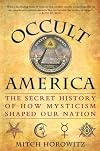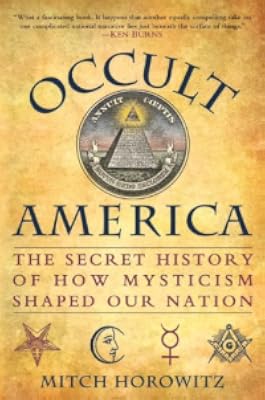
Occult America: The Secret History of How Mysticism Shaped Our Nation
by Mitch Horowitz
On This Page
Description
From the meaning of the symbols on the one-dollar bill to the origins of the Ouija board,"Occult America" briskly sweeps from the nation's earliest days of mystical and esoteric movements to the birth of the New Age era, tracing the many people and episodes that continue to exert such a powerful pull on the public today.Tags
Recommendations
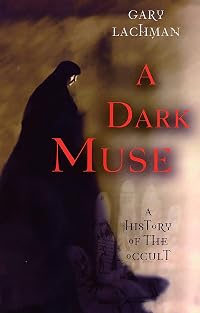

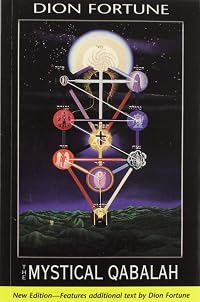
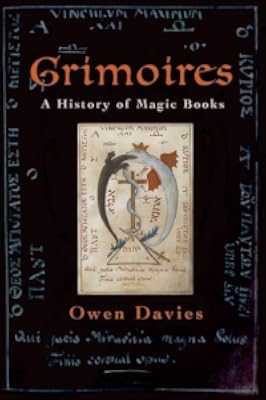

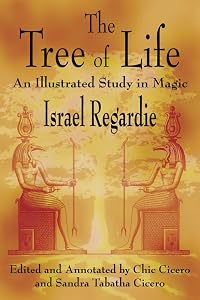

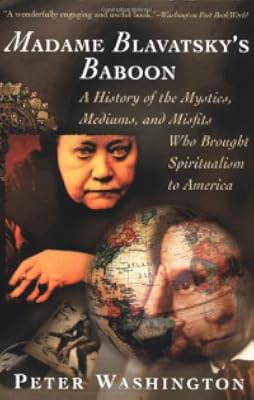
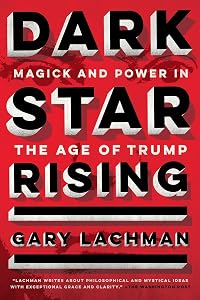
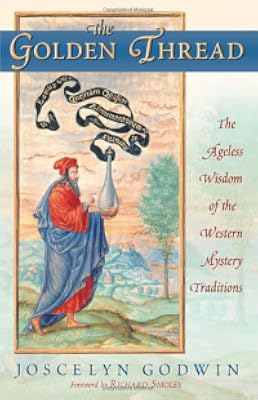
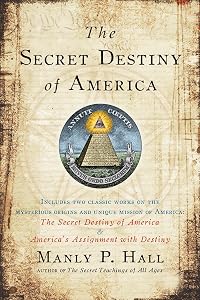


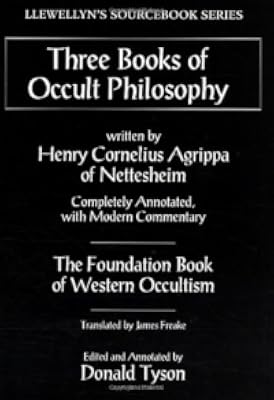
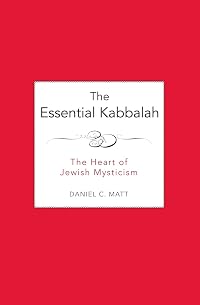

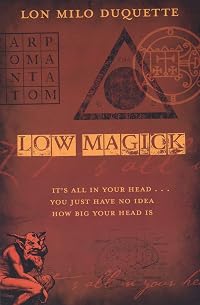

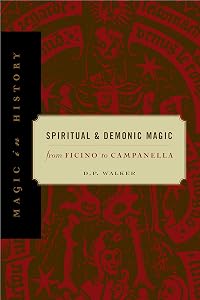







Member Recommendations


paradoxosalpha Ellwood provides more theoretical orientation than Horowitz does, and a better view of the social and cultural factors that are overshadowed by individual personalities in Horowitz's treatment. But there is considerable overlap in terms of the basic interest in "alternative spirituality" in American history.
Member Reviews
Occult America by Mitch Horowitz is engaging, entertaining, and educational. It is not, however--despite the assertion of its subtitle--"the secret history of how mysticism shaped our nation." For one thing, it is not a single history; it is a bricolage of tangentially-related sketches and investigations regarding a topic that Horowitz never manages to subject to any theoretical treatment, nor to encompass with a larger narrative. (An earlier attempt covering nearly the same domain that did succeed in this regard is Catherine Albanese's A Republic of Mind and Spirit.) The closest he comes to answering his own initial question "What is the occult?" is to propose that it comprehends all those techniques and teachings that purport to put show more people in communication with an "unseen world." But surely many of the most common and non-"occult" of spiritual traditions do so as well.
Although the book starts with the 18th century and ends with the 1970s, the contents don't progress in a strictly chronological fashion. In one chapter, for example, Horowitz spends the first half discussing the Theosophical Society, and then goes back to describe the advent of Spiritualism in the second half. He jumps forward from there to give the full century-plus history of the Ouija Board, before returning to the early origins of New Thought in the 1830s. This lack of organization in the book is somewhat surprising, since the author's own background is as an editor, and he is currently editor-in-chief at Penguin's Tarcher imprint for metaphysical books. He contributed to the publication of the "reader's edition" of Manly P. Hall's Secret Teachings of All Ages and the trade paper issuance of The Tarot by Paul Foster Case, and when it comes to these figures, and to other trivia of American occult bibliography, Horowitz delivers fascinating and highly credible detail I have never encountered elsewhere.
In a treatment that appears to be attempting a comprehensive sketch, however, the initiatory orders of occultism are markedly absent. Horowitz derides them as being characteristic of the European occult scene, and writes as if they have had only sporadic relevance to America. The one to which he gives the most attention is the Golden Dawn, in his account of Paul Foster Case. But an otherwise-uninformed reader of Horowitz would likely get the impression that in Case's day the US only had a few fledgling Golden Dawn (really Alpha et Omega) groups, with the bulk of the Order still in England, when in fact the American membership may well have outnumbered the British at that time, just as O.T.O. (never mentioned by Horowitz) had its most populous organizing in America then--and ever since. Even AMORC, whose mail-order initiatory arrangement demonstrates so well the themes of popularization and commodification that seem to interest Horowitz, barely rates a few glancing mentions. This is a book purportedly about the deep traditions of American occultism, in which Paschal Beverly Randolph is given only passing notice, in reference to the Hermetic Brotherhood of Luxor--itself only briefly mentioned as background for the astrological writer C.C. Zain.
His disdain for initiatory orders and the objects of their secrecy puts into question Horowitz's offer of a "secret" history. Still, one of the high points of the volume is the chapter on "Politics and the Occult," with sometimes surprising facts regarding the role of mystics on both the right and left in mid-20th-century US politics. Although he is willing to acknowledge the connection of the occult to political ideologies he finds distasteful, Horowitz seems to be whitewashing other key features of American occultism. He does not introduce his readers to figures like sex-guru Oom the Omnipotent or professed antichrist Jack Parsons, nor does he discuss the historical intersection of occultism and drug culture.
Horowitz concludes the book with a claim that the late 20th-century New Age synthesized the occult currents of America and successfully deposited them in mainstream religion and popular culture. The thesis that the New Age Movement was heir to occultism and esotericism has been amply demonstrated in Wouter Hanegraaff's magisterial New Age Religion and Western Culture, but Horowitz glosses over the more recent fact that the piecemeal adoption of "New Age" ideas and techniques by other groups and personalities has only helped to make superfluous an ostensible movement which was always a shaky sort of coalition.
While Occult America is clearly intended for a popular audience, I think the book's greatest value will be for those who already grasp the larger historical framework of American metaphysical religion that it doesn't really clarify. Its wealth of intriguing detail kept me thoroughly interested, and its neglect of the initiatory culture of American esotericism actually makes it a valuable complement to the reading usually undertaken by those of us who have an established interest in that field. show less
Although the book starts with the 18th century and ends with the 1970s, the contents don't progress in a strictly chronological fashion. In one chapter, for example, Horowitz spends the first half discussing the Theosophical Society, and then goes back to describe the advent of Spiritualism in the second half. He jumps forward from there to give the full century-plus history of the Ouija Board, before returning to the early origins of New Thought in the 1830s. This lack of organization in the book is somewhat surprising, since the author's own background is as an editor, and he is currently editor-in-chief at Penguin's Tarcher imprint for metaphysical books. He contributed to the publication of the "reader's edition" of Manly P. Hall's Secret Teachings of All Ages and the trade paper issuance of The Tarot by Paul Foster Case, and when it comes to these figures, and to other trivia of American occult bibliography, Horowitz delivers fascinating and highly credible detail I have never encountered elsewhere.
In a treatment that appears to be attempting a comprehensive sketch, however, the initiatory orders of occultism are markedly absent. Horowitz derides them as being characteristic of the European occult scene, and writes as if they have had only sporadic relevance to America. The one to which he gives the most attention is the Golden Dawn, in his account of Paul Foster Case. But an otherwise-uninformed reader of Horowitz would likely get the impression that in Case's day the US only had a few fledgling Golden Dawn (really Alpha et Omega) groups, with the bulk of the Order still in England, when in fact the American membership may well have outnumbered the British at that time, just as O.T.O. (never mentioned by Horowitz) had its most populous organizing in America then--and ever since. Even AMORC, whose mail-order initiatory arrangement demonstrates so well the themes of popularization and commodification that seem to interest Horowitz, barely rates a few glancing mentions. This is a book purportedly about the deep traditions of American occultism, in which Paschal Beverly Randolph is given only passing notice, in reference to the Hermetic Brotherhood of Luxor--itself only briefly mentioned as background for the astrological writer C.C. Zain.
His disdain for initiatory orders and the objects of their secrecy puts into question Horowitz's offer of a "secret" history. Still, one of the high points of the volume is the chapter on "Politics and the Occult," with sometimes surprising facts regarding the role of mystics on both the right and left in mid-20th-century US politics. Although he is willing to acknowledge the connection of the occult to political ideologies he finds distasteful, Horowitz seems to be whitewashing other key features of American occultism. He does not introduce his readers to figures like sex-guru Oom the Omnipotent or professed antichrist Jack Parsons, nor does he discuss the historical intersection of occultism and drug culture.
Horowitz concludes the book with a claim that the late 20th-century New Age synthesized the occult currents of America and successfully deposited them in mainstream religion and popular culture. The thesis that the New Age Movement was heir to occultism and esotericism has been amply demonstrated in Wouter Hanegraaff's magisterial New Age Religion and Western Culture, but Horowitz glosses over the more recent fact that the piecemeal adoption of "New Age" ideas and techniques by other groups and personalities has only helped to make superfluous an ostensible movement which was always a shaky sort of coalition.
While Occult America is clearly intended for a popular audience, I think the book's greatest value will be for those who already grasp the larger historical framework of American metaphysical religion that it doesn't really clarify. Its wealth of intriguing detail kept me thoroughly interested, and its neglect of the initiatory culture of American esotericism actually makes it a valuable complement to the reading usually undertaken by those of us who have an established interest in that field. show less
 This review was written for LibraryThing Early Reviewers.
Occult. Not revealed; not easily apprehended or understood; hidden from view; not manifest or detectable by clinical methods alone. (Definition courtesy of Merriam-Webster.)
The occult, in short, is that which is hidden from view. The term is used to refer to the belief that there are powers in the world unknown or undetectable by peoples' earthly senses. Although unseen, the irony is that the occult is all around us. The pyramid and "all seeing eye" on the back of the dollar bill? You can thank Freemasons FDR and Henry Wallace for that; prior to their administration, paper money tended toward the more mundane eagle. Mitch Horowitz explores the vagaries of the American occult in Occult America: White House Seances, Ouija Circles, show more Masons, and the Secret Mystic History of Our Nation.
Horowitz defines the occult as "a wide array of mystical philosophies and mythical lore, particularly the belief in an 'unseen world' whose forces act upon us and through us." That's an ambiguous statement, and, given one's inclination, could be applied to mainstream religions, which Horowitz assumes exist in contradiction to the occult: "These religious radicals [i.e., practitioners of the occult], acting outside the folds of traditional churches..." The occult, then, may be said to exist in parallel, or in opposition to, mainstream religions, but even that is simplistic: The borders of both the occult and traditional religions are porous, and the two were often in dialogue with one another. Consider Christian Science, Christianity infused with "New Thought," or the occult notion that, in order to be cured of an illness, a sufferer must change her belief about the illness. It's easy for readers to see how "thinking makes it so" traversed from a marginal belief to one enshrined in the late twentieth and early twenty-first century's "prosperity gospel." It might be said that the occult is that which lacks legitimacy according to the majority of society.
Definition, or lack thereof, assigned, Horowitz sets himself the ambitious task of synthesizing several centuries of religious history in less than 300 pages. Horowitz gives short shrift to the eighteenth century and post-World War II era. In truth, his subject is the American occult in the nineteenth and early twentieth centuries. Readers interested in the "New Age" movement, still developing today, will find a perfunctory chapter at the end of the book.
Horowitz treats his true scope, the nineteenth century American occult, extremely well. He devotes two early chapters, "The Psychic Highway" and "Mystic Americans" to the influential topics of the Burned-Over District (so-called) of upstate New York, and the founding of the Theosophical Society, both of which set the stage for the occult movements of the late 1800s. Some readers may be surprised to know that the Church of Latter Day Saints traces it origins to the Burned-Over District, of which Joseph Smith was a resident, and where he practiced "scrying" with a "peep stone" prior to his religious epiphany. Henry Steel Olcott and Madame Blavatsky founded the Theosophical Society, which primed America for an explosion of occult activity by insisting upon the equality of all religions and introducing Eastern beliefs to the West.
Subsequent chapters vary in quality. Topics range from the aforementioned New Thought, predecessor of The Secret and influence upon Norman Vincent Peale (The Power of Positive Thinking), to various mail order schemes, to the quasi-fascist occult ideologies of the 1920s and '30s. Of these, the strongest is, perhaps, "Go Tell Pharaoh," an exploration of African-American occult belief that touches upon hoodoo and the mysticism of Marcus Garvey.
Horowitz employs a certain formula that identifies the main movement of a particular period and sticking to that them, with some variation in terms of his discussion of historic personalities. Horowitz briefly sums up whatever occult system he's discussing. Some readers may wish for more detail, but Horowitz's brevity is probably a blessing, given the profound tendency toward minutiae of which all religions, occult or otherwise, are capable.
Horowitz is sympathetic toward his subject, perhaps too much so; he tells readers, halfway through the book, that he has arranged for the publication of various occult volumes long out of print. Still, it's refreshing to have a perspective that isn't snide or contemptuous of occult subject matter, and Horowitz seems to recognize that occult seekers are motivated by the quest for meaning and truth. The phonies and charlatans one finds in occult movements have their peers in other human enterprises, from religion, to business, to politics.
Some readers have criticized Occult America on the grounds they they expected more out of it, that its subject matter would point toward an enormous occult influence on American history. Horowitz takes pains to demonstrate the beliefs of Henry Wallace, one of FDR's vice presidents, and their effects both on his support for particular policies and his career: He was turned out of office, in part, because colleagues perceived him as too credulous. Likewise, Ronald Reagan was inaugurated at governor of California several minutes after midnight, a time chosen by his astrologer. And Horowitz cites on numerous occasions the circulations of various occult publications, which are doubtless low estimates, as the believers shared their books and pamphlets with friends and family. One is hard pressed to imagine how Horowitz might have better demonstrated the influence of his subject matter. Perhaps readers expect to learn that Kennedy's response to the Cuban Missile Crisis was guided by the stars?
Occult America is a fine introduction to subject little explored (until recently) by scholars. Horowitz is a sympathetic chronicler who makes accessible to readers the major themes of American occult history. Although Horowitz gives some topics short shrift, readers will find in Occult America a useful primer and a starting point for further exploration. Recommended for readers of nonfiction with an interest in American religious history. show less
The occult, in short, is that which is hidden from view. The term is used to refer to the belief that there are powers in the world unknown or undetectable by peoples' earthly senses. Although unseen, the irony is that the occult is all around us. The pyramid and "all seeing eye" on the back of the dollar bill? You can thank Freemasons FDR and Henry Wallace for that; prior to their administration, paper money tended toward the more mundane eagle. Mitch Horowitz explores the vagaries of the American occult in Occult America: White House Seances, Ouija Circles, show more Masons, and the Secret Mystic History of Our Nation.
Horowitz defines the occult as "a wide array of mystical philosophies and mythical lore, particularly the belief in an 'unseen world' whose forces act upon us and through us." That's an ambiguous statement, and, given one's inclination, could be applied to mainstream religions, which Horowitz assumes exist in contradiction to the occult: "These religious radicals [i.e., practitioners of the occult], acting outside the folds of traditional churches..." The occult, then, may be said to exist in parallel, or in opposition to, mainstream religions, but even that is simplistic: The borders of both the occult and traditional religions are porous, and the two were often in dialogue with one another. Consider Christian Science, Christianity infused with "New Thought," or the occult notion that, in order to be cured of an illness, a sufferer must change her belief about the illness. It's easy for readers to see how "thinking makes it so" traversed from a marginal belief to one enshrined in the late twentieth and early twenty-first century's "prosperity gospel." It might be said that the occult is that which lacks legitimacy according to the majority of society.
Definition, or lack thereof, assigned, Horowitz sets himself the ambitious task of synthesizing several centuries of religious history in less than 300 pages. Horowitz gives short shrift to the eighteenth century and post-World War II era. In truth, his subject is the American occult in the nineteenth and early twentieth centuries. Readers interested in the "New Age" movement, still developing today, will find a perfunctory chapter at the end of the book.
Horowitz treats his true scope, the nineteenth century American occult, extremely well. He devotes two early chapters, "The Psychic Highway" and "Mystic Americans" to the influential topics of the Burned-Over District (so-called) of upstate New York, and the founding of the Theosophical Society, both of which set the stage for the occult movements of the late 1800s. Some readers may be surprised to know that the Church of Latter Day Saints traces it origins to the Burned-Over District, of which Joseph Smith was a resident, and where he practiced "scrying" with a "peep stone" prior to his religious epiphany. Henry Steel Olcott and Madame Blavatsky founded the Theosophical Society, which primed America for an explosion of occult activity by insisting upon the equality of all religions and introducing Eastern beliefs to the West.
Subsequent chapters vary in quality. Topics range from the aforementioned New Thought, predecessor of The Secret and influence upon Norman Vincent Peale (The Power of Positive Thinking), to various mail order schemes, to the quasi-fascist occult ideologies of the 1920s and '30s. Of these, the strongest is, perhaps, "Go Tell Pharaoh," an exploration of African-American occult belief that touches upon hoodoo and the mysticism of Marcus Garvey.
Horowitz employs a certain formula that identifies the main movement of a particular period and sticking to that them, with some variation in terms of his discussion of historic personalities. Horowitz briefly sums up whatever occult system he's discussing. Some readers may wish for more detail, but Horowitz's brevity is probably a blessing, given the profound tendency toward minutiae of which all religions, occult or otherwise, are capable.
Horowitz is sympathetic toward his subject, perhaps too much so; he tells readers, halfway through the book, that he has arranged for the publication of various occult volumes long out of print. Still, it's refreshing to have a perspective that isn't snide or contemptuous of occult subject matter, and Horowitz seems to recognize that occult seekers are motivated by the quest for meaning and truth. The phonies and charlatans one finds in occult movements have their peers in other human enterprises, from religion, to business, to politics.
Some readers have criticized Occult America on the grounds they they expected more out of it, that its subject matter would point toward an enormous occult influence on American history. Horowitz takes pains to demonstrate the beliefs of Henry Wallace, one of FDR's vice presidents, and their effects both on his support for particular policies and his career: He was turned out of office, in part, because colleagues perceived him as too credulous. Likewise, Ronald Reagan was inaugurated at governor of California several minutes after midnight, a time chosen by his astrologer. And Horowitz cites on numerous occasions the circulations of various occult publications, which are doubtless low estimates, as the believers shared their books and pamphlets with friends and family. One is hard pressed to imagine how Horowitz might have better demonstrated the influence of his subject matter. Perhaps readers expect to learn that Kennedy's response to the Cuban Missile Crisis was guided by the stars?
Occult America is a fine introduction to subject little explored (until recently) by scholars. Horowitz is a sympathetic chronicler who makes accessible to readers the major themes of American occult history. Although Horowitz gives some topics short shrift, readers will find in Occult America a useful primer and a starting point for further exploration. Recommended for readers of nonfiction with an interest in American religious history. show less
Occult America
By Mitch Horowitz
Review by Debra Louise Scott
Mitch Horowitz presents an interesting look about some of the mystical personages in early American (as in USA) life. The book is very readable, with anecdotal vignettes about persons as varied as Joseph Smith to Abraham Lincoln to Madam Blavatsky. However, I find myself somewhat mystified by the selection of people and movements he pulls together to indicate the Occult movement in America.
In this book, Horowitz defines occult as “a wide array of mystical philosophies and mythical lore, particularly the belief in an ‘unseen world’.” He then goes on to relay the origins of movements that for the most part were offshoots of the established christian church. While there show more are brief nods to European occultists such as Cagliostro, Cornelius Agrippa, Eliphas Levi, and of course Aleister Crowley, his main emphasis centers around those who sought to redefine spirituality in the populist mind. Mormons, Christian Scientists, Shakers, Quakers, even Buddhists, may find themselves surprised to be classified as occultists. He also classifies as occult the practice of positive thinking which seems curious as there really is nothing very hidden or unseen there. He does however give his version of the history of the Ouija Board, as well as other divinatory systems, particularly the Tarot, which are undeniably occult practices. He also spends time on Madame Blavatsky, The Fox Sisters, Edgar Cayce and the Rosicrucians who would all be legitimately called occult practitioners. Masonic orders are also arguably connected to the occult.
In reading Occult America, one gets the impression that the world had never really gotten the hang of occultism until the New Englanders got a hold of it in the eighteenth century. Horowitz stages the development primarily on a section of New England surrounding Route 20, which he notes was called the ‘Psychic Highway’ by folklorist Carl Carmer. With the establishment of the Ephrata commune, Horowitz claims “and so began a revolution… felt around the earth.” I would argue that occult practice was alive and well long before this, in various forms throughout the world. Even the early colonists of the sixteenth century had their share of wise women and secret practitioners. If he is defining the term as mystical and mythical lore, then one need only look at the various tomes of cultural fairy tales to see that people have believed in an unseen world for a very, very long time. The Egyptians, Chaldeans, Druids, Norse, Yoruba and Chinese, to name only a few, were adept in practices that bridged the gap between this world and the hidden one. It is not that he completely ignores these influences; it is more that he gives them short shrift, as if they don’t have much of a bearing on what developed here. Even Crowley’s Golden Dawn he describes as being “on its last breaths” in 1920, a fact which will surprise today’s active adherents. I think it more in line with reality that some early immigrants were themselves practitioners of arts passed down to them through the ages, kept secret by the necessity of social fear and hysteria until it became socially acceptable to come out. When archaeological finds popped up, they served to strengthen what was already in existence, rather than spark “new” occult religions.
Horowitz steps away from New England momentarily to mention Hoodoo, differentiating it from Voodoo, and again divorcing it from its important African roots. Of Voodoo itself, he says very little, surprisingly giving the iconic figure of Marie Laveau only a single sentence. He then goes on to talk about the Black Muslim movement, as an occult practice. He also avoids speaking of the mystical traditions of the Native Americans, who, after all, did get here first. Unless I missed something, their influence is limited to a brief blurb debunking Carlos Castaneda who claimed to have a Yaqui teacher. To neglect the influence of an incredibly diverse Indian mysticism on the development of occult Americana is a serious omission.
In a curious side theme, he credits the movements he calls occult as being responsible for a corollary social radicalism. “The standard bearers of the American occult… sought to remake mystical ideas as tools of public good and self-help.” While it is true that many groups did espouse a social consciousness, this is also very true of many traditional christian churches and jewish synagogues. In addition, many actual occult movements are specifically self-focused, with very little theological basis for social reform beyond the more general one-ness with the world/earth/universe tenet.
What I think Horowitz is really trying to portray is the growth of populist and new age ideas that challenged a straight-laced and dogmatic church. While some of the movements he mentions had hidden elements to them, some do not. Even Joseph Smith’s account of how he found and mysteriously translated his Book of Mormon, is not a secret to anyone. It is no more mysterious than how Moses “received” the Ten Commandments, or the paternal source of the Immaculate Conception.
He further defines the term Occult in an interview he gave on Coast to Coast AM, which is available on his website at http://www.mitchhorowitz.com/understanding-the-occult.html. “When I talk about the occult what I really mean is hidden knowledge that requires some kind of direct experience in order to be known.” However, the meaning of Occult, is quite simply, hidden. It neither requires the experience of it to produce knowledge, nor the knowledge of it to be experienced, although both things are helpful in the understanding of it. It simply is, by definition, hidden. If it is blasted out on radio waves, or mail ordered in massive quantities, or lectured of in big conventions, it is no longer hidden.
Modern day students of the occult (magic, witchcraft, alchemy, voodun, asatru, druidry, etc) will scratch their heads reading this book. It is certainly interesting, but with the exception of the spiritist and theosophical movements, and a brief look at the contemporary practice of Wicca, it does not really address the rich heritage of occult practice in America. show less
By Mitch Horowitz
Review by Debra Louise Scott
Mitch Horowitz presents an interesting look about some of the mystical personages in early American (as in USA) life. The book is very readable, with anecdotal vignettes about persons as varied as Joseph Smith to Abraham Lincoln to Madam Blavatsky. However, I find myself somewhat mystified by the selection of people and movements he pulls together to indicate the Occult movement in America.
In this book, Horowitz defines occult as “a wide array of mystical philosophies and mythical lore, particularly the belief in an ‘unseen world’.” He then goes on to relay the origins of movements that for the most part were offshoots of the established christian church. While there show more are brief nods to European occultists such as Cagliostro, Cornelius Agrippa, Eliphas Levi, and of course Aleister Crowley, his main emphasis centers around those who sought to redefine spirituality in the populist mind. Mormons, Christian Scientists, Shakers, Quakers, even Buddhists, may find themselves surprised to be classified as occultists. He also classifies as occult the practice of positive thinking which seems curious as there really is nothing very hidden or unseen there. He does however give his version of the history of the Ouija Board, as well as other divinatory systems, particularly the Tarot, which are undeniably occult practices. He also spends time on Madame Blavatsky, The Fox Sisters, Edgar Cayce and the Rosicrucians who would all be legitimately called occult practitioners. Masonic orders are also arguably connected to the occult.
In reading Occult America, one gets the impression that the world had never really gotten the hang of occultism until the New Englanders got a hold of it in the eighteenth century. Horowitz stages the development primarily on a section of New England surrounding Route 20, which he notes was called the ‘Psychic Highway’ by folklorist Carl Carmer. With the establishment of the Ephrata commune, Horowitz claims “and so began a revolution… felt around the earth.” I would argue that occult practice was alive and well long before this, in various forms throughout the world. Even the early colonists of the sixteenth century had their share of wise women and secret practitioners. If he is defining the term as mystical and mythical lore, then one need only look at the various tomes of cultural fairy tales to see that people have believed in an unseen world for a very, very long time. The Egyptians, Chaldeans, Druids, Norse, Yoruba and Chinese, to name only a few, were adept in practices that bridged the gap between this world and the hidden one. It is not that he completely ignores these influences; it is more that he gives them short shrift, as if they don’t have much of a bearing on what developed here. Even Crowley’s Golden Dawn he describes as being “on its last breaths” in 1920, a fact which will surprise today’s active adherents. I think it more in line with reality that some early immigrants were themselves practitioners of arts passed down to them through the ages, kept secret by the necessity of social fear and hysteria until it became socially acceptable to come out. When archaeological finds popped up, they served to strengthen what was already in existence, rather than spark “new” occult religions.
Horowitz steps away from New England momentarily to mention Hoodoo, differentiating it from Voodoo, and again divorcing it from its important African roots. Of Voodoo itself, he says very little, surprisingly giving the iconic figure of Marie Laveau only a single sentence. He then goes on to talk about the Black Muslim movement, as an occult practice. He also avoids speaking of the mystical traditions of the Native Americans, who, after all, did get here first. Unless I missed something, their influence is limited to a brief blurb debunking Carlos Castaneda who claimed to have a Yaqui teacher. To neglect the influence of an incredibly diverse Indian mysticism on the development of occult Americana is a serious omission.
In a curious side theme, he credits the movements he calls occult as being responsible for a corollary social radicalism. “The standard bearers of the American occult… sought to remake mystical ideas as tools of public good and self-help.” While it is true that many groups did espouse a social consciousness, this is also very true of many traditional christian churches and jewish synagogues. In addition, many actual occult movements are specifically self-focused, with very little theological basis for social reform beyond the more general one-ness with the world/earth/universe tenet.
What I think Horowitz is really trying to portray is the growth of populist and new age ideas that challenged a straight-laced and dogmatic church. While some of the movements he mentions had hidden elements to them, some do not. Even Joseph Smith’s account of how he found and mysteriously translated his Book of Mormon, is not a secret to anyone. It is no more mysterious than how Moses “received” the Ten Commandments, or the paternal source of the Immaculate Conception.
He further defines the term Occult in an interview he gave on Coast to Coast AM, which is available on his website at http://www.mitchhorowitz.com/understanding-the-occult.html. “When I talk about the occult what I really mean is hidden knowledge that requires some kind of direct experience in order to be known.” However, the meaning of Occult, is quite simply, hidden. It neither requires the experience of it to produce knowledge, nor the knowledge of it to be experienced, although both things are helpful in the understanding of it. It simply is, by definition, hidden. If it is blasted out on radio waves, or mail ordered in massive quantities, or lectured of in big conventions, it is no longer hidden.
Modern day students of the occult (magic, witchcraft, alchemy, voodun, asatru, druidry, etc) will scratch their heads reading this book. It is certainly interesting, but with the exception of the spiritist and theosophical movements, and a brief look at the contemporary practice of Wicca, it does not really address the rich heritage of occult practice in America. show less
This review was written for LibraryThing Early Reviewers.This was quite interesting. It is what the title says -- a look at occult movements thoughout America's history. It's curious how most of European occultism was focused on secrecy, whereas the bulk of American mysticism has been about getting the word to John Q. Public so he too can be enlightened. Kind of neat.
There are lots of interesting little tidbits in this. For example, I knew a little about the Theosophical Society of the mid-1800s, but I didn't know that its founders helped save native languages and cultures in India and Sri Lanka when those areas were being invaded by Western missionaries. The book is full of ripple effects like these. Did you know spiritual movements in America led to citizens' current obsessions with being show more obsessed with getting wealthy? Great stuff.
I definitely recommend this. It's a scholarly work that doesn't take sides -- it's not an ode to the occult, but it's not against it either. It's academic, but written in an easy and readable style. Great fun. show less
There are lots of interesting little tidbits in this. For example, I knew a little about the Theosophical Society of the mid-1800s, but I didn't know that its founders helped save native languages and cultures in India and Sri Lanka when those areas were being invaded by Western missionaries. The book is full of ripple effects like these. Did you know spiritual movements in America led to citizens' current obsessions with being show more obsessed with getting wealthy? Great stuff.
I definitely recommend this. It's a scholarly work that doesn't take sides -- it's not an ode to the occult, but it's not against it either. It's academic, but written in an easy and readable style. Great fun. show less
In 1774, Mother Ann Lee emigrated from England to New York and started a small but important movement in America: the Shakers. Their belief in a more mystical Christian God led to accusations of heresy from mainline believers. From this small band of radical believers sprang pockets on mysticism throughout America over the last 250 years. Mitch Horowitz’s Occult America takes a slightly off-center look at American history through the lens of those who believed, prayed, practiced, and lived a little differently from the rest of us.
One of the many sticky areas that this book stays away from is conspiracy theories. While many nutters use the symbols on various national icons to point towards a nefarious underbelly of our nation, Horowitz show more chooses to focus on broader religious history in America. There are tons of minor religious figures here to explore and the author tries desperately to take their work and beliefs at face value. They are a few times where falls into the judgment trap when it comes to some of the more fringe belief systems, but on the whole, Horowitz tends to favor sympathy over cynicism. He finds and explores leaders of fringe movements, including Henry Steel Olcott of the Theosophical Society and Christian Science’s Mary Baker Eddy, and gives them all equal footing.
Overall, there is a lot of interesting history here but at times seems like a mish-mash of people, dates, events, and stories. Because many of these movements were largely temporary and centered on their initial leader, there is no real story to connect them all except the broad theme under which they all fall. Horowitz’s writing clips along, but never makes any grand gestures. It’s amusing, sure, but in trying to capture more than 200 years of American religious history, there is only so much here. Each figure could probably merit their own biography. In the end, though, this book has a fair amount of research behind it to be useful to many readers. show less
One of the many sticky areas that this book stays away from is conspiracy theories. While many nutters use the symbols on various national icons to point towards a nefarious underbelly of our nation, Horowitz show more chooses to focus on broader religious history in America. There are tons of minor religious figures here to explore and the author tries desperately to take their work and beliefs at face value. They are a few times where falls into the judgment trap when it comes to some of the more fringe belief systems, but on the whole, Horowitz tends to favor sympathy over cynicism. He finds and explores leaders of fringe movements, including Henry Steel Olcott of the Theosophical Society and Christian Science’s Mary Baker Eddy, and gives them all equal footing.
Overall, there is a lot of interesting history here but at times seems like a mish-mash of people, dates, events, and stories. Because many of these movements were largely temporary and centered on their initial leader, there is no real story to connect them all except the broad theme under which they all fall. Horowitz’s writing clips along, but never makes any grand gestures. It’s amusing, sure, but in trying to capture more than 200 years of American religious history, there is only so much here. Each figure could probably merit their own biography. In the end, though, this book has a fair amount of research behind it to be useful to many readers. show less
Occult America wasn't quite the book I expected, but I enjoyed it all the same.
In keeping with the book's title, Horowitz chronicles the history of the occult in America; consequently, he focuses more on popular spiritual movements and practices (from "spirit raps" to the ouija board) that are uniquely American than on, for example, freemasonry. Less obvious from the title is his focus on the late-nineteenth and early-twentieth centuries. While this leaves the story of the occult in America incomplete, Horowitz does demonstrate in great detail that the American fascination with the occult began long before the 1960s and suggests some of ways that history relates to the larger American story.
I found Occult America fascinating largely show more because of the varied characters Horowitz introduces, from well-known religious and political leaders like Mary Baker Eddy and former US Vice President Wallace to the relatively obscure mail-order prophet Frank B. Robinson. Coverage of those characters, though, seems to be proportional to Horowitz's previous writing and work in publishing rather than their lasting impact. (Jospeh Smith, for example, gets less space than one might expect, given his legacy; and Lovecraft gets barely a mention.) Nor does Horowitz succeed at weaving these stories into a coherent history that develops larger themes. Occult America might have been more successful as a book if Horowitz had simply organized it as a series of short biographies.
Having said that, Occult America has much to recommend it. Horowitz nicely balances the demands of academic rigor and readability: his account has sparked my interest in a subject I knew only a little about, and his eighteen pages of Notes on Sources will surely lead me to explore the subject further. I recommend it to anyone interested in religion, American history, or both.
[2009-08-25] show less
In keeping with the book's title, Horowitz chronicles the history of the occult in America; consequently, he focuses more on popular spiritual movements and practices (from "spirit raps" to the ouija board) that are uniquely American than on, for example, freemasonry. Less obvious from the title is his focus on the late-nineteenth and early-twentieth centuries. While this leaves the story of the occult in America incomplete, Horowitz does demonstrate in great detail that the American fascination with the occult began long before the 1960s and suggests some of ways that history relates to the larger American story.
I found Occult America fascinating largely show more because of the varied characters Horowitz introduces, from well-known religious and political leaders like Mary Baker Eddy and former US Vice President Wallace to the relatively obscure mail-order prophet Frank B. Robinson. Coverage of those characters, though, seems to be proportional to Horowitz's previous writing and work in publishing rather than their lasting impact. (Jospeh Smith, for example, gets less space than one might expect, given his legacy; and Lovecraft gets barely a mention.) Nor does Horowitz succeed at weaving these stories into a coherent history that develops larger themes. Occult America might have been more successful as a book if Horowitz had simply organized it as a series of short biographies.
Having said that, Occult America has much to recommend it. Horowitz nicely balances the demands of academic rigor and readability: his account has sparked my interest in a subject I knew only a little about, and his eighteen pages of Notes on Sources will surely lead me to explore the subject further. I recommend it to anyone interested in religion, American history, or both.
[2009-08-25] show less
This review was written for LibraryThing Early Reviewers.I put this book aside after the first few chapters, but later found that my interest picked up as the history came closer to the present. I'd almost recommend reading the chapters in reverse order, or at least that the reader can feel free to jump around as desired. Especially appreciated was the inclusion of popular culture elements such as ouija boards and dime horoscopes by "Zolar," along with many fascinating figures, from Ann Lee and the Shakers to Edgar Cayce. In the end the book suggests that occult ideas such as spiritual egalitarianism and a focus on individual quests have become mainstream in American spiritual culture.
This review was written for LibraryThing Early Reviewers.Members
- Recently Added By
Author Information
44 Works 876 Members
Mitch Horowitz is a PEN Award-winning historian, longtime publishing executive, and a leading New Thought commentator with bylines in The New York Times, Time, Politico, Salon, and the Wall Street Journal and media appearances on Dateline NBC, CBS Sunday Morning, All Things Considered, and Coast to Coast AM. He is the author of several books, show more including Occult America and One Simple Idea. He lives in New York City. show less
Some Editions
Common Knowledge
- Canonical title
- Occult America: The Secret History of How Mysticism Shaped Our Nation
- Original publication date
- 2009
- People/Characters
- Joseph Smith; Andrew Jackson Davis; Henry Steel Olcott; Phineas P. Quimby; Frank B. Robinson; Manly P. Hall (show all 11); Henry A. Wallace; Baird T. Spalding; Paul Foster Case; Edgar Cayce; Eden Gray
- Important places
- USA
- Epigraph
- “O Egypt, Egypt, there will remain of thy religion only fables…”
—Hermetica - Dedication
- To Allison,
who makes everything possible - Blurbers
- Chopra, Deepak; Needleman, Jacob; Eisenhower, John S.D.; Spong, John Shelby; Kinzer, Stephen; Burns, Ken
Classifications
Statistics
- Members
- 520
- Popularity
- 57,535
- Reviews
- 26
- Rating
- (3.52)
- Languages
- English
- Media
- Paper, Audiobook, Ebook
- ISBNs
- 11
- ASINs
- 9