
Idries Shah (1924–1996)
Author of The Sufis
About the Author
Idries Shah, whose full name is Nawab-Zaba Sayed Idries Shah el-Hashimi, is Grand Sheikh of the Sufis and the eldest son of the Nawab (the Mohammedan equivalent of Maharajah) of Sardana, near Delhi in India. His family originates from the principality of Paghman in the Hindu Kush, where his show more ancestors have reigned since 1221, and claims the senior descent from Mohammed in Islam. Idries Shah was born at Simla in the Himalayas and lives in London show less
Series
Works by Idries Shah
World Tales: The Extraordinary Coincidence of Stories Told in All Times, in All Places (1979) — Editor — 196 copies, 3 reviews
The Exploits of the Incomparable Mulla Nasrudin / The Subtleties of the Inimitable Mulla Nasrudin (1966) 155 copies, 1 review
Sufi Thought and Action: An Anthology of Important Papers (Sufi research series) (1990) 41 copies, 1 review
The Old Woman 2 copies
Just Friends 2 copies
Oinkink (اوئنک اِنک) 2 copies
Overcoming Assumptions that Inhibit Spiritual Development : A Lecture Delivered Before a Live Audience, Plus Teaching St (2000) 2 copies
On the Nature of Sufi Knowledge : A Lecture Before a Live Audience, Plus Teaching Stories and Narratives (1996) 2 copies
The Way of the Sufis 1 copy
Ritos mágicos e ocultos 1 copy
Speak First and LoSe 1 copy
The Onion 1 copy
Peaches 1 copy
The Horrible DIB DIB 1 copy
Pensiero e azione sufi 1 copy
Associated Works
Four Sufi Classics: Salaman and Absal/The Niche for Lights/The Way of the Seeker/The Abode of Spring (1980) — Introduction, some editions — 27 copies
Tagged
Common Knowledge
- Other names
- Daraul, Arkon [pen name]
Shah, Idries Abutahir
Shah, Sayed Idries
ادریس شاه
Hashimi, Sayyid Idris - Birthdate
- 1924-06-16
- Date of death
- 1996-11-23
- Gender
- male
- Education
- City of Oxford High School
- Occupations
- author
teacher - Organizations
- Octagon Press
Royal Humane Society
Royal Hospital and Home for Incurables
Athenaeum Club - Relationships
- Abdullah, Morag Murray (mother)
Shah, Amina (sister)
Shah, Iqbal Ali (father)
Ali-Shah, Omar (brother)
Shah, Saira (daughter)
Shah, Tahir (son) - Nationality
- India (birth)
- Birthplace
- Simla, India
- Places of residence
- Simla, India
London, Middlesex, England, UK
Oxford, Oxfordshire, England, UK - Place of death
- London, Middlesex, England, UK
- Burial location
- Brookwood Cemetery, Surrey, England, UK
- Associated Place (for map)
- England, UK
Members
Discussions
Mostly Blank Arab Philosophy Book in Name that Book (May 2013)
Reviews

When the Queen of Hich-Hich, longing for a son, sends the kingdom's fairies to Arif the Wise Man for advice, she receives a magical apple in return, but her carelessness, in eating only half of the fruit, results in a half-boy being born to her. Neem, so named because of his strange halfness, grows up longing to be whole, and eventually dispatches the fairies to Arif a second time, learning through them that, in order to gain his heart's desire, he must drink the medicine found in Taneen the show more fire-breathing dragon's cave. Assuming that this means he must vanquish the dragon, Neem sets out, only to be argued into a better course of action by Taneen, who, through his calm reasoning, leads him toward a path where everyone gets what they want...
I enjoyed this Sufi teaching tale, one of many retold by the prolific Idries Shah, whose World Tales contains folktales from around the globe. I'm not sure of its exact cultural origin - there is no author's note about source material, sadly, although the blurb on the back cover mentions that the story is well-known throughout the Middle East - but have decided to tag it as "afghani," in honor of Shah's own background. I really appreciated the fact that the theme here is communication - both in the ways in which Arif's messages are communicated to and acted upon by their recipients, and in the way in which Taneen leads Neem toward a better understanding, by questioning, and suggesting alternatives. The artwork, done by Midori Mori and Robert Revels, is colorful and appealing. All in all, this is a successful folktale retelling, one I would recommend to all those who appreciate the genre! show less
I enjoyed this Sufi teaching tale, one of many retold by the prolific Idries Shah, whose World Tales contains folktales from around the globe. I'm not sure of its exact cultural origin - there is no author's note about source material, sadly, although the blurb on the back cover mentions that the story is well-known throughout the Middle East - but have decided to tag it as "afghani," in honor of Shah's own background. I really appreciated the fact that the theme here is communication - both in the ways in which Arif's messages are communicated to and acted upon by their recipients, and in the way in which Taneen leads Neem toward a better understanding, by questioning, and suggesting alternatives. The artwork, done by Midori Mori and Robert Revels, is colorful and appealing. All in all, this is a successful folktale retelling, one I would recommend to all those who appreciate the genre! show less
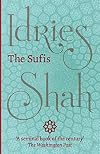
This is a difficult book to review. The author, an acknowledged Sufi master, has accepted the task of writing a comprehensive book about Sufism, the first in the West by a Sufi. But one of the themes of the book is that Sufism cannot be grasped by the intellect or communicated through words. The author is therefore forced to dance around his subject for several hundred pages. He doesn't wish to obscure it with European-style analysis. Neither does he want to trivialize or dumb down a show more tradition that is thousands of years old. The result is at times a history, at others a mystical tract. A bit like the Bible, if the Bible had been commissioned by a publisher of textbooks.
So there is much to frustrate a reader like me, theoretically open to the mystical, but steeped in the Western intellectual tradition. What I think of as essential questions go unanswered, such as the question of how a movement can pass down its traditions with no centers of worship, no hierarchy, and an entirely unofficial (and anonymous) priesthood. At the same time, there is much material of which I'm skeptical, such as the many, many pages devoted to numerology and to finding the hidden meaning of words by converting them to numbers. (I wish I had room here to reproduce one of these three-page analyses.) Then there is the chapter asserting that Francis of Assisi learned much of what he taught from Sufi masters. The circumstantial evidence is interesting; but it isn't, and can never be, conclusive. (I wonder why it matters.)
You can't help feeling that the author, were he being candid, would have begun with a preface urging the reader not to waste his time, because truth can't be found in the book. Nevertheless, there are thousands of interesting anecdotes and stories, most mysterious, which I would be glad to see excerpted for contemplation, away from the numerology, the historical speculation, and the repeated insistance that Sufism is the true mystical path underlying all the world's religions. show less
So there is much to frustrate a reader like me, theoretically open to the mystical, but steeped in the Western intellectual tradition. What I think of as essential questions go unanswered, such as the question of how a movement can pass down its traditions with no centers of worship, no hierarchy, and an entirely unofficial (and anonymous) priesthood. At the same time, there is much material of which I'm skeptical, such as the many, many pages devoted to numerology and to finding the hidden meaning of words by converting them to numbers. (I wish I had room here to reproduce one of these three-page analyses.) Then there is the chapter asserting that Francis of Assisi learned much of what he taught from Sufi masters. The circumstantial evidence is interesting; but it isn't, and can never be, conclusive. (I wonder why it matters.)
You can't help feeling that the author, were he being candid, would have begun with a preface urging the reader not to waste his time, because truth can't be found in the book. Nevertheless, there are thousands of interesting anecdotes and stories, most mysterious, which I would be glad to see excerpted for contemplation, away from the numerology, the historical speculation, and the repeated insistance that Sufism is the true mystical path underlying all the world's religions. show less

A young woman named Fatima experiences the up and downs of fortune in this Sufi teaching tale from Turkey, learning a number of skills that eventually stand her in good stead. The daughter of a prosperous spinner, who taught her his craft, she sets out on a voyage with her father, only to lose him, and everything else she holds dear, in a terrible shipwreck. Adopted by a kind family, she learns to weave, only to see this new life taken from her as well, when she is captured by slavers. show more Bought by a kindly mast-maker, she learns his trade as well, eventually setting out on a voyage to Java, to sell his masts. When yet another disaster strikes, and Fatima finds herself bereft once more, she questions the many misfortunes that have befallen her. But when these skills help her to fulfill a prophecy given to the Emperor of China, and bring her good fortune and happiness, the pattern of her life takes on a new meaning...
Originally credited to Sheikh Mohamed Jamaludin of Adrianople (Edirne, in modern-day Turkey) - apparently there are variants known in Greek folklore as well - this story was included in Idries Shah's 1967 Tales of the Dervishes, and highlights an important lesson about misfortune, and its role in promoting those qualities which will eventually lead to happiness. Presented here in picture-book form, with appealing artwork by Natasha Delmar, who also illustrated Shah's The Old Woman and the Eagle - I particularly like the use of color, and of decorative borders and other elements - Fatima the Spinner and the Tent is an engaging book, one I would recommend to young folklore enthusiasts, and to any picture-book readers who enjoy adventure stories. show less
Originally credited to Sheikh Mohamed Jamaludin of Adrianople (Edirne, in modern-day Turkey) - apparently there are variants known in Greek folklore as well - this story was included in Idries Shah's 1967 Tales of the Dervishes, and highlights an important lesson about misfortune, and its role in promoting those qualities which will eventually lead to happiness. Presented here in picture-book form, with appealing artwork by Natasha Delmar, who also illustrated Shah's The Old Woman and the Eagle - I particularly like the use of color, and of decorative borders and other elements - Fatima the Spinner and the Tent is an engaging book, one I would recommend to young folklore enthusiasts, and to any picture-book readers who enjoy adventure stories. show less

Taken from the folk traditions of Afghanistan and Central Asia, this Sufi teaching tale sets out the story of a foolish old woman who, having never before encountered an eagle, doesn't know what to make of one, when she finally does. In the absence of any knowledge, and despite the eagle's stated denial, she decides that he must be a "funny" kind of pigeon, and sets out to "correct" his flaws. After having his tuft of feathers smoothed and combed down, his claws clipped, and his beak show more straightened, the eagle looks very "funny" indeed! Fortunately, another eagle happens by, helping to set the aquiline victim to rights, and counseling him to avoid those who cannot or will not accept him for what he is...
Well known for adult studies such as The Sufis, as well as for the epic novel Kara Kush, Idries Shah was also a noted collector of folktales from around the world (World Tales: The Extraordinary Coincidence of Stories Told in All Times, in All Places), and many of his stories have been presented in picture-book form. It's interesting to me that a number of other reviewers have expressed dissatisfaction with The Old Woman and the Eagle, citing the fact that the old woman doesn't really learn the error of her ways, as I think it's clear, by the end of the story, that the reader is meant to identify with the eagle, rather than the woman. This is a story, not about learning to accept the realities of the world and the creatures in it, but about how to respond when the people around you won't accept those realities. That shift of perspective, in and of itself, is really quite fascinating.
I don't know that there is really a very engaging 'story' here, but The Old Woman and the Eagle is still worth reading, both for the idea being presented, and also for Natasha Delmar's appealing artwork, with its lovely decorative borders. Recommended primarily to young folklore enthusiasts (particularly those with an interest in Afghanistan), or to anyone looking for Sufi stories for children. show less
Well known for adult studies such as The Sufis, as well as for the epic novel Kara Kush, Idries Shah was also a noted collector of folktales from around the world (World Tales: The Extraordinary Coincidence of Stories Told in All Times, in All Places), and many of his stories have been presented in picture-book form. It's interesting to me that a number of other reviewers have expressed dissatisfaction with The Old Woman and the Eagle, citing the fact that the old woman doesn't really learn the error of her ways, as I think it's clear, by the end of the story, that the reader is meant to identify with the eagle, rather than the woman. This is a story, not about learning to accept the realities of the world and the creatures in it, but about how to respond when the people around you won't accept those realities. That shift of perspective, in and of itself, is really quite fascinating.
I don't know that there is really a very engaging 'story' here, but The Old Woman and the Eagle is still worth reading, both for the idea being presented, and also for Natasha Delmar's appealing artwork, with its lovely decorative borders. Recommended primarily to young folklore enthusiasts (particularly those with an interest in Afghanistan), or to anyone looking for Sufi stories for children. show less
Lists
Awards


You May Also Like


Associated Authors
Statistics
- Works
- 91
- Also by
- 1
- Members
- 6,956
- Popularity
- #3,517
- Rating
- 3.8
- Reviews
- 179
- ISBNs
- 709
- Languages
- 19
- Favorited
- 17
