
Farid al-Din Attar (1145–1221)
Author of The Rubáiyát of Omar Khayyám
About the Author
Image credit: Bust of Farid al-Din Attar, Nishapur, Iran. Photo by Nik_Pendaar / Wikimedia Commons.
Works by Farid al-Din Attar
Muslim Saints and Mystics: Episodes from the Tadhkirat al-Auliya' (Memorial of the Saints) (1966) 82 copies
Associated Works
World Poetry: An Anthology of Verse from Antiquity to Our Time (1998) — Contributor — 499 copies, 2 reviews
Music of a Distant Drum: Classical Arabic, Persian, Turkish, and Hebrew Poems. (2001) — Contributor — 75 copies, 3 reviews
Tagged
Common Knowledge
- Legal name
- Abū Hamīd bin Abū Bakr Ibrāhīm
- Other names
- Attar
- Birthdate
- 1145
- Date of death
- 1221
- Gender
- male
- Occupations
- Pharmacist
- Nationality
- Persia
- Places of residence
- Nishapur, Iran
- Burial location
- Nishapur, Iran
- Map Location
- Iran
Members
Discussions
Petrarch Press - Rubaiyat of Omar Khayyam announcement in Fine Press Forum (February 2023)
Rubáiyát of Omar Khayyám: Khorasan Edition in Tattered but still lovely (September 2012)
Reviews

I have more editions of the Rubáiyát of Omar Khayyám than any other book. I mainly buy new (to me, that is, as most of them are second-hand volumes) editions based upon either the quality of a book as an artefact, or due to the illustrations. The former is a relatively common bibliophilic phenomenon, of which I imagine many reading this review will recognise in themselves. The latter is, I think, due to an unfortunate tendency towards orientalism, a by-product of the cultural context of show more my youthful upbringing. I try to offset this tendency by somewhat extending my knowledge and (hopefully) understanding of other cultures, by which I justify my indulgence. So much for the mea culpas (culpi?).
What attracts me to FitzGerald's rendition is the beauty of his language, particularly in the first edition, and his ordering of the verses to develop themes (perhaps beyond what Khayyám intended? I'm not scholar enough to know for sure). FitzGerald/Khayyám building effects by re-presentation of the concepts of the impermanence of life; the fleeting nature of human existence; the sadness inherent in mortality; the essentially unknowable fate of us all, despite what the "two-and-seventy jarring sects" might say; the logic (that seems the right word, Khayyám being a mathematician, and FitzGerald a student of Greek philosophy) of living in the moment; the consolations of a right good piss-up (this last I might have blasphemously expressed if some interpretations of Khayyám are accepted).
I've no doubt myself that Khayyám was an atheist, notwithstanding claims that there is an underlying Sufi spiritual message in his poetry, though my belief is, admittedly, based upon a rendition of his works by a Westerner stepped in a Christian tradition, even if that tradition was one he ultimately rejected (not to avoid mentioning that I am an atheist myself, so possibly inclined to such a reading of the verses). I find something deeply human about this, looking to ourselves for meaning, or even an acceptance of being in a meaningless universe from which we are required to carve our own temporary meaning if we are to live as persons, even for so brief a time as we have to experience it. I feel in this a connection with Khayyám, though aware that it is mediated through FitzGerald. I've read a literal translation of Khayyám, which did not touch me so deeply. Perhaps it was the more direct phrasing and lack of a distinct thematic thread that I found lacking, or that I was distracted by trying to figure out which quatrains were the basis got FitzGerald's versions. I should read the direct translation again, I think, without the rose-tinted spectacles. show less
What attracts me to FitzGerald's rendition is the beauty of his language, particularly in the first edition, and his ordering of the verses to develop themes (perhaps beyond what Khayyám intended? I'm not scholar enough to know for sure). FitzGerald/Khayyám building effects by re-presentation of the concepts of the impermanence of life; the fleeting nature of human existence; the sadness inherent in mortality; the essentially unknowable fate of us all, despite what the "two-and-seventy jarring sects" might say; the logic (that seems the right word, Khayyám being a mathematician, and FitzGerald a student of Greek philosophy) of living in the moment; the consolations of a right good piss-up (this last I might have blasphemously expressed if some interpretations of Khayyám are accepted).
I've no doubt myself that Khayyám was an atheist, notwithstanding claims that there is an underlying Sufi spiritual message in his poetry, though my belief is, admittedly, based upon a rendition of his works by a Westerner stepped in a Christian tradition, even if that tradition was one he ultimately rejected (not to avoid mentioning that I am an atheist myself, so possibly inclined to such a reading of the verses). I find something deeply human about this, looking to ourselves for meaning, or even an acceptance of being in a meaningless universe from which we are required to carve our own temporary meaning if we are to live as persons, even for so brief a time as we have to experience it. I feel in this a connection with Khayyám, though aware that it is mediated through FitzGerald. I've read a literal translation of Khayyám, which did not touch me so deeply. Perhaps it was the more direct phrasing and lack of a distinct thematic thread that I found lacking, or that I was distracted by trying to figure out which quatrains were the basis got FitzGerald's versions. I should read the direct translation again, I think, without the rose-tinted spectacles. show less
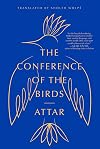
The Conference of the Birds is not merely an allegory; it is a spiritual anatomy of the soul.
Structured around the journey of the birds in search of their sovereign, the Simurgh, Attar constructs one of the most sophisticated mystical narratives in Persian literature. The hoopoe, as guide, summons the scattered birds—each representing a human weakness or attachment—and leads them through seven valleys: quest, love, knowledge, detachment, unity, bewilderment, and annihilation. The show more framework is simple; the execution is profound.
Attar’s genius lies in compression. Unlike later Sufi poets who dissolve doctrine into lyric ecstasy, Attar remains architectonic and severe. His tone is often austere, even confrontational. He does not console the reader; he strips them. Pride, fear, ambition, romantic obsession, attachment to status—each bird’s excuse becomes an indictment of the ego. The path is not sentimentalized. It demands the death of self-certainty.
The culmination—the revelation that the Simurgh is none other than the thirty birds who survive the journey—is among the most powerful metaphysical symbols in world literature. It articulates wahdat (unity) without collapsing transcendence into crude pantheism. The divine is encountered not as an external monarch but as the unveiled reality of purified being. The seeker and the sought are not identical in essence, yet separation dissolves at the level of realization.
What distinguishes Attar from Rumi, who was deeply influenced by him, is tone. Rumi persuades with warmth and ecstatic overflow. Attar instructs with gravity and inevitability. His world is one of spiritual peril; the stakes are ultimate. Even his anecdotes—of kings, dervishes, lovers, and madmen—carry a sharp moral edge.
The poem can feel episodic. Attar frequently interrupts the main narrative with illustrative tales, some more compelling than others. Yet this fragmentation mirrors the path itself: the traveler must confront many mirrors before recognizing the final one.
For readers approaching Sufi literature seriously, The Conference of the Birds is foundational. It is not a decorative mystical text; it is a disciplined manual disguised as poetry. It demands patience and reflection. Read slowly, its symbolism unfolds with increasing clarity.
Attar does not promise comfort. He promises transformation—and reminds us of its cost. show less
Structured around the journey of the birds in search of their sovereign, the Simurgh, Attar constructs one of the most sophisticated mystical narratives in Persian literature. The hoopoe, as guide, summons the scattered birds—each representing a human weakness or attachment—and leads them through seven valleys: quest, love, knowledge, detachment, unity, bewilderment, and annihilation. The show more framework is simple; the execution is profound.
Attar’s genius lies in compression. Unlike later Sufi poets who dissolve doctrine into lyric ecstasy, Attar remains architectonic and severe. His tone is often austere, even confrontational. He does not console the reader; he strips them. Pride, fear, ambition, romantic obsession, attachment to status—each bird’s excuse becomes an indictment of the ego. The path is not sentimentalized. It demands the death of self-certainty.
The culmination—the revelation that the Simurgh is none other than the thirty birds who survive the journey—is among the most powerful metaphysical symbols in world literature. It articulates wahdat (unity) without collapsing transcendence into crude pantheism. The divine is encountered not as an external monarch but as the unveiled reality of purified being. The seeker and the sought are not identical in essence, yet separation dissolves at the level of realization.
What distinguishes Attar from Rumi, who was deeply influenced by him, is tone. Rumi persuades with warmth and ecstatic overflow. Attar instructs with gravity and inevitability. His world is one of spiritual peril; the stakes are ultimate. Even his anecdotes—of kings, dervishes, lovers, and madmen—carry a sharp moral edge.
The poem can feel episodic. Attar frequently interrupts the main narrative with illustrative tales, some more compelling than others. Yet this fragmentation mirrors the path itself: the traveler must confront many mirrors before recognizing the final one.
For readers approaching Sufi literature seriously, The Conference of the Birds is foundational. It is not a decorative mystical text; it is a disciplined manual disguised as poetry. It demands patience and reflection. Read slowly, its symbolism unfolds with increasing clarity.
Attar does not promise comfort. He promises transformation—and reminds us of its cost. show less

Having loved Edward FitzGerald's free translation of these verses for many years, I wanted to read a more literal translation, which I got with this edition.
Initially, I wasn't taken: the verses were stark and plain for the most part, and there was no real connection between one quatrain and the next. But I persevered and as the memory of FitzGerald receded somewhat, I was able to enjoy the poems on their own terms. The humour and beauty of the "originals" (as close as a non-Persian speaker show more can get to the originals, anyway) shone through and won me over.
It was fun, too, to recognise some old friends in new clothes.
The translators' fascinating introduction and appendices were worth the price of the book by themselves, enhancing enjoyment of the verses by giving some context.
I guess I still prefer FitzGerald's translation because it's the one I've grown up with, but I will definitely revisit this edition, too. show less
Initially, I wasn't taken: the verses were stark and plain for the most part, and there was no real connection between one quatrain and the next. But I persevered and as the memory of FitzGerald receded somewhat, I was able to enjoy the poems on their own terms. The humour and beauty of the "originals" (as close as a non-Persian speaker show more can get to the originals, anyway) shone through and won me over.
It was fun, too, to recognise some old friends in new clothes.
The translators' fascinating introduction and appendices were worth the price of the book by themselves, enhancing enjoyment of the verses by giving some context.
I guess I still prefer FitzGerald's translation because it's the one I've grown up with, but I will definitely revisit this edition, too. show less
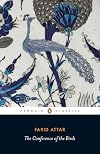
The writings of the Sufis are, without a doubt, some of the most beautiful and challenging spiritual works in existence. Rumi's works are currently undergoing something of a renaissance in the Western world but the name of Farid Ud-Din Attar is not as well known. This is unfortunate, since The Conference of the Birds provides, in my opinion, a much better insight into Sufi philosophy than the bits and pieces of Rumi floating about the New Age universe.
Attar's beautiful descriptions, show more exquisite metaphors and delightful parables describe the stages on the soul's journey to union with God. An extended metaphor for the soul, the birds gather and travel through various valleys to reach the Simorgh - a state of ecstatic oneness with deity. The Hoopoe acts as the guide and provides answers to the bird's questions and doubts about the journey - usually with short illustrative tales. These tales are each tiny drops of gold, the longest being only a few hundred lines. The overarching theme is the denial of the self to gain ultimate bliss. This is no intellectual exercise and much of the advice given is shocking and revolutionary. In the extended tale of Sheik Sam'an, the Sheik leaves his faith and becomes a Christian for the love of a woman who ultimately spurns him. His apostasy and depravity astound his followers who swiftly abandon him. A Sufi teacher chastises them for their lack of faith and eventually they return to his side. Sam'an then reconverts and his love is converted too. The message would seem to be that to find God it may be necessary to abandon conventional notions of behaviour and faith and plunge forward with wild abandon, losing the self. Some of the stories may shock our sensibilities, and no doubt had the same effect on Attar's medieval audiences. A kind of counter-culture attitude is displayed in the book, with tales of romantic love between men and other "un-Islamic" behaviours challenging accepted norms.
As to the book itself, the translation is done in "heroic couplets" which according to the introduction, best suits the style of the arabic original. It at first seems a little stilted but soon lends a beauty of its own to the work. A fairly substantial introduction helps put the book in context and describes what is known of Attar's life and times. A biographical index is included which provides details on the many characters - often historical - who people the pages of the poem. This book is a beautiful little gem, filled with a lot of wisdom. It is definitely worth the read for members of any faith, even those who aren't practicing Sufis. show less
Attar's beautiful descriptions, show more exquisite metaphors and delightful parables describe the stages on the soul's journey to union with God. An extended metaphor for the soul, the birds gather and travel through various valleys to reach the Simorgh - a state of ecstatic oneness with deity. The Hoopoe acts as the guide and provides answers to the bird's questions and doubts about the journey - usually with short illustrative tales. These tales are each tiny drops of gold, the longest being only a few hundred lines. The overarching theme is the denial of the self to gain ultimate bliss. This is no intellectual exercise and much of the advice given is shocking and revolutionary. In the extended tale of Sheik Sam'an, the Sheik leaves his faith and becomes a Christian for the love of a woman who ultimately spurns him. His apostasy and depravity astound his followers who swiftly abandon him. A Sufi teacher chastises them for their lack of faith and eventually they return to his side. Sam'an then reconverts and his love is converted too. The message would seem to be that to find God it may be necessary to abandon conventional notions of behaviour and faith and plunge forward with wild abandon, losing the self. Some of the stories may shock our sensibilities, and no doubt had the same effect on Attar's medieval audiences. A kind of counter-culture attitude is displayed in the book, with tales of romantic love between men and other "un-Islamic" behaviours challenging accepted norms.
As to the book itself, the translation is done in "heroic couplets" which according to the introduction, best suits the style of the arabic original. It at first seems a little stilted but soon lends a beauty of its own to the work. A fairly substantial introduction helps put the book in context and describes what is known of Attar's life and times. A biographical index is included which provides details on the many characters - often historical - who people the pages of the poem. This book is a beautiful little gem, filled with a lot of wisdom. It is definitely worth the read for members of any faith, even those who aren't practicing Sufis. show less
Lists
Awards


You May Also Like


Associated Authors
Statistics
- Works
- 34
- Also by
- 5
- Members
- 5,403
- Popularity
- #4,618
- Rating
- 4.1
- Reviews
- 68
- ISBNs
- 301
- Languages
- 25
- Favorited
- 5