
Omar Khayyám (1048–1131)
Author of The Rubáiyat of Omar Khayyám (FitzGerald)
About the Author
Known in Iran as a leading mathematician, Omar gained literary importance through certain quatrains that were translated by Edward FitzGerald. The Ruba'iyat is justly famous in English translation. Others besides FitzGerald have tried their hand at translating it, not all with admired results. show more Bowens's is a good example of competent and pleasing work. (Bowker Author Biography) show less
Image credit: Copyright © The Circle of Ancient Iranian Studies (CAIS)
Works by Omar Khayyám
Wine of the Mystic : The Rubaiyat of Omar Khayyam : A Spiritual Interpretation (1994) — Author; Author — 105 copies, 1 review
The Rubáiyát of Omar Khayyám and Other Persian Poems: An Anthology of Verse Translations (1954) — Contributor — 73 copies
Rubáiyát of Omar Khayyám Rendered into English Verse by Edward Fitzgerald followed by Euphranor a Dialogue on Youth and Salámán and Absál, an Allegory Translated from the… (1953) — Contributor — 26 copies, 1 review
رباعيات خيام 20 copies
The Authentic Rubaiyyat of Omar Khayaam: A New Translation with Critical Commentaries (1993) 7 copies
De ware zin heeft niemand nog verstaan kwatrijnen van Omar Khayyâm en andere Perzische dichters (2009) 6 copies
Poemoj de Omar Kajam 5 copies
Četrrindes 2 copies
The Rubaiyat of Omar Khayyam / edited from a newly discovered ms. dated 658 (1259-60) in the possession of A. Chester Beatty Esq. (1949) 2 copies
رباعيات الخيام 2 copies
Rubayat - ed. José Olympio 1 copy
Rubayat - ed. Civ. Bras. 1 copy
Rubayat - coleção rubayat 1 copy
Rubayat - ed. Bolso 1 copy
Die Sprüche der Weisheit 1 copy
Rubáiyát of Omar Khayyám: English, French, German, Italian, and Danish Translations, Vol. 1 of 2 (Classic Reprint) (2012) 1 copy
History of New York 1 copy
Sinnsprüche 1 copy
Lyubovnyy napitok. Rubai 1 copy
Рубоийлар - Рубайяат 1 copy
The Ruba'iyat 1 copy
Indledning til Rubaiyat 1 copy
Rubaiyat "Odes ao vinho" 1 copy
ඔමර් ඛය්යාට් රුබාය්යාට් 1 copy
ÖMER HAYYAM VE RUBAİLERİ 1 copy
rbaiyat of omar khayyam 1 copy
Rubāʻiyāt 1 copy
Rubāʻīyāt-i nādirah-ʼi ayyām-i Khayyām : shāmil-i rubāʼīyāt-i aṣīl barʹgiriftah az nusakh-i muʻtabar 1 copy
LAS CUARTETAS 1 copy
Extracts from The Rubaiyat 1 copy
Rubāʻīyāt-i Ḥakīm Khayyām : Ṭarabkhānah-ʼi Yār Aḥmad Rashīdī, Risālah-ʼi Silsilat al-Tartīb, Khuṭbah-ʼi Tamjīd-i Ibn Sīnā (2019) 1 copy
Omar Khayyám the poet 1 copy
Roba'iyyat 1 copy
Лучшие Афоризмы 1 copy
Sonce zlati naše čaše 1 copy
Rubayat - ed. Garnier 1 copy
Rubayat - ed. de luxo inglês 1 copy
Associated Works
Literature: An Introduction to Fiction, Poetry, and Drama (1995) — Contributor, some editions — 1,017 copies, 7 reviews
World Poetry: An Anthology of Verse from Antiquity to Our Time (1998) — Contributor — 499 copies, 2 reviews
Music of a Distant Drum: Classical Arabic, Persian, Turkish, and Hebrew Poems. (2001) — Contributor — 76 copies, 3 reviews
Grolier Classics: Jane Eyre, Maxims and Reflections, Essays of Elia, Rubaiyat (1956) — Contributor — 21 copies
Oogst Der Tijden. keur uit de werken van schrijvers en dichters aller volken en eeuwen (1940) — Contributor — 12 copies
Tagged
Common Knowledge
- Legal name
- ol-Khayyami, Abu ol-Fath Omar ebn Ebrahim
غیاث الدین ابو الفتح عمر بن ابراهیم خیام نیشابوری - Birthdate
- 1048-05-18
- Date of death
- 1131-12-04
- Gender
- male
- Occupations
- poet
mathematician
astronomer - Nationality
- Persia
- Birthplace
- Nishapur, Khorasan (present-day Iran)
- Places of residence
- Nishapur, Iran
Khorasan, Iran - Burial location
- Nishapur, Iran
- Map Location
- Iran
Members
Discussions
Omar Khayyam in Combiners! (August 2025)
Petrarch Press - Rubaiyat of Omar Khayyam announcement in Fine Press Forum (February 2023)
Rubáiyát of Omar Khayyám: Khorasan Edition in Tattered but still lovely (September 2012)
Reviews
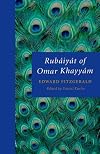
When people say a book is difficult to read they normally mean there is something intrinsically challenging about the text. Ulysses is difficult because, well, it's by James Joyce; The Tale of Genji is difficult because there are five hundred characters spanning half a century, and no one has a name. But this edition of Rubáiyát of Omar Khayyám is the first book I've read that was difficult to read from a purely mechanical point of view.
After the book's thorough and interesting show more introduction we come to the reproduction of the original book. FitzGerald didn't want to ruin the text of the poem with footnotes, so uses endnotes, marked out by numeric superscripts. So far so good. Daniel Karlin, this edition's editor, wants to respect FitzGerald's wishes so also omits footnotes and moreover omits any superscripts to inform the reader of the presence of one of his endnotes. So now not only does the reader need to mark three pages simultaneously, the poem, FitzGerald's endnotes, and Karlin's end-endnotes, but also he must keep flicking to the latter of the three in case Karlin has just pointed out something useful. (In fact for the full experience one should mark a fourth set of pages where variants are included for each stanza from the five different editions of FitzGerald's work.)
Having virtually dislocated my fingers after three stanzas in order to keep up with this merry charade I felt obliged to utter a playground epithet pointing out that this style of reading was a poor substitute for a game of soliders. And so I gave up on Karlin's end-endnotes and made do with Fitzgerald's, referring to Karlin's only if something I really didn't understand came up. And then I re-read the poem using Karlin's notes rather than Fitzgerald's. And then I read the variant stanzas, and the intriguing appendices. Suffice it to that once I figured out how to read the book I really did enjoy it. show less
After the book's thorough and interesting show more introduction we come to the reproduction of the original book. FitzGerald didn't want to ruin the text of the poem with footnotes, so uses endnotes, marked out by numeric superscripts. So far so good. Daniel Karlin, this edition's editor, wants to respect FitzGerald's wishes so also omits footnotes and moreover omits any superscripts to inform the reader of the presence of one of his endnotes. So now not only does the reader need to mark three pages simultaneously, the poem, FitzGerald's endnotes, and Karlin's end-endnotes, but also he must keep flicking to the latter of the three in case Karlin has just pointed out something useful. (In fact for the full experience one should mark a fourth set of pages where variants are included for each stanza from the five different editions of FitzGerald's work.)
Having virtually dislocated my fingers after three stanzas in order to keep up with this merry charade I felt obliged to utter a playground epithet pointing out that this style of reading was a poor substitute for a game of soliders. And so I gave up on Karlin's end-endnotes and made do with Fitzgerald's, referring to Karlin's only if something I really didn't understand came up. And then I re-read the poem using Karlin's notes rather than Fitzgerald's. And then I read the variant stanzas, and the intriguing appendices. Suffice it to that once I figured out how to read the book I really did enjoy it. show less

Voz da antiga Pérsia, rimar com o cheiro do vinho... Poeta que conta estrelas, Omar da cor do rubi. Khayyam, ó Khayyam... Sabias que a tua fala de barro ainda ronda o meu coração? Chocam-se os copos, os risos se ouvem e o vinho, teu adorado vinho se derrama nos cálices... E a copeira! Ai, os olhos dessa donzela! Cai a noite, a lua vai aparecendo e do cofre do Nada voltou a surgir o jogo, o caminhar que nunca termina... Será o crescer da relva, o canto do rouxinol... Ou o eco de um show more rubaiyat? Oleiro dos Céus, torno que nunca paras... O Livro folheias novamente... E eu apenas desejo esses lábios que me esperam e poder me enredar nos cabelos da minha doce bem-amada. Dá-me o vinho dos teus versos! Canta em minha alma... Omar Khayyam! show less

I have more editions of the Rubáiyát of Omar Khayyám than any other book. I mainly buy new (to me, that is, as most of them are second-hand volumes) editions based upon either the quality of a book as an artefact, or due to the illustrations. The former is a relatively common bibliophilic phenomenon, of which I imagine many reading this review will recognise in themselves. The latter is, I think, due to an unfortunate tendency towards orientalism, a by-product of the cultural context of show more my youthful upbringing. I try to offset this tendency by somewhat extending my knowledge and (hopefully) understanding of other cultures, by which I justify my indulgence. So much for the mea culpas (culpi?).
What attracts me to FitzGerald's rendition is the beauty of his language, particularly in the first edition, and his ordering of the verses to develop themes (perhaps beyond what Khayyám intended? I'm not scholar enough to know for sure). FitzGerald/Khayyám building effects by re-presentation of the concepts of the impermanence of life; the fleeting nature of human existence; the sadness inherent in mortality; the essentially unknowable fate of us all, despite what the "two-and-seventy jarring sects" might say; the logic (that seems the right word, Khayyám being a mathematician, and FitzGerald a student of Greek philosophy) of living in the moment; the consolations of a right good piss-up (this last I might have blasphemously expressed if some interpretations of Khayyám are accepted).
I've no doubt myself that Khayyám was an atheist, notwithstanding claims that there is an underlying Sufi spiritual message in his poetry, though my belief is, admittedly, based upon a rendition of his works by a Westerner stepped in a Christian tradition, even if that tradition was one he ultimately rejected (not to avoid mentioning that I am an atheist myself, so possibly inclined to such a reading of the verses). I find something deeply human about this, looking to ourselves for meaning, or even an acceptance of being in a meaningless universe from which we are required to carve our own temporary meaning if we are to live as persons, even for so brief a time as we have to experience it. I feel in this a connection with Khayyám, though aware that it is mediated through FitzGerald. I've read a literal translation of Khayyám, which did not touch me so deeply. Perhaps it was the more direct phrasing and lack of a distinct thematic thread that I found lacking, or that I was distracted by trying to figure out which quatrains were the basis got FitzGerald's versions. I should read the direct translation again, I think, without the rose-tinted spectacles. show less
What attracts me to FitzGerald's rendition is the beauty of his language, particularly in the first edition, and his ordering of the verses to develop themes (perhaps beyond what Khayyám intended? I'm not scholar enough to know for sure). FitzGerald/Khayyám building effects by re-presentation of the concepts of the impermanence of life; the fleeting nature of human existence; the sadness inherent in mortality; the essentially unknowable fate of us all, despite what the "two-and-seventy jarring sects" might say; the logic (that seems the right word, Khayyám being a mathematician, and FitzGerald a student of Greek philosophy) of living in the moment; the consolations of a right good piss-up (this last I might have blasphemously expressed if some interpretations of Khayyám are accepted).
I've no doubt myself that Khayyám was an atheist, notwithstanding claims that there is an underlying Sufi spiritual message in his poetry, though my belief is, admittedly, based upon a rendition of his works by a Westerner stepped in a Christian tradition, even if that tradition was one he ultimately rejected (not to avoid mentioning that I am an atheist myself, so possibly inclined to such a reading of the verses). I find something deeply human about this, looking to ourselves for meaning, or even an acceptance of being in a meaningless universe from which we are required to carve our own temporary meaning if we are to live as persons, even for so brief a time as we have to experience it. I feel in this a connection with Khayyám, though aware that it is mediated through FitzGerald. I've read a literal translation of Khayyám, which did not touch me so deeply. Perhaps it was the more direct phrasing and lack of a distinct thematic thread that I found lacking, or that I was distracted by trying to figure out which quatrains were the basis got FitzGerald's versions. I should read the direct translation again, I think, without the rose-tinted spectacles. show less
When people say a book is difficult to read they normally mean there is something intrinsically challenging about the text. Ulysses is difficult because, well, it's by James Joyce; The Tale of Genji is difficult because there are five hundred characters spanning half a century, and no one has a name. But this edition of Rubáiyát of Omar Khayyám is the first book I've read that was difficult to read from a purely mechanical point of view.
After the book's thorough and interesting show more introduction we come to the reproduction of the original book. FitzGerald didn't want to ruin the text of the poem with footnotes, so uses endnotes, marked out by numeric superscripts. So far so good. Daniel Karlin, this edition's editor, wants to respect FitzGerald's wishes so also omits footnotes and moreover omits any superscripts to inform the reader of the presence of one of his endnotes. So now not only does the reader need to mark three pages simultaneously, the poem, FitzGerald's endnotes, and Karlin's end-endnotes, but also he must keep flicking to the latter of the three in case Karlin has just pointed out something useful. (In fact for the full experience one should mark a fourth set of pages where variants are included for each stanza from the five different editions of FitzGerald's work.)
Having virtually dislocated my fingers after three stanzas in order to keep up with this merry charade I felt obliged to utter a playground epithet pointing out that this style of reading was a poor substitute for a game of soliders. And so I gave up on Karlin's end-endnotes and made do with Fitzgerald's, referring to Karlin's only if something I really didn't understand came up. And then I re-read the poem using Karlin's notes rather than Fitzgerald's. And then I read the variant stanzas, and the intriguing appendices. Suffice it to that once I figured out how to read the book I really did enjoy it. show less
After the book's thorough and interesting show more introduction we come to the reproduction of the original book. FitzGerald didn't want to ruin the text of the poem with footnotes, so uses endnotes, marked out by numeric superscripts. So far so good. Daniel Karlin, this edition's editor, wants to respect FitzGerald's wishes so also omits footnotes and moreover omits any superscripts to inform the reader of the presence of one of his endnotes. So now not only does the reader need to mark three pages simultaneously, the poem, FitzGerald's endnotes, and Karlin's end-endnotes, but also he must keep flicking to the latter of the three in case Karlin has just pointed out something useful. (In fact for the full experience one should mark a fourth set of pages where variants are included for each stanza from the five different editions of FitzGerald's work.)
Having virtually dislocated my fingers after three stanzas in order to keep up with this merry charade I felt obliged to utter a playground epithet pointing out that this style of reading was a poor substitute for a game of soliders. And so I gave up on Karlin's end-endnotes and made do with Fitzgerald's, referring to Karlin's only if something I really didn't understand came up. And then I re-read the poem using Karlin's notes rather than Fitzgerald's. And then I read the variant stanzas, and the intriguing appendices. Suffice it to that once I figured out how to read the book I really did enjoy it. show less
Lists
Unread books (1)
1970s (1)
Folio Society (2)
Awards


You May Also Like


Associated Authors
Statistics
- Works
- 136
- Also by
- 10
- Members
- 10,279
- Popularity
- #2,308
- Rating
- 4.0
- Reviews
- 141
- ISBNs
- 497
- Languages
- 28
- Favorited
- 19

