
Ibn-al-ʿArabī (1165–1240)
Author of Ibn-Al-Arabi: The Bezels of Wisdom
About the Author
Muhammad ibn-'Ali ibn al-Arabi, also called Muhyi al-Din, was the celebrated Muslim philosopher who first formulated the esoteric mystical dimension of Islamic thought. Born in Murcia, Spain, he devoted 30 years to the study of traditional Islamic sciences in Seville. After travelling extensively show more in the East, he settled in Damascus, where he spent his last days in contemplation, teaching, and writing. Ibn al-Arabi composed two great mystical treatises, The Meccan Revelations and Wisdom of the Prophets (Fusus al-HikamFusus al-Hikam). Completed in Damascus, The Meccan Revelations is a personal encyclopedia of 560 chapters extending over all the esoteric sciences in Islam as he knew them, combined with valuable autobiographical information. Wisdom contains only 27 chapters, but, as the mature expression of ibn al-Arabi's mystical thought, it is regarded as one of the most important documents of its kind. However, he is best known for his mystical odes, wherein, like all Sufis, he expresses his longing for union with God in terms of passionate human love (in Mecca, he fell in love with a young beauty who came to personify wisdom for him). It is not clear whether his poetry is religious or erotic, an ambiguity also characteristic of the work of the great Persian lyricst Hafiz. Critics have found in ibn al-Arabi's poetry, as in most Sufi verse, elements of Muslim orthodoxy, Manichaeanism, Gnosticism, Neoplatonism, and Christianity. (Bowker Author Biography) show less
Series
Works by Ibn-al-ʿArabī
Divine Governance of the Human Kingdom: Including What the Seeker Needs and The One Alone (1997) 44 copies, 1 review
The Four Pillars of Spiritual Transformation: The Adornment of the Spiritually Transformed (Hilyat al-abdal) (Mystical Treatises of Muhyiddin Ibn 'Arabi) (2009) 26 copies
The Translator of Desires: Poems (The Lockert Library of Poetry in Translation, 147) (2021) 25 copies
Contemplation of the Holy Mysteries: The Mashahid al-asrar of Ibn 'Arabi (1996) 22 copies, 5 reviews
What the Seeker Needs: Essays on Spiritual Practice, Oneness, Majesty and Beauty (Threshold Sufi Classics) (1992) 20 copies, 1 review
101 Diamonds from the Oral Tradition of the Glorious Messenger Muhammad (2002) — Root Text — 15 copies
Ismail Hakki Bursevi's translation of, and commentary on Fusus al-hikam by Muhyiddin ibn ʻArabi (1991) 11 copies
La maravillosa vida de Du-l-Nun, el egipcio =: Al-kawkab al-durri fi manauib Di-l-Nun al misri (Coleccion Ibn Al'Arabi) (Spanish Edition) (1988) 7 copies, 2 reviews
The Secrets of Voyaging: Kitab al-isfar 'an nata'ij al-asfar (Mystical Treatises of Muhyiddin Ibn 'Arabi) (2015) 7 copies
Dīwān Muḥyī al-Dīn ibn ‘Arabī 4 copies
Der verborgene Schatz : des größten Meisters mystische Philosophie der Einheit aller Existenz (2006) 4 copies
Le contemplazioni di Dio. Le visioni teofaniche dei santi misteri e le ascensioni delle luci divine (2012) 3 copies
Ibn Arabi Unveiling the Secret of the Most Beautiful Names (Kashf al-ma'na 'an sirr asma Allah al-husna) (2018) 2 copies
رسائل ابن عربي 2 copies
Fusûsu'l - Hikem Terüme Ve Şerhi I 2 copies
İlahi Aşk 2 copies
Fütuhat-ı Mekkiyye 10 2 copies
Ibn al-‘Arabī’s The Openings Revealed in Makkah – Vol 3 – (al-Futūḥāt al-Makkīyah – Books 5 & 6) (2021) — Author — 2 copies
Kaza ve Kader 1 copy
Razlagalec hrepenenj 1 copy
ديوان ابن العربى 1 copy
< Il libro del Sè divino > ("Kitab al-ya'wa huwa kitab al-huwa", Andalusia, XIII sec.) 1 copy, 1 review
Ko samog sebe poznaje...., 1 copy
لوازم الحب الإلهي 1 copy
Fusus ül-Hikem 1 copy
Os Engastes da Sabedoria 1 copy
Al-Futuhat al-makkiyya 1 copy
El intérprete de los deseos Taryumán al-Ashwáq (Interpreter of Desires) [sound recording] (2002) 1 copy
ماهية القلب 1 copy
Die sieben Tage des Herzens: Des größten Sufi-Meisters Morgen- und Abendgebete für jeden Tag der Woche (2019) 1 copy
Sahilsiz Deniz 1 copy
The Translator of Desires 1 copy
O adorno dos abdāl (hilyat al-abdāl) e as Gnoses e Estados Espirituais que dele se Manifestam 1 copy
Tarjumān al-Ashwāq 1 copy
Fütuhat-ı Mekkiyye 4 1 copy
Fütuhat-ı Mekkiyye 3 1 copy
Fütuhat-ı Mekkiyye 2 1 copy
Associated Works
Leading from Within: Poetry That Sustains the Courage to Lead (2007) — Contributor — 114 copies, 3 reviews
Tagged
Common Knowledge
- Canonical name
- Ibn-al-ʿArabī
- Other names
- Abū 'Abdullāh Muḥammad ibn 'Alī ibn Muḥammad ibn al-`Arabī
Ibn al-Arabi
Ibn 'Arabi
Muhammad ibn al-`Arabi al-Hatimi - Birthdate
- 1165-07-28
- Date of death
- 1240-11-10
- Gender
- male
- Occupations
- mystic
poet
philosopher - Nationality
- Andalusia
- Birthplace
- Murcia, Spain
- Places of residence
- Murcia, Spain
Seville, Spain
Sale, Morocco
Mecca, Saudi Arabia
Bagdad, Iraq - Place of death
- Damascus, Syria
- Burial location
- Damascus, Syria
Members
Reviews

The "retreat" (khalwa) in the subtitle of Journey to the Lord of Power is not the sort of retreat where members of a religious community join together to temporarily devote their full attentions to spiritual concerns. It is rather the anchoritic sort of withdrawal by an individual mystic from the world as a whole. This medieval Sufi epistle is centrally concerned with a particular practice of direct attainment to God, to be undertaken in solitude. Translator Rabia Terri Harris identifies show more such attainment with the Night Journey and Ascension of Muhammad (3). Author Ibn al-ʻArabī cautions his correspondent about the danger of the practice, insisting that it should be undertaken only under the direct supervision of a teacher (shaykh), or by one who has mastered his own imagination.
In Thelemic argot this prerequisite mastery would be the "perfect control of the Astral Plane" demanded of a Neophyte according to "One Star in Sight." The basic mechanism of the practice described here by al-ʻArabī seems to be fundamentally identical with that outlined as Sagitta trans Lunam or "Rising on the Planes" in Liber O. In fact, the bulk of the epistle is analogous to Crowley's survey of the hierarchy of mystical trances at the end of "The Herb Dangerous," to which Liber O refers the reader for "the results of success."
The discussion of the practice and its results is supported with some metaphysical ideas. The first of these is "renewed creation" (khalq jadid). In the appended commentary from ʻAbd al-Karīm Jīlī' (ca. 1400 C.E.) the explication of khalq jadid is redolent of Thelemic gnosis, in that it describes the "moment" (waqt) as the dialectical product of divine manifestation (zahir) and hiding (batin). A Thelemite will immediately understand these concepts to be figured by Ra-Hoor-Khuit, Nuit, and Hadit in The Book of the Law. In fact, the religious application of the manifest-hidden polarity has its root in the Quran: "He is the First and the Last, and the Manifest and the Hidden, and He has knowledge of everything" (57:3). It is very likely that the Prophet of Thelema received this concept from his Sufi instructor in Egypt. Another metaphysical notion explained here is that of the six Realms, general fields of experience within the cycle of human existence. O.T.O. initiates may be able to make a constructive comparison with the Third Triad degrees of that Order.
Furthermore, there are a couple theological points made, pendant to the main matter of the text. One of these is the distinction between saints and prophets relative to the attainments discussed here. (Continuing my effort at translation, Sufi "saints" are Masters of the Temple, and "prophets" are Magi.) The other is concerned to conserve the priority of Muhammad among the prophets, for the sake of Muslim orthodoxy.
Besides the al-ʻArabī text itself, this edition contains excerpts from the aforementioned commentary of Jīlī', a translator's preface, an introduction by a contemporary shaykh of the Jerrahi tariqa, a biographical essay on al-ʻArabī by another member of the Halveti-Jerrahi Order, and a useful glossary. It is illustrated by full-page calligraphic images of divine names, reproduced from large murals on the Grand Mosque in Busra, Turkey, originally painted in the nineteenth century. Even in black and white at less than a tenth of their original scale, these designs are very beautiful. show less
In Thelemic argot this prerequisite mastery would be the "perfect control of the Astral Plane" demanded of a Neophyte according to "One Star in Sight." The basic mechanism of the practice described here by al-ʻArabī seems to be fundamentally identical with that outlined as Sagitta trans Lunam or "Rising on the Planes" in Liber O. In fact, the bulk of the epistle is analogous to Crowley's survey of the hierarchy of mystical trances at the end of "The Herb Dangerous," to which Liber O refers the reader for "the results of success."
The discussion of the practice and its results is supported with some metaphysical ideas. The first of these is "renewed creation" (khalq jadid). In the appended commentary from ʻAbd al-Karīm Jīlī' (ca. 1400 C.E.) the explication of khalq jadid is redolent of Thelemic gnosis, in that it describes the "moment" (waqt) as the dialectical product of divine manifestation (zahir) and hiding (batin). A Thelemite will immediately understand these concepts to be figured by Ra-Hoor-Khuit, Nuit, and Hadit in The Book of the Law. In fact, the religious application of the manifest-hidden polarity has its root in the Quran: "He is the First and the Last, and the Manifest and the Hidden, and He has knowledge of everything" (57:3). It is very likely that the Prophet of Thelema received this concept from his Sufi instructor in Egypt. Another metaphysical notion explained here is that of the six Realms, general fields of experience within the cycle of human existence. O.T.O. initiates may be able to make a constructive comparison with the Third Triad degrees of that Order.
Furthermore, there are a couple theological points made, pendant to the main matter of the text. One of these is the distinction between saints and prophets relative to the attainments discussed here. (Continuing my effort at translation, Sufi "saints" are Masters of the Temple, and "prophets" are Magi.) The other is concerned to conserve the priority of Muhammad among the prophets, for the sake of Muslim orthodoxy.
Besides the al-ʻArabī text itself, this edition contains excerpts from the aforementioned commentary of Jīlī', a translator's preface, an introduction by a contemporary shaykh of the Jerrahi tariqa, a biographical essay on al-ʻArabī by another member of the Halveti-Jerrahi Order, and a useful glossary. It is illustrated by full-page calligraphic images of divine names, reproduced from large murals on the Grand Mosque in Busra, Turkey, originally painted in the nineteenth century. Even in black and white at less than a tenth of their original scale, these designs are very beautiful. show less

شرح ابن عربي لأشعاره قلل بعض الشئ من متعة القراءة. أسباب شرح المؤلف وجيهة، وما أعجبنى منها كان شرحه لهذا البيت
أديـنُ بدينِ الحــــبِ أنّى توجّـهـتْ
ركـائـبهُ ، فالحبُّ ديـني وإيـمَاني
.حيث أشار إبن عربي إلى قول الله تعالى: فأتبعونى يحببكم الله. فلهذا سماه دين الحب ودان به show more ليتلقى تكليفات محبوبه بالقبول والرضى والمحبة ورفع المشقة والكلفة فيها بأي وجه كانت. show less
أديـنُ بدينِ الحــــبِ أنّى توجّـهـتْ
ركـائـبهُ ، فالحبُّ ديـني وإيـمَاني
.حيث أشار إبن عربي إلى قول الله تعالى: فأتبعونى يحببكم الله. فلهذا سماه دين الحب ودان به show more ليتلقى تكليفات محبوبه بالقبول والرضى والمحبة ورفع المشقة والكلفة فيها بأي وجه كانت. show less
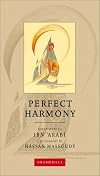
Another of the most magnificent books of calligraphy from the Shambhala Calligraphy Series. This one has the art of Hassan Massoudy, a master of calligraphy. This series of books, now sadly out of print must not be lost. They contain some of the most beautiful calligraphy I have ever seen.
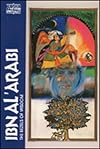
Ibn Al-'Arabi was born in 1165 in Murcia, Spain. He became a Sufi and wrote The Bezels of Wisdom during his later years. This translation contains biographical information in the Introduction.
You May Also Like


Associated Authors
Statistics
- Works
- 186
- Also by
- 3
- Members
- 1,476
- Popularity
- #17,398
- Rating
- 4.0
- Reviews
- 75
- ISBNs
- 227
- Languages
- 10
- Favorited
- 3