
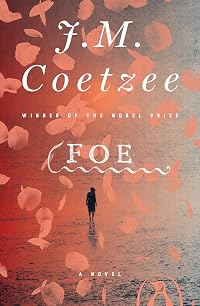
Foe
by J. M. Coetzee
On This Page
Description
Returning to London after being marooned on an island in the Atlantic, Susan Barton approaches the author Daniel Foe with the story of her adventures with Robinson Cruso and the mute Friday.Tags
Recommendations

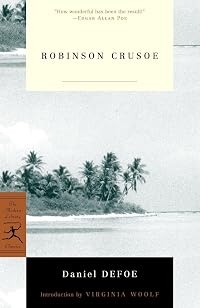


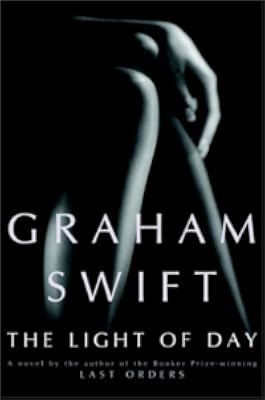

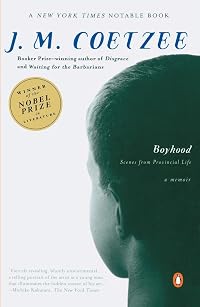
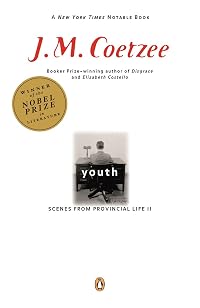
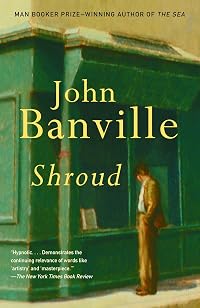

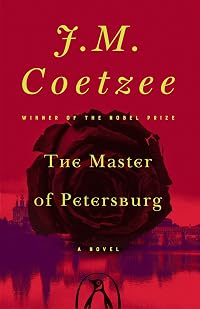

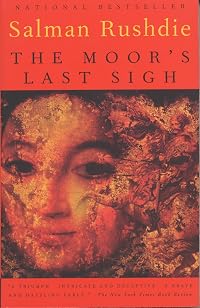
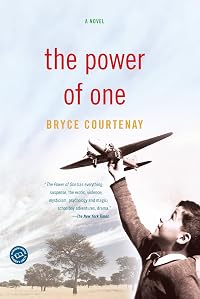
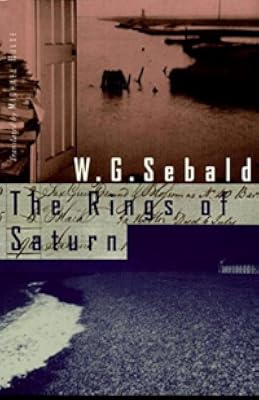
Member Recommendations

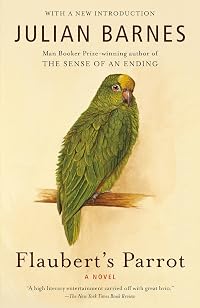
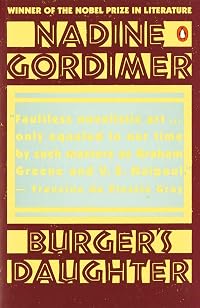
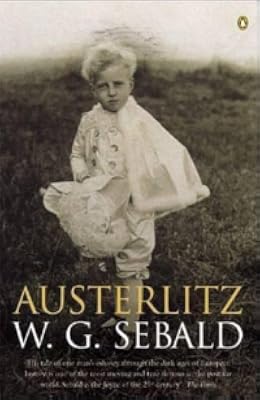
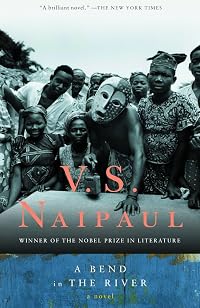
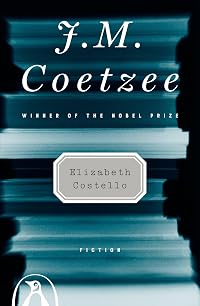
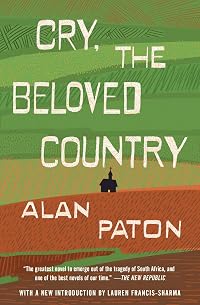
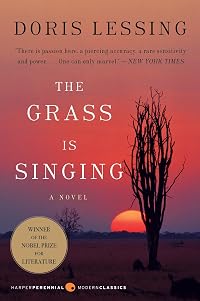
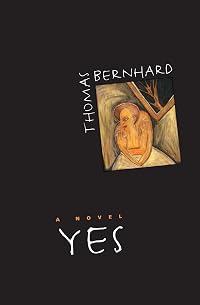
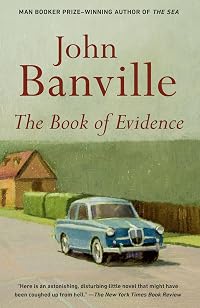
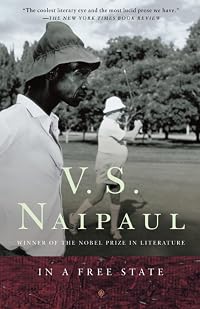
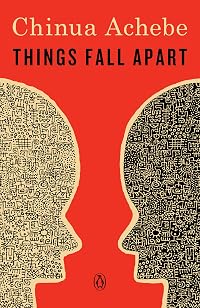
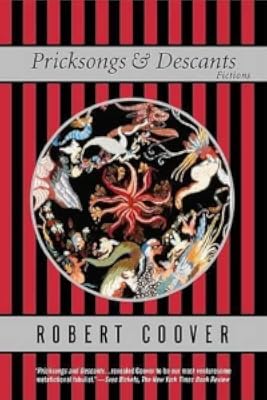
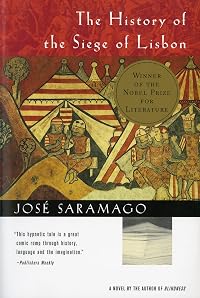
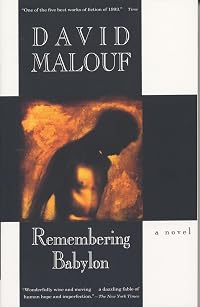
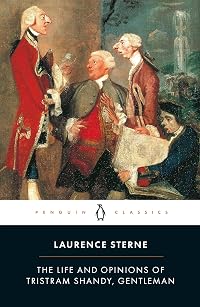
CGlanovsky Post-Colonial novel appropriating classic characters and fictionalized versions of their creators.
Member Reviews
In Foe, J. M. Coetzee delivers a different spin on the Robinson Crusoe story. By adding some new characters and giving the original author, Daniel Defoe a major role, he reworks the story and raises the question of artistic license – where is the line between fiction and reality, imagination and fact?
Susan Barton is a widow who is tossed overboard during a mutiny. Her tiny boat brings her to a desert island that is, in fact, Crusoe’s island. She joins with Crusoe and Friday in their quest for survival on this barren island. Crusoe has become comfortable in his solitude and has no wish to leave his island while Friday cannot say what he wants as his tongue has been cut out and so he cannot express himself. When they are rescued from show more the island, Barton and Friday return to England while Crusoe dies on the journey. Susan comes into contact with author Foe and she feels that since she was there and he was not, her version, although rather dull, should be the one told leaving no allowance for the author to use his imagination to liven up the story.
I found this a fascinating addition to the original story. I particularly found the character of Friday very interesting. His tongue was removed giving him no voice, very much like the black South Africans during apartheid. With it’s sharp observations and interesting angle on the art of storytelling I thoroughly enjoyed Foe. show less
Susan Barton is a widow who is tossed overboard during a mutiny. Her tiny boat brings her to a desert island that is, in fact, Crusoe’s island. She joins with Crusoe and Friday in their quest for survival on this barren island. Crusoe has become comfortable in his solitude and has no wish to leave his island while Friday cannot say what he wants as his tongue has been cut out and so he cannot express himself. When they are rescued from show more the island, Barton and Friday return to England while Crusoe dies on the journey. Susan comes into contact with author Foe and she feels that since she was there and he was not, her version, although rather dull, should be the one told leaving no allowance for the author to use his imagination to liven up the story.
I found this a fascinating addition to the original story. I particularly found the character of Friday very interesting. His tongue was removed giving him no voice, very much like the black South Africans during apartheid. With it’s sharp observations and interesting angle on the art of storytelling I thoroughly enjoyed Foe. show less
The book seemingly has everything for me to enjoy. Written by one of my favourite writers at the height of his powers it addresses such important topics as gender and racial discrimination, power and limitation of storytelling, role of a writer in a society and a personal struggle, damnation of being a writer. Most of these topics Coetzee addresses in his other works of the same period that I have greatly enjoyed.
So why does Foe fall flat for me where other books have succeeded? Is it the postmodern style I have grown so tired of, much more prominent here than in other Coetzee novels? Is it the unconvincing portrayal of Daniel Foe, who could have taken a more central role, is it the lack of stronger connections to Defoe’s oeuvre? Is show more it the feeling of incompleteness - a set up that offers so many possibilities, while nearly all of them are abandoned?
Ultimately, I cannot put my finger on the real reason the book fails to deliver. This reason may lie in the reader this time. The reader who seems to get most of the hidden meanings but does not find the process of uncovering them exciting. Sorry Mr. Coetzee, I did not rise to the occasion of a discussion with you this time around. show less
So why does Foe fall flat for me where other books have succeeded? Is it the postmodern style I have grown so tired of, much more prominent here than in other Coetzee novels? Is it the unconvincing portrayal of Daniel Foe, who could have taken a more central role, is it the lack of stronger connections to Defoe’s oeuvre? Is show more it the feeling of incompleteness - a set up that offers so many possibilities, while nearly all of them are abandoned?
Ultimately, I cannot put my finger on the real reason the book fails to deliver. This reason may lie in the reader this time. The reader who seems to get most of the hidden meanings but does not find the process of uncovering them exciting. Sorry Mr. Coetzee, I did not rise to the occasion of a discussion with you this time around. show less
Surprisingly subtle little book that manages to bring in all sorts of complicated ideas about freedom, individual identity, gender, and in particular about the way a written narrative constrains and shapes stories, and the ways writers mine memory, testimony and imagination. Coetzee presents us with plenty of questions to think about, but very few answers. Very nicely written: not pastiche 18th century English, but not intrusively anachronistic either.
More interesting than I expected.
More interesting than I expected.
J.M. Coetzee's "Foe" is, in many ways, the sort of modern literature that many readers love to hate. The novel has a plot – Susan Barton, the novel's narrator, gets shipwrecked on an island with a mysterious man named Cruso and his slave, Friday, and struggles to tell her story – but if you were feeling uncharitable you could argue that all of this is just a vehicle for Coetzee to investigate the nature of storytelling. For what it's worth, this little book a formidable intellectual exercise, maybe one of the densest, most intricately constructed novels I've ever read. Cruso's island becomes an analogue for colonialism, capitalism, and maybe a few other isms. As another reviewer has noted, Friday's silence hangs over the book like a show more puzzle and a curse, and the narrator's attempts to ascertain the nature of his consciousness becomes the book's central quest. Later in the book, Susan also fights to present her experience accurately to both Cotzee's readers and Mr. Foe, or rather, Daniel Defoe, as he struggles to make it fit to narrative convention. This book is highly recommended to grad school students looking to struggle with postmoden ideas who just don't have the time to go through all seven hundred or so pages of Thomas Pynchon's "Gravity's Rainbow."
This review's in danger of becoming nothing more than reportage of "Foe's" themes and major conflicts, but that wouldn't really do the book justice. I was surprised at how pretty, and how human, Coetzee's novel could be, unusual in a genre that many readers consider unpleasantly dry and didactic. Susan Barton's not exactly a likable character, but she's still more than an empty vessel for the author's ideas. Her desire for independence, her loneliness, and her confusion all seemed genuine and were, at times, genuinely affecting. "Foe's" written in consciously antiquated language, but you never get the impression that Coetzee's showing off, and his descriptions of Cruso's island have a certain somber, windswept grandeur. This novel's a supremely economical piece of work, lending it a sense of honesty and directness that's sometimes absent in similarly high-flown literary endeavors. This was my second time through "Foe," but there's enough here to merit further rereading. I can honestly say that I look forward to picking it up again a few years from now to see what else it yields. show less
This review's in danger of becoming nothing more than reportage of "Foe's" themes and major conflicts, but that wouldn't really do the book justice. I was surprised at how pretty, and how human, Coetzee's novel could be, unusual in a genre that many readers consider unpleasantly dry and didactic. Susan Barton's not exactly a likable character, but she's still more than an empty vessel for the author's ideas. Her desire for independence, her loneliness, and her confusion all seemed genuine and were, at times, genuinely affecting. "Foe's" written in consciously antiquated language, but you never get the impression that Coetzee's showing off, and his descriptions of Cruso's island have a certain somber, windswept grandeur. This novel's a supremely economical piece of work, lending it a sense of honesty and directness that's sometimes absent in similarly high-flown literary endeavors. This was my second time through "Foe," but there's enough here to merit further rereading. I can honestly say that I look forward to picking it up again a few years from now to see what else it yields. show less
A fascinating look at storytelling--approached through another author's story.
Coetzee introduces Susan Barton, lately a female castaway, as she approaches the author Foe to tell the story of herself and the late Cruso on their desert island before rescue. Friday, Crusoe's servant/slave and now hers (for whom she has forged a note stating he is freed), is a mute with no tongue. Just as Friday cannot tell his story, can Susan tell hers? Is it worth telling, or must Foe make it more interesting? Is it then her story? What was her real story?
Fascinating and clever--and I am SO glad I read Robinson Crusoe first!
Coetzee introduces Susan Barton, lately a female castaway, as she approaches the author Foe to tell the story of herself and the late Cruso on their desert island before rescue. Friday, Crusoe's servant/slave and now hers (for whom she has forged a note stating he is freed), is a mute with no tongue. Just as Friday cannot tell his story, can Susan tell hers? Is it worth telling, or must Foe make it more interesting? Is it then her story? What was her real story?
Fascinating and clever--and I am SO glad I read Robinson Crusoe first!
When I set aside J M Coetzee's Foe for Novellas in November, I had completely forgotten that I'd read it before. Indeed, I had even posted at Goodreads an embarrassed 'review' from my 2002 reading journal that seemed like the thoughts of a stranger, not of my own mind.
Twenty years later, here we are, and I certainly have changed my rating. I rarely rate books with show more five stars, but Foe is brilliant.
By the time I got to Part III of this cunning little book, increasingly I was finding myself amused. Mr Foe, seeking to reassure (or maybe to dupe) Susan Barton who is beginning to doubt her own existence, says to her:
Ha!
Part I begins with Susan Barton's narrative about her experience as a castaway, which we learn later has been written in an attempt to make some much needed money. Washed up on an island where she finds Cruso and Friday, whose names of course are those we know from our childhood reading of Daniel Defoe's Robinson Crusoe. She was on her way home to Britain after a fruitless search in the New World for her unnamed daughter who was abducted by a trader. En route to Lisbon the crew mutinied, 'insulted' her and then cast her adrift with the dead Captain.
(Her use of the term 'New World' and the euphemistic 'insulted' gives the reader an indication of the era in which this tale is taking place. And Coetzee's dialogue is flawless.)
Playing with the reader, Coetzee begins her description of the desert island with a nod to Daniel Defoe:
Debunking the idea of a lush paradise, her desert island lacks the ingenious contrivances fashioned by Robinson Crusoe because her Cruso has salvaged only a knife and after many years on the island has used it only to make a rudimentary shelter. Their diet is monotonous because there are no plants that can be cultivated for food, there are no fauna suited to animal husbandry, and there are no fruits falling from the trees or otherwise. They live on a kind of weed, and fish, caught by Friday.
Worse than that is that Cruso has no initiative. He resists all Susan's efforts to encourage improvements in their tedious life, and continues building useless terraces for plants that can't be cultivated in them. He has lapsed into inertia and a morose listlessness, unable and unwilling to talk, to share his personal history, or to offer any consolation.
The slave Friday is mute, because his tongue has been cut out. He follows orders, but there isn't much for him to do. He has a kind of dignity that the others lack...
To read the rest of my review please visit https://anzlitlovers.com/2021/11/07/foe-by-j-m-coetzee/ but note that from this point on there are spoilers there. show less
I feel that my rating is wrong... the fact that I didn't understand it at that long ago time in my reading journey means that it's not the book that should be rated, it's me. The reader who read it 15 years ago is not the same reader as the reader now, and I bet if I read it again now after many years of reading and enjoying postmodern novels, I'd rate it very differently.
Twenty years later, here we are, and I certainly have changed my rating. I rarely rate books with show more five stars, but Foe is brilliant.
By the time I got to Part III of this cunning little book, increasingly I was finding myself amused. Mr Foe, seeking to reassure (or maybe to dupe) Susan Barton who is beginning to doubt her own existence, says to her:
'But if you cannot rid yourself of your doubts, I have something to say that may be of comfort. Let us confront our worst fear, which is that we have all of us been called into the world from a different order (which we have now forgotten) by a conjuror unknown to us, as you say I have conjured up your daughter and her companion (I have not). Then I ask nevertheless: Have we thereby lost our freedom? Are you, for one, any less mistress of your life? Do we of necessity become puppets in a story whose end is invisible to us, and towards which we are marched like condemned felons? You and I know, in our different way, how rambling an occupation writing is; and conjuring is surely much the same. (p.135)
Ha!
Part I begins with Susan Barton's narrative about her experience as a castaway, which we learn later has been written in an attempt to make some much needed money. Washed up on an island where she finds Cruso and Friday, whose names of course are those we know from our childhood reading of Daniel Defoe's Robinson Crusoe. She was on her way home to Britain after a fruitless search in the New World for her unnamed daughter who was abducted by a trader. En route to Lisbon the crew mutinied, 'insulted' her and then cast her adrift with the dead Captain.
(Her use of the term 'New World' and the euphemistic 'insulted' gives the reader an indication of the era in which this tale is taking place. And Coetzee's dialogue is flawless.)
Playing with the reader, Coetzee begins her description of the desert island with a nod to Daniel Defoe:
'For readers reared on travellers' tales, the words desert isle may conjure up a place of soft sands and shady trees where brooks run to quench the castaway's thirst and ripe fruit falls into his hand, where no more is asked of him than to drowse the days away till a ship calls to fetch him home. (p.7)
Debunking the idea of a lush paradise, her desert island lacks the ingenious contrivances fashioned by Robinson Crusoe because her Cruso has salvaged only a knife and after many years on the island has used it only to make a rudimentary shelter. Their diet is monotonous because there are no plants that can be cultivated for food, there are no fauna suited to animal husbandry, and there are no fruits falling from the trees or otherwise. They live on a kind of weed, and fish, caught by Friday.
Worse than that is that Cruso has no initiative. He resists all Susan's efforts to encourage improvements in their tedious life, and continues building useless terraces for plants that can't be cultivated in them. He has lapsed into inertia and a morose listlessness, unable and unwilling to talk, to share his personal history, or to offer any consolation.
The slave Friday is mute, because his tongue has been cut out. He follows orders, but there isn't much for him to do. He has a kind of dignity that the others lack...
To read the rest of my review please visit https://anzlitlovers.com/2021/11/07/foe-by-j-m-coetzee/ but note that from this point on there are spoilers there. show less
Great, yet confusing... I love Coetzee's style and I like the way he takes Defoe's Robinson Crusoe and turns it into something different altogether. The book keeps you guessing all along, and it never becomes clear what is actually going on. Is Susan Barton crazy, is the girl really her daughter, is Foe playing a trick on her?
More than being a 'story' in which you actually get to find out what's going on, Coetzee focusses more on underlying questions. He explores what it means to be a writer, to 'have a voice', to deal with other people's stories. Added to this are questions of colonialism and slavery vs freedom, making it a complex book, which contains a lot of issues.
Though in a way this style of writing makes books diffcult to show more follow and often confuses, I very much like the way in which it forces you to think more deeply about the issues that are introduced. Whereas most novels can be read simply as stories, without going into the deeper layers, Foe is a novel that forces you into these deeper layers and entices you to think more seriously about what the writer really wants you to get from the book. show less
More than being a 'story' in which you actually get to find out what's going on, Coetzee focusses more on underlying questions. He explores what it means to be a writer, to 'have a voice', to deal with other people's stories. Added to this are questions of colonialism and slavery vs freedom, making it a complex book, which contains a lot of issues.
Though in a way this style of writing makes books diffcult to show more follow and often confuses, I very much like the way in which it forces you to think more deeply about the issues that are introduced. Whereas most novels can be read simply as stories, without going into the deeper layers, Foe is a novel that forces you into these deeper layers and entices you to think more seriously about what the writer really wants you to get from the book. show less
Members
- Recently Added By
Lists

1001 Books You Must Read Before You Die
1,448 works; 1,131 members

Metafiction
84 works; 21 members

Significant works of postmodern fiction
86 works; 25 members

Authors from South Africa
4 works; 1 member

Books Set on Islands
190 works; 24 members

Parallel Novels
37 works; 6 members

Stories Inspired by Other Fiction
127 works; 24 members

Robinsonade Novels
55 works; 4 members

Harold Bloom - The Western Canon: D. The Chaotic Age
833 works; 24 members

My TBR
371 works; 3 members

Books Read in 2025
4,091 works; 97 members
Author Information

111+ Works 42,161 Members
J.M. Coetzee's full name is John Michael Coetzee. Born in Cape Town, South Africa, in 1940, Coetzee is a writer and critic who uses the political situation in his homeland as a backdrop for many of his novels. Coetzee published his first work of fiction, Dusklands, in 1974. Another book, Boyhood, loosely chronicles an unhappy time in Coetzee's show more childhood when his family moved from Cape Town to the more remote and unenlightened city of Worcester. Other Coetzee novels are In the Heart of the Country and Waiting for the Barbarians. Coetzee's critical works include White Writing and Giving Offense: Essays on Censorship. Coetzee is a two-time recipient of the Booker Prize and in 2003, he won the Nobel Literature Award. (Bowker Author Biography) J. M. Coetzee's books include "Boyhood", "Dusklands", "In the Heart of the Country", "Waiting for the Barbarians", "Life & Times of Michael K", "Foe", & "The Master of Petersburg". A professor of general literature at the University of Cape Town, Coetzee has won many literary awards, including the CNA Prize (South Africa's premier literary award), the Booker Prize (twice), the Prix Etranger Femina, the Jerusalem Prize, the Lannan Literary Award, & The Irish Times International Fiction Prize. (Publisher Provided) show less
Some Editions
Awards and Honors
Notable Lists
Series
Belongs to Publisher Series
Work Relationships
Is contained in
Is a retelling of
Common Knowledge
- Canonical title*
- Foe
- Original title
- Foe
- Original publication date
- 1986
- People/Characters
- Daniel Defoe; Susan Barton; Cruso; Friday
- Important places
- England, UK
- Epigraph*
- /
- Dedication*
- /
- First words*
- I
'Il me fut enfin impossible de continuer à ramer. [...] - Last words*
- (Click to show. Warning: May contain spoilers.)(IV)
[...]. Doux et froid, obscur et sans fin, il déferle sur mes paupière, sur la peau de mon visage. - Original language*
- Anglais (Royaume-Uni) (Royaume-Uni)
*Some information comes from Common Knowledge in other languages. Click "Edit" for more information.
Classifications
Statistics
- Members
- 2,091
- Popularity
- 9,824
- Reviews
- 43
- Rating
- (3.42)
- Languages
- 17 — Danish, Dutch, English, Finnish, French, German, Greek, Hungarian, Italian, Norwegian (Bokmål), Norwegian, Polish, Portuguese, Croatian, Spanish, Swedish, Turkish
- Media
- Paper, Ebook
- ISBNs
- 57
- ASINs
- 12