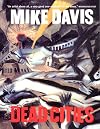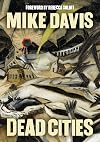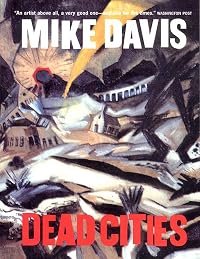
Dead Cities: And Other Tales
by Mike Davis
On This Page
Description
For the late great Mike Davis, the ravaging of the climate by capital--and his prescient analysis of its consequences for those of us left to deal with the resulting crises--was always a central part of his urban geography. In these wide ranging, incisive, and hauntingly relevant essays, Davis asks us to consider what we would find if we put a microscope to the ruins of Metropolis, and provides a riveting account of the disasters--natural, man-made, and those (as in the case of climate show more calamity) where the distinction is impossible to make--that he finds on the other end. He begins his examination by sifting through the rubble of the twin towers in the wake of 9/11, presciently identifying the seeds of war already germinating in the scorched soil of ground zero, and closes by considering how little prepared our hollowed out urban infrastructure is to deal with shocks of any kind, be they from car bombs or ice storms. In between we are treated to tours of blasted wastelands where American generals built and destroyed replicas of Berlin, glimpses of Las Vegas's penchant for annihilating its own best-known landmarks, and other riveting tales of the dialectic between nature and the city.Dead Cities, written over twenty years ago, abounds with prophecies fulfilled, contains echoes of our current moment where conspiracies abound and anxieties drown out official celebrations of prosperity, and offers dreams of alternative paths not taken. show lessTags
Recommendations









Member Reviews
‘Dead Cities’ has been on my to-read list for at least seven years and I can make a plausible guess about why I decided to read it: the title. Urbanism and the apocalypse are particular interests of mine. I’ve previously read Mike Davis’ [b:Planet of Slums|7855|Planet of Slums|Mike Davis|https://i.gr-assets.com/images/S/compressed.photo.goodreads.com/books/1388466296i/7855._SX50_.jpg|1245814], which deals with similar themes while having a more specific focus. ‘Dead Cities’ is a collection of disparate essays and thus fascinating for its spatial range, from a single neighbourhood to the entire solar system. This extremely broad interpretation of urbanism is both entertaining and thought-provoking for the reader (or at least show more I found it so). The essays are grouped into four chapters, loosely themed around extremes of pollution and natural disaster, what went wrong with Los Angeles, global catastrophe, and miscellaneous. All are written in a fluid and involving style, neither academic nor journalistic, that I felt did the very serious topics justice while retaining a literary flair. Given that the collection was published in 2002 and the pieces within written in the late 90s and early 00s, it is instructive and depressing to note the further deterioration in the environment, housing affordability, and urban policy during the two subsequent decades.
There is insightful analysis to be found throughout, although Davis is most incisive when explaining how urban areas develop as they do:
While the level of detail in the essays about American cities, especially LA, is interesting, the same situations and themes recur: regulatory capture, corruption, racism, inequality, and environmental degradation. The shocking state of cities in America seems bizarre in comparison to the UK, where wealth is concentrated in dense city centres and poverty pushed to the outskirts. With its greenbelt protection, Britain has never embraced suburbs to anything like the same extent as the US. Rather than being abandoned to those unable to move, UK urban centres are highly desirable locations snapped up in fragments by international investors at inflated prices. Not a great situation either, but a very different spatial dispersion of development and wealth to that in America.
The two essays which I found most memorable and striking were in the final section: ‘Cosmic Dancers on History’s Stage?’ and ‘Dead Cities: A Natural History’. The former discusses in some depth how disciplines including geology, paleontology, and evolutionary biology have been transformed by growing understanding of how many meteors hang around the solar system banging into things. I was only aware of such theories in the broadest possible terms (a meteor killed the dinosaurs, right?) so found this mind-expanding. It’s probably the densest and most difficult of the essays, yet also the most rewarding. I didn’t expect to find so much astronomy in a book on the urban environment; it was a pleasant surprise. Davis elegantly links a variety of scientific material, while acknowledging debates and uncertainties across fields:
The latter titular essay is very different. I appreciated it equally, albeit in a different way. It evaluates the environmental realism of early postapocalyptic literature, specifically [b:After London: or, Wild England|2220037|After London or, Wild England|Richard Jefferies|https://i.gr-assets.com/images/S/compressed.photo.goodreads.com/books/1348221574i/2220037._SY75_.jpg|905982] and [b:Earth Abides|93269|Earth Abides|George R. Stewart|https://i.gr-assets.com/images/S/compressed.photo.goodreads.com/books/1320505234i/93269._SY75_.jpg|1650913]. In some ways, this essay prefigures Alan Weisman’s compelling thought experiment [b:The World Without Us|248787|The World Without Us|Alan Weisman|https://i.gr-assets.com/images/S/compressed.photo.goodreads.com/books/1441986417i/248787._SY75_.jpg|241063], as Davis considers what happens to cities when humanity abandons them. The reminder of [b:After London: or, Wild England|2220037|After London or, Wild England|Richard Jefferies|https://i.gr-assets.com/images/S/compressed.photo.goodreads.com/books/1348221574i/2220037._SY75_.jpg|905982]’s lyrical vision was welcome, although I think Mary Shelley’s [b:The Last Man|966835|The Last Man|Mary Wollstonecraft Shelley|https://i.gr-assets.com/images/S/compressed.photo.goodreads.com/books/1392984325i/966835._SY75_.jpg|835097] and M. P. Shiel’s [b:The Purple Cloud|209525|The Purple Cloud (Frontiers of Imagination)|M.P. Shiel|https://i.gr-assets.com/images/S/compressed.photo.goodreads.com/books/1328817985i/209525._SY75_.jpg|923941] also deserved a mention. I particularly liked the discussion of which plants thrived in bombed-out cities during WWII:
I have some ambivalence about my obsession with post-apocalyptic visions; Davis acknowledges that such fascination with urban destruction has associations with eugenics and exterminism. Yet he manages to examine disasters real and theoretical while avoiding voyeuristic disregard for their human impact. I learned a lot from this collection of nuanced and thoughtful essays. Inevitably the content is largely depressing, but not hopeless. For some reason, the most painful environmental disaster to read about in this collection was not nuclear waste, climate change, or soil degradation, but industrial overfishing. Perhaps because deep sea trawling destroys so much and so wastefully, for no good reason, without it even being clear what irreplaceable biodiversity is being lost. show less
There is insightful analysis to be found throughout, although Davis is most incisive when explaining how urban areas develop as they do:
The terrible beauty struggling to be born Downtown is usually called growth, but it is neither a purely natural metabolism (as neoliberals imagine the marketplace to be) nor an enlightened volition (as politicians and planners like to claim). Rather it is better conceptualised as a vast game - a relentless competition between privileged players (or alliances of players) in which the state intervenes much like a card-dealer or croupier to referee the play. Urban design, embodied in different master plans and project visions, provides malleable rules for the key players as well as a set of boundaries to exclude unauthorised play. But unlike most games, there is no winning gambit or final move. Downtown development is an essentially infinite game, played not towards any conclusion or closure, but towards its endless protraction.
While the level of detail in the essays about American cities, especially LA, is interesting, the same situations and themes recur: regulatory capture, corruption, racism, inequality, and environmental degradation. The shocking state of cities in America seems bizarre in comparison to the UK, where wealth is concentrated in dense city centres and poverty pushed to the outskirts. With its greenbelt protection, Britain has never embraced suburbs to anything like the same extent as the US. Rather than being abandoned to those unable to move, UK urban centres are highly desirable locations snapped up in fragments by international investors at inflated prices. Not a great situation either, but a very different spatial dispersion of development and wealth to that in America.
The two essays which I found most memorable and striking were in the final section: ‘Cosmic Dancers on History’s Stage?’ and ‘Dead Cities: A Natural History’. The former discusses in some depth how disciplines including geology, paleontology, and evolutionary biology have been transformed by growing understanding of how many meteors hang around the solar system banging into things. I was only aware of such theories in the broadest possible terms (a meteor killed the dinosaurs, right?) so found this mind-expanding. It’s probably the densest and most difficult of the essays, yet also the most rewarding. I didn’t expect to find so much astronomy in a book on the urban environment; it was a pleasant surprise. Davis elegantly links a variety of scientific material, while acknowledging debates and uncertainties across fields:
Evolution by catastrophe, Michael Rampino adds, also entails speciation through a different process than the classic gradualist mechanisms of geographic isolation and adaptive change. Catastrophe replaces the linear temporal creep of microevolution with nonlinear bursts of macroevolution. Comet showers accelerate evolutionary change by injecting huge pulses of sudden energy into biogeochemical circuits. Nutrient recycling is stimulated and bolides add new stocks of organic molecules. [...] Most importantly, catastrophes break up static ecosystems and clear adaptive space for the explosive radiation of new taxa - like mammals after the K/T horizon. Rampino, awed by this dialectic of creative destruction, openly wonders if impact catastrophe is not the real driving force behind the movement towards greater biological diversity, and if Gaia has not evolved in intricate choreography with Shiva.
The latter titular essay is very different. I appreciated it equally, albeit in a different way. It evaluates the environmental realism of early postapocalyptic literature, specifically [b:After London: or, Wild England|2220037|After London or, Wild England|Richard Jefferies|https://i.gr-assets.com/images/S/compressed.photo.goodreads.com/books/1348221574i/2220037._SY75_.jpg|905982] and [b:Earth Abides|93269|Earth Abides|George R. Stewart|https://i.gr-assets.com/images/S/compressed.photo.goodreads.com/books/1320505234i/93269._SY75_.jpg|1650913]. In some ways, this essay prefigures Alan Weisman’s compelling thought experiment [b:The World Without Us|248787|The World Without Us|Alan Weisman|https://i.gr-assets.com/images/S/compressed.photo.goodreads.com/books/1441986417i/248787._SY75_.jpg|241063], as Davis considers what happens to cities when humanity abandons them. The reminder of [b:After London: or, Wild England|2220037|After London or, Wild England|Richard Jefferies|https://i.gr-assets.com/images/S/compressed.photo.goodreads.com/books/1348221574i/2220037._SY75_.jpg|905982]’s lyrical vision was welcome, although I think Mary Shelley’s [b:The Last Man|966835|The Last Man|Mary Wollstonecraft Shelley|https://i.gr-assets.com/images/S/compressed.photo.goodreads.com/books/1392984325i/966835._SY75_.jpg|835097] and M. P. Shiel’s [b:The Purple Cloud|209525|The Purple Cloud (Frontiers of Imagination)|M.P. Shiel|https://i.gr-assets.com/images/S/compressed.photo.goodreads.com/books/1328817985i/209525._SY75_.jpg|923941] also deserved a mention. I particularly liked the discussion of which plants thrived in bombed-out cities during WWII:
The botanical census of bomb sites in the City and the East End revealed a new pattern of urban vegetation adapted to fire, rubble, and open space. Uncommon natives and robust aliens dominated this unexpected ‘bomber ecology’. The most successful colonist of blitzed sites, for example, was the formerly rare rosebay willowherb, which in Jefferies’ time could only be found in Paddington Cemetery and on a few gravelly banks. [...] Among other aliens that flourished during the Blitz were the Canadian fleabane, already a familiar plant on railway embankments, the redoubtable buddleia, and the Peruvian Galinsoga parviflora, an escapee from Kew Gardens.
I have some ambivalence about my obsession with post-apocalyptic visions; Davis acknowledges that such fascination with urban destruction has associations with eugenics and exterminism. Yet he manages to examine disasters real and theoretical while avoiding voyeuristic disregard for their human impact. I learned a lot from this collection of nuanced and thoughtful essays. Inevitably the content is largely depressing, but not hopeless. For some reason, the most painful environmental disaster to read about in this collection was not nuclear waste, climate change, or soil degradation, but industrial overfishing. Perhaps because deep sea trawling destroys so much and so wastefully, for no good reason, without it even being clear what irreplaceable biodiversity is being lost. show less
Some books haunt my stacks of books laughing at me for they have never been read or were started and now wait slowly for me to get around to finishing them. In a moment of triumph i just finished one book I started in January that through off my reading mojo for the last two months. The problem was that most times when i read a book I can start reading a book and find a rythym to the book. When you find this you can move into a book like a dance moving through the style and flow of words. I can take what I need whether it be data, laughter, drama, or whatever else the words holds for me. This book wasa challenge for it was not a whole but yet a collection of essays and reports done by the writer over the years and collected in one show more volume.
The book is broken into several distinct sections dealing with the overall theme of the fall of modern city through variuous incarnations. The first section deals mostly with the west and effect people and technology have had on the romantic picture of the west that os often pictured by mainstream media. It begins with a look at the early settlement of the west and breakdown of a native culture with the introduction of white settlers. It moves on to nuclear testing, the outlandishness of las vegas, test bombing sites, and the weakness of hawaii from tsunami's. The structural weakness of the west and how it comes from the weakness of its builders. There is one tentative connection between each of the essays but overall different themes and ideas are presented.
The second section deals directly with a series of articles written about the problems within cities due to political or social problems occuring in our modern day city. At times this section gets preachy and is in a lot of ways the slow part of the book where i got stuck. Many of the articles were insightful and beautifully written. Mostly many of these articles were out dated by a almost ten years and give you little insight into contemporary situations in many of the mentioned locales. Some of the sections are also very long!!!!!!
The third part of the book is alot more personal testimonies from subjects in the book and at times gives you better insight into the everyday life of people you read about. This section is called riot city and deals with various movements in the city. Crime, housing, politics, gangs, murder, and everything in between gets touched upon in this section. Very good reading!!!!!!!!!
The last section is acopalytic veiwpoints from various writers and scientists about the fall of the cities in general. This section is the part that would be a boon to all eco activists because he gives interesting information about enivonmental problems. The nice part of this is that these articles are more recent and thus more up to date in terms of issues that are being presented. This section specifically Dead Cities: A natural History is an interesting look at literature that was written in england over a hundred years ago that looks at nature reclaiming much of the modern world within a few generations. This was treat to read how people would see cities and their eventual fall a hundred years ago.
Overall this was a good book, but not a great one. This isn't the writers fault because each piece stands alone by itself as great. Together they get lost in their own repetitiveness and preachiness. One of the problems i have with Davis is he reminds you how smart he is and at times this can be a little annoying. Yet since I have all his book I guess I can't blame him. show less
The book is broken into several distinct sections dealing with the overall theme of the fall of modern city through variuous incarnations. The first section deals mostly with the west and effect people and technology have had on the romantic picture of the west that os often pictured by mainstream media. It begins with a look at the early settlement of the west and breakdown of a native culture with the introduction of white settlers. It moves on to nuclear testing, the outlandishness of las vegas, test bombing sites, and the weakness of hawaii from tsunami's. The structural weakness of the west and how it comes from the weakness of its builders. There is one tentative connection between each of the essays but overall different themes and ideas are presented.
The second section deals directly with a series of articles written about the problems within cities due to political or social problems occuring in our modern day city. At times this section gets preachy and is in a lot of ways the slow part of the book where i got stuck. Many of the articles were insightful and beautifully written. Mostly many of these articles were out dated by a almost ten years and give you little insight into contemporary situations in many of the mentioned locales. Some of the sections are also very long!!!!!!
The third part of the book is alot more personal testimonies from subjects in the book and at times gives you better insight into the everyday life of people you read about. This section is called riot city and deals with various movements in the city. Crime, housing, politics, gangs, murder, and everything in between gets touched upon in this section. Very good reading!!!!!!!!!
The last section is acopalytic veiwpoints from various writers and scientists about the fall of the cities in general. This section is the part that would be a boon to all eco activists because he gives interesting information about enivonmental problems. The nice part of this is that these articles are more recent and thus more up to date in terms of issues that are being presented. This section specifically Dead Cities: A natural History is an interesting look at literature that was written in england over a hundred years ago that looks at nature reclaiming much of the modern world within a few generations. This was treat to read how people would see cities and their eventual fall a hundred years ago.
Overall this was a good book, but not a great one. This isn't the writers fault because each piece stands alone by itself as great. Together they get lost in their own repetitiveness and preachiness. One of the problems i have with Davis is he reminds you how smart he is and at times this can be a little annoying. Yet since I have all his book I guess I can't blame him. show less
Dead Cities and Other Tales is a rich and varied collection of essays, each stamped with a year, presumably of its composition; some have been updated. The earliest date from 1990.
Davis's tone is generally journalistic or analytical, depending on the origin of the piece. Though he calls himself an "aging socialist" (309) these pieces are more descriptive than prescriptive. His sensibility is that of an historian, though he does not claim that title here.
Most of the book is about Los Angeles. But the longest piece is an ambitious and mind-boggling account effectively summarizing and conceptualizing recent scientific work radically revising the history of the earth and our understanding of how it relates to the surrounding cosmos, with show more special attention to the theory of "coherent catastrophism" and its deep implications for the biological sciences. Why Davis did not expand this extraordinary piece into a book of its own is a mystery; no foreword explains the author's intentions. show less
Davis's tone is generally journalistic or analytical, depending on the origin of the piece. Though he calls himself an "aging socialist" (309) these pieces are more descriptive than prescriptive. His sensibility is that of an historian, though he does not claim that title here.
Most of the book is about Los Angeles. But the longest piece is an ambitious and mind-boggling account effectively summarizing and conceptualizing recent scientific work radically revising the history of the earth and our understanding of how it relates to the surrounding cosmos, with show more special attention to the theory of "coherent catastrophism" and its deep implications for the biological sciences. Why Davis did not expand this extraordinary piece into a book of its own is a mystery; no foreword explains the author's intentions. show less
Reviewed by Lisa Magloff for H-Net here:
http://www.h-net.org/reviews/showrev.cgi?path=50041074061302
http://www.h-net.org/reviews/showrev.cgi?path=50041074061302
Ratings
Members
- Recently Added By
Published Reviews
ThingScore 25
For all his social conscience, Davis may be as elitist as any chateau owner who spots a washing line on the horizon. What he most objects to, after all, is other people, their cars and supermarkets, theme parks and affordable housing.
added by ehines
Author Information

41+ Works 6,980 Members
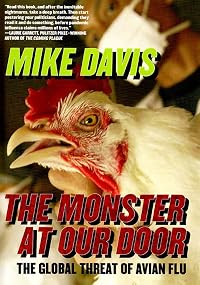
Mike Davis is the author of many books, including City of Quartz, The Monster at Our Door, Buda's Wagon, and Planet of Slums. He is the recipient of the MacArthur Fellowship and the Lannan Literary Award. He lives in San Diego.
Common Knowledge
- Canonical DDC/MDS
- 307.760973
- Canonical LCC
- HT123
Classifications
- Genre
- Nonfiction
- DDC/MDS
- 307.760973 — Society, government, & culture Social sciences, sociology & anthropology Communities Specific kinds of communities Urban communities Biography And History North America United States
- LCC
- HT123 — Social sciences Communities. Classes. Races Communities. Classes. Races Urban groups. The city. Urban sociology
- BISAC
Statistics
- Members
- 293
- Popularity
- 109,641
- Reviews
- 4
- Rating
- (4.04)
- Languages
- English, French, Spanish
- Media
- Paper, Ebook
- ISBNs
- 7
- ASINs
- 3