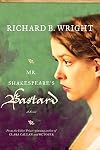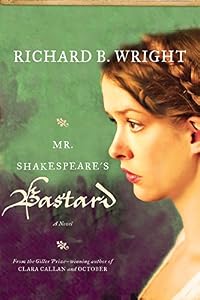
Mr. Shakespeare's Bastard
by Richard B. Wright
On This Page
Description
In a manor house in Oxfordshire, an ailing housekeeper by the name of Aerlene Ward feels the time has come to confess the great secret that has shaped her life, she is the illegitimate daughter of William Shakespeare. A story of the lovely Elizabeth seduced by a struggling young writer from Stratford and her plain but clever daughter.Tags
Recommendations













Member Recommendations

Member Reviews
I was so annoyed with myself as a reader for not properly appreciating Richard Wright's October; I knew it was very well-done and it was simply my preternatural attachment to his earlier novel, Clara Callan, that interfered with my properly appreciating it. I was in that I-don't-care-what-it-is-if-it's-not-Clara-Callan phase and nothing could permeate that fog of resistance. I wasn't signing up if Clara wasn't attending.
Perhaps enough books have fallen between then and now. Or perhaps it's simply that the story of Mr. Shakespeare's Bastard took hold of me with a simliar intensity. For whatever reason, I loved this novel. It is definitely not Clara Callan. But I don't mind. The story of Aerlene Ward (Linny) and her Mam was more than show more enough to satisfy, on its own terms, not Clara Callan's, nobody else's.
Aerlene was not always aware that she was Mr. Shakespeare's Bastard. Her mother told her when Linny was nearly twelve. For those readers who are troubled by the idea of fictionalizing biography, for whom reading Curtis Sittenfeld's American Wife was as disturbing as it was fascinating, the question of whether Shakespeare fathered a illegitimate child (or, children) might fall into the category of "better left unsaid". But even some of those readers will find their doubts and uncertainties resolved by the narrative's approach.
It's clear throughout the telling that Aerlene recognizes that her story (which as she relays it to Charlotte, her amanuensis, is also very much Linny's mother's, Elizabeth's, story) is of her personal experience. Charlotte, young mistress of the house, and obviously extremely fond of Linny, poses all the questions and doubts that a reader might have.
Primarily, how can Linny, at 70, relay entire conversations, depend upon memories across so many intervening years? And not only her own memories, but the memories of her mother, shared with Linny when barely twelve, across even more years and experience? This is something Charlotte ponders and likely most readers, even those immediately engaged by the bare outline of Linny's tale, consider this as well.
As Linny explains to Charlotte: "that is an uncommonly literal reading of events and, if I may say so, does a disservice to your intelligence. In relating anything we only approach the truth; we are never exactly there. Moreover, does not another truth besides the factual lurk in any account of events? A truth perhaps far more important?"
It's clearly a reconstruction, but one rooted in a quest for realism. "I will try to reconstruct this as best I can." Linny accepts the "truth besides the factual" that lurks in Elizabeth's tale and I've accepted Linny's truth, one "perhaps far more important", in Richard B. Wright's latest novel.
But, it's true, I have what some might consider an exceedingly tolerant approach to invention; I signed up to read a novel, not a biography. And, ultimately this is not Shakespeare's tale: it is Linny's and, through her eyes, Elizabeth's.
It's not Mr. Shakespeare's tale; it's Mr. Shakespeare's Bastard's tale. It's a derogatory term and, as you'd expect, there is a certain sadness in their experiences, sometimes outright sorrow and other times a subtle sense of loss. But that's not all. Linny, as you know (if you have read this far), has her own ideas about what makes a good story, even altering the endings of some of her father's plays when she recounts them to listeners.
So, yes, it's possible that Linny's tale is not only filtered through memory, but altered by the art of a storyteller. That's what I signed up for.
(If you're interested, you can read a longer review of this novel at BIP, here.) show less
Perhaps enough books have fallen between then and now. Or perhaps it's simply that the story of Mr. Shakespeare's Bastard took hold of me with a simliar intensity. For whatever reason, I loved this novel. It is definitely not Clara Callan. But I don't mind. The story of Aerlene Ward (Linny) and her Mam was more than show more enough to satisfy, on its own terms, not Clara Callan's, nobody else's.
Aerlene was not always aware that she was Mr. Shakespeare's Bastard. Her mother told her when Linny was nearly twelve. For those readers who are troubled by the idea of fictionalizing biography, for whom reading Curtis Sittenfeld's American Wife was as disturbing as it was fascinating, the question of whether Shakespeare fathered a illegitimate child (or, children) might fall into the category of "better left unsaid". But even some of those readers will find their doubts and uncertainties resolved by the narrative's approach.
It's clear throughout the telling that Aerlene recognizes that her story (which as she relays it to Charlotte, her amanuensis, is also very much Linny's mother's, Elizabeth's, story) is of her personal experience. Charlotte, young mistress of the house, and obviously extremely fond of Linny, poses all the questions and doubts that a reader might have.
Primarily, how can Linny, at 70, relay entire conversations, depend upon memories across so many intervening years? And not only her own memories, but the memories of her mother, shared with Linny when barely twelve, across even more years and experience? This is something Charlotte ponders and likely most readers, even those immediately engaged by the bare outline of Linny's tale, consider this as well.
As Linny explains to Charlotte: "that is an uncommonly literal reading of events and, if I may say so, does a disservice to your intelligence. In relating anything we only approach the truth; we are never exactly there. Moreover, does not another truth besides the factual lurk in any account of events? A truth perhaps far more important?"
It's clearly a reconstruction, but one rooted in a quest for realism. "I will try to reconstruct this as best I can." Linny accepts the "truth besides the factual" that lurks in Elizabeth's tale and I've accepted Linny's truth, one "perhaps far more important", in Richard B. Wright's latest novel.
But, it's true, I have what some might consider an exceedingly tolerant approach to invention; I signed up to read a novel, not a biography. And, ultimately this is not Shakespeare's tale: it is Linny's and, through her eyes, Elizabeth's.
It's not Mr. Shakespeare's tale; it's Mr. Shakespeare's Bastard's tale. It's a derogatory term and, as you'd expect, there is a certain sadness in their experiences, sometimes outright sorrow and other times a subtle sense of loss. But that's not all. Linny, as you know (if you have read this far), has her own ideas about what makes a good story, even altering the endings of some of her father's plays when she recounts them to listeners.
So, yes, it's possible that Linny's tale is not only filtered through memory, but altered by the art of a storyteller. That's what I signed up for.
(If you're interested, you can read a longer review of this novel at BIP, here.) show less
Starting in the Elizabethan age and ending with the death of Cromwell, Mr. Shakespeare's Bastard is a easy flowing narrative that transports the reader from the Oxfordshire countryside to the teeming streets of London of the time period. The story's main protagonist is Aerlene Ward. Aerlene has reached her 70th year after decades of service to the Easton family. With failing health and cataracts, Aerlene enlists her young mistress Charlotte to transcribe Aerlene's memoir, including the great secret that Aerlene is the illegitimate daughter of the playwright, William Shakespeare.
I liked this story for a number of reasons. One, I felt that I was transported back in time 17th century England, getting a taste of the time period without show more being bogged down in it, including the 'god-spellers' and the interesting polarity of the puritan values in contrast with those of the crowds that filled the Globe and the Rose playhouses to see Shakespeare's and Marlowe's plays. The role of women is captured quite well, especially the tenuous nature of a woman's place as one that is almost entirely dependent upon her virtue, or is ruined by her loss of virtue, or even 'perceived' loss of virtue. Following first the story of Aerlene's mother Elizabeth, how her mom came to meet Shakespeare in London and then Aerlene's own journey to London 15 years later, it was tempting to draw parallels between the two journeys. I also loved how the story retained a consistency in style and content to the very last page.
Overall, I found this to be a very easy, light reading trip through Cromwell's England. It is not a masterpiece, but it is a good story. Wright is a "New to me" Canadian author. After enjoying this story, I plan on reading more of Wright's works. show less
I liked this story for a number of reasons. One, I felt that I was transported back in time 17th century England, getting a taste of the time period without show more being bogged down in it, including the 'god-spellers' and the interesting polarity of the puritan values in contrast with those of the crowds that filled the Globe and the Rose playhouses to see Shakespeare's and Marlowe's plays. The role of women is captured quite well, especially the tenuous nature of a woman's place as one that is almost entirely dependent upon her virtue, or is ruined by her loss of virtue, or even 'perceived' loss of virtue. Following first the story of Aerlene's mother Elizabeth, how her mom came to meet Shakespeare in London and then Aerlene's own journey to London 15 years later, it was tempting to draw parallels between the two journeys. I also loved how the story retained a consistency in style and content to the very last page.
Overall, I found this to be a very easy, light reading trip through Cromwell's England. It is not a masterpiece, but it is a good story. Wright is a "New to me" Canadian author. After enjoying this story, I plan on reading more of Wright's works. show less
Shakespeare's personal life is poorly documented,leaving room for much speculation. This novel speculates that The Bard fathered an illegitimate daughter, although he remained unaware of her existence. This daughter, Aerlene Ward, is the 70-year-old narrator who tells the story of her own life and that of her mother. Understandably she becomes obsessed with the father's plays, and passages from them are inserted and connected to Aerlene's situation. Aerlene especially likes "Hamlet" which explores themes with parallels in her life.
Shakespeare is really a secondary character in the book; the novel focuses more on its female protagonists. There are, in fact, several interesting women. As in his other novels(especially "Clara Callan"), show more Wright portrays female characters convincingly.
The book sheds no new light on Shakespeare's life, but does illuminate life both in the country and in London during his lifetime. show less
Shakespeare is really a secondary character in the book; the novel focuses more on its female protagonists. There are, in fact, several interesting women. As in his other novels(especially "Clara Callan"), show more Wright portrays female characters convincingly.
The book sheds no new light on Shakespeare's life, but does illuminate life both in the country and in London during his lifetime. show less
Mr Shakespeare’s Bastard is the latest offering from Richard B. Wright, who won the Giller Prize for Clara Callan in 2001. ANZLitLovers read and enjoyed that in 2005, and Mr. Shakespeare’s Bastard shares the same kind of deceptive tone: this tale about Shakespeare’s illegitimate daughter seems slight and inconclusive but it’s seductively revealing about lives in another lifetime, with perhaps also a message for our own. For the sub-text of this book is that whether a fatherless child identifies a man as her own parent with DNA or a lofty forehead, he may not want the relationship or even acknowledge it, and the way to handle that, is with dignity.
To read the rest of my review please visit show more target="_top">https://anzlitlovers.wordpress.com/2011/03/05/mr-shakespeares-bastard-by-richard... show less
To read the rest of my review please visit show more target="_top">https://anzlitlovers.wordpress.com/2011/03/05/mr-shakespeares-bastard-by-richard... show less
*This is just a partial review. The full review can be found at http://christashookedonbooks.blogspot.com/2011/04/review-mr-
shakespeares-bastard-by.html*
I enjoyed the narrative voice of this story – a women telling her mother's story (as as a result her story) in her own old age. It gave a sort of authority to the telling making it seem very believable. The historical detail was also incredibly intricate. I had to appreciate the amount of work and research Richard B. Wright would have had to put into this novel. My only real problem with this book was that the pacing was a bit slow. It weighs in at only 341 pages but at times it feels a lot longer. Since it is a story of someone telling a story some parts feel a little repetitive or show more over described. Other than that though the characters are heart warming, the setting is beautifully depicted and the story is unique. show less
shakespeares-bastard-by.html*
I enjoyed the narrative voice of this story – a women telling her mother's story (as as a result her story) in her own old age. It gave a sort of authority to the telling making it seem very believable. The historical detail was also incredibly intricate. I had to appreciate the amount of work and research Richard B. Wright would have had to put into this novel. My only real problem with this book was that the pacing was a bit slow. It weighs in at only 341 pages but at times it feels a lot longer. Since it is a story of someone telling a story some parts feel a little repetitive or show more over described. Other than that though the characters are heart warming, the setting is beautifully depicted and the story is unique. show less
One dimensional characters, simplistic writing, clumsy narration technique. A neat idea can be hamstrung by all these things singly, but with all three in the mix the story is slaughtered. Too bad :(
I was delighted to see a new book by one of my favourite Canadian authors. I loved "The Teacher's Daughter' , "October" and "Clara Callan" and will report as soon as I have read it..
Members
- Recently Added By
Published Reviews
Though Wright’s depiction of Elizabethan London is interesting, especially his take on the city’s book trade, the story he tells never comes to life.
added by lkernagh
Like Clara Callan, Wright's ninth and most famous novel, Mr. Shakespeare's Bastard produces a kind of insidious, transformative pain in the reader. A feminist pain, too: It’s hard not to feel angry at the continual lack of notice accorded Aerlene, a strong and sensible person whose very ability to read prods her contemporaries into regarding her as a kind of sideshow freak.
added by lkernagh
With its female narrators, travels between country and city, unwanted pregnancies and hybridized dialogue combining period elements with modern syntax, Wright’s book feels like a combination of Clara Callan and Hilary Mantel’s Booker-winning Wolf Hall. In many ways it shares many of the best qualities of both novels.
added by lkernagh
Author Information

17 Works 1,706 Members
Awards and Honors
Common Knowledge
- Canonical title
- Mr. Shakespeare's Bastard
- People/Characters
- William Shakespeare; Aerlene Ward
- Important places
- Oxfordshire, England, UK
- Dedication
- For my wife, Phyllis, and for our newest grandchild, Nathan
- First words
- Charlotte left for Oxford this morning.
Classifications
- Genres
- General Fiction, Fiction and Literature, Historical Fiction
- DDC/MDS
- 813.54 — Literature & rhetoric American literature in English American fiction in English 1900-1999 1945-1999
- LCC
- PR9199.3 .W7 .M57 — Language and Literature English English Literature English literature: Provincial, local, etc.
- BISAC
Statistics
- Members
- 87
- Popularity
- 366,491
- Reviews
- 7
- Rating
- (3.60)
- Languages
- English
- Media
- Paper, Ebook
- ISBNs
- 6
- ASINs
- 2