Hiroshima No Pika
by Maruki Toshi
On This Page
Description
A retelling of a mother's account of what happened to her family during the Flash that destroyed Hiroshima in 1945.Tags
Recommendations









Member Reviews
Here is an interesting note for non-Japanese speakers. In Japanese, the word "pika" has several meanings. The basic version is akin to "thunder" or "bright flash" or "blinding light" and it is occasionally used as short hand for atomic bombing alongside the more literal "genbaku." However, the word "pika" is also a short hand for how you say Picasso in Japanese (PiKaSo). That little irony feels very appropriate for this book.
This book is haunting, disturbing, beautiful and sad. It is an informational picture book about Toshi Maruki's experiences in Hiroshima and one of the best depictions of the atomic bombing of Hiroshima on August 6, 1945 (I will always remember because I got a shirt from a Hiroshima when I visited). Toshi Maruki, a show more survivor of the bombing, wrote this story because she felt it was a story that needed to be told, no matter how much people either thought she was exaggerating or just trying to get attention (She details this story in the Author's Notes). In it, she uses the raw emotion of her Picasso-inspired drawings to convey what the bombing and the subsequent days and months of suffering afterwards were like for her and her family.
I may be slightly biased on this opinion, but I appreciated the brief bibliography of the author's other work because it cleared away a fear I often have when discussing the atomic bomb with Japanese people. Mrs Maruki does not divorce the horror of the atomic bombings from the horror of the Japanese wartime atrocities in Asia. The monument in Hiroshima is specifically about the horrors of nuclear warfare, but more broadly aims for a pacifist narrative, seeking to use Hiroshima as a warning against humanity ever doing anything like this again. Sadly, most Japanese prefer to look at Hiroshima and Nagasaki in the context of horrifying events in their past completely disconnected from the context that spawned them. Discussions of World War II prior to the bombings are almost non-existent in the museums. Curators often say that the pacifist message of the museum is, "not about that." The fact that one of Maruki's other works is an equally horrifying depiction of the infamous "rape of Nanking" incident perpetrated by the Japanese Imperial Army in China, where hundreds of thousands were killed, tortured, and raped suggests that Maruki seeks to discuss this matter from a truly pacifist perspective. Maybe it is wrong for me to assume things about one book's mindset based on the author's other works, but as someone who spent two years investigating the Japanese equivalent of German Holocaust deniers, I believe it is a worthy mindset.
The narrative structure with no chapters and third person perspective with unbelievably evocative details and dialogue suggest a wonderful ability to convey the emotions and imagery that have haunted Maruki for decades. The informational picture storybook format with its deliberately warped imagery and broad use of colors amplifies the emotions of the narrative and fills you with dread. Even a rainbow is somehow horrifying when juxtaposed with what is beneath it.
If I go on too much longer, then I will simply be repeating myself. I loved this book and must thank the person who loaned it to me deeply. I kinda want my own copy. show less
This book is haunting, disturbing, beautiful and sad. It is an informational picture book about Toshi Maruki's experiences in Hiroshima and one of the best depictions of the atomic bombing of Hiroshima on August 6, 1945 (I will always remember because I got a shirt from a Hiroshima when I visited). Toshi Maruki, a show more survivor of the bombing, wrote this story because she felt it was a story that needed to be told, no matter how much people either thought she was exaggerating or just trying to get attention (She details this story in the Author's Notes). In it, she uses the raw emotion of her Picasso-inspired drawings to convey what the bombing and the subsequent days and months of suffering afterwards were like for her and her family.
I may be slightly biased on this opinion, but I appreciated the brief bibliography of the author's other work because it cleared away a fear I often have when discussing the atomic bomb with Japanese people. Mrs Maruki does not divorce the horror of the atomic bombings from the horror of the Japanese wartime atrocities in Asia. The monument in Hiroshima is specifically about the horrors of nuclear warfare, but more broadly aims for a pacifist narrative, seeking to use Hiroshima as a warning against humanity ever doing anything like this again. Sadly, most Japanese prefer to look at Hiroshima and Nagasaki in the context of horrifying events in their past completely disconnected from the context that spawned them. Discussions of World War II prior to the bombings are almost non-existent in the museums. Curators often say that the pacifist message of the museum is, "not about that." The fact that one of Maruki's other works is an equally horrifying depiction of the infamous "rape of Nanking" incident perpetrated by the Japanese Imperial Army in China, where hundreds of thousands were killed, tortured, and raped suggests that Maruki seeks to discuss this matter from a truly pacifist perspective. Maybe it is wrong for me to assume things about one book's mindset based on the author's other works, but as someone who spent two years investigating the Japanese equivalent of German Holocaust deniers, I believe it is a worthy mindset.
The narrative structure with no chapters and third person perspective with unbelievably evocative details and dialogue suggest a wonderful ability to convey the emotions and imagery that have haunted Maruki for decades. The informational picture storybook format with its deliberately warped imagery and broad use of colors amplifies the emotions of the narrative and fills you with dread. Even a rainbow is somehow horrifying when juxtaposed with what is beneath it.
If I go on too much longer, then I will simply be repeating myself. I loved this book and must thank the person who loaned it to me deeply. I kinda want my own copy. show less
Apicture book about ""the Flash"" at Hiroshima would seem a dubious proposition. Japanese artist and antiwar activist Maruki manages to avoid the opposing perils of giving children nightmares and belittling the horror. The text, based on one woman's account with bits of other people's experiences mixed in, tells of a sunny day and a pleasant family breakfast interrupted by a sudden, terrible flash, followed by fire and chaos. The little girl Mil is knocked unconscious but recovers to run from the debris, fleeing the fire with her mother, who carries Mii's badly wounded father on her back. Crowds of people wander like ghosts, and fall. ""There were heaps of people everywhere."" A man and a cat float down the river, dead. A nursing mother show more wades into the river and out of sight, carrying her dead baby. Darkness, rain, two rivers, and four days later, Mil is still clutching her breakfast chopsticks. Returning to the city, the family finds ""a burned-out wasteland as far as the eye could see."" Mii's father seems to heal, but he dies within months. ""Mii never grew after that day. Many years have passed and she is still the same size she was when she was seven years old."" Thousands of people died, Maruki adds, and many are still in hospitals. ""There is no cure for their diseases."" On August 6, Mii floats a lantern for her father and another for a swallow who was also a casualty of the Flash. ""It can't happen again,"" she says, ""if no one drops the bomb."" Maruki's illustrations are fluent, expressive, gracefully distorted, a bit pretty for the occasion if judged for adults, but--with all the swirling backgrounds of cloudy fire and the heaped and floating masses of nude bodies--clearly depicting ""something very bad that happened,"" which Maruki describes for young people ""in the hope that their knowing will help keep it from happening again."" The publishers, playing it safe, age the book ""12 up,"" but it reads far more simply, looks like a typical picture book, and is altogether a gentler, and thus suitably younger introduction than Lifton's Return to Hiroshima (1970).
-Kirkus Review show less
-Kirkus Review show less
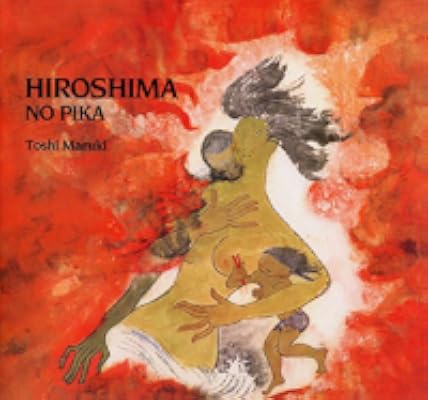
This book should still be published today. Maybe be giving new illustrations as modern libraries would not a low a naked woman’s nipple to be on the cover of a book in the children’s department. This is the true story of a little girl and her mother on the day of and days after the dropping of the bomb on Hiroshima. This story is bold, this story is powerful. This story is heartbreaking, and should still be in libraries, so children can learn not to repeat the mistakes of the past.
Hiroshima No Pika translates to "The Flash of Hiroshima" and tells the story of seven-year-old Mii and her mother and father after the atomic bomb was dropped on August 6, 1945. The watercolor-style pictures flow and sing with a poignant beauty. The prose on the other hand, is stark. I don't know how frightening the story would be for children, but it is a story that needs to be told. (JAF)
This is a chilling gripping book about the atomic bomb that was dropped in Hiroshima. It follows the story of Mii and her mother and father who attempt to flee Hiroshima after the dropping of the atomic bomb. Mii's father is badly injured so Mii's mother carries him on her back as they run to avoid the fires that have been caused by the explosion. Along the way, you witness the horror that those in Hiroshima that day experienced. The pictures are somewhat graphic so caution should be used when presenting this book to children. Although it is written as a picture book, it is best suited for older children.
This picture book is a matter-of-fact account of a terrible event that students absolutely need to know about – the atomic bomb that was dropped over the city of Hiroshima. It explains the actual event as well as the aftermath – going through rubble, suffering the effects of radiation, etc. The pictures are graphic (naked bodies because their clothes had been burned away) and possibly disturbing. The message is not watered down at all, but because it is told in picture book form, it is somewhat “gentler.” Great introduction to this atrocity. I would recommend it be used with middle school and even high school.
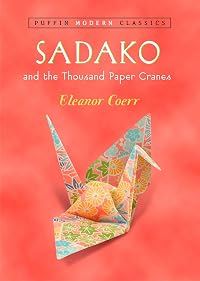
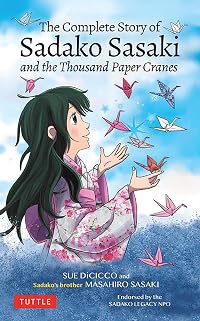
Consider using as a tie-in with Sadako and the Thousand Paper Cranes.
Consider using as a tie-in with Sadako and the Thousand Paper Cranes.
This story is about the confusion, fear, suffering, and loss that a family and so many others experienced as a result of the bombing of Hiroshima. This book is good for educating children about the harsh truths and consequences of war, and offers a unique account from WW2 that is often ignored.
Members
- Recently Added By
Lists

A Child's Book Tour of Japan
58 works; 4 members

Children's Books about World War II (1939-1945)
143 works; 12 members
Author Information
8+ Works 225 Members
Awards and Honors
Awards
Common Knowledge
- Canonical title*
- Hiroshima No Pika
- Alternate titles*
- Pika! en Hiroŝima
- Important places*
- Hiroshima, Japan
- Important events
- World War II
- Original language
- Japanese
*Some information comes from Common Knowledge in other languages. Click "Edit" for more information.
Classifications
Statistics
- Members
- 198
- Popularity
- 165,254
- Reviews
- 23
- Rating
- (4.09)
- Languages
- 9 — Danish, English, Esperanto, French, German, Japanese, Spanish, Turkish, Welsh
- Media
- Paper
- ISBNs
- 9