Clybourne Park: A Play (Tony Award Best Play)
by Bruce Norris
On This Page
Description
Clybourne Park spans two generations fifty years apart. In 1959, Russ and Bev are selling their desirable two-bedroom at a bargain price, unknowingly bringing the first black family into the neighborhood and creating ripples of discontent among the cozy white residents of Clybourne Park. In 2009, the same property is being bought by a young white couple, whose plan to raze the house and start again is met with equal disapproval by the black residents of the soon-to-be-gentrified area. Are show more the issues festering beneath the floorboards actually the same, fifty years on? The author's excruciatingly funny and squirm-inducing satire explores the fault line between race and property. -- Publisher description. show lessTags
Recommendations








Member Recommendations
Member Reviews
This is a fantastic read that is both comical and gut wrenching. However, it is the uncomfortable conversations that make this play truly remarkable. There is a catharsis in hearing these conversations and playing out these scenarios that highlight the complications of conversations of race in our culture.
So amazing!!!!!!! The verbal exchanges and the way he sets up the movement/dialogue/action is such a feat. My mind was blown.
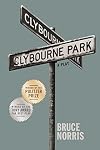
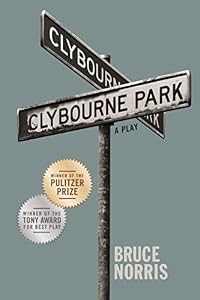
However, don't get the Faber & Faber edition with the blue cover that has road signs on it. So many spelling errors and typos I'm embarrassed for the editors. :-/ (Example: "apologizing" was spelled "aploqizing" ......)
However, don't get the Faber & Faber edition with the blue cover that has road signs on it. So many spelling errors and typos I'm embarrassed for the editors. :-/ (Example: "apologizing" was spelled "aploqizing" ......)
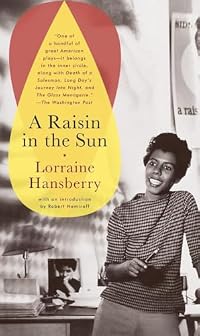
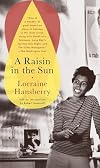
A play about a black family buying a house in a white neighborhood. The focus is the white family selling the house; this is based on the play A Raisin in the Sun, and the house is the one that they have just purchased. The white family is moving out, and the neighborhood improvement committee is visiting them, unhappy with the sale. The sellers did not know the family was black, but they seem unconcerned, and in fact the wife seems to be the only member of the group that is willing to consider it all right for blacks to live next to whites. The second act occurs 50 years later, when the same house is again being sold, this time to a white family moving into what is now an all-black neighborhood, and tearing down the old house to build show more a new one. The resistance of the neighborhood to this change is as great as in the first, but it is a bit more difficult to tell what the motivator is - although the white buyers accuse the black couple of racism, it appears it is more the interest of maintaining the historical integrity of the neighborhood - or perhaps its fear of the process of gentrification turning the neighborhood back into an enclave for the upper middle class. A decent read; could be very interesting to see it performed. show less
Just a bit further down the infinite staircase of liberal guilt than we're used to
Ratings
Members
- Recently Added By
Lists

My Play Collection
769 works; 3 members

Next Plays / 2025
352 works; 1 member
Author Information

11 Works 360 Members
Awards and Honors
Work Relationships
Is a reply to
Common Knowledge
- Original publication date
- 2011
Classifications
Statistics
- Members
- 264
- Popularity
- 122,118
- Reviews
- 5
- Rating
- (3.78)
- Languages
- English
- Media
- Paper, Ebook
- ISBNs
- 7
- ASINs
- 2