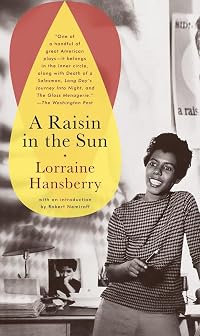
A Raisin in the Sun
by Lorraine Hansberry
On This Page
Description
"Never before, the entire history of the American theater, has so much of the truth of black people's lives been seen on the stage," observed James Baldwin shortly before "A Raisin in the Sun" opened on Broadway in 1959. Indeed Lorraine Hansberry's award-winning drama about the hopes and aspirations of a struggling, working-class family living on the South Side of Chicago connected profoundly with the psyche of black America--and changed American theater forever. The play's title comes from show more a line in Langston Hughes's poem "Harlem," which warns that a dream deferred might "dry up/like a raisin in the sun." "The events of every passing year add resonance to "A Raisin in the Sun,"" said "The New York Times." "It is as if history is conspiring to make the play a classic." This Modern Library edition presents the fully restored, uncut version of Hansberry's landmark work with an introduction by Robert Nemiroff. show lessTags
Recommendations



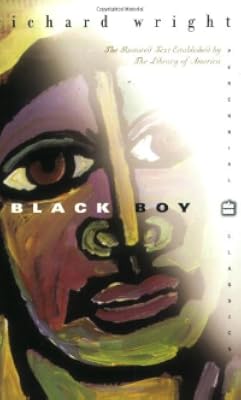
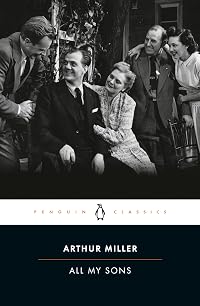

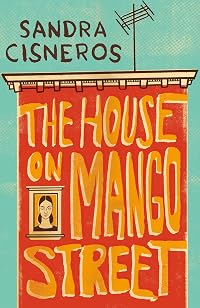

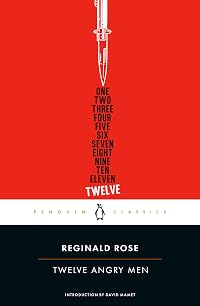


Member Recommendations
Member Reviews
From Langston Hughes:
What happens to a dream deferred?
Does it dry up
Like a raisin in the sun?
Or fester like a sore--
And then run?
Does it stink like rotten meat
Or crust and sugar over--
Like a syrupy sweet?
Maybe it just sags
Like a heavy load.
Or does it explode?
A Raisin in the Sun is the powerful play about a Chicago African-American family in poverty, with enough dreams deferred and enough coping styles and self-destructive behaviors to cover the poem above. Into this comes an inheritance that gives new possibility to those dreams. And then, in comes racism. In the end, the characters feel much optimism while the reader feels a desperate hope.
Set “sometime between World War II and the present” (original publication date: 1959), it show more holds up all too well. show less
What happens to a dream deferred?
Does it dry up
Like a raisin in the sun?
Or fester like a sore--
And then run?
Does it stink like rotten meat
Or crust and sugar over--
Like a syrupy sweet?
Maybe it just sags
Like a heavy load.
Or does it explode?
A Raisin in the Sun is the powerful play about a Chicago African-American family in poverty, with enough dreams deferred and enough coping styles and self-destructive behaviors to cover the poem above. Into this comes an inheritance that gives new possibility to those dreams. And then, in comes racism. In the end, the characters feel much optimism while the reader feels a desperate hope.
Set “sometime between World War II and the present” (original publication date: 1959), it show more holds up all too well. show less
"An end to misery! To stupidity! Don't you see there isn't any real progress, Asagai, there is only one large circle that we march in, around and around, each of us with our little picture in front of us--our own little mirage of what we think is the future."
This is the best book I've read this year, one of the best I've ever read. It did everything I think a great story should and did it exceptionally well, that is deposit the reader at the end more illuminated, stirred with a better understanding.
The play is centered around the Younger family, a Black family living in Chicago post World War II. With the main characters representing three generations: Lena/Mama, the matriarch of the family representing the older generation, Lena's son show more Walter, his wife Ruth and sister Beneatha representing the new generation and Travis, the grandchild representing the future generation. The title of the play itself is from Langston Hughes' poem Harlem:
What happens to a dream deferred?
Does it dry up
like a raisin in the sun?
Or fester like a sore—
And then run?
Does it stink like rotten meat?
Or crust and sugar over—
like a syrupy sweet?
Maybe it just sags
like a heavy load.
Or does it explode?
Told in brilliant storytelling, the dreams of all these characters are presented, weighed, scoffed at, some humbler than others but all generations keeping and trying to maintain a dream that the system they're living under not only refuses to recognize, but actively works to ruin.
I'll be thinking about this story for a while, going through the incredible characterization, all the wonderful scenes and there are several that I will pick up and look at still marveling, and that superb ending. show less
This is the best book I've read this year, one of the best I've ever read. It did everything I think a great story should and did it exceptionally well, that is deposit the reader at the end more illuminated, stirred with a better understanding.
The play is centered around the Younger family, a Black family living in Chicago post World War II. With the main characters representing three generations: Lena/Mama, the matriarch of the family representing the older generation, Lena's son show more Walter, his wife Ruth and sister Beneatha representing the new generation and Travis, the grandchild representing the future generation. The title of the play itself is from Langston Hughes' poem Harlem:
What happens to a dream deferred?
Does it dry up
like a raisin in the sun?
Or fester like a sore—
And then run?
Does it stink like rotten meat?
Or crust and sugar over—
like a syrupy sweet?
Maybe it just sags
like a heavy load.
Or does it explode?
Told in brilliant storytelling, the dreams of all these characters are presented, weighed, scoffed at, some humbler than others but all generations keeping and trying to maintain a dream that the system they're living under not only refuses to recognize, but actively works to ruin.
I'll be thinking about this story for a while, going through the incredible characterization, all the wonderful scenes and there are several that I will pick up and look at still marveling, and that superb ending. show less
I will start by saying that I don’t generally enjoy reading plays – I prefer to see them performed – but this play, is extraordinary. I highly recommend reading it, if a live theater performance isn’t available.
The play was first produced on Broadway in 1959. The title comes from a poem by Langston Hughes, Harlem (or A Dream Deferred). The drama concerns the lives of an African American family living in an apartment on Chicago’s Southside, sometime between WWII and the mid-1950s. The Younger family consists of Mama, her two adult children (Beneatha and Walter Lee), her daughter-in-law Ruth, and her grandson Travis. They struggle to make do in crowded conditions, Travis having to sleep on the living room sofa. As the play opens show more the family is anxiously awaiting a check for $10,000 – the life insurance payment following the death of their husband/father/grandfather. Each of them has dreams of what s/he will do with that money. Those competing dreams form the central conflict.
The play is a product of its time, but has some themes that still ring true today. While there are no longer covenants excluding one racial group from housing in a particular neighborhood (or at least they are no longer enforceable), there is still evidence of racial stereotyping and prejudice. The themes of conflicting dreams and finding one’s moral compass are universal. As the characters traverse the path from despair to triumph (and the many points in between), they touch my own soul, causing me to examine my own dreams – both realized and deferred. show less
The play was first produced on Broadway in 1959. The title comes from a poem by Langston Hughes, Harlem (or A Dream Deferred). The drama concerns the lives of an African American family living in an apartment on Chicago’s Southside, sometime between WWII and the mid-1950s. The Younger family consists of Mama, her two adult children (Beneatha and Walter Lee), her daughter-in-law Ruth, and her grandson Travis. They struggle to make do in crowded conditions, Travis having to sleep on the living room sofa. As the play opens show more the family is anxiously awaiting a check for $10,000 – the life insurance payment following the death of their husband/father/grandfather. Each of them has dreams of what s/he will do with that money. Those competing dreams form the central conflict.
The play is a product of its time, but has some themes that still ring true today. While there are no longer covenants excluding one racial group from housing in a particular neighborhood (or at least they are no longer enforceable), there is still evidence of racial stereotyping and prejudice. The themes of conflicting dreams and finding one’s moral compass are universal. As the characters traverse the path from despair to triumph (and the many points in between), they touch my own soul, causing me to examine my own dreams – both realized and deferred. show less
Though I knew it, until reading [b:A Raisin in the Sun|5517|A Raisin in the Sun|Lorraine Hansberry|https://d.gr-assets.com/books/1165522672s/5517.jpg|3154525] I had never contemplated the idea that nearly every African American lives with the identity of slaves as their ancestors. They live on this quarter of the world because someone wanted to own their family generations ago. I can do no more than imagine it yet I assume that's an incredibly disquieting reality.
[b:A Raisin in the Sun|5517|A Raisin in the Sun|Lorraine Hansberry|https://d.gr-assets.com/books/1165522672s/5517.jpg|3154525] presents a different kind of disquieting reality, full of identity and history and dreams and squandered ambitions and open future and hope. It's show more distinctly black, distinctly Chicago, and distinctly poor, yet the dreams and hopes are universal and the characters ubiquitous (read, human). After the Younger family is given $10,000 (about $82,000 in 2016 dollars), they have to decide the best way to use it to build a better life. As a black family living at the cusp of civil rights, where can they go and what can they do yet still be accepted? Does that matter? Do they live as blacks unapologetically and with dignity? Or do they sacrifice dreams and dignity in the face of a culture that refuses them their humanity?
I loved this play. I read it but I'd also love to see it performed. [a:Lorraine Hansberry|3732|Lorraine Hansberry|https://d.gr-assets.com/authors/1234149147p2/3732.jpg] was but 29 when she wrote this; a young gifted black woman in a culture that had continually rejected her for at least those three reasons. Yet, in her own dignity, she overcame. Her battles continue to be fought daily. The best end I can give here is her words on artistry and the cultural impact that artistry has:
I am a writer. I suppose I think that the highest gift that man has is art, and I am audacious enough to think of myself as an artist - that there is both joy and beauty and illumination and communion between people to be achieved through the dissection of personality. That's what I want to do. I want to reach a little closer to the world, which is to say people, and see if we can share some illuminations together about each other.
Lines I liked from the play:
- "You never understood that there is more than one kind of feeling which can exist between a man and a woman - or at least - there should be."
"No - between a man and a woman there need be only one kind of feeling. I have that for you - Now even - right this moment -"
"I know - and by itself - it won't do. I can find that anywhere."
"For a woman it should be enough."
"I know - because that's what it says in all the novels that men write. But it isn't."
- "I want so many things... I want so many things that they are driving me crazy. Sometimes it's like I can see the future stretched out in front of me - just plain as day. The future, Mama. Hanging over there at the edge of my days. Just waiting for me - a big, looming blank space - full of nothing. Just waiting for me. But it don't have to be."
- Then isn't there something wrong in a house - in a world - where all dreams, good or bad, must depend on the death of a man?"
- "Just sit a while and think - Never be afraid to sit a while and think."
- "There is always something left to love. If you ain't learned that you ain't learned nothing. [...] Child, when do you think is the time to love somebody the most - when they when they done good and made things easy for everybody? Well, that ain't the time at all. It's when he's at his lowest and can't believe in hisself 'cause the world done whipped him so… When you starts measuring somebody - measure him right, child. Measure him right. Make sure you done taken into account what hills and valleys he come through before he got to wherever he is."
- ...above all [Negros] have among our miserable and downtrodden ranks people who are the very essence of human dignity.
- …I think that the human race does not command its own destiny and that that destiny can eventually embrace the stars…
- I have treated Mr. Lindner as a human merely because he is one; that does not make the meaning of his call less malignant, less sick.
- ...attention must be paid in equal and careful measure to the frequent triumph of man, if not nature, over the absurd. Perhaps it is here that certain of the modern existentialists have erred. They have seemed to me to be overwhelmed by the mere fact of the absurd and become incapable of imagining its frailty. show less
[b:A Raisin in the Sun|5517|A Raisin in the Sun|Lorraine Hansberry|https://d.gr-assets.com/books/1165522672s/5517.jpg|3154525] presents a different kind of disquieting reality, full of identity and history and dreams and squandered ambitions and open future and hope. It's show more distinctly black, distinctly Chicago, and distinctly poor, yet the dreams and hopes are universal and the characters ubiquitous (read, human). After the Younger family is given $10,000 (about $82,000 in 2016 dollars), they have to decide the best way to use it to build a better life. As a black family living at the cusp of civil rights, where can they go and what can they do yet still be accepted? Does that matter? Do they live as blacks unapologetically and with dignity? Or do they sacrifice dreams and dignity in the face of a culture that refuses them their humanity?
I loved this play. I read it but I'd also love to see it performed. [a:Lorraine Hansberry|3732|Lorraine Hansberry|https://d.gr-assets.com/authors/1234149147p2/3732.jpg] was but 29 when she wrote this; a young gifted black woman in a culture that had continually rejected her for at least those three reasons. Yet, in her own dignity, she overcame. Her battles continue to be fought daily. The best end I can give here is her words on artistry and the cultural impact that artistry has:
I am a writer. I suppose I think that the highest gift that man has is art, and I am audacious enough to think of myself as an artist - that there is both joy and beauty and illumination and communion between people to be achieved through the dissection of personality. That's what I want to do. I want to reach a little closer to the world, which is to say people, and see if we can share some illuminations together about each other.
Lines I liked from the play:
- "You never understood that there is more than one kind of feeling which can exist between a man and a woman - or at least - there should be."
"No - between a man and a woman there need be only one kind of feeling. I have that for you - Now even - right this moment -"
"I know - and by itself - it won't do. I can find that anywhere."
"For a woman it should be enough."
"I know - because that's what it says in all the novels that men write. But it isn't."
- "I want so many things... I want so many things that they are driving me crazy. Sometimes it's like I can see the future stretched out in front of me - just plain as day. The future, Mama. Hanging over there at the edge of my days. Just waiting for me - a big, looming blank space - full of nothing. Just waiting for me. But it don't have to be."
- Then isn't there something wrong in a house - in a world - where all dreams, good or bad, must depend on the death of a man?"
- "Just sit a while and think - Never be afraid to sit a while and think."
- "There is always something left to love. If you ain't learned that you ain't learned nothing. [...] Child, when do you think is the time to love somebody the most - when they when they done good and made things easy for everybody? Well, that ain't the time at all. It's when he's at his lowest and can't believe in hisself 'cause the world done whipped him so… When you starts measuring somebody - measure him right, child. Measure him right. Make sure you done taken into account what hills and valleys he come through before he got to wherever he is."
- ...above all [Negros] have among our miserable and downtrodden ranks people who are the very essence of human dignity.
- …I think that the human race does not command its own destiny and that that destiny can eventually embrace the stars…
- I have treated Mr. Lindner as a human merely because he is one; that does not make the meaning of his call less malignant, less sick.
- ...attention must be paid in equal and careful measure to the frequent triumph of man, if not nature, over the absurd. Perhaps it is here that certain of the modern existentialists have erred. They have seemed to me to be overwhelmed by the mere fact of the absurd and become incapable of imagining its frailty. show less
It's always interesting going back and reading required-reading books from high school/junior high. I'd not read "A Raisin in the Sun" since high school, but picked it up to see what I thought now, ~15+ years later.
It really is a profound play, with a gripping plot and characters that alternately make you love and hate (or perhaps strongly dislike) them. I definitely wanted to reach into the book and smack them upside the head sometimes - but then I got to the end ... and wow. Talk about a mic drop finale!
I may not have appreciated "A Raisin in the Sun" in high school (do we ever appreciate things in high school, though?), but I certainly do now. Remarkable writing, story, and message.
It really is a profound play, with a gripping plot and characters that alternately make you love and hate (or perhaps strongly dislike) them. I definitely wanted to reach into the book and smack them upside the head sometimes - but then I got to the end ... and wow. Talk about a mic drop finale!
I may not have appreciated "A Raisin in the Sun" in high school (do we ever appreciate things in high school, though?), but I certainly do now. Remarkable writing, story, and message.
I was surprised by how funny the dialogue was sometimes, the way the characters adopt voices and attitudes. A wide range of responses to the treatment of Black Americans is on display, including the Nigerian reformist who compares the poverty in his country with the relative affluence of the US. I expected the growing sense of despair but was surprised by the affirmation of courage and dignity in the end.
The Younger family can’t seem to catch a break. For years, maybe even decades, they’ve lived in a two-bedroom apartment on the south side of Chicago. The head of the family has recently died, and the insurance money is coming: $10,000, more than any of them have ever had. Will Walter get the business opportunity he’s been hoping for? Will it put Beneatha through college and medical school? Maybe get the little house in the suburbs that Ruth dreams of for her children? Or will it slip away somehow, as so many of their dreams have done?
I’d love to see a live performance of this show someday. It’s powerfully written, but I can only imagine the impact it must have when staged. In any event, I’m glad I finally took the time to show more read it. show less
I’d love to see a live performance of this show someday. It’s powerfully written, but I can only imagine the impact it must have when staged. In any event, I’m glad I finally took the time to show more read it. show less
Members
- Recently Added By
Lists

Plays I Like
230 works; 29 members
Essential/Recognized Stage Plays
115 works; 4 members
1:28 p.m.'s 350 Stage Plays Challenge
94 works; 3 members

College Reads (Lit Edition)
75 works; 5 members

Favorite Books from the 1950s
33 works; 2 members

Best Books of the 20th Century
193 works; 5 members

AP Lit
363 works; 6 members

Five star books
1,755 works; 108 members

Books Read in 2023
5,547 works; 145 members

American Lit for Eng 11 Research Project
368 works; 6 members

Recommended Reading : 600 Classics Reviewed, Editors of Salem Press, 2015
634 works; 6 members
My Play Collection
769 works; 3 members

Books Read in 2025
4,091 works; 97 members

Books by Black Women
108 works; 2 members
School Made Us Read It
380 works; 196 members
Most Depressing Books
69 works; 16 members

My Favorite Plays
25 works; 1 member
Female Author
1,235 works; 67 members

Ambleside Books
459 works; 18 members
Best African American Literature
53 works; 9 members
Black Authors
384 works; 32 members

Top Five books of 2014
9 works; 2 members
Blue Pyramid 1,276 Best Books of All Time
1,248 works; 32 members

Books Read in 2016
4,666 works; 199 members

The Black Archives: All Power To the People! Reading List
79 works; 10 members

20th Century Literature
1,161 works; 54 members
Overdue Podcast
806 works; 9 members
Zora Canon
100 works; 6 members

1964 College Preparatory Reading List
202 works; 8 members

Books Read in 2002
197 works; 8 members

Read the book and saw the movie
1,170 works; 195 members

Books You Read During High School (For School)
301 works; 53 members

1950s
340 works; 22 members
Nifty Fifties
129 works; 13 members
Stage Plays/Screenplays/Dialogues/Anything Dialogue-Storytelling Related
81 works; 2 members

Every Non-Musical Play Nominated for a Tony Award
64 works; 3 members
r/acting on Reddit - Essential Plays
44 works; 2 members

Schomburg Centennial Reading List
100 works; 4 members
Author Information

American playwright Lorraine Hansberry was born on May 19, 1930 in Chicago. After attending the University of Wisconsin for two years and then studying painting in Chicago and Mexico, Hansberry moved to New York in 1950. There she held a number of odd jobs to make ends meet while trying to establish her writing career. Hansberry wrote her first show more play A Raisin in the Sun in 1959. The first drama by a black woman to be produced on Broadway. A Raisin in the Sun tells the story of a working-class black family in Chicago. The production won the New York Drama Critics' Circle Award, and in 1961, the film version, starring Sidney Poitier and Ruby Dee, received a special award at the Cannes Film Festival. Hansberry's next play, The Sign in Sidney Brustein's Window, a drama set in Greenwich Village, had a short run on Broadway in 1964. Hansberry's promising career was tragically cut short by her premature death on January 12, 1965. She was 34 years old. The plays To Be Young, Gifted and Black and Les Blancs were adapted from Hansberry's early writings by her ex-husband Robert Nemiroff. Both plays were produced off-Broadway, in 1969 and 1970 respectively. (Bowker Author Biography) show less
Some Editions
Awards and Honors
Awards
Distinctions
Notable Lists
Series
Belongs to Publisher Series
Reclams Universal-Bibliothek (19840)
Work Relationships
Is contained in
Has the adaptation
Is abridged in
Is replied to in
Has as a study
Has as a student's study guide
Has as a teacher's guide
Common Knowledge
- Canonical title
- A Raisin in the Sun
- Original publication date
- 1959
- People/Characters
- Ruth Younger; Walter Younger; Travis Younger; Beneatha Younger; Lena Younger; Joseph Asagai (show all 10); George Murchison; Mrs. Johnson; Karl Linder; Bobo
- Important places
- South Side, Chicago, Illinois, USA; Washington Park, Chicago, Illinois, USA; Chicago, Illinois, USA; Illinois, USA
- Related movies
- A Raisin in the Sun (1961 | IMDb); A Raisin in the Sun (1989 | IMDb); A Raisin in the Sun (2008 | IMDb)
- Epigraph
- What happens to a dream deferred?
Does it dry up
Like a raisin in the sun?
Or fester like a sore—
And then run?
Does it stink like rotten meat?
Or crust and sugar over—
Like a syrupy sweet?
May... (show all)be it just sags
Like a heavy load.
Or does it explode?
—Langston Hughes - Dedication
- To Mama:
in gratitude for the dream - First words
- This is the most complete edition of A Raisin in the Sun ever published.
--Introduction, 1988 edition.
The Younger living room would be a comfortable and well-ordered room if it were not for a number of indes... (show all)tructible contradictions to this state of being.
--Body text - Quotations
- And we have decided to move into our house—because my father—my father—he earned it for us brick by brick . . . we don't want to make no trouble for nobody or fight no causes, and we will try to be good neighbors. And t... (show all)hat's all we got to say about that. . . . We don't want your money.
- Last words
- (Click to show. Warning: May contain spoilers.)The door opens and she comes back in, grabs her plant, and goes out for the last time.
- Original language
- English US
- Canonical DDC/MDS
- 812.54
- Canonical LCC
- PS3515.A515
Classifications
Statistics
- Members
- 6,403
- Popularity
- 1,913
- Reviews
- 87
- Rating
- (3.80)
- Languages
- English, French, German, Italian
- Media
- Paper, Audiobook, Ebook
- ISBNs
- 62
- UPCs
- 1
- ASINs
- 42