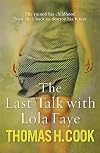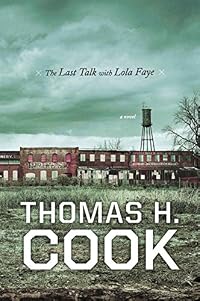
The Last Talk with Lola Faye
by Thomas H. Cook
On This Page
Description
Historian Lucas Page visits St. Louis to give a reading. Among the attendees is someone he does not expect: Lola Faye Gilroy, the "other woman" he has long blamed for his father's murder decades earlier. Now he must discover why Lola Faye has come and what she is after--before it is too late.Tags
Recommendations






















Member Reviews
Harvard educated historian Lucas Page has come to St. Louis to promote his latest book in front of a small group of "museum regulars," none of whom, as it turns out, have any interest in actually taking a copy of the book home with them. Just when he's ready to call it a night, Lucas is approached at his table by what he at first assumes is a homeless woman. But then he realizes that he is looking into the eyes of Lola Faye Gilroy, the very woman he still blames for his father's murder two decades earlier.
"She'd come to make her case before me, clarify the issue Woody Gilroy had raised in his suicide note, rid herself of the guilt he'd laid at her feet, revisit all that in a talk with me, then enter her plea at the end of it: not show more guilty."
Or had she?
Feeling a little as if he'd been tricked into it, Lucas finds himself agreeing to have a drink with Lola Faye so that they can have a talk about their lives in the aftermath of what happened all those years ago. Lucas, under the impression that Lola Faye is still the uneducated and naive small-town Alabama girl she was when his father hired her to clerk in the family variety store, figures that their conversation will be a short one. Just a quick drink, a little polite conversation, and Lola Faye will be out of his life again - exactly where she belongs.
But then Lola Faye starts asking questions, good ones. And those questions cause Lucas to rethink everything he was so certain that he knew about the night his father was shot to death in his own kitchen by someone lurking outside in the dark. Long before Lucas realizes it, Lola Faye has taken over the conversation and she's guiding it exactly where she wants it to end up.
"The last best hope of life is that at some point during living it, all that you did wrong will suddenly teach you to do right."
The Last Talk with Lola Faye is an intense novel, one in which the pressure is turned up so gradually that the reader ends up being lulled into the same false sense of complacency that Lucas experiences. As it became clearer and clearer that Lucas is correct in feeling threatened by where Lola Faye is leading the conversation, I couldn't turn pages fast enough. Even so, the book's ending is a completely satisfying one that I never saw coming. And that's a good thing.
This is my first experience with a Thomas H. Cook novel, and that strikes me as remarkable considering how much crime fiction I've read over the last several decades and that Cook has written something like three dozen novels. But that's kind of nice, really, because now I have Cook's huge back catalog to explore, including Red Leaves, the one I started a couple of days ago. show less
"She'd come to make her case before me, clarify the issue Woody Gilroy had raised in his suicide note, rid herself of the guilt he'd laid at her feet, revisit all that in a talk with me, then enter her plea at the end of it: not show more guilty."
Or had she?
Feeling a little as if he'd been tricked into it, Lucas finds himself agreeing to have a drink with Lola Faye so that they can have a talk about their lives in the aftermath of what happened all those years ago. Lucas, under the impression that Lola Faye is still the uneducated and naive small-town Alabama girl she was when his father hired her to clerk in the family variety store, figures that their conversation will be a short one. Just a quick drink, a little polite conversation, and Lola Faye will be out of his life again - exactly where she belongs.
But then Lola Faye starts asking questions, good ones. And those questions cause Lucas to rethink everything he was so certain that he knew about the night his father was shot to death in his own kitchen by someone lurking outside in the dark. Long before Lucas realizes it, Lola Faye has taken over the conversation and she's guiding it exactly where she wants it to end up.
"The last best hope of life is that at some point during living it, all that you did wrong will suddenly teach you to do right."
The Last Talk with Lola Faye is an intense novel, one in which the pressure is turned up so gradually that the reader ends up being lulled into the same false sense of complacency that Lucas experiences. As it became clearer and clearer that Lucas is correct in feeling threatened by where Lola Faye is leading the conversation, I couldn't turn pages fast enough. Even so, the book's ending is a completely satisfying one that I never saw coming. And that's a good thing.
This is my first experience with a Thomas H. Cook novel, and that strikes me as remarkable considering how much crime fiction I've read over the last several decades and that Cook has written something like three dozen novels. But that's kind of nice, really, because now I have Cook's huge back catalog to explore, including Red Leaves, the one I started a couple of days ago. show less
Do you ever pick up a book, smugly knowing exactly what to expect, and read maybe 100 or 150 pages, getting more and more frustrated because the author is taking so long to get where you know he is going, but you keep going because once he gets there you know it will be worth the wait? And then there are only 50 or so pages left, and you realize the author is not doing what you expected and you realize you probably would have enjoyed the book more had you gone in with no expectations?
Such was my experience with The Last Talk with Lola Faye. I thought it would be a tight, suspenseful mystery with a big reveal at the end. About a quarter of the way in, I had already decided what that big reveal would be and how the story would resolve show more itself. I wasn’t totally wrong, but instead of enjoying the process of getting there, I was impatient with what I perceived to be Cook’s digressions, mis-directions, and ham-handed way of telling rather than showing. It was only in the last third of the book that I realized Cook was telling a much more subtle story, and that the suspense – the expectation by the reader of some sort of action-based denouement – was actually driven by the careful disentangling of threads.
Last Talk is a dialogue between Luke, a mediocre historian and academic and Lola Faye, an old acquaintance. Years ago, tragedy struck Luke’s family and he has spent years with the ghosts of his past and his certainty about what happened. The novel switches between Luke’s recollections and his conversation with Lola Faye in a hotel bar. Slowly, everything Luke thought he understood is revealed to be based on his own assumptions and biases. What takes the place of Luke’s “truth” is a story of miscommunication, misplaced anger, and missed opportunities. The youthful Luke is a character entirely devoid of sensitivity, empathy or understanding, despite his academic brilliance. The adult Luke is a man frozen in place and numb to the world. Neither one evokes any sympathy in the reader, and the redemptive ending of Luke’s story seems a little too pat and happy.
Despite these flaws, I admire how Cook deftly drew me in and shattered my assumptions and expectations of the story, just as Luke’s are during the course of one evening. show less
Such was my experience with The Last Talk with Lola Faye. I thought it would be a tight, suspenseful mystery with a big reveal at the end. About a quarter of the way in, I had already decided what that big reveal would be and how the story would resolve show more itself. I wasn’t totally wrong, but instead of enjoying the process of getting there, I was impatient with what I perceived to be Cook’s digressions, mis-directions, and ham-handed way of telling rather than showing. It was only in the last third of the book that I realized Cook was telling a much more subtle story, and that the suspense – the expectation by the reader of some sort of action-based denouement – was actually driven by the careful disentangling of threads.
Last Talk is a dialogue between Luke, a mediocre historian and academic and Lola Faye, an old acquaintance. Years ago, tragedy struck Luke’s family and he has spent years with the ghosts of his past and his certainty about what happened. The novel switches between Luke’s recollections and his conversation with Lola Faye in a hotel bar. Slowly, everything Luke thought he understood is revealed to be based on his own assumptions and biases. What takes the place of Luke’s “truth” is a story of miscommunication, misplaced anger, and missed opportunities. The youthful Luke is a character entirely devoid of sensitivity, empathy or understanding, despite his academic brilliance. The adult Luke is a man frozen in place and numb to the world. Neither one evokes any sympathy in the reader, and the redemptive ending of Luke’s story seems a little too pat and happy.
Despite these flaws, I admire how Cook deftly drew me in and shattered my assumptions and expectations of the story, just as Luke’s are during the course of one evening. show less
Classic southern gothic!
"The Last Talk with Lola Faye" is the fourth Thomas Cook novel I have read and he has become one of my favorite authors. The way he peels back the layers of the onion and reveals the story beneath is truly masterful. Cook's latest effort is told in the format of a hotel lounge conversation between two acquaintances from the past that, over the course of an evening, lays bare tragic events from years before that shaped the lives and identities of both. A native of Alabama, Cook spins this southern gothic tale with a skill that would make Faulkner proud. This is not the South of antebellum mansions, southern belles and mint juleps; rather it is a place of dark family secrets, angry passions, guilt and ruined show more lives...and it is very appealing. I highly recommend it. show less
"The Last Talk with Lola Faye" is the fourth Thomas Cook novel I have read and he has become one of my favorite authors. The way he peels back the layers of the onion and reveals the story beneath is truly masterful. Cook's latest effort is told in the format of a hotel lounge conversation between two acquaintances from the past that, over the course of an evening, lays bare tragic events from years before that shaped the lives and identities of both. A native of Alabama, Cook spins this southern gothic tale with a skill that would make Faulkner proud. This is not the South of antebellum mansions, southern belles and mint juleps; rather it is a place of dark family secrets, angry passions, guilt and ruined show more lives...and it is very appealing. I highly recommend it. show less
This was a fascinating look at people's actions, motivations, and how differently people see the same event. This book was recommended by my cousin's wife. Thanks Janet!
Luke, a middle-aged historian, is in St. Louis to plug his latest book. Lola Faye, the woman who worked at his father's variety store in the small town they both grew up in, shows up and wants to speak with him. They adjourn to the hotel bar and slowly start circling around the events leading up to the murder of Luke's father when he (Luke) was an adolescent. I'm not sure how Cook does it, but he manages to get the reader inside the head of both Luke & Lola Faye and we gradually begin to understand that the facts each knows about what happened may not be as close to the show more truth as they think. show less
Luke, a middle-aged historian, is in St. Louis to plug his latest book. Lola Faye, the woman who worked at his father's variety store in the small town they both grew up in, shows up and wants to speak with him. They adjourn to the hotel bar and slowly start circling around the events leading up to the murder of Luke's father when he (Luke) was an adolescent. I'm not sure how Cook does it, but he manages to get the reader inside the head of both Luke & Lola Faye and we gradually begin to understand that the facts each knows about what happened may not be as close to the show more truth as they think. show less
This book really surprised me. I started reading and became sure that I knew where the story was going and what was going to happen. It felt clunky and predictable. Well, I was very mistaken! This book alternates chapters between and conversation one night and flashbacks. They mesh very well. The story changes directions and goes down a very different road. It felt like an intensely dramatic play or a movie that should be cast with actors who can handle dialogue that changes tone constantly. It often felt like one of the detective shows where the cop acts like he doesn't really know what's going on but he does, and the criminal knows he should be careful with his words but can't stop talking - it reminded me of Vincent D'Onofrio"s show more character from Criminal Minds...
There is a mystery involved, but the real meat of the novel is the conversation, we watch as it takes twist and turns, and when we think we know what will happen next - it usually doesn't. Fun, tense read! show less
There is a mystery involved, but the real meat of the novel is the conversation, we watch as it takes twist and turns, and when we think we know what will happen next - it usually doesn't. Fun, tense read! show less
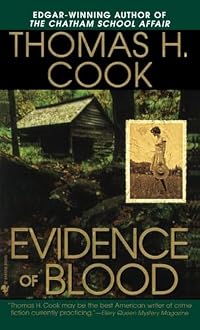
What would you do to get what you want? How far would you go to make someone pay for something they purportedly did? What is the extent of human behavior? That's what Thomas H. Cook delves into in The Last Talk With Lola Faye.
Once Luke's teacher, Ms. McDowell, tells him he has the potential to go to Harvard on scholarship, that's all Luke thinks of. Getting out of Glenville, AL at any cost. Unfortunately, his lofty goals of writing a stirring, emotional tribute to the every day person was never reached. Instead, he is visiting St. Louis, talking to a museum crowd about his latest dull book on fateful decisions in battle.
Lola Faye Gilroy, his father's assistant at the money losing Variety Store is also in St,. Louis, there to kill two show more birds with one stone, see the St. Louis arch and have a last conversation with Luke. It was presumed that Lola Faye was having an affair with Luke's father, Doug. Her estranged husband, Woody, killed Doug and later himself. While the Sheriff attributed it to murder/suicide, Cook plants enough suspense and innuendo to make the reader wonder.
Luke's and Lola Faye's conversation at the bar in his hotel twists and turns, flashes back to events in Glenville, makes Luke wonder about Lola Faye's motives both then and now. His writing always has this air about it...mystical, meandering, cloudy, ruminating. As the conversation advances, readers will be unsure as to who might have done what.
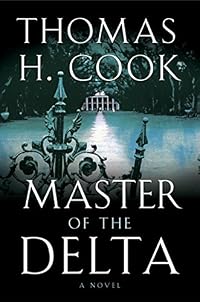
While The Chatham School Affair, for personal reasons, will always be my favorite Cook book, this and Master of the Delta are right up there. Take every opportunity to read a Thomas H. Cook mystery. show less
Once Luke's teacher, Ms. McDowell, tells him he has the potential to go to Harvard on scholarship, that's all Luke thinks of. Getting out of Glenville, AL at any cost. Unfortunately, his lofty goals of writing a stirring, emotional tribute to the every day person was never reached. Instead, he is visiting St. Louis, talking to a museum crowd about his latest dull book on fateful decisions in battle.
Lola Faye Gilroy, his father's assistant at the money losing Variety Store is also in St,. Louis, there to kill two show more birds with one stone, see the St. Louis arch and have a last conversation with Luke. It was presumed that Lola Faye was having an affair with Luke's father, Doug. Her estranged husband, Woody, killed Doug and later himself. While the Sheriff attributed it to murder/suicide, Cook plants enough suspense and innuendo to make the reader wonder.
Luke's and Lola Faye's conversation at the bar in his hotel twists and turns, flashes back to events in Glenville, makes Luke wonder about Lola Faye's motives both then and now. His writing always has this air about it...mystical, meandering, cloudy, ruminating. As the conversation advances, readers will be unsure as to who might have done what.
While The Chatham School Affair, for personal reasons, will always be my favorite Cook book, this and Master of the Delta are right up there. Take every opportunity to read a Thomas H. Cook mystery. show less
Reading this novel was very much like watching an Indie film. The entire novel takes place in a hotel bar where Lucas (a self-proclaimed boring history book writer) and Lola Faye (his father's former mistress) meet and discuss old times.
As you can imagine, they're not reminiscing about "the good old days". As the conversation unfolds, there are quite a few flash backs where Luke remembers his childhood, his parents, and his burning desire to go to Harvard and become a famous writer. Luke also has some secrets that he's never told anyone and Lola Faye seems like she might be able to guess them.
I was intrigued enough to keep reading. Just why is Lola Faye acting like this and saying these things? What are Luke's secrets? What really show more happened to cause his father's murder?
I didn't feel Lola Faye's conversation seemed true to life, though. Most of the novel involved Lola Faye saying something sincerely, then saying something with a hard edge, then saying something light and fluffy, then back to another penetrating glance and harder edge. We went back and forth with Lola Faye's strange moods and strange sayings for the entire book.
And the ending? The final epilogue chapter? A bit confusing to me. show less
As you can imagine, they're not reminiscing about "the good old days". As the conversation unfolds, there are quite a few flash backs where Luke remembers his childhood, his parents, and his burning desire to go to Harvard and become a famous writer. Luke also has some secrets that he's never told anyone and Lola Faye seems like she might be able to guess them.
I was intrigued enough to keep reading. Just why is Lola Faye acting like this and saying these things? What are Luke's secrets? What really show more happened to cause his father's murder?
I didn't feel Lola Faye's conversation seemed true to life, though. Most of the novel involved Lola Faye saying something sincerely, then saying something with a hard edge, then saying something light and fluffy, then back to another penetrating glance and harder edge. We went back and forth with Lola Faye's strange moods and strange sayings for the entire book.
And the ending? The final epilogue chapter? A bit confusing to me. show less
Members
- Recently Added By
Lists

#JustTheFacts2022Silver
48 works; 1 member
Author Information

56+ Works 5,147 Members
Classifications
Statistics
- Members
- 165
- Popularity
- 197,784
- Reviews
- 9
- Rating
- (3.58)
- Languages
- English, French
- Media
- Paper, Audiobook, Ebook
- ISBNs
- 21
- ASINs
- 8