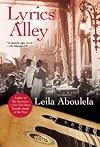
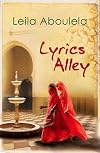
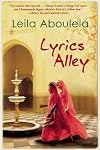
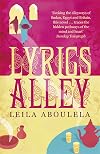
Lyrics Alley
by Leila Aboulela
On This Page
Description
Their fortune threatened by shifting powers in Sudan and their heir's debilitating accident, a powerful family under the leadership of Mahmoud Bey is torn between the traditional and modern values of Mahmoud's two wives and his son's efforts to break with cultural limits.Tags
Recommendations















Member Recommendations
Member Reviews
It took me a little while to get into this, but once in I was hooked. There's a lot packed into this not-particularly-lengthy (just over 300 pages) novel, and I like the way Aboulela brings it all together. In a nutshell, it's the story of one family living just outside Khartoum, over a couple of years in the early 1950s, with the tumultuous political events of that period (the fall of the British Empire, the struggle for self-determination, Sudan's relationship with Egypt) as a backdrop (my interest was piqued enough to have me go off and do some googling). Add to that a polygamous marriage, female circumcision, one female character's battle to be allowed to wear reading glasses (why would a woman need to read?) and other show more considerations linked to the role of women in this society...but all skillfully handled in a gentle way which made me think about the issues at stake, question them. show less
Lyrics Alley is set in Sudan, but Leila Aboulela takes her readers across borders in such a way that we can observe differences and universals simultaneously. It’s a satisfying story overall, with each character depicted in bold strokes and a broader arc with a credible — if not completely and entirely happy — resolution that’s definitely worth reading (although, selfishly, I think I might have enjoyed a whole novel about my favourite characters even more).Curious about those favourite characters? I have more to say about this Orange Prize longlisted novel here.
I like how the book ends. The final chapter expertly encapsulates what happened to the main characters through Nur Abuzeid's interview with the radio station. Nabilah Bey returned to Egypt and her children became friends with Fatma's daughter, and Soraya became a mother. And Ustaz Badr moved into his dream home. It wasn't clear initially what Ustaz Badr's role is, and the chapters on him slowed the book down. Turns out that he had an important role in spurring Nur to become an excellent poet and unwittingly persuaded Nabilah to return to Sudan. While reading this, I can't help but think of Palace Walk. Both took place in Egypt and had kind patriarchs. Palace Walk took place in Egypt in the 1910s; Lyrics Alley partly took place in Egypt show more but in the 1950s. But as I write this review, it strikes me how different the two Egypts are. The Egypt depicted in Palace Walk is so much more conservative. That's one of the interesting things I like about reading - learning about different countries and cultures. show less
Lyrics Alley has some very beautiful moments but is a disjointed novel that never really pulls it together by the end. It is a quick and compelling story but the reasons for being pulled into the novel - the setting, the tragedy the characters, wondering about the outcomes - end up being less than fully realized. I was left dissatisfied, unfortunately, yet I am open to reading more by this author. I wonder, though, given the setting and political climate of the time (Sudan & Egypt, 1951 & 1952) if this disjointed feeling was created by the author on purpose?? But I just really can't be sure.
Started slowly, but became very engrossing in the middle and then fizzled a little toward the end. The book is based on the life of the author's uncle (although she says she didn't try to stick closely to the facts of his life) and I wonder if that accounts for some of the pacing problems. I also found the large cast of characters hard to keep track of in the first few chapters--they are all interrelated (often in multiple ways) and I practically need to make a chart to figure out the different relationships.
Started slowly, but became very engrossing in the middle and then fizzled a little toward the end. The book is based on the life of the author's uncle (although she says she didn't try to stick closely to the facts of his life) and I wonder if that accounts for some of the pacing problems. I also found the large cast of characters hard to keep track of in the first few chapters--they are all interrelated (often in multiple ways) and I practically need to make a chart to figure out the different relationships.
Lyrics Alley is set in Sudan, but Leila Aboulela takes her readers across borders in such a way that we can observe differences and universals simultaneously. It’s a satisfying story overall, with each character depicted in bold strokes and a broader arc with a credible — if not completely and entirely happy — resolution that’s definitely worth reading (although, selfishly, I think I might have enjoyed a whole novel about my favourite characters even more).
Curious about those favourite characters? I have more to say about this Orange Prize longlisted novel here.
Curious about those favourite characters? I have more to say about this Orange Prize longlisted novel here.
Members
- Recently Added By
Published Reviews
ThingScore 67
LEILA ABOULELA’S “Lyrics Alley”, which has been shortlisted for the 2011 Orange prize for fiction, is set in Sudan, as it sloughs off British and Egyptian rule and prepares for its new liberty. Mahmoud, the urbane patriarch, straddles two worlds, embodied in his two wives. The first, Waheeba, is Sudanese; her bulk swathed in a traditional tobe, the tribal scars on her face like “cracks show more on a French loaf”. Spoilt Nabilah, his younger second wife, is an Egyptian glamourpuss, who sulkily divides her time between Egypt and Sudan, infuriated at the “primitiveness” of her new home, sullen at the heat and squalor of her husband’s “untamed land”. Dismissive of Waheeba, she scorns the very idea that this lump of a woman, “obese, menopausal, illiterate”, could be her rival in anything. show less
added by kidzdoc
The novel was inspired by the life of Aboulela’s uncle, a poet, and a deeper question running throughout is: what is the role of artists in our society? Lyrics Alley sensitively charts the growth of a young artist discovering and honing his talent: 'It must be a skill, like fishing, to cast your net into a river of dreams and catch a splendid array of words.’ In an unstable world, Nur show more finds that 'the poem is his home’.
Vividly evoking the alleyways of Sudan, Egypt and Britain, this novel also movingly and meticulously traces the hidden pathways of the mind and heart with all its anger, shame, hate and love. show less
Vividly evoking the alleyways of Sudan, Egypt and Britain, this novel also movingly and meticulously traces the hidden pathways of the mind and heart with all its anger, shame, hate and love. show less
added by kidzdoc
As a tale of stricken love between two souls, Lyrics Alley is impressive. It is a shame that the novel's gentle, gilded atmosphere prevents it being more.
added by charl08
Lists

Favourite Women's Prize for Fiction, Orange & Bailey's Prize contenders
132 works; 52 members

Best African Books
126 works; 46 members
Author Information

12+ Works 1,551 Members
Awards and Honors
Awards
Distinctions
Common Knowledge
- Canonical title
- Lyrics Alley
- Original publication date
- 2010-12-12 (UK) (UK); 2011-03-01 (US) (US)
- People/Characters
- Mahmoud Bey; Nur Bey; Nabilah Bey; Wahibah Bey
- Important places
- Sudan; Cairo, Egypt; Egypt
- First words
- Alhamdullilah, he was safe and the worst was over.
- Last words
- (Click to show. Warning: May contain spoilers.)Nur watches him as he switches on the tape recorder, holds the microphone and murmurs in that deep familiar Radio Umdurman voice, 'Dear, esteemed listeners, you were in the company of the poet of love and hope.'
Classifications
Statistics
- Members
- 209
- Popularity
- 156,754
- Reviews
- 14
- Rating
- (3.73)
- Languages
- English
- Media
- Paper, Ebook
- ISBNs
- 12
- ASINs
- 4