On This Page
Description
After twelve-year-old Johnny Maxwell suddenly starts seeing and talking to ghosts, he and his friends become involved in a battle to save the local cemetery.Tags
Recommendations


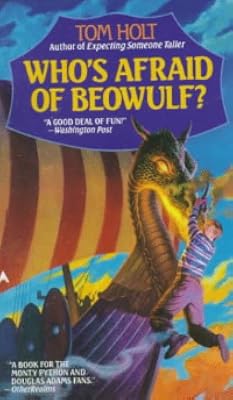
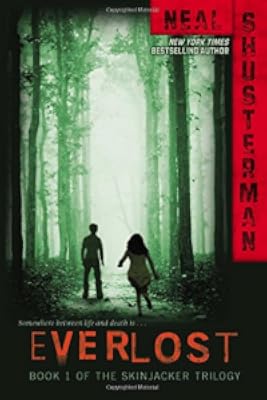
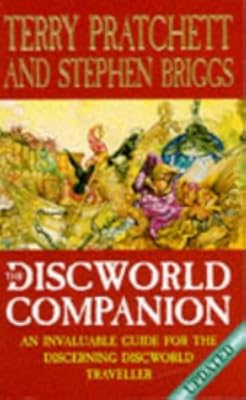
Member Recommendations
Member Reviews
Johnny Maxwell is back and this time he can see ghosts, who are pissed off that their cemetery is slated for demolition after being sold to developers in a dodgy real estate deal.
There's a lot about the importance of tradition in this one; not tradition in the "this how we've always done things and why should we change them now" sense, but as a way to respect and remember those who came before. Of course since this is Pratchett he turns it all topsy-turvy, so the living become keepers of the past while the dead get a new lease on, er, life.
There's a lot about the importance of tradition in this one; not tradition in the "this how we've always done things and why should we change them now" sense, but as a way to respect and remember those who came before. Of course since this is Pratchett he turns it all topsy-turvy, so the living become keepers of the past while the dead get a new lease on, er, life.
A loose sequel to 'Only You Can Save Mankind', but it's also an excellent standalone novel, and I have a hazy memory I might have read it first.
Johnny is an undistinguished child growing up in Blackbury, a Northern city in the 1990s. His parents are in the middle of getting divorced, and his friends are a rag-tag assortment - the fat computer geek, the skinhead with a heart of gold, and the black one who loves brass band music.
Johnny's gift / problem is the ability to see things that other people don't. In Only You Can Save Mankind, this manifests as talking to the ScreeWee in his computer game, and having to engage with 'what if I was really trying to commit genocide on an entire other race of sentient beings? In Johnny and the Dead show more he becomes aware of the dead in the cemetery, which is due to be demolished to make room for a new office block.
This gives rise to a sweet story, where the living work out the importance of knowing about the past, and the dead (who are definitely not Ghosts, just Dead) work out the importance of letting go of the past and moving on to be free and happy. .
'You listened. You tried. You were there. You can get medals just for being there.'
It's a warm and uplifting book that I think is one of my favourites of all the Pratchetts, with his trademark humour and a deep love of the world.
'Johnny blinked. And looked around at the world. It was, not to put too fine a point on it, wonderful. Which wasn't the same as nice. It wasn't even the same as good. But it was full of ... stuff. You'd never get to the end of it. It was always springing new things on you.' show less
Johnny is an undistinguished child growing up in Blackbury, a Northern city in the 1990s. His parents are in the middle of getting divorced, and his friends are a rag-tag assortment - the fat computer geek, the skinhead with a heart of gold, and the black one who loves brass band music.
Johnny's gift / problem is the ability to see things that other people don't. In Only You Can Save Mankind, this manifests as talking to the ScreeWee in his computer game, and having to engage with 'what if I was really trying to commit genocide on an entire other race of sentient beings? In Johnny and the Dead show more he becomes aware of the dead in the cemetery, which is due to be demolished to make room for a new office block.
This gives rise to a sweet story, where the living work out the importance of knowing about the past, and the dead (who are definitely not Ghosts, just Dead) work out the importance of letting go of the past and moving on to be free and happy. .
'You listened. You tried. You were there. You can get medals just for being there.'
It's a warm and uplifting book that I think is one of my favourites of all the Pratchetts, with his trademark humour and a deep love of the world.
'Johnny blinked. And looked around at the world. It was, not to put too fine a point on it, wonderful. Which wasn't the same as nice. It wasn't even the same as good. But it was full of ... stuff. You'd never get to the end of it. It was always springing new things on you.' show less
Yes, my ranking's probably high because Pratchett is no longer with us (sob). But this is still an entertaining read, with more insight and soul than usually implied by the YA label. Johnny and his buddies are fun and interesting characters to hang out with, and the take on time travel is refreshingly original and hilarious. I'm only sorry that Pratchett only did a trilogy instead of a longer series. And no one else had better try ... narrativium may be everywhere, but talent's rare and Pratchett's brand of magic rarer still.
Ei ole just palju inimesi, kes surnuid näeksid (ja ega paljud tahakski). Kaheteistkümneaastane Johnny Maxwell aga näeb. Ja tal on neile halbu uudiseid: linnanõukogu plaanib surnuaia kinnisvaraarendajatele maha müüa. Kuid surnud ei kavatse seda lihtsalt lamades ootama jääda... eriti kui homme on Halloween. Pealegi hakkavad surnud aru saama, et nende elu on palju lõbusam nüüd kui... noh... elus olles. Iseäranis juhul, kui mõnest reeglist mitte kinni pidada...
Tegemist on teise raamatuga kolmeosalisest Johnny Maxwelli sarjast, mis on saanud mitu auhinda ja võlunud ohtralt noori lugejaid.
Tegemist on teise raamatuga kolmeosalisest Johnny Maxwelli sarjast, mis on saanud mitu auhinda ja võlunud ohtralt noori lugejaid.
There are certainly good things here. There is thought and care and humanity, maybe a bit too younger readers to get in fact. However there are a lot of smaller issues.
The structure is odd, it spends a lot more time with the dead than your expecting rather than focusing on Johnny. It has less to say of Johnny personal life than the previous book and the dead are a less compelling group than the Scree-Wee from the last book.
I might be a little biased on that as i do like aliens and videogames more as an aesthetic over the undead and civic responsibility anyway ;) .
The writing also has some issues, the jumps between scenes are jarring.. although i did read an e-copy, those may not be as bad in a hardcopy. Also there are a number of points show more with multiple characters talking and it can be quite hard to tell who’s saying what.
Anyway... i still liked it a lot in places although it doesn’t stand up to the previous book and i look forward to finishing the trilogy. show less
The structure is odd, it spends a lot more time with the dead than your expecting rather than focusing on Johnny. It has less to say of Johnny personal life than the previous book and the dead are a less compelling group than the Scree-Wee from the last book.
I might be a little biased on that as i do like aliens and videogames more as an aesthetic over the undead and civic responsibility anyway ;) .
The writing also has some issues, the jumps between scenes are jarring.. although i did read an e-copy, those may not be as bad in a hardcopy. Also there are a number of points show more with multiple characters talking and it can be quite hard to tell who’s saying what.
Anyway... i still liked it a lot in places although it doesn’t stand up to the previous book and i look forward to finishing the trilogy. show less
Twelve year old Johnny Maxwell is cutting through the cemetery one day with a friend when he knocks on the door of a tomb and the inhabitant answers the door. Johnny is the only one with the unique ability to wake up the dead and soon they are bothering him to stop the proposed development of their cemetery for a large corporation's offices. Once they discover they can leave the cemetery, go to the movies, and travel over telephone wires to chat on late night radio talk shows everyone else starts feeling that something isn't quite right around town too. As always, Pratchett's twists and turns of plot and conversation are hilarious while telling an enjoyable tale about living life to the fullest even after you're dead.
Terry Pratchett's second book in the Johnny Maxwell Trilogy starts out wonderfully. We find Johnny can talk to the dead, and as he does so, comes to learn more about the history of his town and good lessons about respecting the importance of those who came before you. This isn't to say it's a preachy book. It's a Pratchett book, meaning there is humor and cunning insight.
The problem, however, is that Pratchett seems to rush the last half of the novel. I wonder if perhaps the smaller length found in the young adult novel proved to be a bit too cumbersome for his storytelling. There's enough plot here for at least a hundred more pages, but I'm guessing editors made him cut it down. In the process, the conclusion of the story rushes by show more and all the build up ends up being a bit of a let down. It's still a wonderful book though, and worth a read by children and adults alike. show less
The problem, however, is that Pratchett seems to rush the last half of the novel. I wonder if perhaps the smaller length found in the young adult novel proved to be a bit too cumbersome for his storytelling. There's enough plot here for at least a hundred more pages, but I'm guessing editors made him cut it down. In the process, the conclusion of the story rushes by show more and all the build up ends up being a bit of a let down. It's still a wonderful book though, and worth a read by children and adults alike. show less
Members
- Recently Added By
Published Reviews
Kirkus (Kirkus Reviews, December 1, 2005 (Vol. 73, No. 23))
Fresh from leading the ScreeWee fleet across hostile game space and back to their own territory, Johnny Maxwell returns to champion a more local group of beings in need: the dead denizens of the local cemetery, slated for redevelopment into Modern Purpose-Designed Offices by United Amalgamated Consolidated Holdings. Pratchett's cry show more against the needlessly tragic rejection of communities and their histories is just as passionate as was his cry against war in Only You Can Save Mankind (2004). Johnny allows himself to be conscripted by the dead, whom only he can see. They are an agreeable assortment of sweetly loony characters including a former Alderman, a suffragist, a socialist and an inventor, who, along with the rest of their fellows, represent the collective history and culture of Blackbury. If the narrative turns a bit preachy at times, kids will nevertheless find themselves won over by both the dead and Johnny's basic sense of decency. Humor and honest pathos play off each other to make for an emotionally balanced whole, one whose resolution will be as satisfying to readers as it is to Johnny. 2006 show less
Fresh from leading the ScreeWee fleet across hostile game space and back to their own territory, Johnny Maxwell returns to champion a more local group of beings in need: the dead denizens of the local cemetery, slated for redevelopment into Modern Purpose-Designed Offices by United Amalgamated Consolidated Holdings. Pratchett's cry show more against the needlessly tragic rejection of communities and their histories is just as passionate as was his cry against war in Only You Can Save Mankind (2004). Johnny allows himself to be conscripted by the dead, whom only he can see. They are an agreeable assortment of sweetly loony characters including a former Alderman, a suffragist, a socialist and an inventor, who, along with the rest of their fellows, represent the collective history and culture of Blackbury. If the narrative turns a bit preachy at times, kids will nevertheless find themselves won over by both the dead and Johnny's basic sense of decency. Humor and honest pathos play off each other to make for an emotionally balanced whole, one whose resolution will be as satisfying to readers as it is to Johnny. 2006 show less
added by kthomp25
Jane Harrington (Children's Literature)
The second book in “The Johnny Maxwell Trilogy” gets off to a good start (“Johnny never knew for certain why he started seeing the dead…”) but quickly becomes a surprisingly poor read from the prolific author of Discworld, and the “Bromeliad Trilogy.” The story loosely revolves around twelve-year-old Johnny and his fight to keep a cemetery show more from being destroyed, though most of the pages are devoted to other happenings that are not well-connected to this central theme. Attempts at parody and humor sometimes work--as in many of the conversations between Johnny and the “post-life citizens”--but most fall flat, or are too dated or too tied to the author’s own (British) culture. There is a level of crassness, too, that borders on offensive, as in this description which seems intended to show what social misfits Johnny’s friends are: “And then there was Johnny, and Wobbler, and Bigmac, who said he was the last of the well hard skin-heads but was actually a skinny kid with short hair and flat feet and asthma who had difficulty even walking in Doc Martens, and there was Yo-less, who was technically black.” Young readers on this side of the pond are very apt to consider that racial remark a slur-- and probably will not have a clue what “well hard skin-heads” and “Doc Martens” are. Brit-lit can be great fun, but there clearly could have been a heavier editorial hand in the Americanization of this book. Overall, a disappointing offering from such an experienced writer. 2006 show less
The second book in “The Johnny Maxwell Trilogy” gets off to a good start (“Johnny never knew for certain why he started seeing the dead…”) but quickly becomes a surprisingly poor read from the prolific author of Discworld, and the “Bromeliad Trilogy.” The story loosely revolves around twelve-year-old Johnny and his fight to keep a cemetery show more from being destroyed, though most of the pages are devoted to other happenings that are not well-connected to this central theme. Attempts at parody and humor sometimes work--as in many of the conversations between Johnny and the “post-life citizens”--but most fall flat, or are too dated or too tied to the author’s own (British) culture. There is a level of crassness, too, that borders on offensive, as in this description which seems intended to show what social misfits Johnny’s friends are: “And then there was Johnny, and Wobbler, and Bigmac, who said he was the last of the well hard skin-heads but was actually a skinny kid with short hair and flat feet and asthma who had difficulty even walking in Doc Martens, and there was Yo-less, who was technically black.” Young readers on this side of the pond are very apt to consider that racial remark a slur-- and probably will not have a clue what “well hard skin-heads” and “Doc Martens” are. Brit-lit can be great fun, but there clearly could have been a heavier editorial hand in the Americanization of this book. Overall, a disappointing offering from such an experienced writer. 2006 show less
added by kthomp25
Lists

Ghosts
278 works; 18 members

Books about World War I
80 works; 14 members

KayStJ's to-read list
1,616 works; 11 members

Books Read in 2020
4,379 works; 124 members

Read in 2001–2002
29 works; 1 member
Author Information

422+ Works 580,927 Members
Terry Pratchett was on born April 28, 1948 in Beaconsfield, United Kingdom. He left school at the age of 17 to work on his local paper, the Bucks Free Press. While with the Press, he took the National Council for the Training of Journalists proficiency class. He also worked for the Western Daily Press and the Bath Chronicle. He produced a series show more of cartoons for the monthly journal, Psychic Researcher, describing the goings-on at the government's fictional paranormal research establishment, Warlock Hall. In 1980, he was appointed publicity officer for the Central Electricity Generating Board with responsibility for three nuclear power stations. His first novel, The Carpet People, was published in 1971. His first Discworld novel, The Colour of Magic, was published in 1983. He became a full-time author in 1987. He wrote more than 70 books during his lifetime including The Dark Side of the Sun, Strata, The Light Fantastic, Equal Rites, Mort, Sourcery, Truckers, Diggers, Wings, Dodger, Raising Steam, Dragons at Crumbling Castle: And Other Tales, and The Shephard's Crown. He was diagnosis with early onset Alzheimer's disease in 2007. He was knighted for services to literature in 2009 and received the World Fantasy award for life achievement in 2010. He died on March 12, 2015 at the age of 66. (Bowker Author Biography) show less
Some Editions
Series

Belongs to Publisher Series
Work Relationships
Is contained in
Has the adaptation
Is abridged in
Common Knowledge
- Canonical title
- Johnny and the Dead
- Original title
- Johnny and the dead
- Alternate titles
- Johnny y los muertos
- Original publication date
- 1993
- People/Characters
- Johnny Maxwell; Yo-less; Bigmac; Wobbler
- Important places
- Blackbury, England, UK; Cemetery
- Related movies
- Johnny and the Dead (1995 | IMDb)
- First words
- Johnny never knew for certain why he started seeing the dead.
- Quotations
- Life was difficult enough already. Let someone else say something.
It's wrong to think that the past is something that's just gone. It's still there. It's just that You've gone past. If you drive through a town, it's still there in the rearview mirror: Time is a road, but it doesn't roll up ... (show all)behind you. Things aren't over just because they're past. Do you see that?
If we start off not knowing what we're going to do, we could do anything.
"I hardly did anything." "You listened. You tried. You were there. You can get medal just for being there."
Johnny blinked. And looked around at the world. It was, not to put too fine a point on it, wonderful. Which wasn't the same as nice. It wasn't the same as nice. It wasn't even the same as good. But it was full of...stuf... (show all)f. You'd never get to the end of it. It was always springing new things on you.... - Last words
- (Click to show. Warning: May contain spoilers.)What shall we do now?
- Original language
- English
Classifications
- Genres
- Fiction and Literature, Fantasy, Teen
- DDC/MDS
- 823.914 — Literature & rhetoric English & Old English literatures English fiction 1900- 1901-1999 1945-1999
- LCC
- PZ7 .P8865 .J — Language and Literature Fiction and juvenile belles lettres Fiction and juvenile belles lettres Juvenile belles lettres
- BISAC
Statistics
- Members
- 2,105
- Popularity
- 9,800
- Reviews
- 31
- Rating
- (3.72)
- Languages
- 14 — Czech, Dutch, English, Estonian, French, German, Japanese, Norwegian, Polish, Serbian, Spanish, Swedish, Turkish, Welsh
- Media
- Paper, Audiobook, Ebook
- ISBNs
- 45
- ASINs
- 16